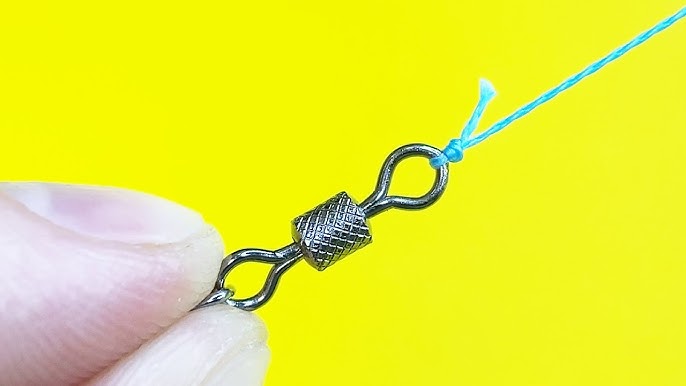
If you want to improve your fishing experience, knowing how to attach a swivel to your fishing line is a must. A swivel helps prevent your line from twisting and tangling, making your casts smoother and your catches easier.
But if you’re not sure how to tie it correctly, you might end up frustrated or lose a big catch. In this guide, you’ll learn simple, step-by-step instructions that anyone can follow. By the end, you’ll feel confident and ready to fish like a pro.
Keep reading to discover the easy way to secure a swivel to your line and boost your fishing success.

Credit: www.ohero.com
Choosing The Right Swivel
Attaching a swivel to your fishing line helps prevent twists and tangles. Picking the right swivel is important for a smooth fishing experience.
There are many types and sizes of swivels. Choosing the best one depends on the type of fishing and the fish you want to catch.
Types Of Swivels
Swivels come in different designs. Each type has a special use for fishing.
- Barrel Swivels: Simple and strong, good for general fishing.
- Ball Bearing Swivels: Rotate smoothly, great for heavy lines.
- Snap Swivels: Include a clip to change lures quickly.
- Three-Way Swivels: Used for connecting multiple lines or baits.
Choose a swivel type that fits your fishing style and gear.
Material And Size Considerations
Swivels are made from different materials like brass, stainless steel, or nickel. Pick a material that resists rust and matches the water type.
Size matters too. Use a swivel size that matches the fishing line strength and fish size. Too small can break, too big may scare fish.
- Small Swivels: Best for light lines and small fish.
- Medium Swivels: Good for general freshwater fishing.
- Large Swivels: Used for heavy lines and big fish.
Preparing Your Fishing Line
Attaching a swivel to your fishing line starts with good preparation. Preparing the line helps create a strong and reliable connection.
Taking time to select and check your line will make fishing easier and more fun. Let’s look at the key steps.
Selecting The Line Type
Choose a fishing line that fits the type of fish and water you will fish in. Different lines have different strengths and uses.
Monofilament lines are easy to handle and stretch well. Fluorocarbon lines are less visible underwater. Braided lines are very strong and thin.
- Monofilament: good for beginners and general use
- Fluorocarbon: best for clear water and shy fish
- Braided: strong and good for heavy cover
Cutting And Inspecting The Line
Cut your fishing line with sharp scissors or a line cutter. A clean cut helps tie knots better and prevents slipping.
Look closely at the line for any damage or weak spots. Replace the line if it has cuts, frays, or thin areas.
- Cut the line straight and clean
- Check for nicks or rough spots
- Remove damaged sections before tying
Popular Knots For Attaching Swivels
Attaching a swivel to your fishing line is essential for smooth casting. Using the right knot ensures your tackle stays secure.
Here are some popular knots used by anglers to attach swivels. Each knot has unique benefits and can be tied easily with practice.
Improved Clinch Knot
The Improved Clinch Knot is widely used for attaching a swivel. It is strong and reliable for most fishing conditions.
- Thread the line through the swivel eye.
- Wrap the line around itself five times.
- Pass the end through the first loop.
- Bring it back through the big loop.
- Moisten and pull tight.
Palomar Knot
The Palomar Knot is known for its simplicity and strength. It works well with braided lines.
Uni Knot
The Uni Knot is versatile and can be used for various types of line. It is easy to tie and very dependable.
| Knot Type | Best For |
| Improved Clinch Knot | Monofilament |
| Palomar Knot | Braided Line |
| Uni Knot | All Types |
Step-by-step Knot Tying
Attaching a swivel to your fishing line is important for smooth fishing. Using the right knot keeps your line strong and secure.
Here are simple steps to tie three popular knots. Each knot works well for connecting a swivel to your line.
Tying The Improved Clinch Knot
The Improved Clinch Knot is strong and easy to tie. It works well for most fishing lines and swivels.
- Thread the line through the swivel eye.
- Wrap the tag end around the main line 5-7 times.
- Pass the tag end through the small loop near the swivel.
- Then pass it through the big loop you just made.
- Wet the knot with water or saliva.
- Pull the main line slowly to tighten the knot.
- Trim the tag end close to the knot.
Tying The Palomar Knot
The Palomar Knot is very strong and simple to tie. It keeps line strength high and is good for braided or monofilament lines.
- Double about 6 inches of line and pass it through the swivel eye.
- Tie a loose overhand knot with the doubled line.
- Pass the swivel through the loop of the overhand knot.
- Pull both ends of the line to tighten the knot.
- Wet the knot before tightening fully.
- Trim the tag end close to the knot.
Tying The Uni Knot
The Uni Knot is versatile and easy to adjust. It works well for tying swivels to many types of fishing lines.
- Pass the line through the swivel eye and double back alongside the main line.
- Make a loop by laying the tag end over the doubled line.
- Wrap the tag end around both lines 5 times.
- Pass the tag end through the loop.
- Moisten the knot to reduce friction.
- Pull the tag end to tighten the coils.
- Slide the knot down to the swivel eye and pull the main line to secure.
- Trim the tag end close to the knot.
Tips For Strong And Secure Knots
Attaching a swivel to your fishing line needs a strong knot. A secure knot keeps your gear safe and helps catch fish. Use simple steps to tie your knots well.
Small details make big differences. Follow these tips to make your knots tight and lasting.
Moistening The Line
Wet the fishing line before tightening the knot. Moistening reduces friction and heat. It helps the knot slide smoothly and not weaken.
Use water or saliva to moisten the line. Avoid using oil or lotion as they can damage the line.
Tightening The Knot Properly
Pull the knot slowly and evenly on both ends. This keeps the knot tight and balanced. Quick or uneven pulls can weaken the knot.
Make sure the knot is snug against the swivel eye. Check that it does not slip or slide before use.
- Hold the swivel steady
- Pull the line ends gently
- Check knot tightness by hand
Trimming Excess Line
Cut off the extra line close to the knot. Leave a small tail to avoid slipping. Too long tails can tangle or catch debris.
Use sharp scissors or nail clippers for a clean cut. Avoid frayed ends that weaken the knot.
- Leave about 1/8 inch of tail
- Trim carefully to avoid damage
- Check the knot after trimming
Testing The Knot Strength
After attaching a swivel to your fishing line, it is important to test the knot strength. This ensures your connection will hold during fishing. Testing helps prevent losing fish or equipment.
There are simple ways to check the knot’s reliability. Pull tests and watching for signs of weakness are key methods.
Pull Test Methods
Pull test methods involve applying force to the knot to see if it holds. Use steady pressure and avoid quick jerks. This mimics real fishing tension.
- Hold the swivel in one hand and the fishing line in the other.
- Pull the line slowly and steadily away from the swivel.
- Increase pressure until you feel resistance or the knot slips.
- Stop if the knot breaks or the line snaps.
- Repeat the test several times to be sure.
Signs Of Weakness To Watch For
Look for these signs to know if the knot may fail during fishing. Early detection helps you retie the knot before you lose fish or tackle.
| Sign | What It Means |
|---|---|
| Slipping Knot | The knot moves along the line, showing poor tightness. |
| Frayed Line | The line fibers look worn or cut near the knot. |
| Uneven Knot Shape | The knot does not look symmetrical or tight. |
| Sudden Breakage | The knot or line breaks under low pressure. |
Common Mistakes To Avoid
Attaching a swivel to your fishing line is simple but requires care. Mistakes can cause line damage or lost fish.
Here are common errors anglers make and how to avoid them for a strong, reliable connection.
Overtightening And Line Damage
Tightening the knot or swivel too much can weaken the fishing line. Excess pressure may cause small cuts or frays.
- Do not pull knots with extreme force.
- Leave enough slack to prevent line stress.
- Use wet hands when tightening to reduce friction.
- Check the line for damage after tying.
Incorrect Knot Formation
Tying the wrong knot or making it incorrectly weakens the connection. The knot may slip or break under tension.
| Knot Type | Use | Common Mistakes |
|---|---|---|
| Improved Clinch Knot | General swivel attachment | Not tightening enough, loose wraps |
| Palisade Knot | Heavy lines | Incorrect loop size, uneven wraps |
| Uni Knot | Strong and easy | Not moistening, poor tightening |
Using The Wrong Swivel Size
Choosing a swivel that is too big or too small affects fishing line performance. It may cause tangles or fail under strain.
- Match swivel size to line strength.
- Use smaller swivels for light lines to avoid bulk.
- Pick larger swivels for heavy lines to handle pressure.
- Check swivel weight to keep bait action natural.

Credit: mysterytacklebox.com

Credit: www.youtube.com
Frequently Asked Questions
How Do You Tie A Swivel To Fishing Line?
To tie a swivel, thread the line through the swivel eye. Use a strong knot like the improved clinch knot. Tighten it firmly and trim excess line for a secure connection.
Why Use A Swivel In Fishing Line Setup?
A swivel prevents line twisting and tangling during casting and retrieval. It also allows smooth bait or lure movement, improving fishing efficiency and reducing line damage.
What Type Of Knot Is Best For Swivels?
The improved clinch knot is most recommended. It provides strong, reliable fastening and is easy to tie. It ensures the swivel stays securely attached during fishing.
Can I Attach A Swivel To Braided Line?
Yes, you can attach a swivel to braided line. Use a knot like the Palomar knot for a strong, secure connection with braided lines.
Conclusion
Attaching a swivel to your fishing line keeps your gear strong and tangle-free. Use the right knot and pull it tight for best results. Check your work before fishing to avoid problems. Practice a few times to get comfortable with the steps.
A well-attached swivel helps you catch more fish and enjoy your time on the water. Keep it simple and steady for better fishing success.