
Have you ever stood in your yard, wondering exactly how much space your wheelbarrow can carry? Knowing how many yards your wheelbarrow holds isn’t just a number—it can save you time, effort, and even money on your projects.
Whether you’re moving soil, mulch, or concrete, understanding your wheelbarrow’s capacity helps you plan better and work smarter. Keep reading, and you’ll discover simple tips to make the most of every load you carry.
Credit: www.homedepot.com
Wheelbarrow Capacity Basics
Wheelbarrows come in different sizes and hold different amounts. Knowing the capacity helps you choose the right one for your job.
This guide explains common sizes, how to measure capacity, and the difference between volume and weight.
Standard Sizes
Most wheelbarrows have a tub size between 4 and 6 cubic feet. This size fits most gardening and construction needs.
- Small wheelbarrows hold about 2 to 3 cubic feet.
- Medium wheelbarrows hold about 4 to 6 cubic feet.
- Large wheelbarrows can hold 7 cubic feet or more.
Measuring Capacity
Capacity is the volume inside the wheelbarrow tub. It usually measures in cubic feet or cubic yards.
| Measurement | Equivalent |
| 1 cubic foot | 7.48 gallons |
| 27 cubic feet | 1 cubic yard |
| 5 cubic feet | 0.185 cubic yards |
Volume Vs Weight
Volume is how much space the wheelbarrow holds. Weight is how heavy the load is.
- Materials like soil or gravel have different weights per cubic foot.
- A full tub of soil weighs more than a full tub of mulch.
- Consider weight to avoid overloading the wheelbarrow.
Credit: www.homedepot.com
Common Wheelbarrow Types
Wheelbarrows come in different types to suit various tasks. Each type holds a certain amount of material. Knowing the types helps you pick the right wheelbarrow.
The size and shape of the wheelbarrow tray affect how many yards it can hold. Let’s look at common types and their features.
Contractor Wheelbarrows
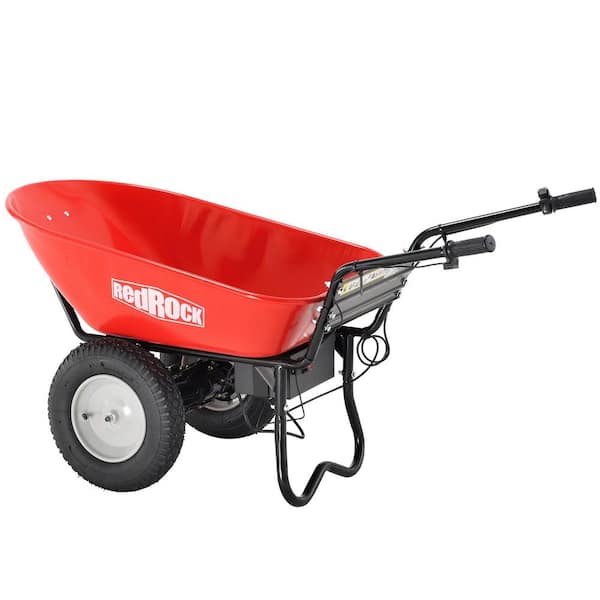
Contractor wheelbarrows have a large, heavy-duty tray. They are made for tough jobs like construction. They usually hold about 6 cubic feet or 0.22 cubic yards.
The deep tray lets you carry heavy loads of concrete, dirt, or tools. These wheelbarrows often have one or two wheels for stability.
Garden Wheelbarrows
Garden wheelbarrows are smaller and lighter. They hold about 3 to 4 cubic feet, which equals roughly 0.11 to 0.15 cubic yards. They work well for soil, plants, and mulch.
These wheelbarrows are easier to maneuver in tight spaces. Their trays are often shallow to help with light loads.
Poly Vs Steel Trays
Poly trays are made of plastic. They resist rust and are lighter. Steel trays are stronger and better for heavy loads but can rust over time.
Both tray types affect how much a wheelbarrow can carry. Steel trays often have bigger sizes, while poly trays are easier to handle.
- Poly trays:Rust-proof, light, less durable
- Steel trays:Strong, heavy, may rust
- Capacity:Steel trays usually hold more material
Calculating Yard Capacity
Understanding how much a wheelbarrow holds is helpful for many projects. It helps in planning gardening, construction, or any task that involves moving material.
Wheelbarrows come in different sizes. Calculating their capacity in yards is key to efficient work.
Converting Cubic Feet To Yards
Wheelbarrow capacity is usually given in cubic feet. To find out how many yards it holds, you need a simple conversion.
One cubic yard equals 27 cubic feet. So, divide the wheelbarrow’s cubic feet by 27 to get the capacity in yards.
- For example, if a wheelbarrow holds 6 cubic feet, divide 6 by 27.
- This means the wheelbarrow holds about 0.22 cubic yards.
Using Dimensions For Estimation
Sometimes, you have the dimensions of the wheelbarrow. You can use these to estimate its capacity.
Multiply the length, width, and depth in feet to find the cubic feet. Then, convert to cubic yards as before.
- For a wheelbarrow measuring 2.5 feet long, 2 feet wide, and 1.5 feet deep:
- Multiply 2.5 × 2 × 1.5 to get 7.5 cubic feet.
- Divide 7.5 by 27 to get about 0.28 cubic yards.
Typical Yard Capacities
Wheelbarrows come in different sizes. Each size holds a different amount of material.
Knowing the yard capacity helps you choose the right wheelbarrow for your work.
Small Wheelbarrows
Small wheelbarrows usually hold about 2 to 3 cubic feet. This equals about 0.07 to 0.11 cubic yards.
They are good for light tasks and small gardens. Small size makes them easy to push and control.
- Hold less material
- Lightweight and easy to use
- Best for small jobs
Medium Wheelbarrows
Medium wheelbarrows hold about 4 to 6 cubic feet. This is about 0.15 to 0.22 cubic yards.
They balance capacity and size. Medium wheelbarrows work well for most home projects.
- More capacity than small wheelbarrows
- Still easy to handle
- Good for yard work and construction
Large Wheelbarrows
Large wheelbarrows can hold 6 to 10 cubic feet or more. This equals about 0.22 to 0.37 cubic yards.
They carry heavy loads and big materials. Large wheelbarrows are best for big jobs and heavy use.
- High capacity for heavy materials
- Heavier and harder to push
- Used in construction and landscaping
Choosing The Right Wheelbarrow
Wheelbarrows come in different sizes and shapes. Knowing how many yards a wheelbarrow holds helps you pick the right one.
Choosing the right wheelbarrow makes your work easier and faster.
Project Needs
Think about the size of your project. Small jobs need smaller wheelbarrows. Big jobs need larger ones that hold more material.
Wheelbarrows usually hold between 2 to 6 cubic feet. This is about 0.07 to 0.22 cubic yards.
- Light gardening needs about 2 cubic feet
- Construction work may need 4 to 6 cubic feet
- Choose size based on how much you move at once
Material Considerations
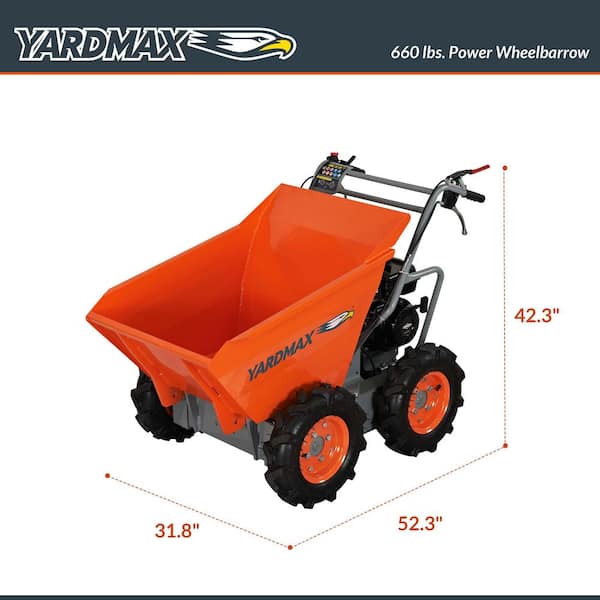
Wheelbarrows come in steel, plastic, and wood. Each material holds different weights and lasts differently.
Steel wheelbarrows hold heavy loads but can rust. Plastic ones are lighter and resist rust but may crack. Wood is less common and heavier.
- Steel is good for heavy, rough materials
- Plastic works well for light materials and wet conditions
- Wood is sturdy but needs more care
Maneuverability And Weight
Think about how easy it is to move the wheelbarrow. A lighter wheelbarrow is easier to push and turn.
Wheel type and handles affect control. One-wheel models turn sharply. Two-wheel models are stable but harder to turn.
- One-wheel wheelbarrows are good for narrow paths
- Two-wheel wheelbarrows are better on flat ground
- Check the weight you can handle comfortably

Credit: www.amazon.com
Tips For Maximizing Capacity
Knowing how many yards a wheelbarrow holds helps you plan your work better. You can carry more by using smart tips.
This guide shares ways to load your wheelbarrow correctly and keep it in good shape. This will save time and effort.
Proper Loading Techniques
Load the wheelbarrow evenly to keep balance. Place heavy items near the wheel for easier pushing.
Do not pile materials above the sides. This stops spillage and keeps the load stable.
- Start with a flat base
- Distribute weight evenly
- Keep the load below the tray’s edge
- Place heavier items close to the wheel
Avoiding Overloading
Do not fill the wheelbarrow beyond its capacity. Overloading makes it hard to push and control.
Check the maximum volume your wheelbarrow can hold. Stick to this limit to avoid damage or accidents.
- Know your wheelbarrow’s volume in cubic yards
- Use smaller loads for heavy materials like rocks
- Make several trips if needed
- Keep loads balanced to prevent tipping
Maintenance For Longevity
Regular maintenance keeps your wheelbarrow working well. Clean it after use to stop rust and wear.
Check tires, handles, and tray for damage. Fix small problems before they get worse.
- Wash off dirt and debris
- Lubricate moving parts
- Inspect and tighten bolts
- Repair or replace worn tires
Frequently Asked Questions
How Many Yards Can A Standard Wheelbarrow Hold?
A standard wheelbarrow typically holds about 3 to 6 cubic feet. This converts to roughly 0. 11 to 0. 22 cubic yards. Capacity varies by size and design, so always check your wheelbarrow’s specifications for exact volume.
What Affects The Capacity Of A Wheelbarrow?
The size of the tray, shape, and material affect wheelbarrow capacity. Larger trays hold more material, while deeper trays increase volume. Weight limits and intended use also influence how much a wheelbarrow can safely carry.
How To Convert Wheelbarrow Capacity From Cubic Feet To Yards?
To convert cubic feet to cubic yards, divide the cubic feet by 27. For example, 6 cubic feet ÷ 27 = 0. 22 cubic yards. This helps compare wheelbarrow volume to larger units used in landscaping and construction.
Can Wheelbarrow Size Impact Project Efficiency?
Yes, larger wheelbarrows carry more material, reducing trips and saving time. However, they may be harder to maneuver. Choosing the right size balances capacity and ease of use for your project.
Conclusion
A wheelbarrow usually holds about one to two cubic feet. This equals roughly 0. 03 to 0. 07 cubic yards. Different models may carry different amounts. Knowing this helps plan your work better. It saves time and effort. Always check your wheelbarrow’s size before buying materials.
This small step makes a big difference. Use the right amount to avoid extra trips. Simple, clear, and useful for any project.