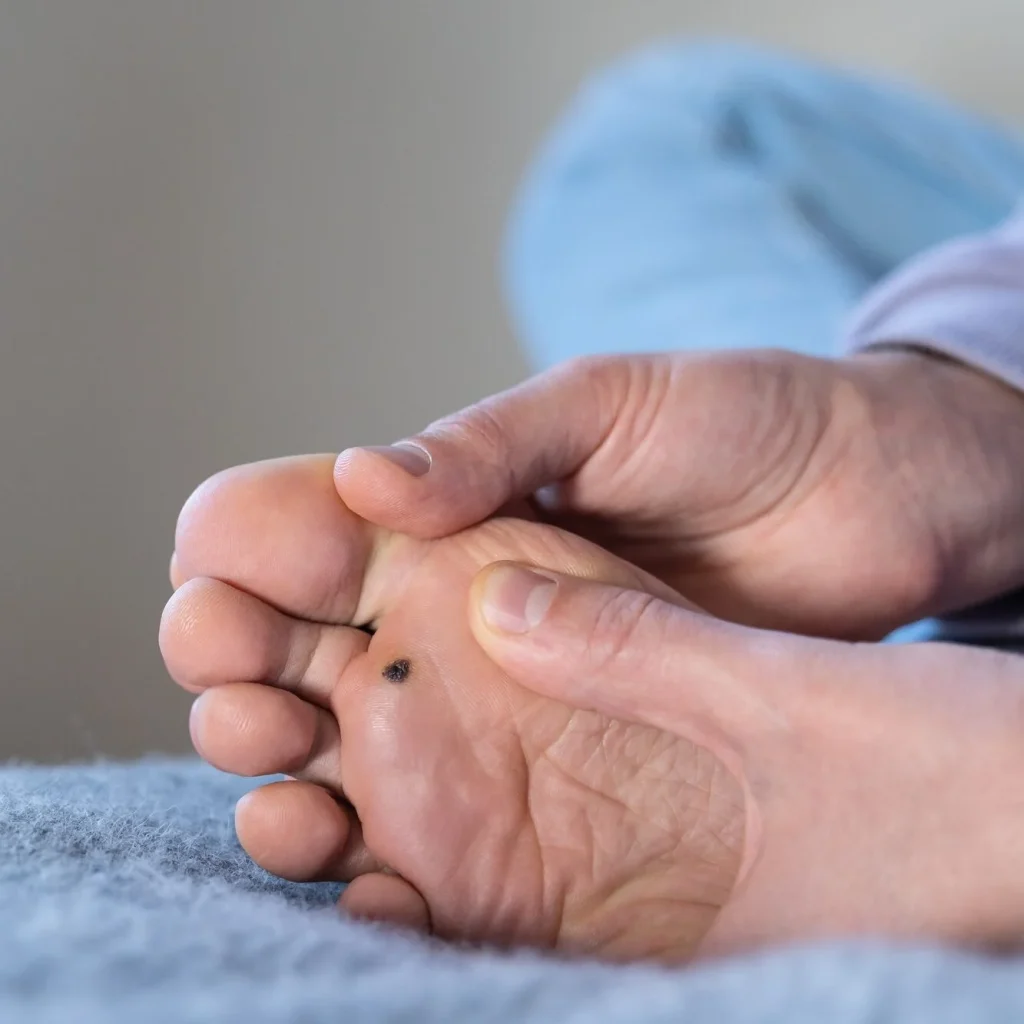
Have you noticed a small, rough bump on the bottom of your foot that just won’t go away? It might be a plantar wart.
You’re probably wondering if it can heal on its own or if you need to take action right now. Understanding how your body deals with this common skin issue can save you time, discomfort, and maybe even a trip to the doctor.
Keep reading to discover what really happens to a plantar wart without treatment and what you can do to help your feet feel better fast.

Credit: www.goodrx.com
What Is A Planters Wart
A planters wart is a small growth that appears on the bottom of the foot. It often looks like a rough, hard bump on the skin.
This type of wart is caused by a virus and can be painful when walking or standing. It may have tiny black dots inside.
Causes And Transmission
Planters warts are caused by the human papillomavirus (HPV). The virus enters the skin through small cuts or breaks.
The virus spreads easily in warm, moist places like swimming pools and locker rooms. Walking barefoot in these areas can increase risk.
- Direct contact with the virus on floors or surfaces
- Touching warts on another person or on yourself
- Having cuts or damaged skin on the feet
Common Symptoms
Planters warts may cause pain or discomfort, especially when pressure is applied. The skin around the wart can thicken.
They often have small black dots inside. These dots are clotted blood vessels. The wart may interrupt normal foot skin patterns.
- Hard, grainy growth on the foot bottom
- Pain or tenderness when walking
- Small black dots inside the wart
- Interruptions in skin lines around the wart

Credit: www.goodrx.com
Natural Healing Process
Planter’s warts are common skin growths caused by a virus. They often appear on the soles of the feet. Many people wonder if these warts can heal on their own without treatment.
The body has a natural way of fighting off the virus that causes warts. This process can lead to the wart disappearing over time. Understanding how this happens helps explain why some warts heal by themselves.
Immune System Role
The immune system fights viruses, including the one causing planter’s warts. It sends special cells to attack the infected skin. This helps stop the wart from growing and can remove it.
Sometimes the immune system does not recognize the wart right away. It may take weeks or months before it starts working to heal the wart. Strong immune response increases the chance of natural healing.
Typical Duration Without Treatment
Planter’s warts can last for several months without treatment. Many warts heal within one to two years on their own. The time varies depending on the person’s immune system and the size of the wart.
In some cases, warts may stay longer or spread to other areas. Patience is important when waiting for natural healing, but medical advice may be needed if the wart causes pain or changes.
Factors Affecting Healing
Planters warts sometimes heal on their own. The healing depends on many factors. These factors help the body fight the wart virus.
Understanding what affects healing can help you know what to expect. Some warts disappear quickly, while others take longer.
Age And Immune Health
Young people usually heal faster because their immune system is strong. The body can fight the virus causing the wart more easily.
Older adults or people with weak immune systems may take longer to heal. Sometimes, the wart may not go away without treatment.
- Children often clear warts naturally.
- Healthy immune systems improve healing chances.
- Immune problems can slow or stop healing.
Wart Location And Size
The place where the wart grows affects healing. Warts on feet may take longer due to pressure and friction.
Large warts have more virus cells. They usually need more time to heal than small ones.
- Warts on weight-bearing areas heal slower.
- Small warts often disappear faster.
- Warts in moist areas may resist healing.
Risks Of Leaving It Untreated
Planters warts can be a nuisance. They are caused by a virus. If not treated, they may lead to bigger problems.
Ignoring a planters wart can result in discomfort and more. Understanding the risks is important for your health.
Potential For Spread
Planters warts are contagious. They can spread to other parts of your body. Sharing surfaces like showers can spread them to others.
This virus loves warm, moist places. Public pools and gyms are common places for spreading. Be cautious in these environments.
- Avoid walking barefoot in public places
- Do not share shoes or socks
- Keep feet dry to prevent spread
Discomfort And Pain
Planters warts can become painful. Walking may hurt if a wart is on your foot. This can affect daily activities.
Pain may increase over time. This can lead to changes in how you walk. It might cause other foot problems.
- Use cushioned pads to reduce pain
- Consider seeing a doctor for severe pain
- Keep an eye on any changes in the wart
When To Seek Medical Help
Planters warts may sometimes heal on their own. But some cases need a doctor’s care. Knowing when to get help is important.
If the wart causes pain or grows bigger, see a doctor. Also seek help if it spreads or changes color.
Signs Of Complications
Most warts are harmless, but some signs show problems. Watch for these signs to avoid serious issues.
- Severe pain or swelling around the wart
- Redness or pus indicating infection
- Wart grows rapidly or changes color
- Warts spread to other parts of the foot
- Bleeding that does not stop easily
If you notice any of these signs, it is best to see a healthcare provider quickly.
Treatment Options
Doctors can offer different treatments if the wart does not heal. Treatment helps remove the wart and stop pain.
- Freezing the wart with liquid nitrogen
- Using special creams to kill wart cells
- Removing the wart with minor surgery
- Laser treatment for stubborn warts
- Immune therapy to boost your body’s defense
Choose treatment based on the wart’s size, pain, and location. Your doctor can help find the best option.
Home Remedies And Their Effectiveness
Planters wart is a small growth on the bottom of the foot. Many people wonder if it can heal without medical treatment. Some try home remedies to remove the wart at home.
This article looks at common DIY methods and how safe they are. It helps you understand what to expect from home treatments.
Common Diy Methods
People use several home remedies to treat planters wart. Some may work slowly, while others might not be effective at all.
- Applying duct tape to cover the wart for several days
- Using salicylic acid patches or liquids to peel the wart
- Soaking the foot in warm water with Epsom salt
- Rubbing apple cider vinegar on the wart with a cotton ball
- Applying tea tree oil, known for its antiseptic properties
These methods aim to soften the wart or kill the virus that causes it. Results may take weeks or months, and warts can return.
Safety Considerations
Before trying home remedies, you should know some safety tips. Incorrect use can cause skin damage or infection.
| Safety Tip | Details |
| Test for Allergies | Apply a small amount of remedy to check skin reaction. |
| Avoid Sensitive Areas | Do not use harsh treatments near nails or broken skin. |
| Keep Area Clean | Wash feet daily and dry well to prevent infection. |
| Limit Use Time | Do not leave treatments like duct tape on for too long. |
| Seek Doctor Advice | See a doctor if the wart grows or causes pain. |

Credit: swfacenter.com
Frequently Asked Questions
Can A Planter’s Wart Disappear Without Treatment?
Yes, planter’s warts can sometimes heal on their own as the immune system fights the virus. However, this process may take months or even years.
How Long Does A Planter’s Wart Usually Last?
Planter’s warts often last from several months up to two years if untreated. Duration varies based on immune response and wart size.
What Are Signs A Planter’s Wart Is Healing Naturally?
Signs include reduced size, less pain, and a smoother skin surface. The wart may also darken and eventually fall off.
Should I See A Doctor If My Planter’s Wart Persists?
Yes, consult a doctor if the wart is painful, spreading, or lasts over two years to explore treatment options.
Conclusion
Planter’s warts may heal on their own, but it can take months. Some warts disappear without treatment, while others stay longer. Pain or discomfort means seeing a doctor is wise. Treating warts early can prevent spreading or worsening. Keeping feet clean and dry helps stop infection.
Watch the wart closely and avoid picking at it. Patience and care often lead to healing. Don’t ignore persistent or painful warts; seek medical advice. Your feet deserve healthy skin and comfort.