Are you struggling to tie a strong, reliable knot with your braided fishing line? You’re not alone.
Braided line behaves differently than regular fishing line, and using the wrong knot can cause frustration or lost fish. But don’t worry—once you learn the right technique, you’ll tie knots that hold tight every time. You’ll discover simple, step-by-step instructions to master knots designed specifically for braided line.
Keep reading to boost your fishing success and confidence on the water.

Credit: www.wikihow.com
Choosing The Right Knot
When using braided fishing line, choosing the right knot is crucial. The strength and reliability of your knot can make or break a fishing trip.
Braided lines are slippery, so certain knots work better. Let’s explore the best options for your fishing needs.
Best Knots For Braided Line
Some knots are more effective with braided fishing lines. These knots ensure that your line holds firm when you need it most.
- Palomar Knot: Easy to tie and very strong.
- Double Uni Knot: Great for connecting lines of different materials.
- Alberto Knot: Ideal for attaching a leader to a mainline.
Knot Strength And Reliability
Strength and reliability are key factors for a good fishing knot. Braided lines need knots that can handle heavy loads.
Testing your knots before fishing is essential. This ensures they won’t slip or break under pressure.
| Palomar Knot | High strength, low slippage |
| Double Uni Knot | Good for different line types |
| Alberto Knot | Strong and reliable for leaders |
Preparing The Line
Preparing braided fishing line correctly helps to tie strong knots. This makes fishing easier and safer. It starts with trimming and conditioning the line.
Handling the texture of braided line also matters. Understanding its feel helps you work with it better. This guide covers both important steps.
Trimming And Conditioning
Cut the line cleanly using sharp scissors or clippers. Avoid frayed ends because they weaken the knot. After cutting, condition the line to make it more flexible.
- Use sharp scissors for a clean cut
- Remove any frayed or damaged tips
- Moisten the line slightly to reduce stiffness
- Run the line through your fingers to soften it
- Keep the line dry but avoid drying it out too much
Handling Braided Line Texture
Braided line feels rough and stiff at first. This texture can make tying knots tricky. You need to get used to its grip and flexibility.
| Texture Feature | Effect on Knot Tying | Tip |
|---|---|---|
| Rough Surface | Helps knots hold tight | Ensure knots are snug but not too tight |
| Stiffness | Makes line harder to bend | Condition line by bending before use |
| Thin Diameter | Can slip in knots easily | Double the line or use extra wraps |
Step-by-step Knot Tying
Tying a knot with braided fishing line needs care and practice.
Good knots keep your line strong and prevent it from slipping.
Palomar Knot Technique
The Palomar knot is strong and easy to tie on braided line.
- Double about 6 inches of line and pass it through the hook eye.
- Tie a loose overhand knot with the doubled line.
- Pass the hook through the loop of the overhand knot.
- Pull both ends of the line slowly to tighten the knot.
- Trim the tag end close to the knot.
Improved Clinch Knot Technique
This knot works well for braided line and keeps the hook secure.
- Pass the line through the hook eye and wrap it 5-7 times around the standing line.
- Thread the tag end through the small loop near the hook eye.
- Then pass the tag end through the big loop you just made.
- Pull the tag end and standing line to tighten the coils.
- Trim the extra line close to the knot.
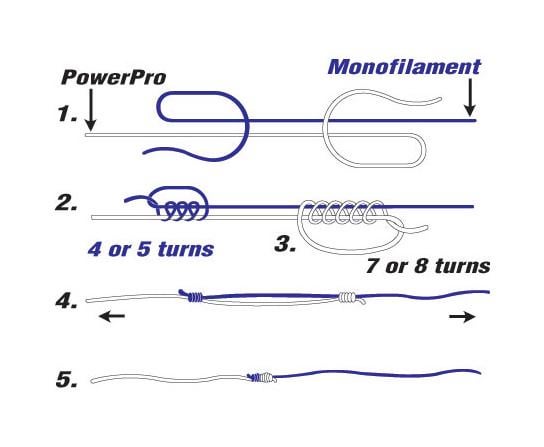
Double Uni Knot Technique
The Double Uni knot links braided line to another line or leader.
| Step | Action |
|---|---|
| 1 | Overlap the two line ends side by side. |
| 2 | Make a loop with the first line over the second line. |
| 3 | Wrap the tag end of the first line 4-6 times around both lines. |
| 4 | Pull the tag end to tighten the knot but leave it loose enough to slide. |
| 5 | Repeat steps 2-4 with the second line around the first. |
| 6 | Pull both standing lines to slide the knots together. |
| 7 | Trim the tag ends close to the knots. |
Common Mistakes To Avoid
Tying knots with braided fishing line can be tricky. Many anglers make simple errors that weaken their knots. Avoiding these mistakes helps keep your line strong and reliable.
Two common mistakes are overtightening the knot and using incorrect loop sizes. These can cause knots to slip or break. Learn how to prevent them below.
Overtightening The Knot
Pulling the knot too tight can damage braided fishing line. The line may get cut or weakened. Tight knots also make it harder to adjust or untie later.
- Pull the knot firmly but gently
- Use steady pressure, not sharp jerks
- Wet the line before tightening to reduce friction
- Stop tightening once the knot feels secure
Incorrect Loop Sizes
Making loops too big or too small weakens the knot. Too large loops may slip or catch on objects. Too small loops can cause the knot to jam or break.
| Loop Size | Effect on Knot |
| Too Large | Slips easily, less secure |
| Ideal Size | Fits snugly, holds firm |
| Too Small | Hard to tighten, may break |
Testing Knot Strength
Testing the strength of your knot is very important when using braided fishing line. A strong knot keeps your line safe and stops it from breaking.
You should always check your knot before fishing. This helps you trust your gear and catch more fish.
Pull Test Methods
Pull tests help you know if your knot is tied well. You pull on the line to see if the knot holds tight.
Try pulling the line slowly and then harder. The knot should not slip or come undone.
- Hold the line near the knot firmly.
- Pull the line away from the knot steadily.
- Increase force until the knot moves or breaks.
- If the knot slips, retie it before fishing.
When To Retie
Retie your knot if it feels weak or loose. Check your knots often during fishing.
Signs to retie include slipping, frayed line, or after catching a big fish. Keeping knots strong helps avoid losing fish.
- Knot slips under light pressure
- Line shows wear or damage near knot
- Knot looks uneven or loose
- After pulling heavy weight or a big catch
- Regularly before each fishing trip

Credit: www.reddit.com
Maintenance Tips For Braided Line
Taking care of your braided fishing line helps it last longer and perform better. Regular maintenance keeps the line strong and reliable.
Check your line often and store it properly. These habits prevent damage and improve your fishing experience.
Regular Inspection
Look over your braided line before and after each use. Check for signs of wear like frays, cuts, or abrasions. Replace the line if you see any damage to avoid losing fish.
- Run your fingers along the line to feel for rough spots
- Inspect knots for slipping or loosening
- Check for discoloration that may indicate sun damage
- Test the line’s strength by pulling gently on it
Storage Recommendations
Store your braided line in a cool, dry place away from sunlight. Proper storage stops the line from weakening or tangling.
| Storage Tip | Reason |
| Keep line on the reel or spool | Prevents tangling and maintains shape |
| Use a sealed plastic bag or container | Keeps out moisture and dust |
| Store in a dark place | Protects from UV damage |
| Avoid extreme temperatures | Prevents weakening of fibers |

Credit: www.youtube.com
Frequently Asked Questions
What Is The Best Knot For Braided Fishing Line?
The Palomar knot is the best choice for braided fishing line. It offers strong, reliable, and easy-to-tie connections. This knot maintains high strength and resists slipping, making it ideal for braided lines in various fishing situations.
How Do I Prevent Braided Line From Slipping?
To prevent slipping, double the line before tying the knot. Use knots like Palomar or Double Uni that grip well. Also, wet the line before tightening to reduce friction and ensure a secure hold.
Can I Use Regular Knots On Braided Lines?
Regular knots can work but may slip with braided lines. Braided lines need knots like Palomar or Double Uni for better grip. Using the right knot ensures strength and prevents line damage during fishing.
Why Is Tying A Knot On Braided Line Tricky?
Braided lines are slippery and thin, making knots prone to slipping. Their low stretch and smooth texture require special knots for secure holding. Using appropriate knots reduces the risk of failure while fishing.
Conclusion
Tying a knot with braided fishing line is simple with practice. Use the right knot to keep your line strong and secure. Wet the knot before tightening to avoid damage. Check your knot often while fishing for safety. With patience, your fishing experience will improve greatly.
Keep practicing to build confidence and skill. Enjoy your time by the water with a reliable knot.