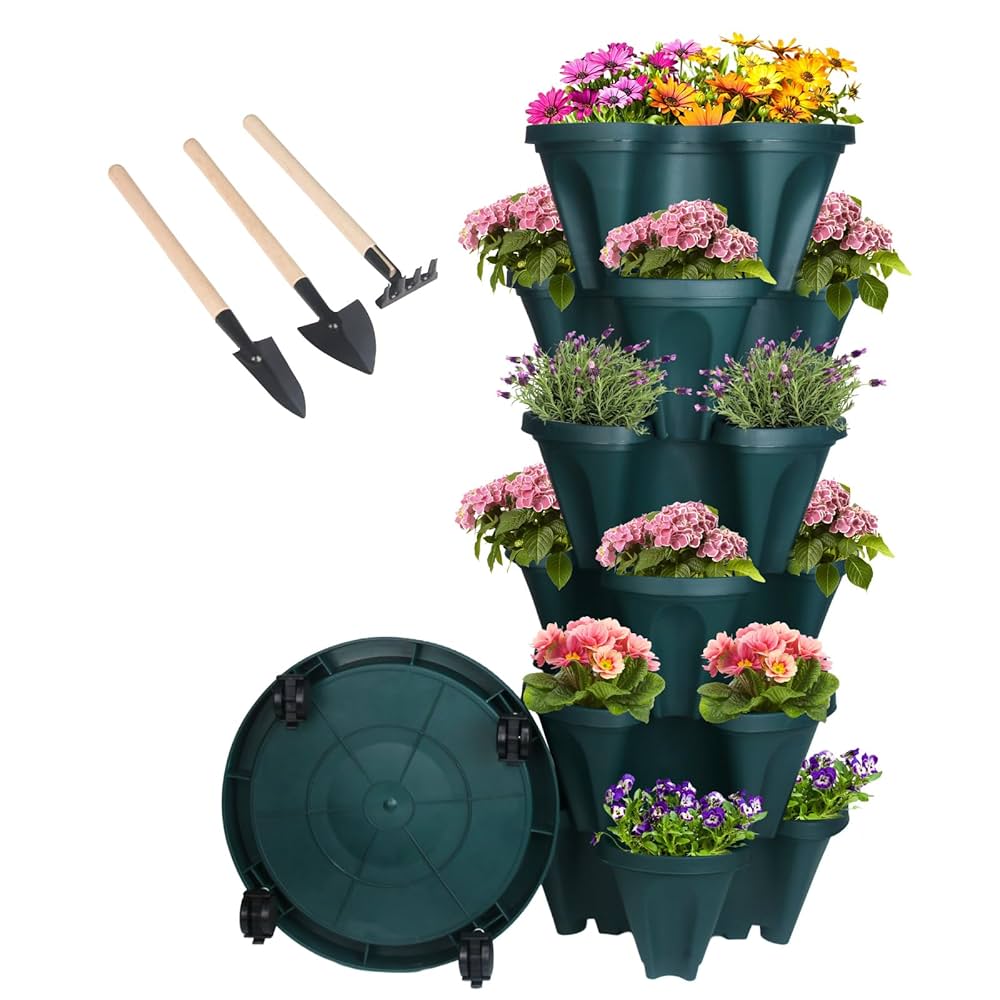
Are you looking to make the most of your garden space without the hassle of a big yard? Stacking planters could be your secret weapon.
They let you grow more in less space, right in your own home or balcony. But what should you plant in these clever containers to get the best results? You’ll discover the perfect plants that thrive in stacking planters, helping you create a vibrant, healthy garden that fits your lifestyle.
Keep reading to unlock simple tips that will turn your stacked garden into a lush, green paradise.

Credit: www.amazon.com
Benefits Of Stacking Planters
Stacking planters are a great way to grow plants in small spaces. They help you use vertical space effectively.
These planters are perfect for urban gardening. They offer many benefits for plant lovers.
Space-saving Design
Stacking planters save a lot of space. They let you grow more plants in a small area.
These planters use vertical space. This is useful for balconies and small gardens.
- Ideal for apartments
- Great for patios
- Perfect for small yards
Improved Drainage
Stacking planters offer better drainage for plants. Each layer allows water to flow smoothly.
This prevents water from collecting. It keeps roots healthy and strong.
- Prevents root rot
- Reduces water logging
- Keeps soil fresh
Enhanced Aesthetics
Stacking planters look beautiful. They add a stylish touch to your garden or balcony.
These planters come in many designs. You can choose colors and styles that match your space.
- Decorative and functional
- Available in various colors
- Enhances garden appeal
Ideal Plants For Stacking Planters
Stacking planters save space and add beauty to small gardens or balconies. Choosing the right plants helps your planter look great and grow well.
Plants that stay small or grow slowly work best. You want plants that do not need deep soil or a lot of room for roots.
Herbs That Thrive
Many herbs grow well in stacking planters. They need little space and do not grow very tall. You can pick fresh herbs for cooking every day.
- Basil
- Thyme
- Parsley
- Chives
- Mint (keep it contained)
- Oregano
Colorful Flower Varieties
Bright flowers add color and cheer to stacking planters. Choose flowers that stay small and bloom all season. They attract bees and butterflies too.
- Pansies
- Petunias
- Alyssum
- Marigolds
- Impatiens
- Begonias
Compact Vegetables
Some vegetables grow well in stacking planters. Pick compact types that do not need deep soil. They give fresh food in a small space.
- Lettuce
- Radishes
- Baby carrots
- Spinach
- Green onions
- Cherry tomatoes (dwarf varieties)
Succulents And Cacti
Succulents and cacti work well in stacking planters because they need little water. They come in many shapes and colors. They are easy to care for.
- Aloe vera
- Echeveria
- Hens and chicks
- Jade plant
- Barrel cactus
- String of pearls
Soil And Watering Tips
Stacking planters save space and look nice. To grow healthy plants, you need good soil and smart watering.
This guide helps you pick the best soil mix, water your plants well, and fertilize for strong growth.
Choosing The Right Soil Mix
Use soil that drains well but holds moisture. A mix made for containers works best. Avoid garden soil because it can be too dense.
- Use potting mix with peat moss or coconut coir
- Add perlite or vermiculite for drainage
- Include compost for nutrients
- Make sure soil is light and fluffy
Watering Techniques For Stacking Planters
Stacking planters need careful watering. Water from the top so all layers get moisture. Check soil often to avoid drying out or overwatering.
| Watering Tips | Details |
| Water deeply | Water until it drains from bottom to reach all roots |
| Check soil moisture | Use finger test or moisture meter |
| Avoid waterlogging | Make sure planter has holes for drainage |
| Water in morning | Reduces evaporation and helps plants absorb better |
Fertilizing For Lush Growth
Plants in stacking planters need extra nutrients. Use balanced fertilizer to keep leaves green and flowers blooming.
- Choose water-soluble fertilizer for easy feeding
- Feed every two weeks during growing season
- Follow package instructions to avoid overfeeding
- Flush soil with water monthly to prevent salt build-up

Credit: greenstalkgarden.com
Sunlight And Placement
Stacking planters save space and let you grow many plants. Choosing the right sunlight and placement helps your plants thrive.
Knowing how much light your plants need and where to place your stacking planter makes a big difference.
Best Light Conditions
Most plants in stacking planters need bright, indirect light. Direct sunlight can harm some plants, especially in the afternoon.
Choose plants that match the light your space offers. Low-light plants do well in shady spots. Sun-loving plants need more direct light.
- Bright indirect light suits most herbs and flowers
- Low light plants include ferns and some succulents
- Full sun plants like tomatoes and peppers need 6+ hours
Indoor Vs Outdoor Placement
Indoor stacking planters need a bright window or grow light. Outdoor planters should be in spots with the right sun and protection.
Keep outdoor planters away from strong wind or heavy rain. Indoor plants may need more water since air is drier.
- Indoor: near south or east-facing windows
- Outdoor: sheltered areas with morning sun
- Avoid placing near heaters or air conditioners indoors
Seasonal Adjustments
Sunlight changes with seasons. Move your stacking planter to catch the best light each season.
In winter, place planters closer to windows. In summer, watch for too much direct sun and move if needed.
- Spring: good time to try sun-loving plants
- Summer: shade plants from harsh afternoon sun
- Fall: prepare plants for less light and cooler temps
- Winter: maximize light near windows indoors
Maintenance And Care
Stacking planters are a great way to grow plants in small spaces. To keep your plants healthy, regular care is important.
Good maintenance helps plants grow strong and look beautiful all year round. Let’s explore how to take care of them.
Pruning And Trimming
Pruning helps plants grow better by removing dead or weak parts. It also keeps plants neat and tidy.
Trim plants regularly to stop them from getting too big or crowded in the planter.
- Cut dead leaves and stems
- Trim overgrown branches
- Shape plants to fit the planter
Pest Management
Pests can damage plants in stacking planters. Check plants often for bugs or signs of damage.
Use natural ways to control pests to keep plants safe and healthy.
- Remove insects by hand
- Spray with mild soap water
- Use natural predators like ladybugs
- Keep plants clean and dry
Repotting And Soil Refresh
Plants need fresh soil to get nutrients. Repotting helps plants grow well in stacking planters.
Change the soil every year or when plants outgrow their space. This keeps roots healthy.
- Remove plants gently from planters
- Replace old soil with fresh, well-draining soil
- Trim roots if they are too long
- Water plants after repotting
Creative Planting Ideas
Stacking planters save space and add beauty to any garden. You can grow many plants in one small area.
Choosing the right plants helps create a unique look. Use colors, shapes, and scents to make your planter stand out.
Layering For Color Contrast
Layer plants by color to make your stacking planter eye-catching. Bright colors on top and darker shades below work well.
Use plants with different bloom times to keep your planter colorful all season. This way, something is always blooming.
- Plant red flowers like geraniums on the top layer
- Use yellow marigolds in the middle layer for brightness
- Place purple petunias on the bottom layer for depth
Mixing Textures And Heights
Combine plants with different leaf shapes and sizes. This adds interest and makes the planter look full and lively.
Tall plants add height, while small, bushy plants fill the spaces. Use trailing plants to soften the edges.
- Tall: Dracaena or ornamental grasses
- Medium: Ferns or small shrubs
- Trailing: Ivy or sweet potato vine
Using Aromatic Plants
Aromatic plants add scent and can keep pests away. They make your stacking planter useful and pleasant.
Place herbs and flowers that release fragrance when touched or brushed by the wind.
- Basil for a fresh, sweet smell
- Lavender for calming fragrance
- Mint for a cool, refreshing scent
- Rosemary for a woody aroma

Credit: www.angiethefreckledrose.com
Frequently Asked Questions
What Vegetables Grow Best In Stacking Planters?
Leafy greens like lettuce, spinach, and kale thrive in stacking planters. Radishes and herbs such as basil and parsley also do well. These plants need minimal root space and prefer well-drained soil, making them ideal for vertical gardening in stacking planters.
Can Stacking Planters Support Fruit Plants?
Yes, small fruit plants like strawberries grow well in stacking planters. Their shallow root systems adapt easily to limited soil. Regular watering and good sunlight help strawberries flourish in these compact vertical setups.
How Do Herbs Benefit From Stacking Planters?
Herbs like mint, thyme, and oregano grow efficiently in stacking planters. Vertical gardening saves space and provides good air circulation, reducing disease risk. The planter’s layered design allows easy access and harvesting for fresh herbs year-round.
Are Stacking Planters Suitable For Flowers?
Stacking planters are perfect for compact, shallow-rooted flowers like pansies, petunias, and marigolds. They add color and beauty to small spaces. Proper watering and sunlight keep these flowers healthy and vibrant in vertical arrangements.
Conclusion
Stacking planters save space and add beauty to any garden. Choose plants that grow well in small spaces and need good drainage. Herbs, leafy greens, and small flowers work great. Keep soil moist but not wet. Rotate plants for even sunlight.
With the right care, your stacked garden will thrive. Enjoy fresh herbs and colorful blooms all season long. Gardening in stacking planters brings joy and fresh food right to your home. Give it a try and watch your garden grow!