
Have you ever stopped to wonder why a simple garden tool is called a “wheelbarrow”? It’s a word you use often, but its origin might surprise you.
Understanding the story behind the name can change the way you see this everyday helper. If you’ve ever pushed one, you know it’s more than just a container with a wheel—it’s a clever invention with a name that holds a piece of history.
Keep reading, and you’ll discover why the word “wheelbarrow” fits perfectly, and maybe even impress your friends with this neat little fact.

Credit: www.aquatix-2u.co.uk
Early Transport Tools
Early humans needed ways to move heavy items. They used simple tools for carrying things over distances.
These tools evolved over time. They laid the groundwork for modern devices like the wheelbarrow.
Ancient Carrying Methods
Long ago, people carried loads on their backs. Animals helped too, especially for heavier tasks.
- Shoulder poles: Used to balance loads on shoulders.
- Animal-drawn sleds: Utilized in snowy or icy terrains.
- Simple drags: Pulled by people across rough terrain.
Transition To Wheeled Devices
The invention of the wheel changed transport forever. Wheeled devices made carrying easier and faster.
| Device | Function |
| Cart | Used for transporting goods over land. |
| Chariot | Utilized in warfare and racing. |
| Wheelbarrow | Designed for individual use, carrying small loads. |
Origins Of The Wheelbarrow
The wheelbarrow is a simple machine used to carry loads. It helps people move heavy items easily. The name comes from its main part: a wheel.
Understanding the wheelbarrow’s origins shows how different cultures improved work and transport. The tool has a long history with many stories.
First Known Uses
The first wheelbarrows appeared in ancient times. The earliest records show their use in China around the 1st century AD. They helped farmers and builders carry heavy loads.
- China: Used for farming and construction by the Han Dynasty.
- Europe: Appeared in the Middle Ages for moving materials on building sites.
- Greece and Rome: Used carts with wheels, but wheelbarrows as we know them were rare.
Cultural Variations
Many cultures have their versions of the wheelbarrow. Designs change based on needs and materials available. Some have one wheel, others two.
| Culture | Wheel Type | Common Use |
| Chinese | One large wheel at the center | Farming and construction |
| European | One wheel at front | Building and gardening |
| African | Two wheels for stability | Transporting goods |
| American | One or two wheels | Landscaping and farming |
Etymology Of Wheelbarrow
The word “wheelbarrow” has a long history. It describes a simple machine used for carrying loads. Understanding its name helps us learn about its origins.
This tool combines two main parts: a wheel and a barrow. The name shows how language and culture shaped the word over time.
Breaking Down The Word
The word “wheelbarrow” breaks into two parts: “wheel” and “barrow”. The “wheel” part is easy to understand. It means the round object that rolls.
The “barrow” part is less clear. It comes from old English words. These words related to a type of cart or carrier. This shows the tool’s purpose.
- “Wheel” means the round object for rolling.
- “Barrow” means a cart or frame for carrying things.
- Together, they describe a one-wheeled cart for moving loads.
Language Influences
The word “wheelbarrow” comes from several languages over time. Old English and Middle English mixed with other languages. This mix shaped the word we use today.
| Language | Contribution |
| Old English | Word “bearwe” meaning a hand-barrow or litter |
| Middle English | Added “wheel” to show the rolling part |
| Germanic | Influenced the word “barrow” related to carrying |
Credit: www.stagandsquire.co.uk
Design Evolution
The wheelbarrow has changed a lot since it was first made. Its design grew from a simple tool to a useful machine.
People improved the wheelbarrow to make moving heavy loads easier and faster. The changes helped it work better for many jobs.
From Simple To Functional
The first wheelbarrows had just one wheel and two handles. This simple design helped people carry things with less effort.
Over time, the shape of the wheelbarrow changed. The tray became deeper to hold more weight. The wheel moved forward for better balance.
- Single wheel for easy steering
- Deeper tray to carry bigger loads
- Handles adjusted for comfort
- Wheel moved to improve balance
Materials And Construction
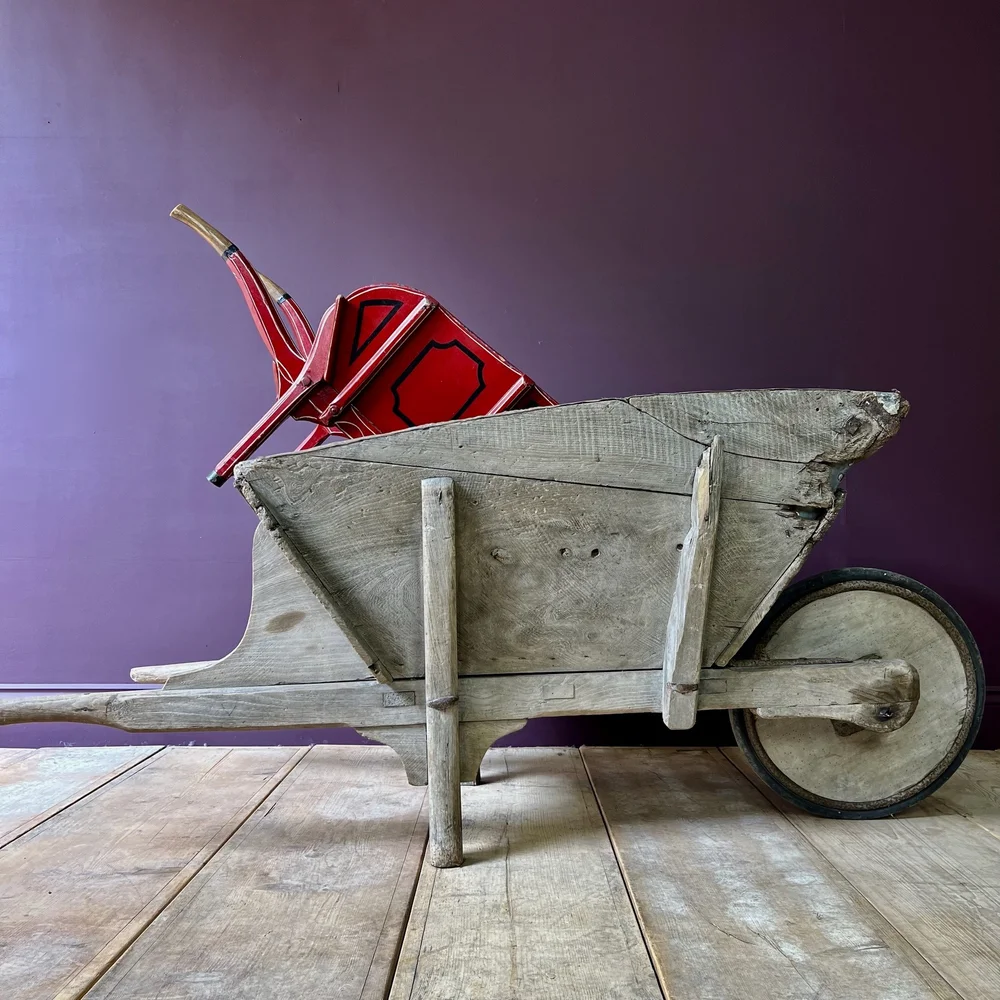
Early wheelbarrows were made from wood. Wood was easy to find and shape. It made the wheelbarrow strong but heavy.
Today, wheelbarrows use metal and plastic parts. Metal makes them lighter and stronger. Plastic parts help reduce weight and resist rust.
- Wood was the first material used
- Metal frames added strength and durability
- Plastic trays reduce overall weight
- Modern wheels use rubber for smooth movement
Impact On Labor And Society
The wheelbarrow is a simple tool with a big impact on work and communities. It helped people move heavy loads with less effort. This tool changed how labor was done in many fields.
By making tasks easier, the wheelbarrow influenced daily life and jobs. It supported growth in farming and building. Its name comes from the wheel and the bar that people hold to carry loads.
Agricultural Advancements
The wheelbarrow made farming work faster and less tiring. Farmers could carry more crops, soil, and tools. This helped increase food production and supported larger farms.
- Carried heavy loads easily across fields
- Saved time moving soil and plants
- Reduced physical strain for farmers
- Helped in planting and harvesting
- Allowed farms to grow larger and more productive
Construction And Trade
In construction, wheelbarrows helped workers move bricks, stones, and tools. This improved building speed and safety. Traders also used wheelbarrows to transport goods to markets.
| Use | Benefit |
| Moving building materials | Faster construction |
| Transporting tools | Better work efficiency |
| Carrying goods to market | Increased trade volume |
| Reducing worker fatigue | Safer labor conditions |
Modern Adaptations
The wheelbarrow has changed a lot since it was first made. Modern versions help people carry heavy loads easier.
New designs focus on making wheelbarrows stronger and easier to use in many tasks.
Contemporary Designs
Modern wheelbarrows use light materials like aluminum or plastic. This makes them easier to push and carry.
Many have two or more wheels to improve balance and reduce effort when moving heavy items.
- Two-wheel models for better stability
- Ergonomic handles for comfort
- Rust-resistant frames for longer life
Specialized Wheelbarrows
Some wheelbarrows are designed for specific jobs. These make work easier in different settings.
Examples include garden wheelbarrows with deep trays and construction models with strong metal beds.
- Garden wheelbarrows with extra large trays
- Contractor wheelbarrows for heavy loads
- Electric wheelbarrows that use motors to help push

Credit: www.tgbuildersmerchants.co.uk
Frequently Asked Questions
Why Is The Tool Called A Wheelbarrow?
The tool is called a wheelbarrow because it combines a single wheel and two handles. The wheel helps move heavy loads easily. The name reflects its design and function. Early versions were used for transporting goods and materials efficiently.
When Was The Wheelbarrow First Invented?
The wheelbarrow was first invented in ancient China around the 1st century AD. It spread to Europe during the Middle Ages. Its invention revolutionized manual labor by reducing effort in carrying heavy loads. The design has remained largely unchanged since then.
How Does The Wheelbarrow’s Design Help Users?
The single wheel allows easy steering and balance on uneven terrain. The handles provide leverage to lift and push heavy items. This design reduces physical strain. It makes transporting materials faster and less tiring for workers.
What Materials Are Wheelbarrows Usually Made From?
Wheelbarrows are commonly made from metal, plastic, or wood. Metal offers durability and strength for heavy loads. Plastic is lightweight and rust-resistant, ideal for gardening. Wood is traditional but less common due to maintenance needs.
Conclusion
The name “wheelbarrow” comes from its simple design: one wheel and a barrow. This tool has helped people carry heavy loads easily for centuries. Its name shows how important the wheel is to its function. Understanding this helps us appreciate everyday tools more.
The wheelbarrow remains useful in gardens and construction sites worldwide. Its history and name tell a story of human creativity and hard work. Simple, effective, and timeless.