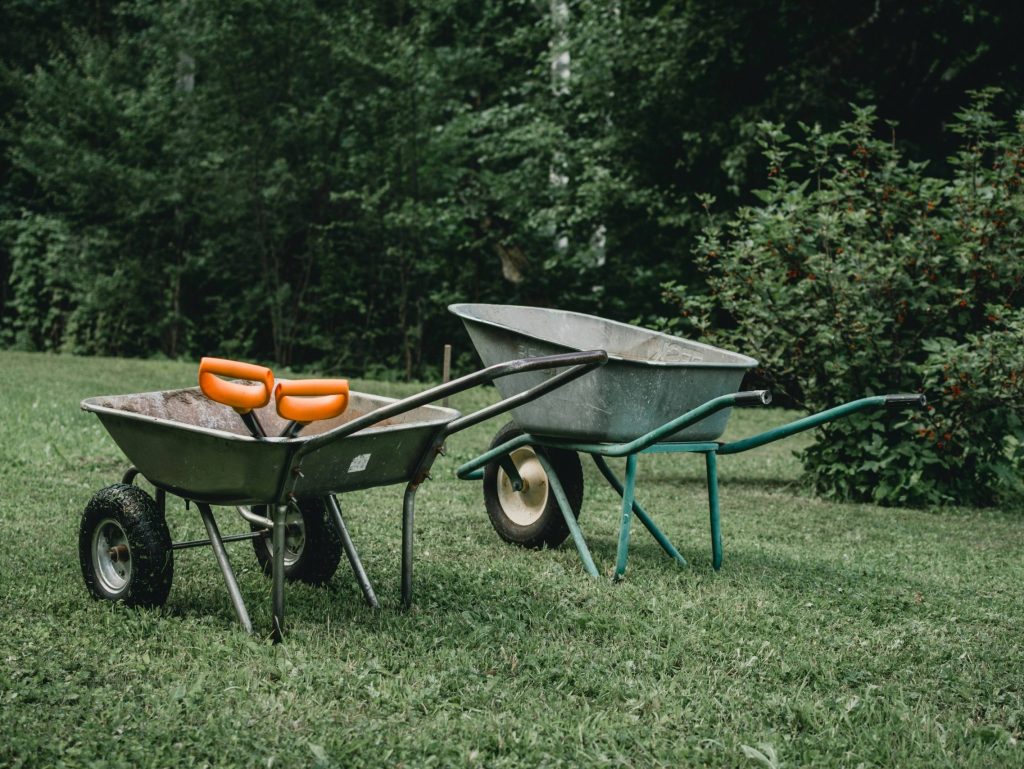
Are you planning a landscaping project or mixing concrete and wondering, “How many wheelbarrows to a yard?” Knowing the answer can save you time, effort, and even money. Imagine finishing your job faster because you have the right amount of materials ready.
You’ll discover simple ways to calculate exactly how many wheelbarrows you need for a yard of soil, gravel, or concrete. Keep reading to avoid common mistakes and make your work smoother from start to finish.
Wheelbarrow Capacity Basics
Understanding how many wheelbarrows make up a yard helps in planning work. It saves time and effort when moving materials like soil or concrete.
The size and type of a wheelbarrow affect how much it can carry. Different wheelbarrows hold different amounts, so knowing the basics is key.
Standard Sizes
Wheelbarrows come in several standard sizes. These sizes usually range from small garden models to large construction types.
| Wheelbarrow Size | Capacity (Cubic Feet) | Capacity (Cubic Yards) |
| Small | 2 | 0.074 |
| Medium | 4 | 0.148 |
| Large | 6 | 0.222 |
| Extra Large | 8 | 0.296 |
Material Types
Wheelbarrows are made from different materials. The material affects weight, durability, and cost.
- Steel: Heavy but very strong and durable.
- Plastic: Lightweight and rust-proof, but less strong.
- Wood: Traditional, but can wear out quickly.
- Aluminum: Light and rust-resistant, good for easy handling.

Credit: topwheelbarrow.com
Measuring A Cubic Yard
Understanding how many wheelbarrows fit into a cubic yard is useful. It helps in gardening and construction projects.
A cubic yard is a unit of volume. It equals a cube with sides that are 3 feet long.
Volume Calculation
To calculate a cubic yard, multiply length by width by height. Each side should measure 3 feet.
This gives you 27 cubic feet. A typical wheelbarrow holds about 3 cubic feet.
- 1 cubic yard = 27 cubic feet
- 1 wheelbarrow = 3 cubic feet
- 9 wheelbarrows fill 1 cubic yard
Common Uses
People use cubic yards to measure soil, gravel, and mulch. It is also common in construction for concrete and sand.
Knowing the number of wheelbarrows helps in planning. It ensures you order the right amount of materials.
| Material | Uses |
| Soil | Gardening and landscaping |
| Gravel | Driveways and pathways |
| Mulch | Garden beds |
Converting Wheelbarrows To Yards
Wheelbarrows are common tools for moving dirt, sand, or gravel. Knowing how many wheelbarrows make one yard helps in planning work.
This guide shows how to convert wheelbarrow loads into cubic yards. It makes measuring materials easier and more accurate.
Step-by-step Calculation
First, find the volume of one wheelbarrow load. This depends on the size of the wheelbarrow.
Next, convert the volume from cubic feet to cubic yards. One cubic yard equals 27 cubic feet.
- Measure wheelbarrow length, width, and height (in feet).
- Calculate volume: length × width × height (in cubic feet).
- Divide volume by 27 to get cubic yards per wheelbarrow.
- Divide 1 cubic yard by cubic yards per wheelbarrow to find how many wheelbarrows equal one yard.
Example Scenarios
A standard wheelbarrow holds about 3 cubic feet. We use this size for examples.
Here are two examples showing the number of wheelbarrows needed for one yard.
| Wheelbarrow Volume (cubic feet) | Cubic Yards per Wheelbarrow | Wheelbarrows to Make 1 Yard |
|---|---|---|
| 3 | 3 ÷ 27 = 0.11 | 1 ÷ 0.11 ≈ 9 |
| 4 | 4 ÷ 27 = 0.15 | 1 ÷ 0.15 ≈ 7 |
In the first example, about 9 wheelbarrows equal one cubic yard. In the second, about 7 wheelbarrows equal one yard.

Credit: www.amazon.com
Factors Affecting Measurement Accuracy
Knowing how many wheelbarrows equal a yard helps in planning work. The measurement can change based on different factors.
These factors affect how accurate the volume calculation will be. Understanding them helps avoid mistakes.
Material Density
Material density means how heavy the material is for its size. Different materials have different densities.
For example, gravel is heavier than mulch. This changes how much fits in one wheelbarrow and affects the yard calculation.
- High density materials weigh more per volume
- Low density materials take up more space
- Density affects the number of wheelbarrows needed
Load Compaction
Load compaction is how tightly the material is packed in the wheelbarrow. Tightly packed loads hold more material.
Loose material takes up more space but weighs less. This changes how many wheelbarrows you need for a yard.
- Compacted loads reduce air gaps
- Loose loads include more empty space
- Compaction affects volume and weight in each wheelbarrow
Tips For Efficient Loading
Loading wheelbarrows correctly saves time and effort. It helps you move materials faster and safer.
Knowing how many wheelbarrows fill a yard allows better planning. Use smart methods to load each wheelbarrow fully.
Maximizing Capacity
Fill the wheelbarrow evenly to avoid spills. Spread materials to use the full space inside the tray.
- Place heavier items first to balance the load
- Use a shovel to level off loose materials
- Avoid overloading to keep control while pushing
- Compact soft materials slightly to fit more
Safety Considerations
| Safety Tip | Description |
|---|---|
| Check Wheelbarrow Condition | Inspect tires and handles before use to prevent accidents. |
| Lift with Your Legs | Bend knees, not back, when lifting heavy loads into the wheelbarrow. |
| Wear Gloves | Protect hands from sharp or rough materials. |
| Keep Path Clear | Remove obstacles to avoid tipping over. |
| Do Not Overload | Heavy loads cause strain and reduce control. |

Credit: www.yahoo.com
Tools And Techniques For Precise Measurement
Knowing how many wheelbarrows make a yard helps you plan your work better. Accurate measurement saves time and materials.
This guide shows tools and techniques for precise measurement of wheelbarrow loads to yards.
Measuring Equipment
Use proper tools to measure materials accurately. A tape measure helps find length and width.
A wheelbarrow’s volume can be measured with a ruler or measuring tape. Knowing its size helps convert loads to yards.
- Tape measure for length, width, and height
- Ruler for small dimensions
- Calculator to find volume and conversion
- Level tool to ensure even loading
Practical Hacks
Fill the wheelbarrow with water to find its exact volume. Measure how many gallons it holds.
Use this volume to estimate how many wheelbarrows fill a cubic yard. One cubic yard equals 27 cubic feet.
- Fill wheelbarrow with water to measure volume
- Convert volume to cubic feet (length × width × height)
- Divide 27 by wheelbarrow volume to find number per yard
- Use consistent measuring methods for accuracy
Frequently Asked Questions
How Many Wheelbarrows Make One Cubic Yard?
One cubic yard equals about three standard wheelbarrow loads. This varies by wheelbarrow size and material density. Always measure your wheelbarrow’s volume for accuracy.
What Is The Average Capacity Of A Wheelbarrow?
A typical wheelbarrow holds about 6 cubic feet of material. This size helps estimate how many loads equal a cubic yard, which contains 27 cubic feet.
How To Calculate Wheelbarrow Loads For A Yard?
Divide the total cubic feet in a yard (27) by your wheelbarrow’s volume. This calculation gives the number of wheelbarrow loads needed for one yard.
Does Material Type Affect Wheelbarrow Load Count?
Yes, heavier materials compact differently, affecting load size. Sand, gravel, or soil can change how much fits in one wheelbarrow load.
Conclusion
Knowing how many wheelbarrows fill a yard helps plan your work well. It saves time and effort moving materials. Always check the size of your wheelbarrow. Different loads may change how many trips you take. Measure carefully to avoid mistakes and extra work.
This simple step makes your project easier and faster. Keep these tips in mind for smooth and smart gardening or construction. Your work will feel less tiring and more organized.