Have you ever spotted a cluster of hairy caterpillars dangling from a tree and wondered what they’ll become? If you’ve come across Eastern Tent Caterpillars, you might be curious—do these fuzzy little creatures turn into butterflies?
The answer might surprise you and change how you see these common garden visitors. Keep reading to uncover the fascinating life cycle of Eastern Tent Caterpillars and discover what amazing transformation they actually go through. Your next backyard encounter will never look the same!
Eastern Tent Caterpillar Lifecycle
The eastern tent caterpillar is a common insect in North America. It is known for the silk tents it builds in tree branches. Many people wonder if these caterpillars turn into butterflies.
This article explains the stages of their life, from eggs to adult moths. Understanding their lifecycle helps us learn about their behavior and impact on trees.
Eggs And Early Stages
Eastern tent caterpillars begin life as eggs laid by adult moths. The eggs are glued in clusters around tree branches. The clusters look like dark brown bands wrapped around twigs.
- Eggs are laid in late spring or early summer
- Each cluster contains 150 to 200 eggs
- Eggs remain on the tree through winter
- They hatch in early spring when temperatures rise
- New larvae are very small and pale
Larval Development
After hatching, larvae start to feed on tree leaves. They grow quickly and shed their skin several times. The larvae live together in silk tents they build on branches.
| Stage | Description | Duration |
| First Instar | Small larvae start feeding | About 1 week |
| Middle Instars | Larvae grow larger, build tents | 2 to 3 weeks |
| Last Instar | Fully grown larvae ready to pupate | About 1 week |
Pupation Process
When larvae finish feeding, they leave the tent. They search for a safe place to pupate. The pupation stage is when the caterpillar changes into an adult moth.
The pupation process includes these key points:
- Larvae spin cocoons in leaf litter or on tree bark
- Pupae stay inside the cocoon for about two weeks
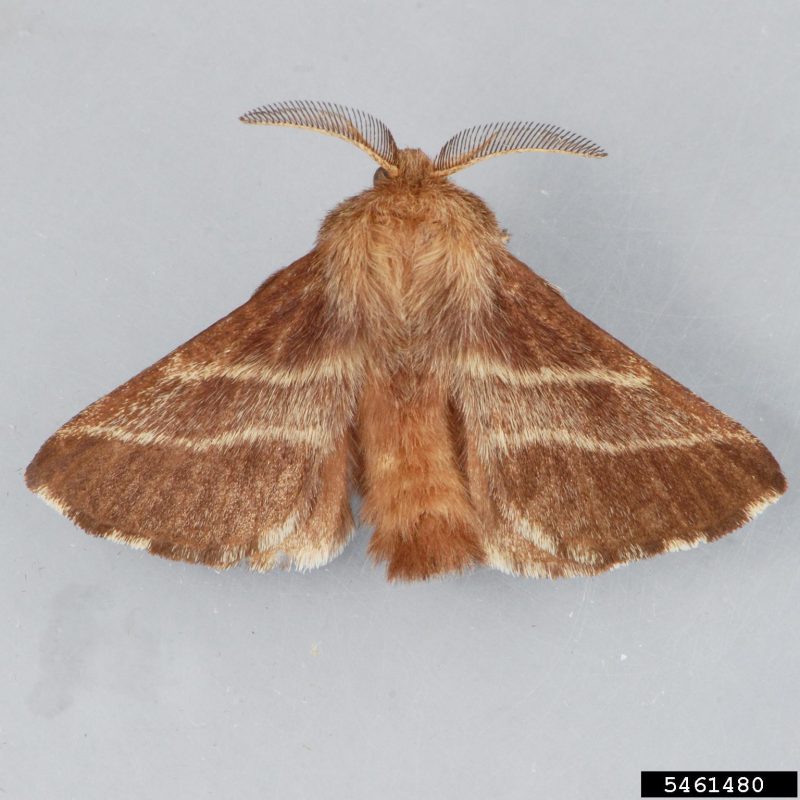
- Adult moths emerge from the cocoon
- Adult moths look very different from butterflies
- They are brown with white markings

Credit: www.butterfliesandmoths.org
Moth Or Butterfly?
Eastern tent caterpillars are fascinating insects. Many wonder if they turn into butterflies or moths.
These caterpillars undergo a transformation. They become adult moths, not butterflies.
Differences Between Moths And Butterflies
Moths and butterflies are both insects. They have some differences that are easy to spot.
- Butterflies are active during the day. Moths are usually active at night.
- Butterflies have clubbed antennae. Moths have feathery or straight antennae.
- Butterflies rest with their wings closed. Moths rest with wings open or spread out.
Eastern Tent Caterpillar Classification
Eastern tent caterpillars belong to the family Lasiocampidae. They are known for their silk tents in trees.
| Order | Lepidoptera |
| Family | Lasiocampidae |
| Genus | Malacosoma |
| Species | Malacosoma americanum |
Surprising Facts About Eastern Tent Caterpillars
Eastern tent caterpillars are common insects found in North America. They are often seen in spring, living in groups inside silk tents.
Many people wonder if these caterpillars turn into butterflies. Actually, they become moths, not butterflies. Their life cycle and behavior are very interesting.
Social Behavior And Tent Building
Eastern tent caterpillars live in groups. They build large silk tents in tree branches. These tents protect them from predators and weather.
The caterpillars leave the tents to find food but return for safety. They communicate by touching and moving together. This social behavior helps them survive.
- Live in groups called colonies
- Build silk tents for protection
- Use tents to stay warm and safe
- Share information by touching each other
- Return to tents after feeding
Impact On Trees And Ecosystems
Eastern tent caterpillars eat leaves from trees like cherry and apple. Large groups can remove many leaves quickly. This defoliation can stress trees.
Despite this, trees usually recover in one season. The caterpillars are food for birds and small mammals. They play a role in the food chain and help balance ecosystems.
- Feed on tree leaves, especially fruit trees
- Can cause temporary leaf loss
- Trees often regrow leaves after caterpillars leave
- Serve as food for birds and animals
- Help keep the ecosystem balanced
Common Misconceptions
Many people confuse Eastern Tent Caterpillars with butterflies. This confusion comes from not knowing their life cycle well. Understanding the differences helps clear up these common mistakes.
In this article, we explain why Eastern Tent Caterpillars do not turn into butterflies. We also describe their true transformation process.
Mistaking Caterpillars For Butterflies
People often think all caterpillars become butterflies. Eastern Tent Caterpillars are no exception to this confusion. They look similar to other caterpillars that do become butterflies.
- Eastern Tent Caterpillars are moth larvae, not butterfly larvae.
- Butterfly caterpillars usually have smooth bodies, while Eastern Tent Caterpillars are hairy.
- Butterflies fly during the day; many moths are active at night.
- Eastern Tent Caterpillars build silk tents in trees, which butterflies do not.
Clarifying The Transformation
Eastern Tent Caterpillars transform into moths, not butterflies. Their life cycle has four stages: egg, larva, pupa, and adult moth.
| Stage | Description |
| Egg | Laid on tree branches in clusters |
| Larva | The caterpillar that builds silk tents |
| Pupa | Inside a cocoon, where transformation occurs |
| Adult | A moth with wings, not a butterfly |
How To Identify Eastern Tent Caterpillars
Eastern tent caterpillars are common in many parts of North America. They are known for making silk tents in tree branches.
Knowing how to spot these caterpillars helps you understand their life cycle and impact on trees.
Physical Characteristics
Eastern tent caterpillars have a unique look that makes them easy to identify. They have hairy bodies with a dark color.
A white stripe runs down the center of their back. Their sides have blue and black markings.
- Length: About 2 inches when fully grown
- Color: Dark brown or black with a white stripe
- Hair: Fine, covering the body
- Head: Shiny and dark brown
Habitat And Seasonal Patterns
Eastern tent caterpillars live mainly in deciduous trees like cherry and apple. They build tents in tree branches early in spring.
Their tents grow as the caterpillars eat leaves. They are most active in spring and early summer before turning into moths.
- Habitat: Deciduous trees, especially fruit trees
- Season: Active in spring and early summer
- Tent location: Branch forks on trees
- Behavior: Group living inside silk tents

Credit: plantwiseplusknowledgebank.org

Credit: medium.com
Frequently Asked Questions
Do Eastern Tent Caterpillars Become Butterflies?
No, Eastern Tent Caterpillars transform into moths, not butterflies. They belong to the moth family and undergo complete metamorphosis.
What Insect Does The Eastern Tent Caterpillar Turn Into?
They develop into the Forest Tent Moth, a brownish moth species. This moth emerges after the caterpillar pupates inside a cocoon.
How Long Is The Eastern Tent Caterpillar Lifecycle?
The lifecycle lasts about one year. It includes egg, caterpillar, pupa, and adult moth stages, with the caterpillar phase in spring.
Are Eastern Tent Caterpillars Harmful To Trees?
Yes, they can defoliate trees, especially cherry and apple trees. However, damage is usually temporary and rarely kills healthy trees.
Conclusion
Eastern tent caterpillars do not turn into butterflies. They grow into moths after their caterpillar stage. This is a common mix-up. Moths and butterflies look alike but belong to different groups. Knowing this helps you understand nature better. Watching these insects change is interesting.
It shows how life cycles work in the wild. Keep observing, and you will learn more about insects. Nature has many surprises waiting for you.