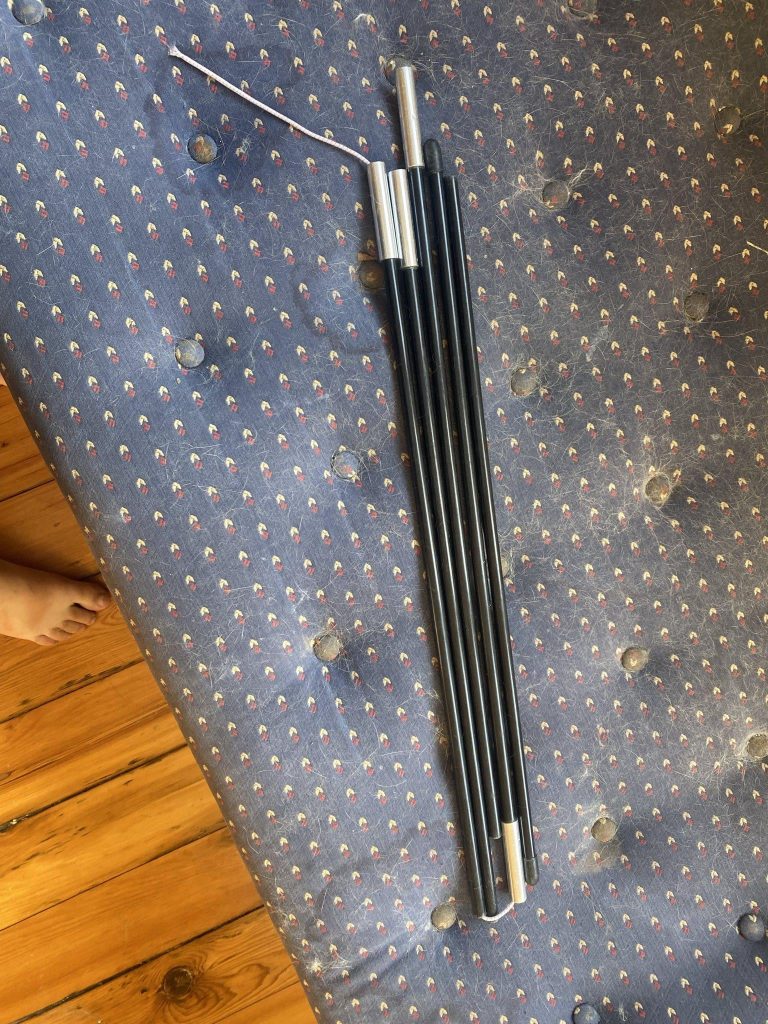
Have you ever struggled with a broken tent pole right before your camping trip? It’s frustrating, isn’t it?
But don’t worry—you can fix it yourself. Learning how to restring a tent pole is easier than you think, and it saves you time and money. In this guide, you’ll discover simple steps to get your tent pole back in shape quickly.
Keep reading, and soon you’ll be ready for your next adventure without any hassle.

Credit: www.reddit.com
Tools And Materials Needed
Restringing a tent pole requires some basic tools and materials. Having the right items ready makes the task easier and faster.
Before you start, gather these essentials to ensure a smooth restringing process.
Replacement Shock Cord
The shock cord holds the tent pole sections together. Choose a strong, stretchy cord that matches the pole length.
Tent Pole Sections
Check your tent pole sections for damage. Replace any broken or bent parts before restringing the cord.
Measuring Tape
A measuring tape helps you cut the shock cord to the right length. Measure the full length of the pole to get an accurate size.
Scissors Or Knife
You need sharp scissors or a knife to cut the shock cord cleanly. A neat cut prevents fraying and makes tying easier.
Lighter Or Tape
Use a lighter to melt the ends of the shock cord. This stops the cord from unraveling. If you prefer, wrap the ends with tape.
Optional: Needle Or Hook
A needle or small hook helps pull the shock cord through the pole sections. This tool is handy if the cord is hard to thread.
- Replacement shock cord
- Tent pole sections
- Measuring tape
- Scissors or knife
- Lighter or tape
- Needle or hook (optional)
Identifying The Problem
Restringing a tent pole can seem tricky, but it is manageable with the right steps. First, you need to identify the issue with your tent pole. This guide will help you locate the problem and assess the condition of the pole and cord.
Understanding the problem is essential for a quick and effective fix. Follow these steps to pinpoint the exact issue.
Locate The Broken Section
Begin by spreading out the tent pole on a flat surface. Look for any visible cracks or breaks. A broken section needs immediate attention.
- Check each segment for visible damage
- Look for splits or cracks in the material
- Ensure all sections are aligned properly
Check The Pole Segments
Next, inspect each segment individually. Make sure they connect smoothly without excessive force. Misaligned segments can indicate hidden damage.
| Segment | Condition |
| Top | Good |
| Middle | Needs Repair |
| Bottom | Good |
Assess The Elastic Cord Condition
The elastic cord inside the pole is crucial for stability. Examine it for signs of wear or loss of elasticity. A worn-out cord can compromise the tent’s structure.
Removing The Old Cord
Restringing a tent pole starts with removing the old cord. This step ensures the pole is ready for a new cord.
Old cords can be worn out or broken. Removing them carefully helps avoid damage to the pole.
Disassemble The Pole
Begin by taking apart the tent pole sections. Lay them flat on a clean surface.
Check for any connectors or joints that hold the sections together. Gently pull them apart to separate each piece.
- Find the end caps or connectors on the pole
- Carefully pull or twist to separate sections
- Keep the pieces in order to make reassembly easier
Extract The Damaged Cord
Look inside each pole section to find the old cord. It usually runs through the center of the pole.
Pull the damaged cord out slowly. If it is stuck, gently work it free without bending the pole.
- Locate the cord end inside the pole
- Pull the cord through each section
- Remove all old cord pieces completely
Choosing The Right Replacement Cord
Replacing a tent pole cord is essential for tent stability. Picking the right cord helps keep the pole strong and flexible.
This guide covers what to look for in cord thickness, elasticity, and length for a proper restring.
Cord Thickness And Elasticity
Choose a cord thick enough to support the tent pole without breaking. The cord should stretch slightly to allow easy assembly and tension.
- Use shock cord with a diameter between 3mm and 5mm for most poles.
- Thinner cords may snap under pressure.
- Too thick cords can make pole segments hard to join.
- Elastic cords help absorb wind and movement.
- Look for cords made with durable rubber or latex inside.
Cord Length Recommendations
The cord length should be slightly shorter than the total pole length. This keeps the pole tight when assembled.
| Pole Length | Recommended Cord Length |
| Up to 3 feet (90 cm) | About 2.5 feet (75 cm) |
| 3 to 6 feet (90 – 180 cm) | About 5.5 feet (165 cm) |
| 6 to 10 feet (180 – 300 cm) | About 9 feet (275 cm) |
| Over 10 feet (300 cm) | Measure pole and subtract 6-10% |
Step-by-step Restringing Process
Restringing a tent pole is simple and keeps your tent sturdy. You need to replace the cord inside the pole sections.
Follow these steps carefully to restring your tent pole correctly and safely.
Threading The Cord Through Sections
Start by removing the old cord from all pole sections. Lay the new cord beside your pole.
Push the cord through each pole section. Make sure the cord goes all the way through without twisting.
- Use a small stick or wire to help push the cord.
- Pull the cord evenly through each section.
- Check that each piece fits tightly together.
Tying Secure Knots
Tie knots at both ends of the cord to keep it from slipping out. Use strong knots that hold well under tension.
Double knot or figure-eight knots work best for this task. Make sure the knots are tight and close to the pole ends.
- Leave a small tail after the knot to prevent slipping.
- Trim any extra cord once the knot is secure.
- Test the knots by pulling gently on the cord.
Adjusting Tension Properly
Pull the cord to tighten the pole sections. The right tension keeps poles strong and easy to assemble.
Do not pull too hard, or the cord may snap. Pull enough to hold the sections firmly together.
- Check tension by bending the pole slightly.
- Adjust the knots if the cord feels loose.
- Test the pole assembly before setting up your tent.

Credit: www.walmart.com
Reassembling The Tent Pole
Reassembling a tent pole after restringing is key to making your tent stand tall. Follow careful steps to fit each part correctly.
This guide covers how to align pole segments and test their strength for a solid setup.
Aligning Pole Segments
Start by laying out all pole segments in order. Make sure the elastic cord runs freely through each piece.
- Match each segment’s ends so they fit snugly.
- Check that the elastic cord is tight but not stretched too much.
- Insert each segment carefully, avoiding sharp bends.
- Align the poles straight to prevent weak spots.
- Secure the last segment by tying a knot or using the pole’s built-in stopper.
Testing Flexibility And Strength
After assembling, test your tent pole’s flexibility and strength. This helps avoid breaks during use.
| Test | How to Do It | What to Check |
| Bend Test | Gently bend the pole in an arc shape | Look for cracks or unusual softness |
| Push Test | Press the pole ends together firmly | Ensure the segments stay connected |
| Elastic Test | Pull the elastic cord slightly | Confirm it returns to normal tension |
Tips For Maintenance And Longevity
Restringing a tent pole is important for keeping your tent strong. Regular care helps the poles last longer. This guide gives tips to maintain your tent poles well.
Taking care of your tent poles means fewer repairs and better camping trips. Follow these simple steps to keep your poles in good shape.
Regular Inspections
Check your tent poles often for cracks, bends, or rust. Look closely at the pole joints and the elastic cord inside. Catching problems early stops bigger damage.
- Look for cracks or splits in the pole sections
- Check the elastic cord for fraying or loss of stretch
- Test pole joints to make sure they fit tightly
- Remove any dirt or debris from the poles
Storage Recommendations
Store tent poles in a dry, cool place away from sunlight. Avoid leaving them in a hot car or damp area. Proper storage keeps poles from warping or weakening.
Use a pole bag or wrap poles loosely with a cloth to protect them. Keep the elastic cord loose by not folding poles too tightly.
- Dry poles completely before storing
- Keep poles away from direct sunlight
- Store poles flat or loosely coiled
- Use a protective bag or sleeve

Credit: www.amazon.co.uk
When To Replace The Entire Pole
Sometimes, restringing a tent pole is not enough. The pole may be too damaged to fix. Knowing when to replace it keeps your tent safe and stable.
Check your tent pole carefully before deciding to restring or replace it. This saves time and ensures your tent stands strong in bad weather.
Visible Cracks Or Splits
If you see cracks or splits along the pole, it is time to replace it. Cracks weaken the pole and can cause it to break during use. Restringing will not fix this damage.
Missing Or Broken Sections
When parts of the pole are missing or broken, replace the entire pole. Even one missing section can make the pole unstable. Restringing cannot add new pieces.
Severe Bending Or Warping
Poles bent or warped out of shape lose their strength. If the pole does not return to its original shape, replace it. Warped poles can cause your tent to collapse.
Damaged Or Missing Shock Cord
The shock cord holds the pole sections together. If the cord is frayed or missing, restringing might help. But if the cord is beyond repair or the pole is old, replacing the pole is better.
Signs Of Rust Or Corrosion
Rust or corrosion weakens metal poles. If you see rust, test the pole’s strength. Replace it if it feels weak or brittle. Rust can spread and cause failure.
Comparison Of Restringing Vs Replacing
| Condition | Restringing | Replacing |
| Minor cord damage | Yes | No |
| Cracked or split pole | No | Yes |
| Missing sections | No | Yes |
| Bent or warped pole | No | Yes |
| Rust or corrosion | No | Yes |
| Old or worn pole | No | Yes |
Frequently Asked Questions
How Do I Know When To Restring A Tent Pole?
You should restring a tent pole if the elastic cord inside breaks or loses tension. This prevents the pole from collapsing. Regular inspection helps catch damage early and ensures your tent remains stable during use.
What Tools Are Needed To Restring A Tent Pole?
You only need basic tools like a new elastic cord, scissors, and a safety pin or needle. These help thread the cord through the pole sections efficiently. No specialized equipment is required for restringing.
Can I Use Any Elastic Cord For Tent Poles?
Use strong, durable shock cord designed for tent poles. Avoid thin or weak cords as they may snap easily. Proper cord ensures your pole stays flexible and secure under tension.
How Long Does It Take To Restring A Tent Pole?
Restringing a tent pole typically takes 15 to 30 minutes. The time depends on your experience and the pole’s length. Patience is key to threading the cord correctly without damaging the pole.
Conclusion
Restringing a tent pole takes patience and simple steps. Always use the right cord length for a strong hold. Keep the pole sections aligned as you work. Check your work carefully before setting up the tent. This skill helps you fix poles and enjoy camping more.
Practice a few times to feel comfortable. Soon, restringing will become quick and easy. Ready for your next outdoor adventure? Your tent will stand strong with a well-restrung pole.