Are you struggling to connect two fishing lines without losing strength or risking a knot that slips? Knowing how to join fishing lines together properly can make a huge difference in your fishing experience.
Whether you’re combining different line types or just need a longer line, the right technique will keep your setup strong and reliable. You’ll discover simple, effective methods to tie your lines perfectly every time. Keep reading to learn the secrets that will help you fish smarter and catch more.
Choosing The Right Knot
Joining two fishing lines requires the right knot for strength and reliability. Different types of lines need specific knots to hold well.
This guide explains the best knots for monofilament, fluorocarbon, and braided lines. Using the right knot improves your fishing experience.
Knots For Monofilament Lines
Monofilament lines are stretchy and smooth. Knots that slide and tighten well work best with this type of line.
- Double Uni Knot: Strong and easy to tie with monofilament.
- Berkley Braid Knot: Also works well on monofilament lines.
- Blood Knot: Ideal for joining similar diameter lines.
Knots For Fluorocarbon Lines
Fluorocarbon lines are stiff and less flexible. Use knots that grip tightly without slipping or weakening the line.
| Knot Name | Best Use | Strength |
| Double Uni Knot | Joining fluorocarbon to fluorocarbon | High |
| Albright Knot | Connecting fluorocarbon to braided line | Strong |
| Blood Knot | Similar diameter fluorocarbon lines | Good |
Knots For Braided Lines
Braided lines are thin and very strong. Knots for these lines must hold without slipping and keep strength.
Recommended knots for braided lines:
- Palomar Knot: Simple and maintains high strength.
- Double Uni Knot: Good for joining braided to other lines.
- FG Knot: Advanced knot for braided to fluorocarbon.

Credit: www.youtube.com
Preparing The Lines
Joining two fishing lines is an essential skill for anglers. It ensures a secure and strong connection.
Before tying knots, proper line preparation is key. Let’s explore the steps you need.
Trimming And Aligning
Trimming and aligning the lines is crucial for a smooth knot. This helps in avoiding tangles.
- Use sharp scissors or a line cutter for clean ends.
- Align both lines side by side before tying.
- Ensure there are no twists in the lines.
Moistening For Better Grip
Moistening the lines helps in reducing friction. It makes tightening the knot easier and more secure.
Step-by-step Knot Instructions
Joining two fishing lines is a common task for anglers. Using the right knot keeps your line strong and secure. Below are easy instructions for four popular knots.
Follow these steps carefully to tie each knot correctly. Practice will improve your speed and confidence.
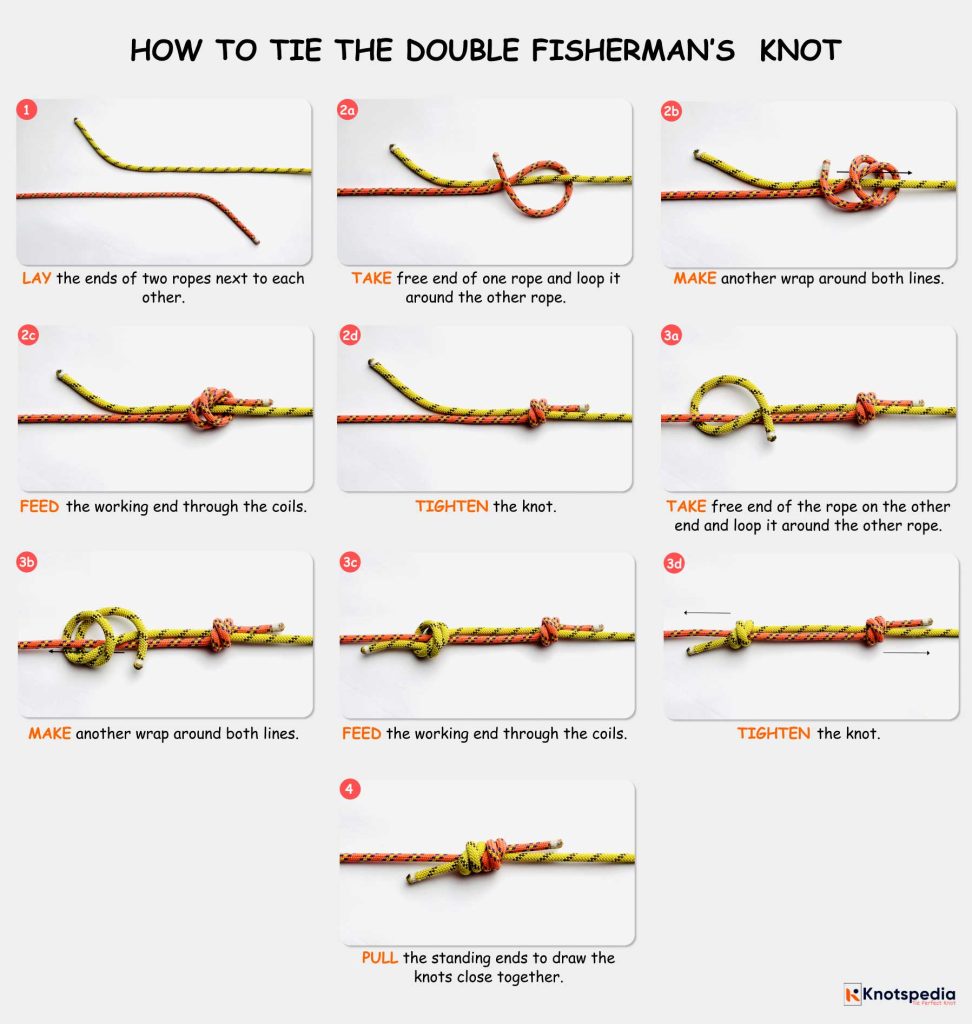
Double Uni Knot
The Double Uni Knot is strong and simple. It works well for lines of different diameters.
- Overlap the ends of the two lines by 6 inches.
- Make a loop with the first line over both lines.
- Wrap the tag end around both lines five times.
- Pass the tag end through the loop and pull tight.
- Repeat the same steps with the second line.
- Pull both standing lines to slide the knots together.
- Trim the tag ends close to the knots.
Blood Knot
The Blood Knot is good for joining similar-sized lines. It forms a slim, strong connection.
| Action | Description |
|---|---|
| Step 1 | Overlap lines about 8 inches. |
| Step 2 | Wrap one tag end around the other line 5 times. |
| Step 3 | Pass tag end back between the lines. |
| Step 4 | Repeat with the other tag end in the opposite direction. |
| Step 5 | Moisten and pull the standing lines to tighten. |
| Step 6 | Trim excess tag ends close to the knot. |
Albright Knot
The Albright Knot joins two lines with different thickness. It is popular for connecting braid to monofilament.
- Make a loop in the thicker line.
- Pass the thinner line through the loop from the bottom.
- Wrap the thinner line around both parts of the loop 10 times.
- Pass the thinner line back through the loop from the top.
- Moisten the knot and pull both lines slowly to tighten.
- Trim the tag ends close to the knot.
Surgeon’s Knot
The Surgeon’s Knot is easy to tie and works well with slippery lines. It is a reliable choice for quick line joining.
- Overlap the two lines by 6 inches.
- Make a simple overhand knot with both lines together.
- Pass the tag ends through the knot a second time.
- Moisten the knot and pull all four ends evenly to tighten.
- Trim the tag ends close to the knot.

Credit: www.ohero.com
Testing Knot Strength
Joining two fishing lines tightly is important for a strong connection. Testing the knot strength ensures it will hold under pressure.
Check the knot carefully before fishing. You want it to be secure and safe to use.
Visual Inspection
Look closely at the knot to see if it is tied correctly. Make sure the lines lie flat and do not twist.
Check for any gaps or loose parts. The knot should be tight and neat without frayed ends.
- Lines should lie smoothly next to each other
- No overlaps or twists in the knot
- No damaged or worn line near the knot
- The knot should look compact and firm
Tensile Testing
Pull on the lines slowly to test how strong the knot is. Use steady force without sudden jerks.
The knot should hold firm and not slip or break. If it slips, retie the knot more tightly.
- Hold both ends of the line firmly
- Pull slowly to feel resistance
- Stop if the knot slips or loosens
- Repeat testing a few times to be sure
Tips For Knot Durability
Joining two fishing lines securely is key to a strong connection. A durable knot prevents breaks and lost fish.
Use the right techniques to keep your knots tight and long-lasting. Small habits help avoid damage.
Avoiding Line Damage
Damaged lines weaken knots quickly. Handle lines gently to keep them strong.
- Do not pull the line harshly when tying
- Keep the line clean and dry before knotting
- Cut frayed ends before making knots
- Avoid sharp bends in the line near the knot
- Use proper scissors or cutters to prevent crushing the line
Proper Knot Tightening
Tighten your knot evenly to stop slipping. Uneven tightening causes weak points.
| Step | Action |
| 1 | Wet the knot before tightening |
| 2 | Pull both ends slowly and evenly |
| 3 | Check for any twists or overlaps |
| 4 | Secure the knot firmly without extra force |
| 5 | Trim excess line close to the knot |
Regular Knot Maintenance
Check your knots often during fishing. Repair or re-tie if needed.
- Inspect knots after catching a fish
- Retighten knots if they feel loose
- Replace knots if the line looks worn
- Keep spare line and tools ready for quick fixes

Credit: www.wikihow.com
Common Mistakes To Avoid
Joining two fishing lines is simple if done right. Many anglers make avoidable errors that weaken their setup.
Knowing common mistakes helps keep your lines strong and ready for a catch.
Incorrect Knot Selection
Using the wrong knot can cause the lines to slip or break. Not all knots work well for every line type.
Choose knots designed for joining lines, like the Blood Knot or Double Uni Knot. Avoid simple knots that are weak.
- Blood Knot: Strong for similar diameter lines
- Double Uni Knot: Works well for different lines
- Surgeon’s Knot: Easy but less strong
Overtightening Or Loosening
Tightening knots too much can damage the line and cause breaks. Too loose knots may slip and fail.
Pull knots firmly but gently until snug. Check knots for tightness and trim excess tag ends carefully.
Ignoring Line Compatibility
Joining lines with very different materials or thicknesses can weaken the connection. Lines need to work well together.
Match line types like monofilament to monofilament or braid to braid when possible. Use special knots if joining different types.
- Monofilament to monofilament: Easy to knot
- Braid to braid: Needs careful knotting
- Braid to monofilament: Use Double Uni Knot
Frequently Asked Questions
How Do I Join Two Fishing Lines Securely?
To join two fishing lines securely, use strong knots like the Double Uni or Blood Knot. Wet the lines before tightening to prevent friction damage. Trim excess ends for a neat finish. This ensures a reliable connection and prevents line slippage during fishing.
What Is The Best Knot To Join Fishing Lines?
The Double Uni Knot is often the best for joining fishing lines. It works well with different line types and thicknesses. The knot is strong, easy to tie, and maintains line strength. It’s ideal for both monofilament and fluorocarbon lines.
Can I Join Braided And Monofilament Lines Together?
Yes, you can join braided and monofilament lines using a Double Uni or Albright Knot. These knots accommodate different line materials and diameters effectively. Wet the knot before tightening to avoid damage and improve knot strength.
How Do I Prevent Line Slippage When Joining Lines?
Prevent line slippage by properly wetting the lines before tightening the knot. Use reliable knots like the Double Uni or Blood Knot. Ensure the knot is tightly cinched and trim excess ends neatly. This increases knot security and fishing line strength.
Conclusion
Joining two fishing lines takes practice and patience. Use the right knot to keep the lines strong. Wet the knot before tightening for a better hold. Always check your work to avoid losing fish. With simple steps, your fishing lines will join smoothly.
Keep practicing, and fishing will become more enjoyable. Remember, a good connection means a better catch. Try these tips on your next fishing trip. Stay calm, be patient, and enjoy the process.