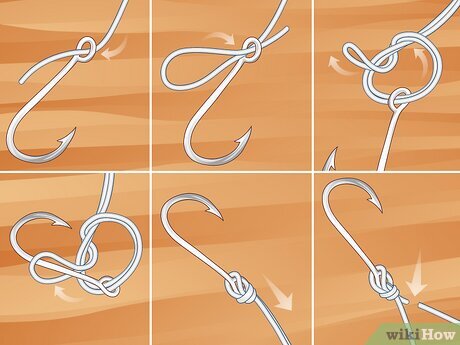
Are you tired of losing fish because your hook slips off the line? Learning how to tie a fishing hook on your line the right way can make all the difference between a great catch and a frustrating day by the water.
In this guide, you’ll discover simple, step-by-step methods to secure your hook fast and strong. Once you master these techniques, you’ll feel more confident, catch more fish, and enjoy every moment of your fishing trip. Keep reading to unlock the secrets that can turn your fishing game around!

Credit: www.ohero.com
Choosing The Right Knot
Tying a fishing hook securely is important for a good catch. The knot must be strong and easy to tie.
Choosing the right knot depends on the type of fishing line and the kind of fish you want to catch.
Popular Knot Types
There are many knots used by anglers. Some knots are simple, while others offer extra strength.
- Improved Clinch Knot: A common knot for tying hooks and lures.
- Palomar Knot: Known for its strength and ease of tying.
- Uni Knot: Versatile and good for many types of lines.
- Snell Knot: Ideal for attaching a hook when using bait.
Each knot has its own benefits. Choose one based on your fishing style and line type.
Knots For Different Fishing Lines
Different fishing lines need different knots. Some knots work better with certain materials.
- Monofilament Line: Works well with Improved Clinch and Uni knots.
- Fluorocarbon Line: Use Palomar or Uni knots for best results.
- Braid Line: Palomar and Snell knots hold strong with braided lines.
Match your knot to your line type for strong, reliable fishing connections.

Credit: www.youtube.com
Preparing The Fishing Line
Tying a fishing hook to a line is a vital skill. Proper preparation ensures a strong and reliable knot. Let’s look at the steps involved in preparing your fishing line for this task.
Preparation involves trimming and moistening the line, which helps in creating a secure knot. These steps are essential for successful fishing.
Trimming The Line
Trimming the line is important before tying the hook. This step ensures a neat and tidy end for knotting.
Use a sharp pair of scissors or line cutters. Cut the line straight to avoid fraying. A clean cut makes knotting easier and more secure.
- Use sharp scissors or cutters
- Trim the line straight
- Avoid frayed edges
Moistening The Line
Moistening the line is crucial before tying a knot. This reduces friction and heat when tightening the knot.
Simply wet the line with water or saliva. This makes the knotting process smoother and helps in creating a tighter knot.
- Wet the line with water or saliva
- Ensure the line is damp, not soaking
- Helps in smooth knot tightening
Tying The Improved Clinch Knot
The Improved Clinch Knot is a strong way to tie a fishing hook to your line. It works well with most fishing lines and hooks.
This knot keeps your hook secure and helps prevent the line from slipping. It is popular among many anglers.
Step-by-step Instructions
Follow these simple steps to tie the Improved Clinch Knot properly.
- Thread the line through the eye of the hook.
- Wrap the loose end around the standing line 5 to 7 times.
- Pass the loose end through the small loop near the hook eye.
- Then, pass it back through the big loop you just made.
- Wet the knot with water or saliva.
- Pull the loose end and standing line slowly to tighten the knot.
- Trim the excess loose end close to the knot.
Tips For A Secure Knot
Use these tips to make sure your knot stays strong and does not slip.
- Always wet the line before tightening. This reduces friction and prevents damage.
- Make sure you wrap the line enough times (5 to 7) for a strong hold.
- Tighten the knot slowly and evenly to avoid twisting the line.
- Check the knot before fishing to ensure it is tight and neat.
- Trim the tag end close, but leave a small bit to avoid slipping.

Credit: n1outdoors.com
Tying The Palomar Knot
The Palomar knot is a strong and simple way to tie a fishing hook to your line. It works well with most types of fishing lines.
This knot keeps your hook secure and is easy to tie even for beginners. Follow the steps carefully to get it right.
Step-by-step Instructions
First, double about six inches of line and pass it through the eye of the hook.
Next, tie a loose overhand knot with the doubled line, leaving the hook hanging below.
Then, pass the loop of the doubled line over the hook.
Pull both the tag end and main line to tighten the knot snug against the hook eye.
- Double six inches of line and pass through hook eye
- Tie a loose overhand knot with the doubled line
- Pass the loop over the hook
- Pull both ends to tighten the knot
Common Mistakes To Avoid
Do not use a knot that is too loose or too tight before passing the loop over the hook. This can cause the knot to fail.
Avoid not doubling enough line. Too little line makes the loop hard to pass over the hook.
- Not doubling enough line to make the loop
- Tying the overhand knot too tight before passing the loop
- Failing to wet the line before tightening, causing friction damage
- Not pulling the ends evenly to secure the knot
Testing Knot Strength
After tying a fishing hook on the line, testing the knot strength is important. It helps ensure the knot will not slip or break.
Testing the knot before fishing can save you from losing fish and gear. Use simple methods to check the knot’s reliability.
How To Pull Test
Hold the hook and line firmly. Pull both ends slowly and steadily. This checks if the knot holds under pressure.
Try to feel any slipping or loosening while pulling. A strong knot should stay tight and not move.
- Pull the hook and line in opposite directions
- Apply steady force without jerking
- Stop if the knot slips or loosens
- Retie if the knot feels weak
Signs Of A Weak Knot
Look for twists or gaps in the knot. These may show the knot is not secure and can fail easily.
Also, check if the line moves inside the knot or if the knot changes shape when pulled.
- Visible gaps between the wraps
- Line slips inside the knot
- Knot becomes loose under tension
- Uneven or twisted wraps
- Frayed or damaged line at the knot
Maintaining Knots On The Line
Tying a fishing hook on the line is important for a strong catch. Keeping knots tight helps stop the hook from slipping.
Good knots last longer and avoid losing fish. You need to care for your knots to keep them strong.
When To Retie
Retie your hook if the knot looks loose or worn out. Check knots before every fishing trip to stay safe.
If you feel the knot slip when pulling the line, retie it right away. A weak knot can break and lose your catch.
- After catching a big fish
- When the line frays near the knot
- If knots get wet and then dry
- When the knot feels loose or uneven
Preventing Line Damage
Protect your fishing line to keep knots strong. Avoid sharp bends or rough surfaces that can cut or weaken the line.
Use wet hands when tying knots to reduce friction. Dry knots can weaken the line and cause breaks.
- Use a smooth hook eye to tie knots
- Keep the line clean and free from dirt
- Do not pull knots too hard when tying
- Store fishing gear away from sunlight
Frequently Asked Questions
How Do I Tie A Fishing Hook On The Line?
To tie a fishing hook, thread the line through the hook eye. Wrap the tag end around the main line 5-7 times. Pass the tag end through the loop near the eye. Pull tight to secure a strong knot.
What Is The Best Knot For Fishing Hooks?
The Improved Clinch Knot is best for fishing hooks. It’s strong, easy to tie, and holds well. This knot works well with most fishing lines and hook sizes, making it versatile for various fishing conditions.
Can I Tie A Fishing Hook Without Tools?
Yes, you can tie a fishing hook without tools. Use your fingers to wrap the line and pull the knot tight. Practice helps improve knot strength and speed without needing extra tools.
How Tight Should I Pull The Fishing Knot?
Pull the knot firmly but not excessively tight. Tighten until the knot is snug and secure on the hook eye. Over-tightening can weaken the line or damage the knot’s integrity.
Conclusion
Tying a fishing hook on the line is simple with practice. Use clear steps and take your time. A strong knot keeps your hook secure and fish on the line. Try different knots to find what works best. Keep your line tight and check the knot often.
Fishing becomes more fun when your gear is ready. Now, you can tie hooks confidently and enjoy your fishing trips more. Keep practicing, and soon it will feel natural.