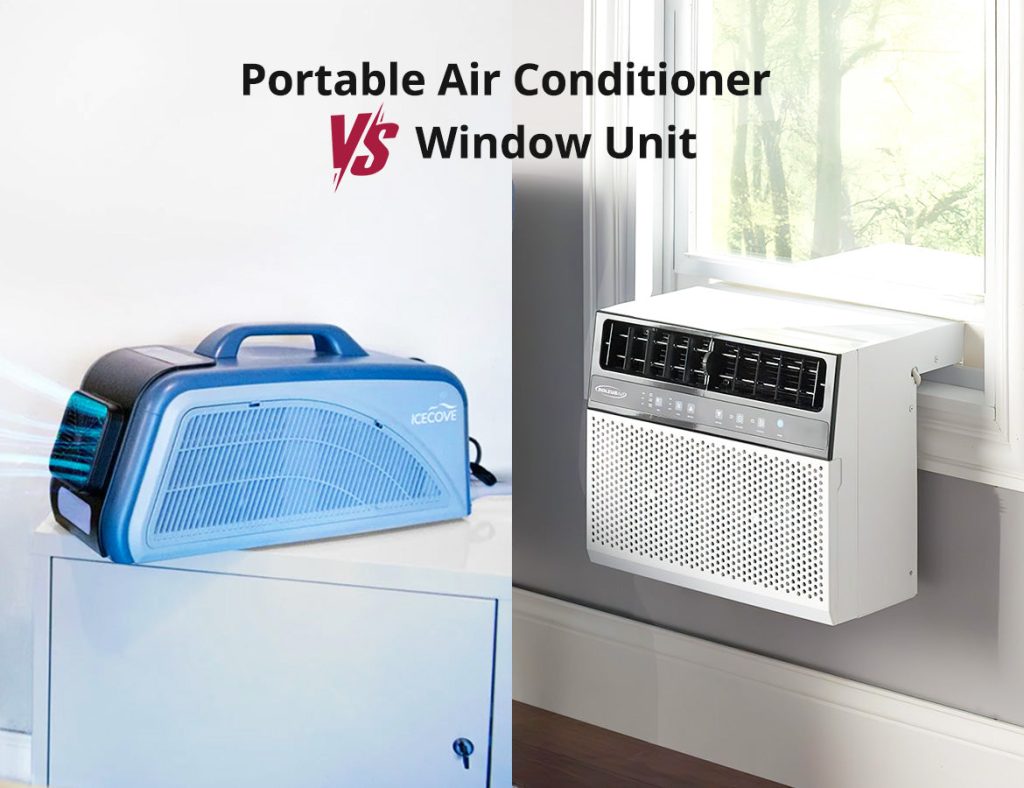
Are you struggling to decide between a portable air conditioner and a window unit? Choosing the right cooling solution can make a huge difference in your comfort and energy bills.
You might think portable ACs are easier to move, while window units are more powerful—but is that really true? This article will clear up the confusion and help you find the best option for your space and lifestyle. Keep reading to discover which air conditioner fits your needs perfectly.

Credit: www.cnet.com
How Portable Acs Work
Portable air conditioners cool a room by drawing in warm air, removing heat, and releasing it outside through a vent. Window units also remove heat but fit directly in the window, often cooling more efficiently. Both have pros and cons depending on space and use.
Cooling Mechanism
Portable air conditioners cool air by removing heat and moisture. They draw warm air from the room, pass it over cold coils, and blow the cool air back inside. The heat extracted is pushed outside through a vent hose. This helps lower the room temperature and reduces humidity.
Installation Process
- Place the unit near a window or door.
- Attach the exhaust hose to the back of the AC.
- Use the window kit to seal the window opening around the hose.
- Plug in the unit and turn it on.
This setup is simple and does not need permanent changes to your home.
How Window Units Work
Window air conditioners cool a room by pulling warm air inside. The warm air passes over cold coils. This process removes heat and moisture from the air. The cooled air is then blown back into the room. The heat removed is pushed outside through the back of the unit.
The unit uses a fan and a refrigerant to move heat. The refrigerant changes from liquid to gas and back. This change helps absorb heat from inside and release it outside.
- Window units need a window or a hole in the wall.
- They are placed on the window sill or wall opening.
- Seals around the unit stop warm air from entering.
- Some have brackets to hold the unit firmly.
- Installation is usually done without tools, but some may need screws.
Cooling Efficiency Comparison
Portable air conditionersusually use more energythan window units. They need extra power to move hot air through a hose. Window units cool rooms by pushing hot air outside directly. This makes them more energy efficient.
In terms of cooling power, window units often cool larger spaces better. Portable units work well in small rooms but may struggle in bigger areas. Also, window units tend to cool faster because they blow cold air directly inside.
| Feature | Portable Air Conditioners | Window Units |
|---|---|---|
| Energy Consumption | Higher due to exhaust hose | Lower, more direct cooling |
| Cooling Power | Good for small rooms | Better for large rooms |
| Cooling Speed | Slower | Faster |

Credit: www.popularmechanics.com
Portability And Space
Portable air conditionerscan be moved from room to room easily. This makes them great for renters or people who like to change their room setup often. They usually come with wheels or handles for quick relocation.
Window unitsstay fixed once installed. They need a window to work and are harder to move around. This limits their use to one spot.
| Type | Space Needed | Installation |
|---|---|---|
| Portable AC | Needs floor space, about 1-2 sq ft | Simple, just plug in and vent |
| Window Unit | Occupies window space, less floor space | Requires mounting in a window |
Noise Levels
Portable air conditioners usually produce more noise than window units. Typical sound levels range from 50 to 60 decibels, similar to a normal conversation or background music. Window units are often quieter, with noise around 40 to 50 decibels.
The noise comes from the compressor and fan inside the unit. Portable ACs have all parts inside the room, which makes noise more noticeable. Window units have some parts outside, reducing indoor noise.
Noise levels can affect comfort, especially in bedrooms or study rooms. Louder sounds may disturb sleep or concentration. Quieter units help maintain a peaceful environment.
Cost Factors
Portable air conditionersusually cost more upfront than window units. Window units often have a lower price range. The price depends on size and cooling power. Portable units include extra parts like a hose for venting. This can increase the initial cost slightly.
Operating costs differ too. Portable air conditioners often use more electricity. This is because they move hot air out through a hose. Window units are generally more energy-efficient. They cool the room with less power.
| Cost Factor | Portable Air Conditioner | Window Unit |
|---|---|---|
| Initial Purchase Price | Higher due to venting parts and design | Lower, simpler design |
| Operating Costs | Usually higher electricity use | Generally lower electricity use |
Maintenance And Durability
Portable air conditioners need regular cleaningto work well. Filters should be washed every two weeks to remove dust. The water tank must be emptied often to stop mold. Dirt and dust can block airflow and reduce cooling.
Window units also require cleaning, but usually less often. Their filters are bigger and easier to clean. Both types need care to keep running smoothly.
| Type | Cleaning Frequency | Common Maintenance | Durability |
|---|---|---|---|
| Portable AC | Every 2 weeks | Empty water tank, clean filters | 3-5 years |
| Window Unit | Every 1-2 months | Clean filters, check seals | 5-10 years |
Portable units usually last 3 to 5 years. Window units last longer, around 5 to 10 years. The durability depends on usage and care. Both need good upkeep to avoid damage.

Credit: www.garvee.com
Ideal Use Cases
Portable air conditionerswork best in rooms that are small to medium-sized. They are easy to move, making them perfect for renters or people who change rooms often. Portable ACs need a window or vent for the hot air to go out. They are good for spaces where installing a window unit is not allowed or possible.
| Best Settings for Portable ACs | Best Settings for Window Units |
|---|---|
| Set fan speed to medium for quiet cooling | Use high fan speed for fast cooling |
| Keep temperature around 75°F for comfort | Set temperature to 72-74°F for efficient cooling |
| Use dehumidifier mode on humid days | Use energy saver mode to save power |
| Place near a window for proper venting | Ensure window seal is tight to prevent air leaks |
Frequently Asked Questions
What Are The Pros Of Portable Air Conditioners?
Portable air conditioners are easy to install and move. They don’t require permanent installation, making them ideal for renters. Their compact design suits small spaces. Additionally, they are versatile and can be used in different rooms as needed. Maintenance is also generally simpler compared to window units.
Do Portable Ac Units Cool Effectively?
Portable AC units effectively cool small to medium-sized rooms. They work best in spaces with good insulation. While they may not match the power of window units, they offer flexibility. For optimal performance, ensure proper venting and maintenance. Regular cleaning helps maintain their efficiency.
Are Portable Ac Units Energy Efficient?
Portable AC units can be energy efficient, but it varies. Look for units with an Energy Efficiency Ratio (EER) rating. Higher ratings indicate better efficiency. Regular maintenance and proper usage enhance energy efficiency. Ensure the unit is suitable for your room size to maximize energy savings.
How Do Portable Ac Units Compare In Cost?
Portable AC units are generally more affordable upfront than window units. However, their operating costs might be higher. Consider the EER rating for energy costs. Maintenance and repair can also affect long-term expenses. Evaluate both purchase and operational costs when deciding.
Conclusion
Portable air conditioners offer flexibility and easy setup. Window units often cool rooms more efficiently. Both have their strengths depending on your needs. Portable units suit renters or those moving often. Window units save space and usually cost less to run.
Think about your room size and budget first. Choose the option that fits your lifestyle best. Either way, you can stay cool this summer.