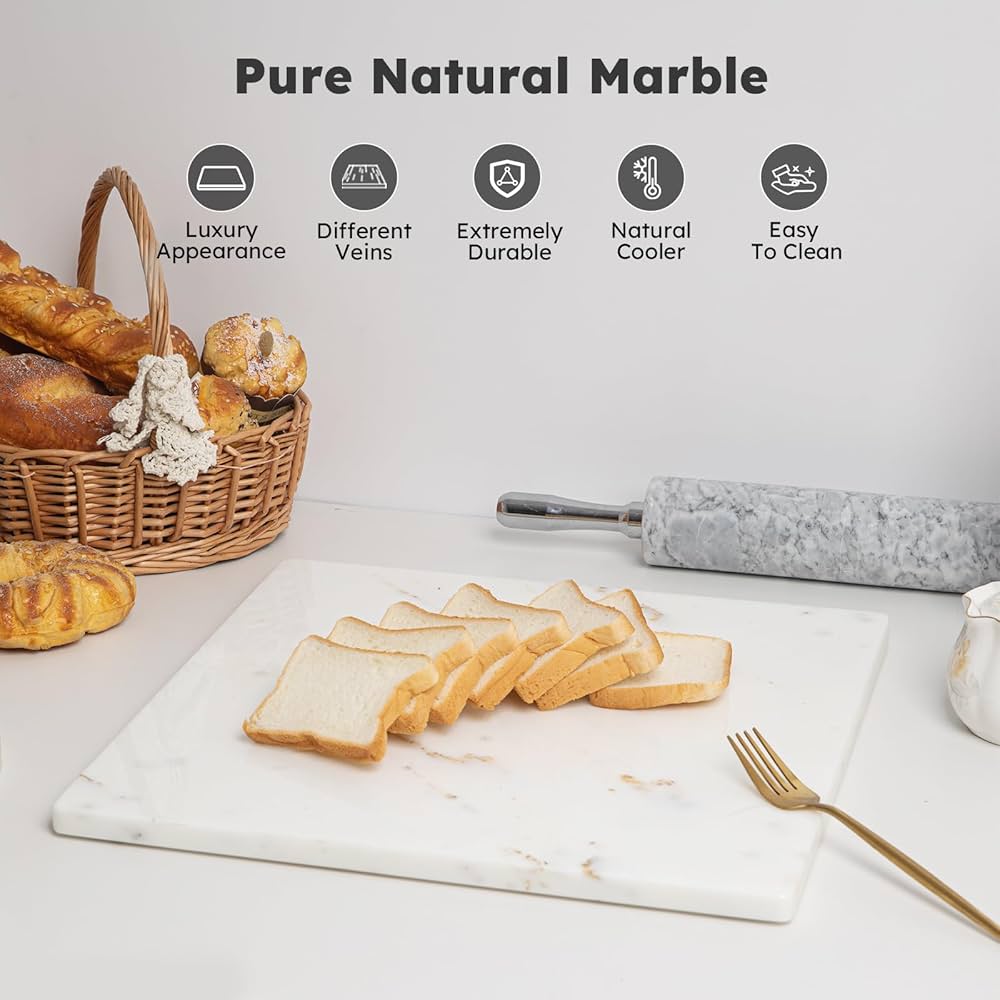
Are you wondering if stone cutting boards are a good choice for your kitchen? Choosing the right cutting board is more important than you might think.
It affects not only how easy it is to prepare your meals but also the cleanliness and safety of your food. Stone cutting boards have a unique look and feel, but are they practical for everyday use? You’ll discover the pros and cons of stone cutting boards, helping you decide if they fit your cooking style and needs.
Keep reading to find out if this sturdy option is the right upgrade for your kitchen.

Credit: www.amazon.com
Benefits Of Stone Cutting Boards
Stone cutting boards are a popular choice in many kitchens. They offer unique benefits that can make food preparation easier and safer.
Understanding these benefits can help you decide if a stone cutting board is right for your cooking needs.
Durability And Longevity
Stone cutting boards last a long time because they resist scratches and dents. They do not wear down easily.
With proper care, a stone board can stay strong for many years without losing its shape.
Non-porous Surface
Stone cutting boards have a non-porous surface that does not absorb liquids. This helps keep food safe from bacteria.
The smooth surface also makes cleaning easy and prevents stains from setting in.
Aesthetic Appeal
Stone cutting boards add a natural and elegant look to your kitchen. They come in various colors and patterns.
Their unique appearance can enhance the style of your countertop and kitchen space.
Heat Resistance
Stone cutting boards can handle high temperatures without damage. You can place hot pots or pans on them safely.
This heat resistance makes stone boards practical for many kitchen tasks beyond cutting.

Credit: www.amazon.com
Drawbacks Of Stone Cutting Boards
Stone cutting boards look elegant and strong in kitchens. They have some downsides that can affect daily use.
It is important to know these drawbacks before choosing a stone board for cutting tasks.
Weight And Portability Issues
Stone cutting boards are very heavy compared to wood or plastic. Moving them around is hard.
This weight makes cleaning and storing more difficult. Carrying a stone board can tire your hands quickly.
Potential To Dull Knives
Stone surfaces are hard and rough. This can make your knives lose their sharp edge faster.
- Hard stone scratches knife blades
- Knife edges may chip or bend more quickly
- Requires frequent sharpening of knives
Maintenance Challenges
Stone boards need careful cleaning to avoid stains and damage. They are not easy to maintain.
| Maintenance Task | Difficulty Level | Reason |
|---|---|---|
| Cleaning | High | Stone absorbs liquids and stains |
| Drying | Medium | Needs full drying to avoid mold |
| Sealing | High | Requires special sealants to protect surface |
Cost Considerations
Stone cutting boards usually cost more than wood or plastic boards. This can be a big factor for buyers.
Buying, maintaining, and replacing stone boards may cost more over time.
Stone Vs Other Cutting Board Materials
Stone cutting boards are popular for their durability and style. Many people want to know how they compare to other materials.
This guide looks at stone boards and compares them with wood, plastic, and bamboo boards. Each type has its own strengths and weaknesses.
Comparison With Wood Boards
Wood boards are soft and gentle on knives. They absorb some impact, which helps keep blades sharp. Stone boards are very hard and may dull knives faster.
Wood boards can be repaired by sanding and are less likely to crack. Stone boards are harder to fix and may chip if dropped.
- Wood is knife-friendly, stone can dull knives
- Wood can be sanded; stone cannot
- Stone is more resistant to stains and water
- Wood boards need more maintenance than stone
Comparison With Plastic Boards
Plastic boards are lightweight and easy to clean. They often come in many colors for different uses. Stone boards are heavier and harder to move.
Plastic can get scratched and hold bacteria if not cleaned well. Stone boards do not absorb liquids and are more hygienic but can be slippery.
- Plastic is light; stone is heavy
- Plastic can scratch and stain; stone resists stains
- Stone feels cold and hard; plastic feels softer
- Stone is more hygienic but less forgiving to knives
Comparison With Bamboo Boards
Bamboo boards are eco-friendly and harder than wood but softer than stone. They are less prone to water damage than wood but can still wear out over time.
Stone boards last longer and resist stains better. Bamboo is lighter and easier on knives. Stone boards need careful handling to avoid chips.
- Bamboo is renewable and lighter than stone
- Stone is very durable and stain-resistant
- Bamboo is gentle on knives; stone is hard on blades
- Stone boards require more careful handling

Credit: www.amazon.com
Expert Tips For Using Stone Cutting Boards
Stone cutting boards look stylish and last long in your kitchen. They are strong and easy to clean.
Using stone cutting boards the right way keeps them safe and your knives sharp.
Proper Cleaning Techniques
Clean stone cutting boards after each use to stop bacteria. Use warm water and mild soap.
Avoid harsh chemicals and rough scrubbers that can damage the stone’s surface.
- Rinse with warm water
- Use soft sponge or cloth
- Dry completely before storing
- Do not soak in water
Best Practices For Knife Care
Stone boards can dull knives faster than wood or plastic boards. Use care to keep knives sharp.
Cut gently and avoid chopping hard materials on the stone surface.
- Use sharp knives to reduce pressure
- Cut at a slight angle, not straight down
- Sharpen knives often
- Consider using a plastic or wood board for daily chopping
Choosing The Right Stone Type
Not all stone cutting boards are the same. Some stones are harder and more durable.
Pick a stone type that fits your kitchen needs and knife care habits.
- Granite: Very hard and durable, but can dull knives faster
- Marble: Softer than granite, looks elegant, but can scratch easily
- Soapstone: Softer and gentler on knives, but less durable
- Quartz: Hard and non-porous, resists stains and bacteria
When To Choose A Stone Cutting Board
Stone cutting boards are strong and last a long time. They are different from wood or plastic boards.
Choosing a stone board depends on your cooking style and what you cut most often.
Ideal Uses In The Kitchen
Stone boards work well for cutting hard foods. They do not get scratched easily.
Use them for chopping vegetables, fruits, and bread. They are good for serving cheese and charcuterie too.
- Cutting hard vegetables like carrots and squash
- Slicing bread without crushing it
- Serving cheese and cold cuts
- Rolling dough or pastry
Suitability For Different Cooking Styles
Stone boards suit cooks who want a sturdy surface. They handle heavy use without damage.
They are good for styles that use sharp knives and precise cuts. They keep their shape and stay flat.
- Good for chefs who use knives often
- Works well for baking and pastry making
- Not ideal for delicate slicing that needs a softer board
- Best for casual cooking and food presentation
Frequently Asked Questions
Are Stone Cutting Boards Durable?
Yes, stone cutting boards are highly durable and resistant to scratches. They are made from materials like granite, marble, or slate, which are known for their strength. However, they can be heavy and may dull knives faster than other materials.
Regular maintenance ensures their longevity and performance.
Do Stone Cutting Boards Damage Knives?
Stone cutting boards can dull knives faster than wood or plastic. The hardness of stone can cause knife edges to lose sharpness quickly. To preserve your knives, consider using a softer cutting board for daily tasks. Regularly sharpening your knives can also help maintain their effectiveness when used on stone.
Are Stone Cutting Boards Hygienic?
Stone cutting boards are hygienic if properly maintained. They are non-porous, which helps prevent bacteria absorption. Regular cleaning with mild soap and water keeps them sanitary. Unlike wood, stone doesn’t harbor bacteria, making it a safe choice for food preparation.
However, avoid using abrasive cleaners that can damage the surface.
How To Clean Stone Cutting Boards?
Cleaning stone cutting boards is simple. Use warm water and mild dish soap to wash the surface. Avoid abrasive cleaners or harsh chemicals that may damage the stone. Dry the board thoroughly to prevent water stains. For deep cleaning, a mixture of baking soda and water can be gently applied.
Conclusion
Stone cutting boards offer durability and style for your kitchen. They resist stains and odors better than wood or plastic. Cleaning them is simple and quick. Yet, they can dull knives faster and feel heavy to move. Think about what matters most—ease, look, or knife care.
Stone boards suit some cooks well but not all. Choose the board that fits your daily cooking habits best. This helps you enjoy food prep every time.