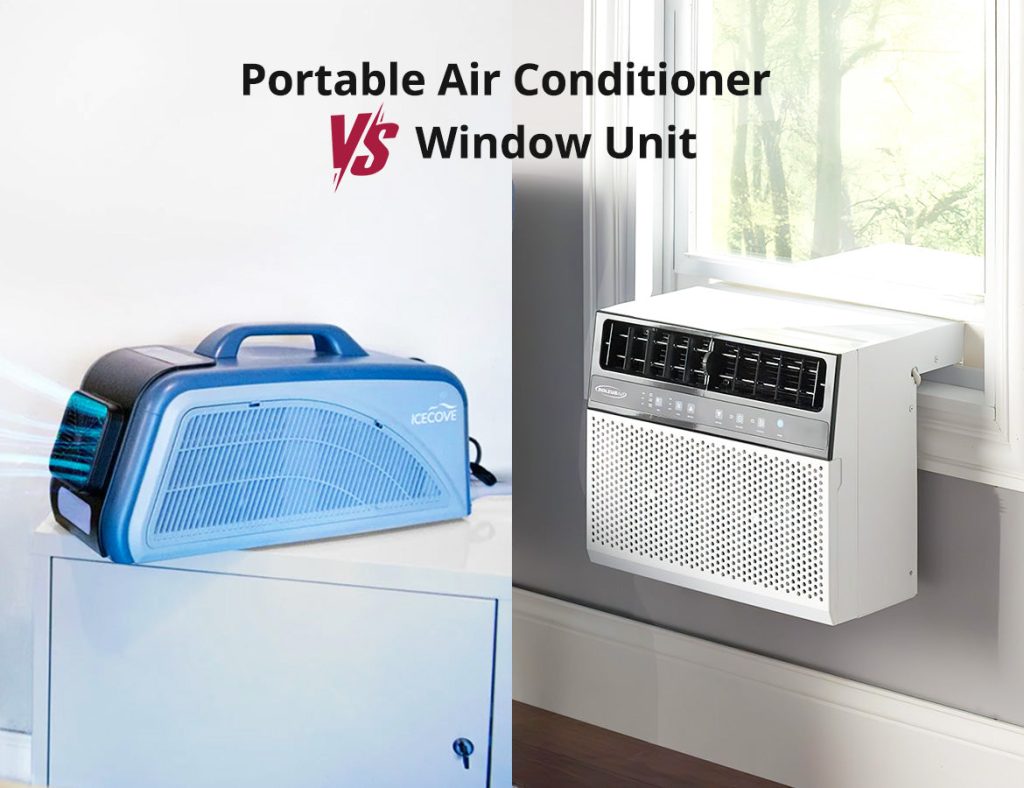
Are you trying to stay cool without breaking the bank on energy bills? Choosing the right air conditioner can make a big difference in how comfortable your home feels—and how much you spend.
You might be wondering if window air conditioners are really more efficient than portable ones. This question matters because picking the wrong option could mean higher costs and less comfort. Keep reading to discover which air conditioner suits your needs best and helps you save money while beating the heat.

Credit: www.garvee.com
How Window Acs Work
Window air conditioners cool rooms by moving heat from inside to outside. They use a compressorand fan systemto push warm air out. Cool air blows back into the room. The unit sits in a window or hole in the wall.
Air from the room passes over cold coils. These coils absorb heat. The heat travels to the outside part of the unit. Then, a fan blows the warm air outside. This process lowers the room temperature.
Window ACs work best in one room. They are fixed and use less energy than some portable units. Easy to install and often quieter than portable models.

Credit: www.garvee.com
How Portable Acs Work
Portable air conditioners cool a room by moving warm air outside. They have a hose that pushes hot air out through a window or wall. Inside, a fan pulls warm air from the room and passes it over cold coils. The cold coils absorb heat from the air, making the air cooler. Then, the cool air blows back into the room.
Water collects inside the unit from the air’s moisture. Some models need you to empty this water tank. Others drain the water automatically or use it to help cool the coils more.
Because the hot air is pushed outside, portable ACs can cool a room but often use more energy than window units. They are easy to move but might be less efficient for big spaces.
Energy Efficiency Comparison
Window air conditionersusually consume less power than portable units. This is because window units are designed to cool a fixed space efficiently. Portable air conditioners often use more energy to move hot air out of the room.
Cooling capacity is measured in BTUs (British Thermal Units). Window units often provide higher BTUs for the same power use. Portable units may have lower BTUs but use more power to cool the same area.
| Type | Power Consumption (Watts) | Cooling Capacity (BTUs) | Energy Star Rating |
|---|---|---|---|
| Window AC | 500 – 1500 | 5000 – 18000 | Often available |
| Portable AC | 800 – 1700 | 8000 – 14000 | Less common |
Energy Star ratingshelp find efficient models. Window air conditioners more often have this rating. It means they use less power and save money.
Installation And Space Needs
Window air conditionersare usually easier to install. They fit into a window frame and need a secure seal to keep air outside. Installation may require two people because units can be heavy. Portable air conditionersneed a vent hose to push hot air outside through a window or wall. This setup can be tricky and may need extra parts.
Space needsdiffer. Window units take up window space but free floor area. Portable units sit on the floor and can take up room, which limits furniture placement. Both need enough space around for good airflow.
Cooling Performance
Window air conditionersusually cool rooms more effectively. They fit into windows and have a fixed spot. This helps them cool larger spaces better than portable units.
Portable air conditioners work well in small rooms. They can be moved from room to room. But they may struggle to cool bigger rooms evenly.
| Type | Best Room Size | Cooling Strength |
|---|---|---|
| Window AC | Medium to Large | Strong and consistent |
| Portable AC | Small to Medium | Moderate, less even |
Airflow from window units spreads across the room well. Their fixed position helps cool the entire space. Portable units blow air in one direction. This can create hot and cold spots.
Noise Levels
Window air conditionersusually make less noise than portable units. This is because window units have most parts outside the room. The noise from the compressor and fan is outside. This lowers the sound inside.
Portable air conditionershave all parts inside the room. The compressor and fan run near you. This makes them louder than window units. Noise can bother people while working or sleeping.
- Window AC noise: 50-60 decibels (quiet conversation level)
- Portable AC noise: 55-70 decibels (normal conversation to vacuum cleaner level)
Choosing a unit depends on how much noise you can accept. Window units are better for quiet rooms. Portable units are louder but easier to move.
Maintenance And Durability
Cleaning and filter replacementare key for both window and portable ACs. Window units usually have larger, easier-to-remove filters. This makes cleaning simpler and quicker. Portable ACs often have smaller, more complex filters that need careful handling. Regular cleaning keeps the AC running efficientlyand extends its lifespan.
Longevitydepends on build quality and maintenance. Window ACs tend to last longerbecause they have fewer moving parts and are installed permanently. Portable ACs face more wear and tear due to frequent moving and flexible hoses. Proper care can help both types last several years, but window units generally have an edge in durability.
Cost Factors
Initial purchase pricefor window air conditioners is usually lower than for portable units. Window models are simpler and often cost less upfront. Portable air conditioners tend to be more expensive due to their design and mobility features.
Operating costsdepend on energy use. Window air conditioners generally use less electricity. They cool rooms more efficiently, saving money on bills. Portable units consume more power because they need extra energy to move hot air out of the room. This makes running them costlier over time.
Environmental Impact
Window air conditionersusually use less energy than portable units. They cool rooms faster and keep the temperature steady. This means they waste less power.
Portable air conditioners need extra energy to move hot air outside. This makes them less efficient. They also use more water in some cases, which can affect the environment.
| Feature | Window AC | Portable AC |
|---|---|---|
| Energy Use | Lower | Higher |
| Cooling Speed | Faster | Slower |
| Environmental Effect | Less Waste | More Waste |
Choosing window units can help reduce your carbon footprint. They use less power and last longer, causing less waste. Portable units may be easier to move but cost more energy over time.
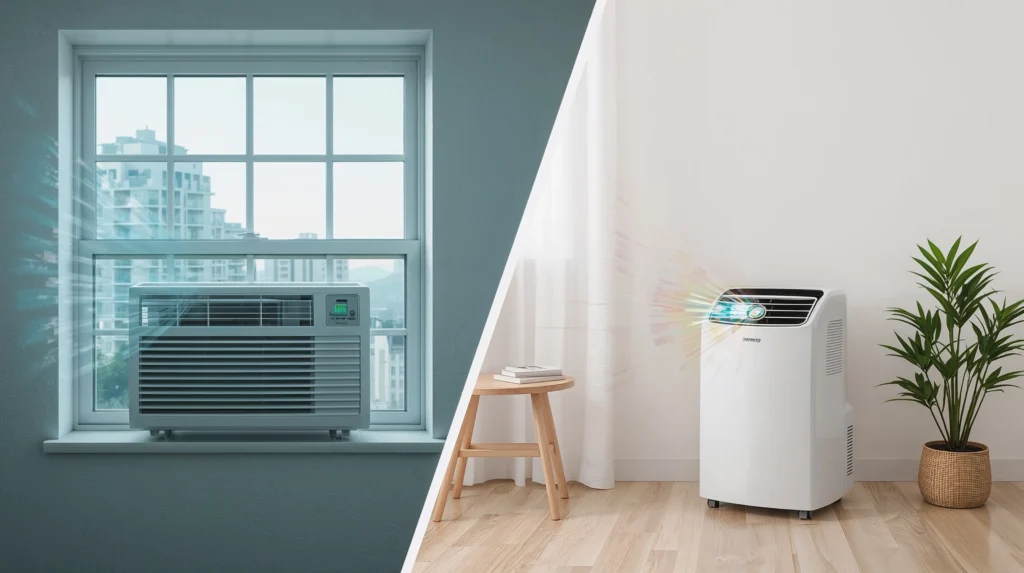
Credit: hvac-temecula-murrieta.com
Best Use Cases
Window air conditioners work best in single rooms with good window space, providing strong cooling and efficiency. Portable units suit small spaces without window access but usually use more energy. Choosing depends on room size, placement, and how often you need cooling.
Ideal Scenarios For Window Acs
Window air conditionerswork best in rooms with a permanent windowsetup. They are great for cooling single roomsefficiently. These units use less energy than portable ones and fit snugly in the window space. Ideal for homes or apartmentswhere you want a steady, reliable cooling option. They are usually quieterand require less maintenance.
Ideal Scenarios For Portable Acs
Portable air conditionerssuit spaces without suitable windows or for those who need flexible cooling. Easy to move from room to room. Good for renters or temporary setups. They don’t need permanent installation but can be noisierand use more power. Best for small spacesor rooms where window units can’t fit.
Frequently Asked Questions
How Do Window Air Conditioners Save Energy?
Window air conditioners are generally more energy-efficient than portable units. They fit snugly into a window, minimizing air leaks. This efficient seal helps maintain room temperature, reducing energy consumption. Additionally, they often have higher EER ratings, meaning they use less power to cool the same space.
Are Portable Air Conditioners Less Efficient?
Yes, portable air conditioners are typically less efficient. They tend to have lower energy efficiency ratios (EER). Portable units require venting through a window or wall, which can cause air leaks. These leaks lead to increased energy usage, making them less efficient compared to window units.
Which Is Cheaper To Run, Window Or Portable Ac?
Window air conditioners are generally cheaper to run. They offer better energy efficiency and tighter seals. This reduces energy consumption, lowering electricity bills. In contrast, portable units often need more power to achieve the same cooling effect, increasing operational costs.
Can Window Acs Cool Larger Spaces Effectively?
Yes, window air conditioners can cool larger spaces effectively. They come in various capacities suitable for different room sizes. Higher BTU models can efficiently cool larger areas. Portable units often struggle with larger spaces, making window ACs a better choice for bigger rooms.
Conclusion
Window air conditioners often use energy more efficiently than portable units. They cool rooms faster and keep temperatures steady. Portable air conditioners offer flexibility but may use more electricity. Choosing the right type depends on your space and needs. Think about room size, installation, and budget.
Both have pros and cons to consider. Efficiency matters for saving energy and money. Understanding these differences helps you make a smart choice. Your comfort and costs can improve with the right AC unit.