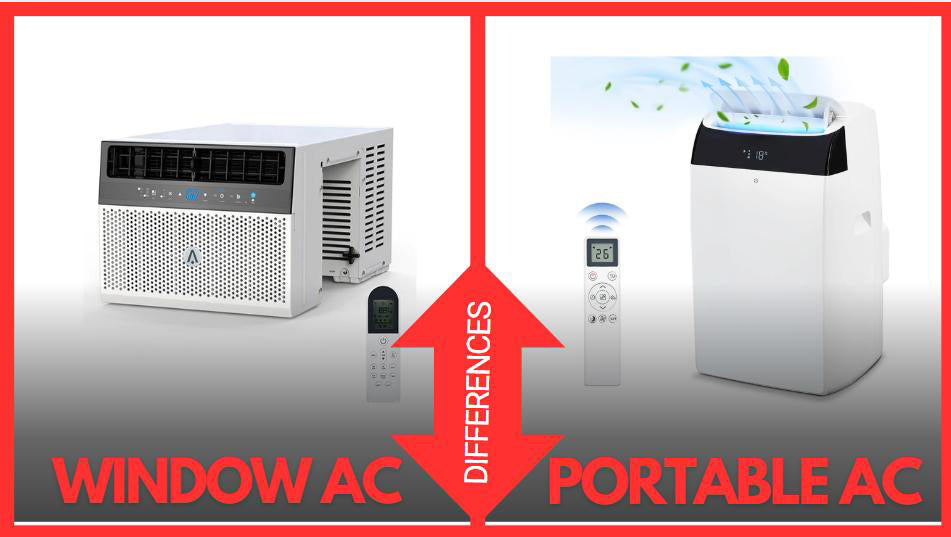
When the temperature rises, staying cool becomes your top priority. But choosing the right air conditioner can be confusing.
Should you go for a window unit or a portable air conditioner? Each option has its own benefits, and the choice you make affects your comfort, energy bills, and space. You’ll discover the key differences between window and portable air conditioners.
By the end, you’ll know exactly which one fits your needs and lifestyle best. Keep reading to make the smartest decision for your home and beat the heat with ease.

Credit: sunjoyshop.com
Types Of Air Conditioners
Air conditioners help keep homes cool and comfortable. There are different types to choose from. Each has its own way to cool a room.
Two common types are window air conditioners and portable air conditioners. Understanding their features can help you pick the right one.
Window Air Conditioners
Window air conditioners fit into a window frame. They cool a single room by blowing cold air inside. The hot air goes outside through the back of the unit.
- Easy to install in most windows
- Usually more energy efficient
- Good for cooling one room only
- Often less expensive than other types
- May block part of the window
Portable Air Conditioners
Portable air conditioners can move from room to room. They sit on the floor and have a hose to vent hot air outside through a window.
| Feature | Details |
| Mobility | Can be moved easily |
| Installation | No permanent setup needed |
| Cooling | Works well for small to medium rooms |
| Energy Use | Usually less efficient than window units |
| Space | Takes up floor space |
Cooling Performance
Choosing between window and portable air conditioners depends on how well they cool your space. Cooling performance varies by model and design.
Let’s look at key factors like efficiency, power, and room size compatibility to help understand which type works better.
Efficiency And Power
Window air conditioners usually use less energy to cool a room. They are sealed in the window and do not lose cooled air.
Portable air conditioners often use more power. Some cooled air escapes through the exhaust hose, reducing efficiency.
- Window units have better energy efficiency ratings.
- Portable units offer flexibility but can consume more electricity.
- Power is measured in BTUs; higher BTUs cool faster.
- Both types come in different BTU levels for various needs.
Room Size Compatibility
Window air conditioners fit best in small to medium rooms. They cool evenly and maintain temperature well.
Portable air conditioners work in spaces where window installation is not possible. They may struggle to cool larger rooms efficiently.
| Type | Best Room Size (sq ft) | Cooling Strength |
| Window AC | 150-450 | Strong and steady |
| Portable AC | 100-350 | Moderate and flexible |
Installation And Setup
Choosing between window and portable air conditioners depends on how easy they are to install and set up. These factors affect how quickly you can start using the unit.
This section covers the ease of installation and space needed for each type of air conditioner.
Ease Of Installation
Window air conditioners usually need a fixed window for installation. You may need tools and some skills to fit it securely. Portable units need less work. You only have to place the unit inside and connect the exhaust hose to a window.
- Window ACs require mounting and sealing in the window frame.
- Portable ACs come with a window kit to fit the exhaust hose.
- Window AC installation can take 1–2 hours with tools.
- Portable ACs can be set up in 10–20 minutes without tools.
- Window ACs are more permanent once installed.
- Portable ACs are easy to move and store.
Space Requirements
Window air conditioners sit in the window space and do not take up floor space inside the room. Portable air conditioners stand on the floor and need enough room for airflow and hose placement.
| Type | Space Needed Inside Room | Space Used Outside |
| Window AC | Minimal (window frame) | Requires external window space for compressor |
| Portable AC | Floor space for unit and hose | No external installation needed |
Mobility And Flexibility
Choosing between window and portable air conditioners depends on your need for mobility and flexibility. These units differ in how easily you can move and adjust them to your space.
This guide explains key points about their portability and where each unit works best.
Portability Features
Portable air conditioners come with wheels and handles. This lets you move them from room to room easily.
Window air conditioners stay fixed in one window. They are heavier and need help to install or remove.
- Portable ACs have built-in wheels for easy movement
- Window ACs require installation in a window frame
- Portable units need a venting hose to exhaust hot air
- Window units do not need a hose but block the window
Usage Scenarios
Portable air conditioners fit well in homes with multiple rooms. You can cool one room then move it to another.
Window air conditioners work best for cooling a single room. They stay in one spot all summer long.
- Portable ACs work well for renters who move often
- Window ACs suit homes with fixed window spots
- Portable units help cool rooms without windows
- Window units save floor space inside the room
Energy Consumption
Choosing between a window air conditioner and a portable air conditioner depends on energy use. Energy consumption affects your electricity bill.
Understanding how much power each type uses helps you save money and energy.
Power Usage Comparison
Window air conditioners generally use less power than portable units. They cool rooms more efficiently because they are fixed in place.
Portable air conditioners need more energy to move warm air out of the room. This makes them less efficient.
- Window units use about 500 to 1500 watts depending on size
- Portable units use about 800 to 2000 watts
- Window units cool rooms faster with less energy
- Portable units can lose energy through the exhaust hose
Cost Implications
Window air conditioners usually cost less to run because of lower energy use. This lowers monthly electric bills.
Portable air conditioners may cost more over time due to higher power needs. They are less energy efficient.
| Type | Average Power Use (Watts) | Estimated Monthly Cost |
|---|---|---|
| Window Air Conditioner | 500 – 1500 | $30 – $90 |
| Portable Air Conditioner | 800 – 2000 | $48 – $120 |
Costs based on average use of 8 hours per day at $0.12 per kWh.

Credit: www.garvee.com
Noise Levels
Noise levels are important when choosing between window and portable air conditioners. Loud machines can disturb sleep and work.
Understanding how each type sounds helps you pick the best option for your space.
Operational Noise
Window air conditioners usually run quieter than portable ones. They sit in the window and keep noisy parts outside.
Portable air conditioners have all parts inside the room. This makes them louder since fans and compressors work close by.
- Window AC noise: 50-60 decibels
- Portable AC noise: 55-70 decibels
- Lower decibels mean quieter machines
Impact On Comfort
Loud air conditioners can bother people in bedrooms or offices. Noise may cause distraction or trouble sleeping.
Quieter window units help keep rooms peaceful. Portable units may need extra noise control steps.
- Quieter units improve focus and rest
- Noisy units may need soundproofing
- Choose based on room use and noise sensitivity
Maintenance Needs
Choosing between window and portable air conditioners means thinking about upkeep. Maintenance affects how well they work and how long they last.
We will look at cleaning and general upkeep, then the lifespan of each type. This helps you decide which fits your needs better.
Cleaning And Upkeep
Window units usually need you to clean the filter every month. This keeps air flowing and stops dust build-up. Portable units also need filter cleaning but often have more parts to check.
- Window AC filters can be removed and rinsed with water.
- Portable AC filters may need vacuuming or washing.
- Both types require cleaning the outer body to prevent dirt.
- Window ACs need sealing checks around the unit to stop air leaks.
- Portable ACs need their exhaust hoses cleaned and inspected.
Longevity
| Type | Average Lifespan | Maintenance Impact |
|---|---|---|
| Window Air Conditioners | 8 to 12 years | Regular filter cleaning and sealing extend life |
| Portable Air Conditioners | 5 to 8 years | More parts need care; neglect shortens lifespan |
Window units tend to last longer because they have fewer moving parts inside. Portable units are easier to move but can wear out faster if not cleaned and checked often.
Cost And Budget
Choosing between window and portable air conditioners often depends on cost. Understanding both initial and long-term expenses helps you decide what fits your budget.
Each type has different costs upfront and over time. These costs affect your overall spending on cooling.
Initial Price
Window air conditioners usually cost less to buy than portable units. The price depends on size and cooling capacity.
- Window units range from $150 to $400.
- Portable units cost between $200 and $600.
- Installation for window units may add to the cost.
- Portable units are mostly plug-and-play, so no extra installation fees.
Long-term Expenses
Long-term costs include electricity use, maintenance, and repairs. These costs affect your budget over time.
| Type | Energy Efficiency | Maintenance | Repairs |
| Window AC | Generally higher efficiency | Lower cost, easy filter changes | Less frequent |
| Portable AC | Usually less efficient | Filter cleaning more frequent | Can be costly due to parts |
Best Use Cases
Choosing between window and portable air conditioners depends on your needs. Each type works better in some situations.
This guide helps you find the best environment for each air conditioner type.
Ideal Environments For Window Units
Window units fit best in spaces where you can install them securely in a window. They cool rooms efficiently and save floor space.
- Rooms with a standard window that opens
- Small to medium-sized rooms needing steady cooling
- Homes where permanent installation is allowed
- Places with limited floor space
- Environments with low noise tolerance, as window units tend to be quieter
Best Situations For Portable Units
Portable air conditioners work well in spaces where window installation is impossible or unwanted. They offer flexibility but may use more floor space.
| Situation | Why Portable Works |
| Rental apartments | No permanent changes to windows allowed |
| Rooms without suitable windows | Can vent through sliding doors or other openings |
| Temporary cooling needs | Easy to move between rooms |
| Spaces with multiple rooms | Can be used where needed, then stored |
| Areas with available floor space | Requires space for unit and vent hose |

Credit: medium.com
Frequently Asked Questions
What Are The Main Differences Between Window And Portable Acs?
Window ACs are fixed units installed in windows, cooling rooms efficiently. Portable ACs are movable, vented through a window, offering flexibility but slightly less efficiency.
Which Ac Type Is More Energy-efficient?
Window ACs generally use less energy than portable units. They cool spaces more effectively, leading to lower electricity bills.
Can Portable Acs Cool Large Rooms Effectively?
Portable ACs work best in small to medium rooms. Larger spaces may require multiple units or a window AC for better cooling.
Are Window Acs Harder To Install Than Portable Ones?
Window ACs need secure window mounting and proper sealing. Portable ACs require minimal setup, just venting through a window.
Conclusion
Choosing between window and portable air conditioners depends on your needs. Window units offer powerful cooling and save space. Portable models provide flexibility and easy installation. Consider room size, budget, and installation effort. Each type has pros and cons. Decide based on personal preference and specific requirements.
Prioritize energy efficiency and noise level too. Both options can improve comfort in hot weather. Make an informed choice for a cooler, more comfortable home.