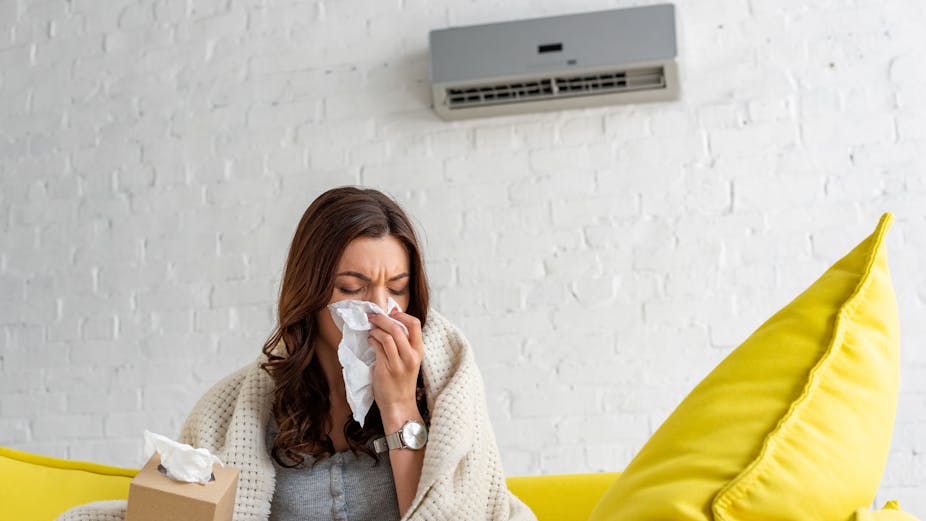
Have you ever felt sick after spending time in a room with the air conditioner on? You might wonder, “Can an air conditioner make you sick?”
It’s a common question because many people notice sniffles, headaches, or tiredness when the AC is running. But is the air conditioner really the culprit, or is something else at play? You’ll discover the surprising ways your air conditioner could affect your health—and what simple steps you can take to stay comfortable and well.
Keep reading to find out how to protect yourself and enjoy cool air without the risks.

Credit: theconversation.com
How Air Conditioners Affect Health
Air conditioners cool indoor spaces by removing heat and moisture. They also circulate air through rooms. This process can affect the quality of the air we breathe.
Understanding how air conditioners impact health helps us use them safely. Poor maintenance or improper use may cause health problems.
Air Quality And Circulation
Air conditioners filter and move air inside buildings. If the filters are dirty, they can spread dust, mold, and bacteria. This lowers indoor air quality.
- Dirty filters cause allergies and breathing issues.
- Stale air can increase germs and viruses indoors.
- Low humidity from AC can dry out skin and throat.
- Proper ventilation helps keep air fresh and clean.
Common Ac-related Illnesses
Using air conditioners may lead to some common health problems. These often come from poor air quality or cold air blowing on the body.
| Illness | Cause | Symptoms |
| Allergic Rhinitis | Dust and mold in filters | Sneezing, runny nose, itchy eyes |
| Respiratory Infection | Spread of bacteria and viruses | Cough, sore throat, fever |
| Dry Skin and Eyes | Low humidity from AC | Itching, redness, irritation |
| Muscle Stiffness | Cold air blowing directly on skin | Pain, stiffness, cramps |
Bacteria And Mold Growth In Ac Units
Air conditioners can sometimes become a place where bacteria and mold grow. These tiny organisms like damp and dark spots inside the AC unit. When the AC runs, it can spread these germs into the air you breathe.
This can cause health problems for people, especially those with allergies or weak immune systems. It is important to understand why contamination happens and what risks mold exposure brings.
Causes Of Contamination
Moisture inside the AC unit helps bacteria and mold grow. Dust and dirt also build up and provide food for these microbes. Poor maintenance of the air conditioner makes the problem worse.
Some common causes include:
- Clogged air filters that trap dust
- Leaks or water buildup inside the unit
- Dirty coils and drain pans
- Low airflow that keeps areas damp
- Using the AC in humid environments without proper ventilation
Health Risks From Mold Exposure
Mold spores spread through the air when the AC runs. Breathing these spores can cause health issues. People with asthma or allergies are more likely to get sick.
Some symptoms of mold exposure are:
- Coughing and sneezing
- Runny or stuffy nose
- Eye irritation or redness
- Skin rashes
- Breathing difficulties or wheezing
Dry Air And Respiratory Issues
Air conditioners often remove moisture from the air. This can cause dry air indoors. Dry air can affect your breathing and throat.
Understanding how dry air impacts your body helps prevent health problems. It is important to know the signs and effects.
Impact On Mucous Membranes
Mucous membranes line your nose, throat, and lungs. Dry air can dry out these membranes. This makes it harder to trap dust and germs.
- Dry mucous membranes can cause irritation and discomfort.
- They may crack, leading to small wounds and infections.
- Less moisture means reduced protection from viruses and bacteria.
- It can increase the risk of colds and respiratory infections.
Symptoms Of Dry Air Exposure
| Symptom | Description |
|---|---|
| Dry Throat | Feeling of scratchiness or soreness in the throat. |
| Coughing | Frequent dry cough due to irritation of airways. |
| Nasal Congestion | Blocked or stuffy nose caused by dryness and swelling. |
| Itchy Eyes | Dry air can cause redness and irritation in the eyes. |
| Difficulty Breathing | Some people feel shortness of breath or tightness. |

Credit: globalcoolair.com.au
Allergies And Air Conditioning
Air conditioners help cool indoor spaces during hot days. They also affect the air quality inside homes and offices. Some people wonder if air conditioning can cause sickness.
One common concern is how air conditioning relates to allergies. Dust and allergens can build up in air systems. This can cause problems for people with asthma or allergies.
Dust And Allergen Accumulation
Air conditioners collect dust and allergens if not cleaned often. Dust mites, mold, and pollen can hide inside filters and ducts. These particles spread through the air when the system runs.
- Dirty filters trap dust and allergens
- Mold grows in moist parts of the system
- Pollen can enter from outside air
- Allergens spread in the cooled air
- Regular cleaning reduces buildup
Triggers For Asthma And Allergies
Air conditioners can trigger asthma and allergy symptoms. Cold, dry air may irritate airways. Allergens in the system can cause sneezing, coughing, or wheezing.
| Trigger | Effect |
| Dust mites | Runny nose, itchy eyes |
| Mold spores | Wheezing, chest tightness |
| Pollen | Sneezing, nasal congestion |
| Cold air | Breathing difficulty, coughing |
Preventing Ac-related Health Problems
Air conditioners help keep us cool, but they can cause health issues if not used properly. This guide shows how to prevent sickness linked to AC use.
Good habits and simple care keep your AC safe and your indoor air healthy. Follow these tips to avoid common problems.
Regular Maintenance Tips
Cleaning and checking your AC regularly stops dirt and germs from building up. This lowers the chance of allergies and breathing problems.
Change filters every 1 to 3 months. Clean coils and drain pans to avoid mold growth. Schedule yearly professional check-ups for best results.
- Replace or clean air filters often
- Clear dust from coils and vents
- Keep drain pans free of water
- Get professional AC service once a year
Improving Indoor Air Quality
Good air quality lowers health risks from AC use. Keep your home well-ventilated to reduce indoor pollution and moisture.
Use air purifiers if needed. Avoid smoking indoors. Houseplants can help clean the air naturally.
- Open windows when possible to freshen air
- Use dehumidifiers to control moisture
- Avoid indoor smoking and strong chemicals
- Add houseplants to improve air quality
When To Seek Medical Attention
Air conditioners can sometimes cause discomfort. It is important to know when symptoms need a doctor’s help. Early care can prevent serious health problems.
Understanding the signs of trouble helps you decide if medical attention is needed. This guide explains serious symptoms and when to consult a healthcare professional.
Recognizing Serious Symptoms
Not all symptoms from air conditioner use are dangerous. Watch for warning signs that need quick action.
- High fever over 101°F (38.3°C)
- Severe headache or dizziness
- Persistent coughing or wheezing
- Shortness of breath or chest pain
- Skin rash or itching that worsens
- Nausea, vomiting, or diarrhea lasting more than one day
- Confusion or difficulty staying awake
Consulting Healthcare Professionals
Doctors can diagnose and treat health issues linked to air conditioner exposure. Contact a healthcare provider if symptoms continue or worsen.
| Reason to See Doctor | What to Expect |
| Fever and chills | Physical exam and possible tests |
| Breathing problems | Breathing tests and treatment plans |
| Severe skin reaction | Skin evaluation and medication |
| Persistent gastrointestinal symptoms | Medical history review and care advice |

Credit: www.1news.co.nz
Frequently Asked Questions
Can Air Conditioning Cause Health Problems?
Yes, air conditioning can cause health issues if not maintained properly. It can circulate dust, mold, and bacteria, leading to respiratory problems. Regular cleaning and filter replacement can mitigate these risks.
Why Do I Feel Sick After Using Ac?
Feeling sick after using AC could be due to poor air quality. Air conditioners can spread allergens and microbes. Ensuring proper maintenance and ventilation can help reduce these symptoms.
Does Air Conditioning Spread Viruses?
Air conditioning can potentially spread viruses if the air is recirculated. Proper ventilation and air filtration are essential. Regular maintenance helps minimize the risk of airborne virus transmission.
Can Air Conditioning Cause Sore Throat?
Yes, air conditioning can cause a sore throat due to dry air. It reduces humidity, which can irritate the throat. Using a humidifier alongside the AC can help maintain moisture levels.
Conclusion
Air conditioners can cause discomfort if not used properly. Poor maintenance lets dust and germs spread. This may lead to cold, allergies, or breathing problems. Regular cleaning keeps the air fresh and healthy. Set the temperature to a comfortable level, not too cold.
Drink enough water to stay hydrated inside. Use your AC wisely to avoid sickness. Stay aware and take simple steps for your health. Clean air means a happier, safer home.