Are you thinking about adding a backup camera to your car but aren’t sure if it’s possible? You’re not alone.
Many drivers want to boost their safety and make parking easier without buying a new vehicle. The good news is, adding a backup camera is often simpler than you think—and it can change the way you drive for the better.
Keep reading to find out how you can upgrade your car with this smart, life-saving feature.

Credit: typesauto.com
Benefits Of Backup Cameras
Backup cameras help drivers see behind their cars. They make driving safer and easier.
Adding a backup camera can improve your driving experience. It reduces blind spots and helps avoid accidents.
Improved Rear Visibility
Backup cameras show a clear view of what is behind your car. This helps you see objects and people.
It is hard to see everything by just using mirrors. The camera covers areas that mirrors miss.
Enhanced Parking Safety
Backup cameras make parking easier. You can see the lines and space behind you clearly.
This reduces the chance of hitting other cars or objects. It helps drivers park in tight spots safely.
- Shows real-time view of the parking area
- Helps judge distances better
- Reduces stress while parking
Accident Prevention
Backup cameras help prevent accidents by showing hidden obstacles. This includes children, pets, and low objects.
They alert drivers to dangers they might miss. This lowers the risk of collisions while reversing.

Credit: www.amazon.com
Types Of Backup Cameras
Backup cameras help drivers see behind their cars. They improve safety while parking and reversing.
There are different types of backup cameras. Each type has its own features and installation style.
Wired Backup Cameras
Wired backup cameras connect to the car with cables. They usually link to the car’s display screen.
These cameras offer a steady video signal. The picture quality is often clearer than wireless types.
- Needs professional or careful installation
- Cables run through the car’s interior
- Good for cars with built-in display units
Wireless Backup Cameras
Wireless backup cameras send video without cables. They connect to a monitor using Wi-Fi or radio signals.
These cameras are easier to install. They work well if you want a simple setup without many wires.
- Quick to install with no cable routing
- Signal can be affected by interference
- Often come with their own display screen
Mirror And License Plate Cameras
Mirror cameras attach to your rearview mirror. They show the camera view on the mirror’s screen.
License plate cameras mount near the plate. They are small and blend well with the car’s design.
- Mirror cameras combine with existing mirror
- License plate cameras are nearly invisible
- Both types connect to monitors or car displays
Choosing The Right Backup Camera
Adding a backup camera to your car can improve safety and parking ease. You need to pick a camera that fits your car and needs well.
This guide will help you choose the right backup camera by covering key factors to consider before buying.
Compatibility With Your Car
Not all backup cameras fit every car. Check your car’s make and model first. Some cameras work only with specific vehicles or require extra parts.
- Verify if the camera fits your car’s size and shape.
- Check if your car needs special wiring or adapters.
- Look for cameras that match your car’s display system.
- Consider how easy the camera is to install on your car.
Resolution And Image Quality
Good image quality helps you see obstacles clearly. Higher resolution means sharper pictures. Choose a camera with clear, bright images.
| Resolution | Image Quality | Use Case |
| 480p | Basic, grainy | Simple parking |
| 720p | Clear and sharp | Most daily uses |
| 1080p | Very sharp | Detailed view, better safety |
| 4K | Ultra clear | Professional or large vehicles |
Night Vision Features
Night vision helps you see behind your car in the dark. Look for cameras with infrared lights or low-light sensors.
Common night vision options include:
- Infrared LEDs that light up the area silently
- Low-light image sensors for better picture quality
- Automatic brightness adjustment for clear view

Credit: www.amazon.com
Tools And Materials Needed
Adding a backup camera to your car can improve safety and make parking easier. To do this, you need some tools and materials. Getting these ready before you start helps the process go smoothly.
This guide covers the main items you will need. It explains the camera kit parts, basic tools for installation, and safety equipment.
Camera Kit Components
The camera kit includes all parts needed to add the backup camera to your car. Knowing these parts helps you understand how to install the system.
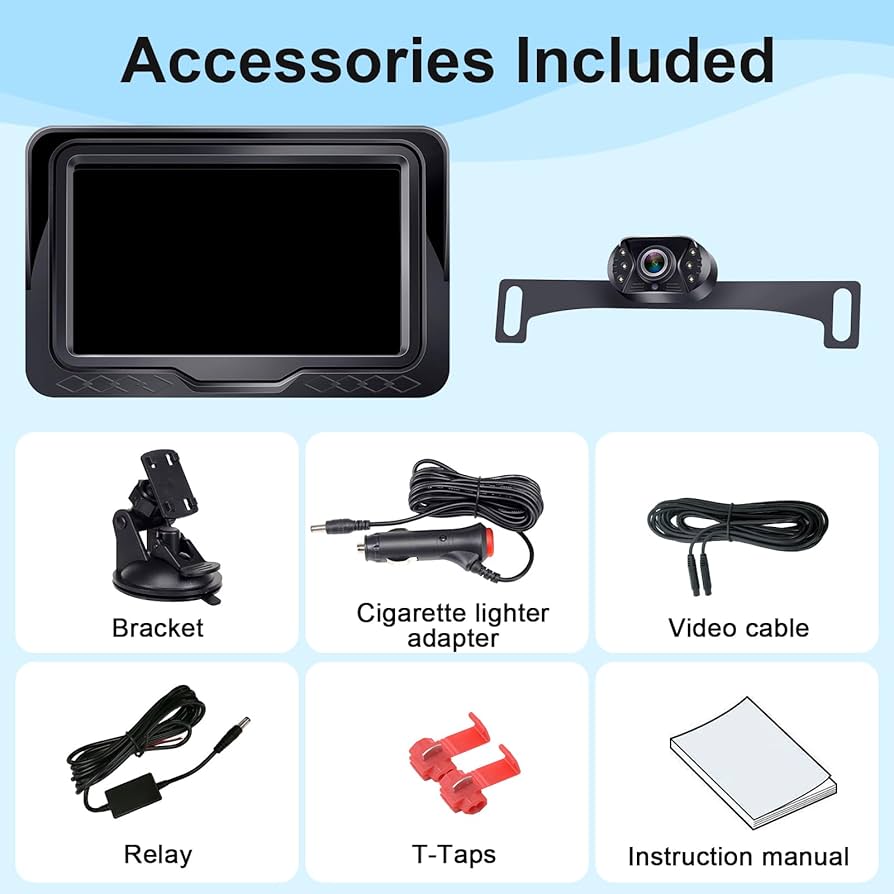
- Backup camera with mounting bracket
- Wiring harness for power and video
- Display monitor or adapter for your screen
- Power cable and connectors
- Instruction manual with wiring diagram
Some kits may also have extra screws or adhesive pads for mounting. Check the kit before starting the installation.
Basic Tools For Installation
You will need some common tools to install the backup camera. These tools help you connect wires and mount the camera securely.
- Screwdrivers (flathead and Phillips)
- Wire strippers and cutters
- Electrical tape or heat shrink tubing
- Drill with drill bits (for mounting holes)
- Socket wrench set
- Multimeter to test electrical connections
- Zip ties to secure cables
Having these tools ready saves time and avoids frustration during installation.
Safety Equipment
Safety is important when working with your car’s electrical system. Use proper safety gear to protect yourself.
- Safety glasses to protect your eyes from debris
- Gloves to avoid cuts and electrical shocks
- Work light for better visibility
- Fire extinguisher nearby in case of accidents
Wear safety gear and work in a well-lit area to avoid accidents.
Step-by-step Installation Guide
Adding a backup camera to your car improves safety and parking ease. This guide shows clear steps to install one yourself.
Follow each part carefully to ensure your backup camera works well and lasts long.
Locating The Power Source
The camera needs power from your car’s electrical system. Usually, you connect it to the reverse light circuit.
- Open your car’s rear panel to find the reverse light wires.
- Use a test light or multimeter to identify the positive and negative wires.
- Tap into the positive wire with a wire tap connector.
- Connect the camera’s power wire to the tap.
- Ground the camera by attaching its ground wire to a metal part of the car body.
Mounting The Camera
Place the backup camera where it has a clear view behind the car. Common spots are above the license plate or inside the rear bumper.
- Clean the mounting area to remove dirt and dust.
- Use screws or adhesive pads to secure the camera.
- Adjust the camera angle to cover the desired field of view.
Running The Wiring
Hide and protect the wires to keep the installation neat and safe from damage.
Follow these wiring tips:
- Run the camera cable through the trunk or rear hatch area.
- Use existing wire channels or rubber grommets to pass cables inside the car.
- Secure wires with zip ties to avoid loose cables.
- Keep wires away from hot engine parts or moving components.
Connecting To The Display
Link the camera video cable to your car’s display or a separate monitor. Use the correct input port for the camera.
| Display Type | Connection Method |
|---|---|
| Factory Screen | Use RCA adapter or wireless transmitter |
| Aftermarket Monitor | Plug RCA video cable directly |
| Smartphone or Tablet | Use Wi-Fi or Bluetooth adapter |
Testing The System
Check the backup camera before finalizing the installation. Make sure the image is clear and the system powers on with reverse gear.
- Turn on your car and shift into reverse gear.
- Look at the display to see if the camera image shows up.
- Adjust the camera angle if the view is not correct.
- Check for any loose connections or flickering video.
- Secure any loose wires or mounts after testing.
Common Installation Challenges
Adding a backup camera to your car can improve safety and make parking easier. The installation process may have some difficulties that you should know about before starting.
Understanding these common challenges can help you prepare and avoid mistakes during installation.
Dealing With Wiring Issues
Wiring the backup camera can be tricky. Cars have many wires, and finding the right ones is important. Wrong connections may cause the camera to not work or damage your car’s electrical system.
Use a wiring diagram for your car model. Take time to check each wire before connecting. Secure wires to avoid loose connections or short circuits.
- Locate the reverse light wire to trigger the camera
- Use a multimeter to test wires for power
- Protect wires with electrical tape or shrink tubing
- Avoid sharp edges that can cut the wires
Avoiding Signal Interference
Signal interference can reduce the video quality of your backup camera. This can happen if the camera wiring runs near other electrical parts or radio devices.
Keep the camera wires separate from power cables and antennas. Use shielded cables if possible. Check the signal before finalizing the installation.
- Run video cables away from the car’s battery and ignition wires
- Use ferrite beads to reduce electrical noise
- Test the display for clear image before securing cables
Ensuring Secure Mounting
Mounting the backup camera firmly is important for safety and image quality. A loose camera may shift or fall off while driving.
Choose a spot with a clear view behind your car. Use the right tools and hardware to fix the camera tightly. Check the angle and adjust if needed.
- Clean the mounting surface before installation
- Use screws or strong adhesive based on the mount type
- Ensure the camera lens is not blocked or dirty
- Test the camera view and adjust the angle carefully
Maintenance Tips For Backup Cameras
Backup cameras help drivers see behind their cars. Keeping them in good shape is important. Simple care can make your camera work well for a long time.
This guide covers easy ways to keep your backup camera clean and working. It talks about cleaning the lens, checking connections, and updating software.
Cleaning The Lens
Dirt and dust can cover the camera lens. A dirty lens makes the image blurry. Clean it often to keep the picture clear.
- Use a soft cloth to wipe the lens gently.
- Apply a small amount of water or lens cleaner if needed.
- Avoid harsh chemicals that can damage the lens.
- Check the lens for scratches or cracks.
Checking Connections
Backup cameras need good wiring to work. Loose or damaged connections can cause problems. Check all cables and plugs to keep the camera running.
| Connection Part | What to Check | Action |
| Power Cable | Is it firmly plugged in? | Push in or reconnect |
| Video Cable | Is the cable damaged or frayed? | Replace if broken |
| Camera Connector | Is it clean and free of rust? | Clean contacts gently |
| Mounting Bracket | Is the camera loose? | Tighten screws |
Software Updates
Many backup cameras use software to work well. Updates fix bugs and add features. Keep the software current for best results.
- Check your car’s system for update notifications.
- Follow the manual instructions to download updates.
- Use a stable internet connection when updating.
- Restart the system after an update to apply changes.
Legal Considerations
Adding a backup camera to your car can improve safety. Before installation, check legal rules. Laws about backup cameras vary by place.
Understanding the legal side helps you avoid fines and insurance issues. Read on for important points about local regulations and insurance.
Local Regulations
Many areas have rules about backup cameras. Some states require backup cameras on new cars. Others have rules about aftermarket devices.
- Check if your state allows adding a backup camera to older cars.
- Make sure the camera does not block your license plate or lights.
- Install the camera in a way that meets local safety standards.
- Use cameras that comply with vehicle equipment laws.
Insurance Implications
Backup cameras can affect your car insurance. Some insurers may offer discounts for added safety features. Others might require notification of changes.
| Insurance Factor | Impact of Backup Camera |
| Premium | May decrease due to added safety |
| Claim Process | Can be easier with video evidence |
| Policy Notification | Some insurers require you to inform them |
| Coverage | Usually not affected but check policy terms |
Frequently Asked Questions
Can I Install A Backup Camera Myself?
Yes, many backup cameras are designed for DIY installation. Basic tools and following the manual can help you install it safely.
Will A Backup Camera Work On Any Car Model?
Most backup cameras are compatible with various car models, but check your vehicle’s specifications for proper fit and connection.
How Much Does It Cost To Add A Backup Camera?
Costs vary from $50 to $300, depending on camera quality and installation complexity. Professional installation may add extra fees.
Do Backup Cameras Improve Driving Safety?
Yes, backup cameras provide a clear rear view, helping to avoid obstacles and reducing accident risks while reversing.
Conclusion
Adding a backup camera to your car is possible and practical. It enhances safety and makes parking easier. Many options fit different budgets and car models. Installation can be simple with the right tools. Research to find the best camera for your needs.
Consider professional help if unsure. A backup camera is a wise investment. It offers peace of mind on the road. Take the step to upgrade your car today. Enjoy safer driving with this helpful addition.