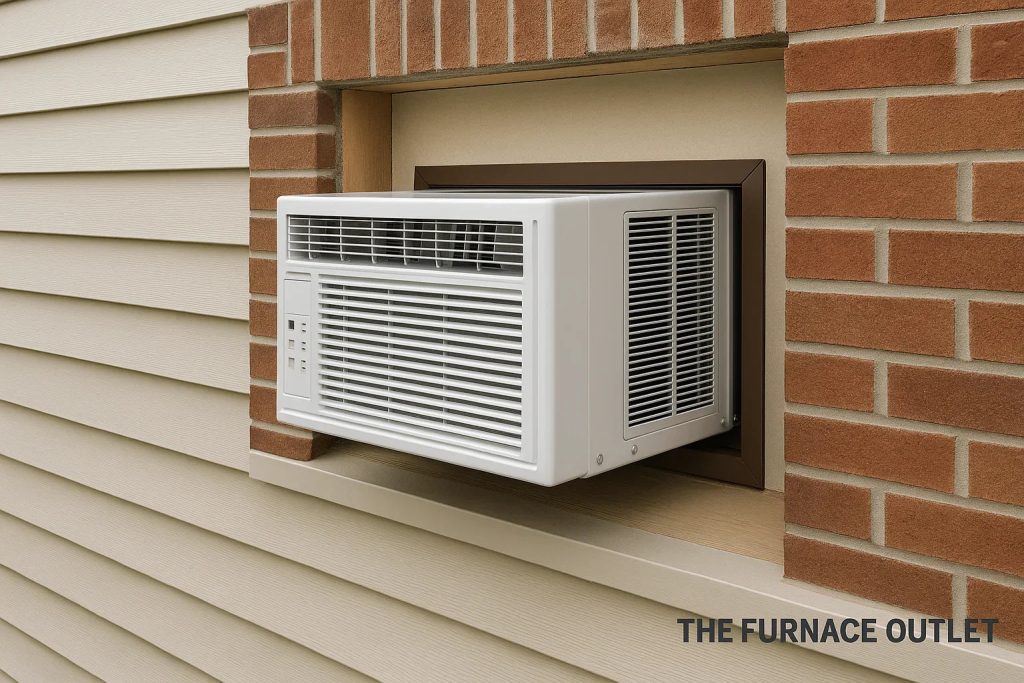
Are you wondering if you can use a window air conditioner through the wall? It’s a question many homeowners ask when trying to cool their space without buying a new unit.
The idea sounds simple, but there’s more to it than just fitting the AC into a hole in your wall. You need to know what works, what doesn’t, and how to do it safely and efficiently. Keep reading, and you’ll discover everything you need to make the right choice for your home and stay cool all summer long.
Window Acs Vs Wall Acs
Window air conditionersfit into window frames. They block some light and view. Wall air conditionersare installed inside walls. They need a special sleeve or opening.
Window ACs are easy to install and move. Wall ACs require cutting a hole in the wall. This makes them more permanent.
| Feature | Window AC | Wall AC |
|---|---|---|
| Installation | Fits in window frame, simple | Installed through wall, needs cutting |
| Design | Compact, portable | More fixed, needs support |
| Performance | Good for small rooms | Better for larger spaces |
| Light & View | Blocks some window light | Does not affect window |

Credit: www.youtube.com
Feasibility Of Wall Installation
Using a window air conditioner through the wall is possible but requires careful planning. The wall must be strong enough to hold the unit’s weight. It should have a solid frame to support the air conditioner safely.
Size and fit are very important. The air conditioner must fit snugly in the wall opening. Measure the unit and the wall space before installation to avoid gaps or loose fitting.
Potential challenges include proper sealing and support. Sealing prevents air leaks and keeps bugs out. Support brackets or a shelf might be needed to hold the unit steady. Electrical wiring and drainage also need attention to ensure safe and efficient operation.
Preparing The Wall Opening
Measure the wall carefully to fit the air conditioner unit. Use a pencil and level to mark the exact size. Cut the opening slightly bigger than the unit for easy fitting. Smooth the edges with sandpaper to avoid damage.
Support the unit well to keep it stable and safe. Use brackets or a sturdy shelf under the unit. Check that the support can hold the weight without bending or breaking. This prevents the air conditioner from falling.
Seal the edges to keep air and water out. Use weatherproof caulk or foam around the unit’s edges. Insulate gaps with foam strips to stop heat loss. This helps the unit work better and saves energy.

Credit: www.reddit.com
Safety And Efficiency Tips
Electrical concernsare key when using a window AC through the wall. Make sure the power outlet matches the unit’s voltage. Avoid using extension cords as they can cause overheating. The unit should have a dedicated circuit to prevent overload.
Weatherproofinghelps keep your home safe and energy efficient. Seal gaps around the AC with weatherstripping or foam to stop air leaks. Use a waterproof cover outside to protect the unit from rain and snow. Proper sealing also stops bugs and dust from entering.
Maintenance advicekeeps your AC working well longer. Clean the filters every month to improve airflow. Check the drain hole to avoid water damage. Inspect the unit for any rust or damage and fix it quickly.
Alternative Cooling Solutions
Through-the-wall AC unitsare designed to fit into a wall opening. They offer a permanent cooling solution without blocking windows. These units are more secure and can be more efficient than window models. Installation requires cutting a hole in the wall and sealing it well to keep air out.
Portable AC optionsprovide flexibility. They do not need permanent installation. You can move them from room to room. These units use a hose that vents hot air outside through a window or wall. Portable ACs are easy to set up but may not cool large areas effectively.
Mini-split systemshave two parts: an indoor unit and an outdoor compressor. They do not need window or wall openings like window ACs. Mini-splits cool quietly and efficiently. Installation is more complex but offers better temperature control and saves space.

Credit: thefurnaceoutlet.com
Frequently Asked Questions
Can I Install A Window Ac Through A Wall?
Yes, you can install a window AC through a wall with proper support. You need a secure frame and insulation to prevent air leaks. Ensure the wall opening matches the AC size for a tight fit and effective cooling.
Will A Window Ac Work Efficiently In A Wall?
A window AC can work efficiently in a wall if sealed properly. Proper insulation and support help maintain cooling performance and prevent air or water leaks. Without these, efficiency drops and the unit may face damage.
What Tools Are Needed To Mount A Window Ac In A Wall?
You need a drill, level, measuring tape, screws, and a mounting bracket. Also, use insulation foam and sealant to close gaps. These tools ensure a secure and airtight installation for optimal performance.
Are There Risks Installing Window Ac Units Through Walls?
Yes, risks include water leaks, poor insulation, and structural damage. Improper installation can reduce efficiency and cause unit damage. It’s vital to follow guidelines or hire a professional to ensure safety and performance.
Conclusion
Choosing the right air conditioner is important for your comfort. Window units can fit through walls, but you need proper installation. Ensure the wall can support the unit’s weight. Check the space for ventilation. A professional can help with the setup.
This ensures safety and efficiency. Consider energy usage and cooling needs. A good fit improves cooling and saves energy. Always follow manufacturer guidelines. Your home will stay cool and comfortable. Make informed decisions for the best results.