
Have you ever found yourself craving freshly baked cookies or a warm loaf of bread but felt discouraged by the time and effort involved in traditional baking? What if I told you that your microwave oven might just be the secret weapon you’ve been overlooking?
Yes, you read that right! You can actually bake using your microwave oven. Imagine the possibilities: quick, delicious treats without the long wait. But how does it work, and is it as good as baking in a conventional oven? Stick around, because we’re about to explore whether your trusty microwave can transform into a mini baking powerhouse.
Get ready to discover tips, tricks, and surprising insights that might just change how you think about baking forever.
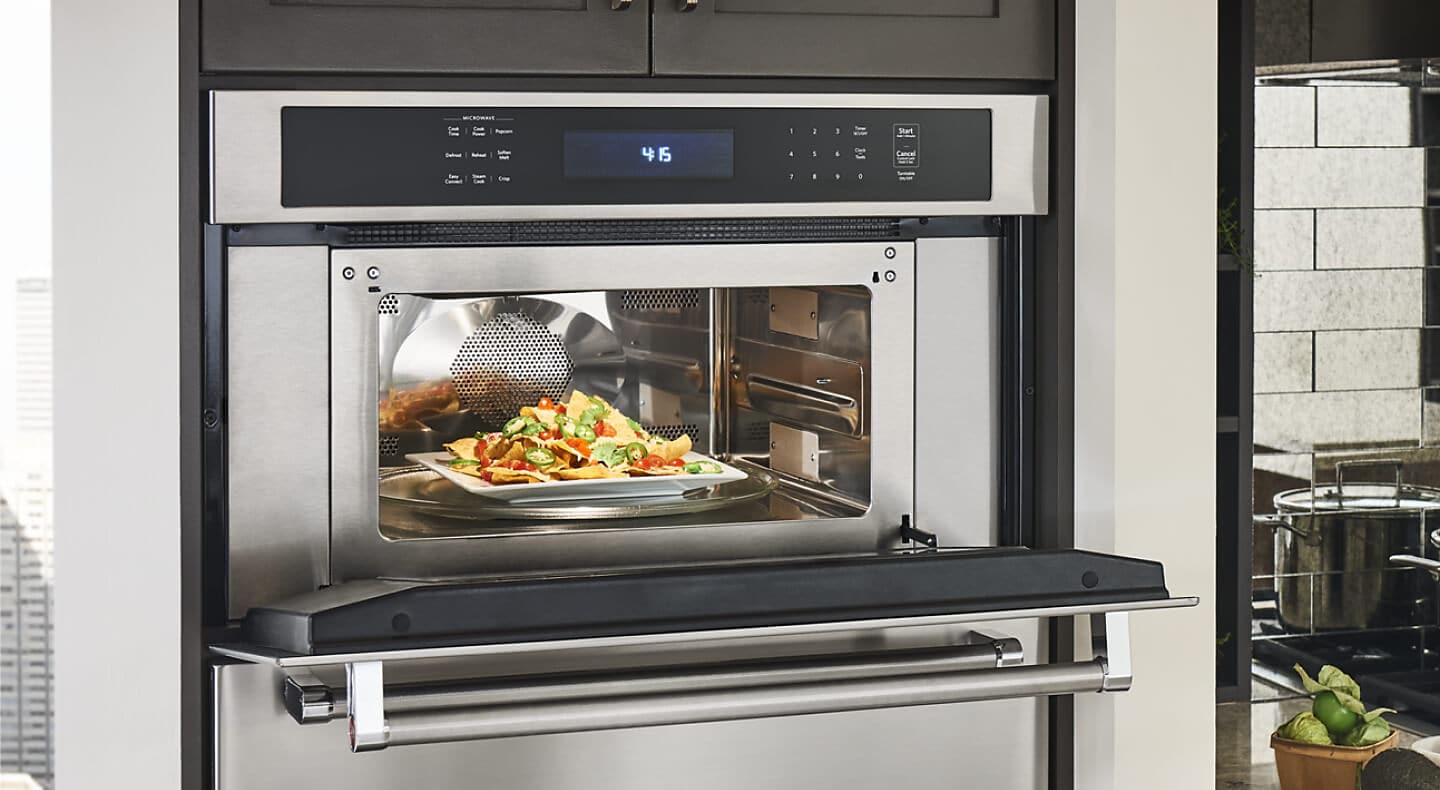
Credit: www.kitchenaid.com
Microwave Baking Basics
Baking in a microwave oven offers a quick and simple way to prepare treats. Understanding the basics helps achieve better results. Microwave baking differs from traditional oven baking in heat and cooking style. This section covers key points for beginners and curious cooks.
How Microwaves Cook Food
Microwaves use electromagnetic waves to heat food. These waves make water molecules inside food move quickly. The movement creates heat, which cooks the food from inside out. This process is much faster than regular ovens.
Microwaves do not brown or crisp food like conventional baking. They mainly produce steam, which keeps food moist. This makes microwaves ideal for soft cakes and quick breads.
Types Of Microwave Ovens
- Solo Microwave:Basic model for heating and simple cooking.
- Grill Microwave:Includes a grill to brown or crisp food slightly.
- Convection Microwave:Combines microwave and convection heating. Good for baking and roasting.
Convection microwaves provide the best baking results. They offer even heat and browning similar to regular ovens.
Benefits Of Microwave Baking
- Much faster cooking times than traditional ovens.
- Uses less energy, saving on electricity bills.
- Easy to use with simple settings for many recipes.
- Less heat released into the kitchen, keeping it cooler.
- Perfect for small portions or quick desserts.
Best Recipes For Microwave Baking
Baking in a microwave oven might sound unusual, but it opens the door to quick, satisfying treats. You don’t need a full-sized oven to enjoy fresh-baked goodies. With the right recipes, your microwave can whip up delicious desserts and snacks in minutes.
Mug Cakes And Single-serve Treats
Mug cakes are a lifesaver when you crave something sweet but don’t want to bake an entire cake. They cook fast and use simple ingredients you likely have on hand. You can experiment with flavors like chocolate, vanilla, or even peanut butter in just one mug.
Single-serve treats go beyond cakes. Think about quick brownies, small cheesecakes, or even tiny fruit crisps. These recipes let you enjoy fresh-baked goodness without leftovers or extra effort.
Quick Breads And Muffins
Microwave baking works well for quick breads and muffins too. These recipes usually rely on baking powder or soda for rising, so they set perfectly in a microwave. Banana bread or blueberry muffins can be ready in under 10 minutes.
Try mixing your favorite add-ins like nuts, chocolate chips, or dried fruits. You might find your new go-to breakfast or snack that fits perfectly into a busy schedule.
Simple Cookies And Brownies
Cookies and brownies don’t have to take a long time or a full oven. Microwave recipes for these often focus on smaller batches. This way, you can satisfy your sweet tooth without committing to a whole tray.
For a quick fix, mix basic cookie dough ingredients in a bowl and microwave for a minute or two. Brownies come out fudgy and rich, with no need to wait for the oven to preheat.
Essential Microwave Baking Tips
Baking in a microwave oven requires some special care. Knowing a few key tips can improve your results. These tips help you avoid common baking problems.
Microwave baking is faster than traditional baking. But the heat works differently. This means you need to adjust your approach for best results.
Choosing The Right Cookware
Use microwave-safe cookware only. Glass, ceramic, and some plastics work well. Avoid metal because it sparks and damages the oven.
Choose shallow dishes for even cooking. Deep pans may cause uneven heat. Round shapes help heat spread evenly.
Adjusting Cooking Times And Power
Microwaves cook faster than ovens. Reduce baking time by about 30-50%. Start with less time and check often.
Use medium or low power settings. High power can burn edges and leave the center raw. Lower power cooks food more evenly.
Preventing Overcooking And Dryness
- Cover baked goods with a microwave-safe lid or wrap.
- Add small amounts of water or butter to keep moisture in.
- Stop cooking as soon as the food is done to avoid drying out.
- Let food rest a few minutes; heat continues to spread inside.
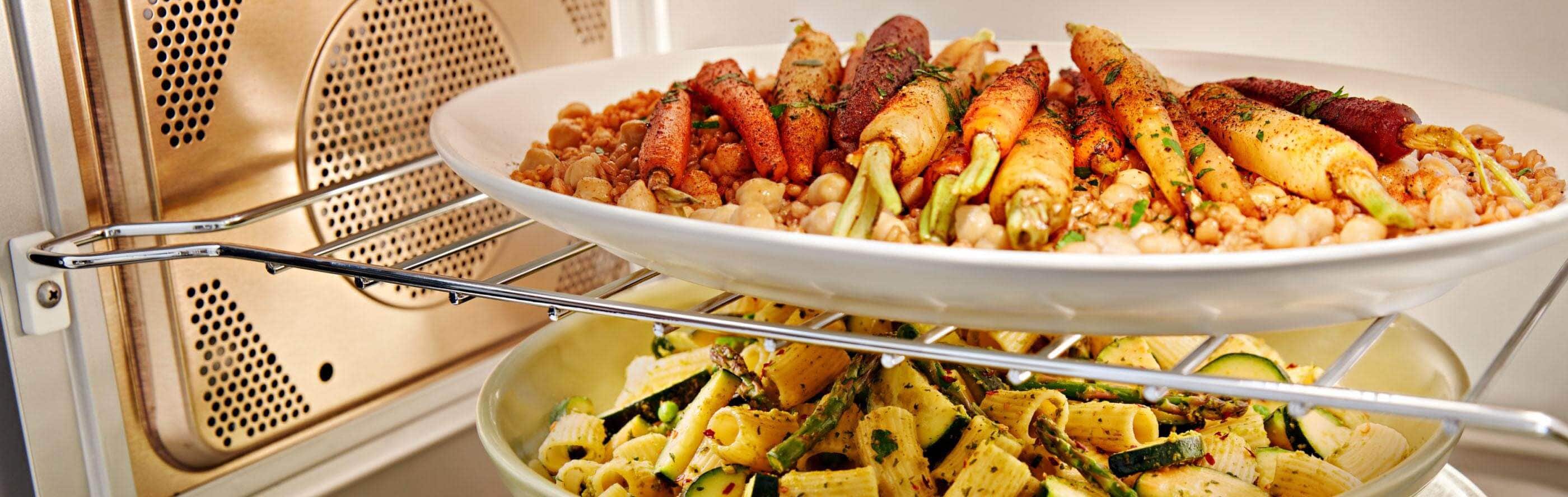
Credit: www.kitchenaid.com
Common Challenges And Fixes
Baking in a microwave oven comes with its own set of challenges that can affect the final outcome. If you’ve tried microwaving a cake or bread, you might have noticed some unexpected results like uneven cooking or texture changes. Understanding these common issues and how to fix them can help you get better results and enjoy microwave baking more.
Uneven Cooking Solutions
Microwave ovens often cook food unevenly because of how microwaves distribute heat. You might find some parts of your baked goods are overcooked while others remain raw.
- Use a turntable:If your microwave doesn’t have one, manually rotate the dish every minute or so.
- Choose the right container:Glass or ceramic dishes work better than metal or plastic for even heat distribution.
- Adjust power levels:Baking at medium or low power allows the heat to spread more evenly without overcooking the edges.
Have you noticed that some microwave cakes rise unevenly? Try stirring the batter well and smoothing it out in the dish before cooking.
Texture Differences To Expect
Baked goods from a microwave won’t have the same texture as those from a traditional oven. They tend to be denser and sometimes a bit rubbery or dry.
That’s because microwaves heat food quickly and don’t allow for the slow rise and crust formation you get in a regular oven. You might also see a lack of browning or crispiness.
To improve texture:
- Add extra moisture like yogurt or applesauce to your batter to prevent dryness.
- Use microwave-specific recipes that account for these texture differences.
- Consider finishing your baked goods in a toaster oven or under a broiler to add crispness.
How To Test Doneness
Testing if your microwave-baked dish is done can be tricky. The usual toothpick test still works but requires some patience.
- Insert a toothpick or skewer in the center. If it comes out clean or with a few moist crumbs, it’s done.
- If the toothpick is wet with batter, microwave in short bursts of 10-15 seconds and check again.
- Watch the texture closely—overcooking can happen fast in a microwave.
Have you ever pulled out a cake from the microwave that looked ready but sank in the middle? That’s often a sign it needs just a bit more cooking, but be careful not to dry it out.
Advanced Microwave Baking Tricks
Microwave ovens have evolved far beyond reheating leftovers. With a few advanced tricks, you can bake delicious treats right in your microwave. These techniques help you get better texture, flavor, and even presentation without needing a full-sized oven.
Using Microwave With Convection Feature
If your microwave has a convection mode, you get the best of both worlds: microwave speed and oven-like baking. This feature circulates hot air while cooking, giving a crispy crust and even browning that typical microwaves can’t achieve.
Try baking cookies or small cakes using convection mode. Keep an eye on the time since convection cooking can be faster. Adjust temperature settings just like in a regular oven for perfect results.
Combining Microwave And Conventional Oven
Sometimes, using both your microwave and conventional oven can improve baking outcomes. Start by microwaving batter or dough to quickly set the inside, then finish in a regular oven to develop a golden crust.
This approach cuts down baking time and keeps moisture locked inside. Have you noticed soggy edges when microwaving cakes? Switching halfway to the oven can solve that problem.
Creative Ingredient Substitutions
Microwave baking often requires ingredient tweaks to get the right texture. For instance, adding a bit more liquid or using yogurt instead of milk can prevent dryness. You might also use baking powder instead of yeast to speed up rising.
Experiment with oil instead of butter for quicker melting and softer crumb. What ingredient swaps have you tried that unexpectedly improved your microwave baked goods?
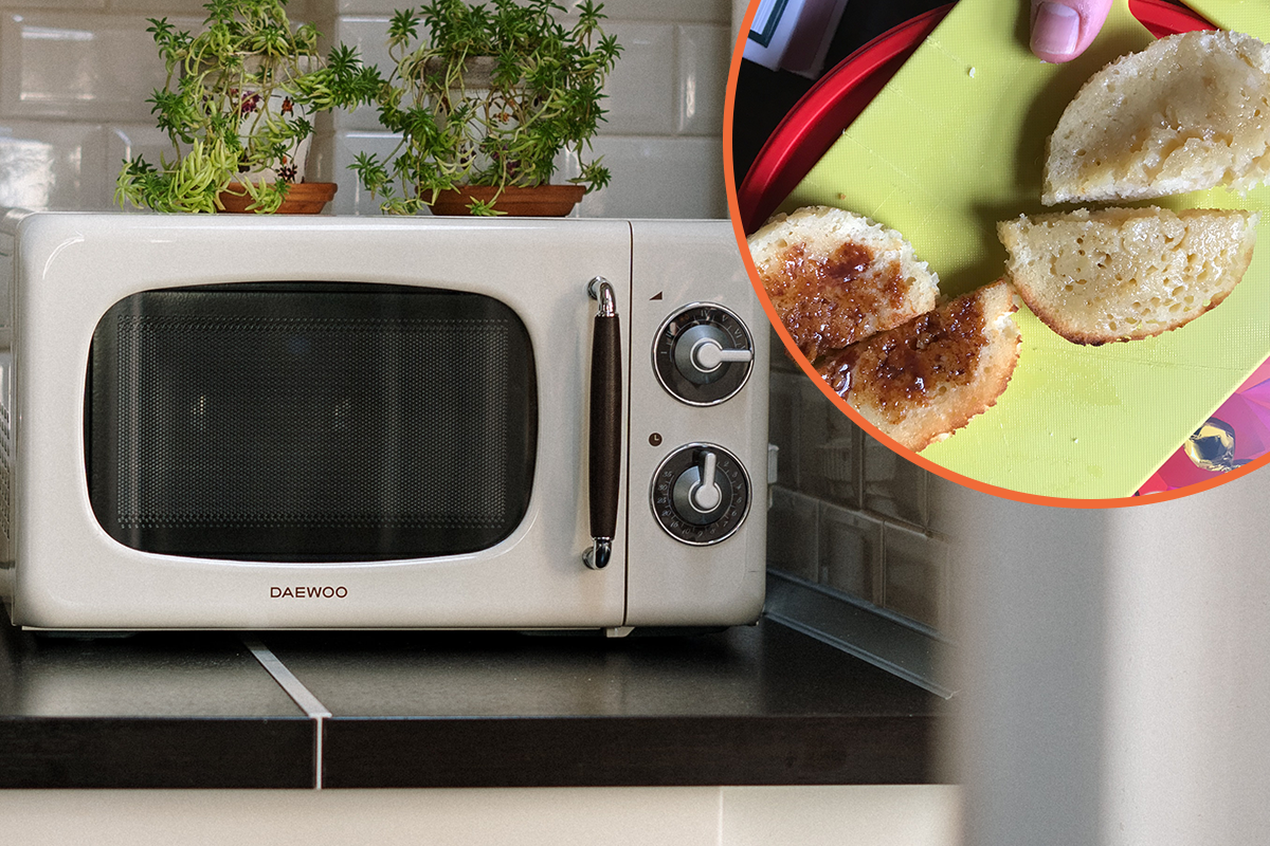
Credit: twistedfood.co.uk
Frequently Asked Questions
Can You Bake Cakes In A Microwave Oven?
Yes, you can bake cakes in a microwave oven. Use microwave-safe containers and adjust time for even cooking. Microwave baking is faster but may produce different textures than traditional ovens.
What Types Of Food Can You Bake In A Microwave?
You can bake cakes, muffins, bread, and casseroles in a microwave. Avoid foods needing crispiness, as microwaves don’t brown or crisp well.
How Long Does Baking Take In A Microwave Oven?
Microwave baking usually takes 5 to 15 minutes, depending on the recipe and power level. Always check for doneness early to avoid overcooking.
Do Microwave Ovens Need Special Baking Recipes?
Yes, microwave baking recipes differ from traditional ones. They use less fat and sugar and require shorter cooking times for best results.
Conclusion
Baking in a microwave oven can save time and effort. It works best for small cakes and simple recipes. The texture differs from oven-baked goods but still tastes good. Experiment with cooking times and ingredients for best results. Keep your microwave clean and use microwave-safe containers.
This method suits quick snacks or last-minute treats. Enjoy baking without heating your whole kitchen. Try it out and see how easy it can be!