Have you ever found yourself stuck with a flat car tire and no air pump in sight? You might wonder, “Can I inflate my car tire with a bicycle pump?”
It’s a question many drivers ask when emergencies strike. The good news is, you might be able to save the day with just a simple bike pump. But is it really that easy? And will it work without causing any damage?
Keep reading to find out exactly how you can use your bicycle pump to get your car tire back in shape—and what you need to watch out for to stay safe on the road.
Car Vs Bicycle Tires
Car tires and bicycle tires are made for different types of vehicles. Each tire type has unique features that fit its vehicle’s needs.
Many people wonder if they can inflate a car tire with a bicycle pump. To understand this, we need to look at the differences between car and bicycle tires.
Tire Size Differences
Car tires are much larger than bicycle tires. They are wider and thicker to support the weight of a car. Bicycle tires are smaller and lighter.
This size difference affects how much air each tire can hold. Car tires need more air volume than bicycle tires.
Pressure Requirements
Car tires usually require lower pressure than bicycle tires. Car tires hold air around 30 to 35 PSI. Bicycle tires need higher pressure, often between 40 and 120 PSI.
Because of this, a bicycle pump may struggle to fill a car tire quickly. It can take a long time and a lot of effort to reach the needed pressure.
Valve Types
Car tires mostly use Schrader valves. These valves are wider and easier to find adapters for. Bicycle tires can have Schrader or Presta valves, which are thinner and longer.
If your bicycle pump fits Schrader valves, it can work on car tires. Pumps made only for Presta valves need an adapter to fit car tires.
- Car tires: Mostly Schrader valves
- Bicycle tires: Schrader or Presta valves
- Presta valves require adapter for car tires

Credit: etenwolf.com
How Bicycle Pumps Work
Bicycle pumps help add air to tires by moving air inside the pump into the tire. They use a simple mechanism to push air through a small opening.
Understanding how bicycle pumps work can help you know if they can inflate car tires properly.
Pump Mechanism
A bicycle pump has a cylinder and a piston inside it. When you pull the handle, the piston moves up and draws air into the cylinder.
When you push the handle down, the piston forces air out through the hose and into the tire valve. A one-way valve stops air from coming back.
- The cylinder holds air inside the pump.
- The piston moves air in and out.
- A valve lets air flow in only one direction.
- The hose connects the pump to the tire valve.
Pressure Limits
Bicycle pumps are designed to reach pressures suitable for bike tires. Car tires usually need higher pressure.
| Type of Tire | Typical Pressure Range (PSI) | Bicycle Pump Limit (PSI) |
| Road Bike Tire | 80 – 130 | Up to 160 |
| Mountain Bike Tire | 30 – 50 | Up to 160 |
| Car Tire | 30 – 35 | Usually under 100 |
Because bicycle pumps cannot always reach the higher pressure needed for car tires, inflating a car tire fully may be difficult.
Using A Bicycle Pump On Car Tires
Many people wonder if a bicycle pump can fill car tires. Bicycle pumps are made for smaller tires. Car tires need more air and higher pressure.
You can use a bicycle pump for car tires in some cases. It works best for small pressure adjustments or emergencies. This guide explains how to do it safely.
Compatibility Check
Check if your bicycle pump fits the car tire valve. Most car tires use Schrader valves. Some bicycle pumps only fit Presta valves.
Make sure your pump can reach the needed pressure. Car tires need about 30-35 PSI. Many bicycle pumps do not reach this high.
- Verify valve type on your car tire
- Check if pump head fits Schrader valves
- Confirm pump pressure limit is above 35 PSI
Step-by-step Process
Start by removing the valve cap from the car tire. Attach the bicycle pump head tightly to the valve. Pump air slowly and steadily.
Stop often to check the tire pressure with a gauge. Do not overinflate the tire. Remove the pump when done and replace the valve cap.
- Remove valve cap
- Attach pump head firmly
- Pump air slowly
- Check pressure regularly
- Stop when desired pressure is reached
- Replace valve cap
Time And Effort Needed
Inflating a car tire with a bicycle pump takes more time than using a car pump. It can take 10 to 20 minutes or more.
You need physical effort to pump many times. This method works in emergencies but is not for regular use. Using a proper car tire pump is easier.

Credit: www.amazon.com
Pros And Cons
Using a bicycle pump to inflate a car tire can be useful in some cases. It is important to know its benefits and drawbacks before trying it.
This guide explains the pros and cons of using a bicycle pump for car tires.
Benefits Of Using A Bicycle Pump
A bicycle pump is often small and easy to carry. It can help you add air to a flat car tire when no other option is available.
It does not need electricity, so it works anywhere. This makes it handy during emergencies or on the road.
- Portable and easy to carry
- No need for electricity or batteries
- Can inflate a tire slowly to a safe level
- Good for small air top-ups
Drawbacks And Risks
A bicycle pump is not designed for car tires. It takes a long time to fill a large tire fully.
Using it incorrectly can cause damage or unsafe tire pressure. It may not reach the needed pressure for car tires.
- Very slow for large car tires
- May not reach proper tire pressure
- Can cause uneven or low inflation
- Risk of damaging valve or tire if forced
Alternative Options
Using a bicycle pump to inflate a car tire is possible but not very efficient. There are better options designed for car tires. These tools save time and effort.
This section looks at three common alternatives to a bicycle pump. Each option has its own benefits and limits. Choose the one that fits your needs.
Portable Air Compressors
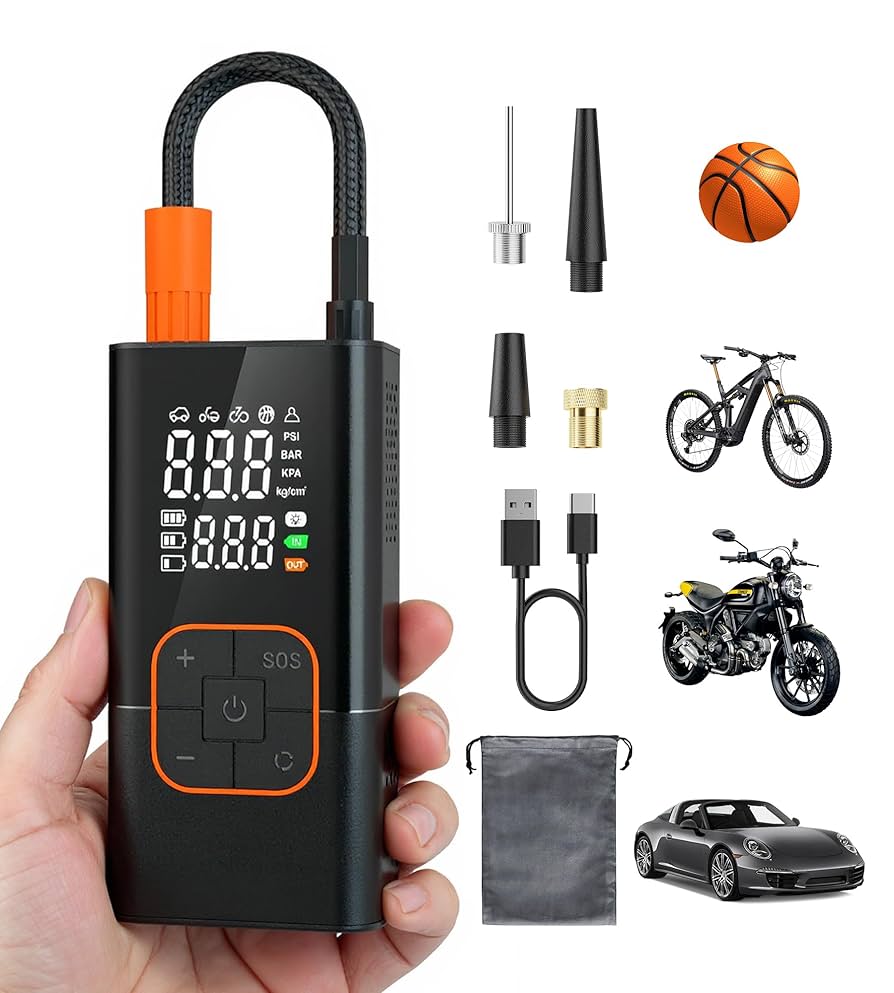
Portable air compressors are small and easy to carry. They plug into your car’s power outlet. These devices inflate tires quickly and accurately.
- Fast inflation speed
- Can inflate different tire sizes
- Often include pressure gauges
- Rechargeable or vehicle-powered
Manual Foot Pumps
Manual foot pumps use foot pressure to push air into the tire. They are more powerful than bicycle pumps. These pumps work well when electricity is not available.
| Feature | Manual Foot Pump | Bicycle Pump |
| Power Source | Foot pressure | Hand pressure |
| Inflation Speed | Moderate | Slow |
| Ease of Use | Requires less arm strength | Needs more arm effort |
| Portability | Medium | High |
Gas Station Air Pumps
Gas station air pumps are common and easy to find. Many are free or charge a small fee. They provide a fast way to fill your car tires.
- Use coin or card for payment
- Fast inflation with high pressure
- Usually include a built-in pressure gauge
- Available 24/7 at many locations
Safety Tips
Inflating a car tire with a bicycle pump can be done safely. You need to follow some key safety tips. These tips help you avoid damage and stay safe during the process.
Always be careful with pressure and the tire valve. Regular checks keep your tires in good shape and prevent problems on the road.
Avoiding Over-inflation
Over-inflating a tire can cause it to burst or wear out quickly. A bicycle pump may not show accurate pressure for car tires. Use a pressure gauge to check the tire pressure often.
- Check the car tire’s recommended pressure on the sidewall.
- Use a pressure gauge after pumping air.
- Stop pumping once the correct pressure is reached.
- Do not exceed the maximum pressure limit.
Proper Valve Handling
Car tires usually use Schrader valves, which are different from some bike valves. Handle the valve carefully to avoid leaks or damage. Remove the valve cap before inflating and replace it afterward.
- Clean the valve area before attaching the pump.
- Attach the pump head firmly to avoid air leaks.
- Do not force the pump if it does not fit well.
- Replace the valve cap tightly after inflation.
Regular Tire Maintenance
Checking your tires regularly keeps them safe and extends their life. Look for signs of damage, and keep the air pressure right. Use this table to help maintain your tires safely.
| Maintenance Task | Frequency | Reason |
|---|---|---|
| Check tire pressure | Once a week | Keep proper inflation for safety |
| Inspect for cracks or bulges | Once a month | Detect damage early |
| Rotate tires | Every 5,000 miles | Even tire wear |
| Check valve caps | Every time you pump air | Prevent air leaks |

Credit: www.amazon.com
Frequently Asked Questions
Can You Use A Bicycle Pump On Car Tires?
Yes, you can use a bicycle pump to inflate car tires. However, it requires more time and effort. Bicycle pumps are designed for lower volumes and higher pressures. Ensure the pump head fits the valve type of your car tire.
How Long Does It Take To Inflate A Car Tire?
Inflating a car tire with a bicycle pump can take 10-20 minutes. This depends on the tire’s size and the pump’s efficiency. Be patient and check the tire pressure regularly to avoid over-inflation.
Is It Safe To Inflate Car Tires With A Bicycle Pump?
Yes, it’s safe but requires caution. Ensure the bicycle pump is compatible with your car’s valve type. Avoid over-inflating by regularly checking the tire pressure. This method is best for minor inflation needs.
What Type Of Pump Is Needed For Car Tires?
A high-volume pump is ideal for car tires. Pumps with dual valve heads can fit both Presta and Schrader valves. This ensures compatibility with most car tires, making the process easier and more efficient.
Conclusion
A bicycle pump can fill a car tire in an emergency. It takes more time and effort than a car pump. Use it only for small pressure increases or quick fixes. Check the tire pressure with a gauge afterward. For regular use, a car tire pump works best.
Keep a proper pump in your car for safety. This way, you avoid flat tire troubles on the road. Remember, staying prepared is always smart and helpful.