Have you ever found yourself stuck with a flat car tire and wondered if your bike pump could save the day? It’s a question many drivers ask when they don’t have access to a proper air compressor or roadside assistance.
You might be surprised to learn that your simple bike pump could actually help you get back on the road—but there are some important things you need to know first. Keep reading to find out if pumping your car tire with a bike pump is really possible, how to do it right, and what to watch out for.
This could make all the difference the next time you face a tire emergency.
Bike Pump Types
Bike pumps come in different types. Each type has its own design and use. Knowing the types helps you pick the right pump.
You can use some bike pumps to fill car tires. The pump type affects how easy and fast it is.
Floor Pumps
Floor pumps are large and stand on the floor. They have a long handle and a wide base for stability.
These pumps can fill tires quickly. They work well for car tires because they create strong pressure.
- Stable and easy to use
- Can reach high pressure
- Good for home use
Hand Pumps
Hand pumps are smaller than floor pumps. You hold them in your hand and push the handle up and down.
They are portable but take more time and effort to fill a tire. They can work on car tires but are slower.
- Light and easy to carry
- Slower pumping speed
- Good for emergency use
Mini Pumps
Mini pumps are very small and fit in a backpack or bike frame. They are the most portable type.
These pumps are best for small tire pressure adjustments. Pumping a car tire with a mini pump takes a lot of time.
- Compact and lightweight
- Low air volume per stroke
- Suitable for minor inflation

Credit: www.amazon.com
Car Tire Valve Types
Car tires use different valve types to hold air. Knowing the valve type helps when pumping air.
Two common valves are Schrader and Presta. Each has unique features and uses.
Schrader Valves
Schrader valves are the most common on car tires. They look like a small metal tube with a pin in the middle.
- Wider valve stem
- Easy to find pumps and tools
- Works with most air compressors
- Has a spring-loaded check valve
- Used on cars, trucks, and motorcycles
You can pump a car tire with a bike pump if it fits the Schrader valve. Many bike pumps have adapters for Schrader valves.
Presta Valves
Presta valves are thin and often found on bicycles. They have a small lock nut at the top to open or close the valve.
| Feature | Presta Valve |
| Valve Diameter | 6 mm |
| Lock Nut | Yes, small screw |
| Common Use | Road and mountain bikes |
| Pressure Handling | High pressure |
| Compatibility | Less common on car tires |
Pumping a car tire with a Presta valve is rare. Most car tires do not use this valve type.
Compatibility Of Bike Pumps With Car Tires
Many people wonder if a bike pump can fill a car tire. The answer depends on several factors. You need to check the pump and tire compatibility.
Bike pumps are made for smaller tires with different pressure needs. Car tires need higher pressure and a different valve type.
Valve Fitting Issues
Bike pumps usually fit Schrader or Presta valves on bike tires. Car tires mostly use Schrader valves. Some bike pumps fit both valve types.
If your bike pump only fits Presta valves, it won’t work on a car tire. You need an adapter to use it on Schrader valves. Without the right fit, air will leak and pumping will be hard.
- Schrader valve: common on car tires
- Presta valve: common on road bikes
- Adapters can convert Presta to Schrader
- Check pump head for valve compatibility
Pressure Capacity Limits
Bike pumps often have lower pressure limits than car pumps. Car tires need more air pressure, usually between 30 and 35 PSI. Many bike pumps max out at 60 PSI or less.
Using a bike pump on a car tire can take a long time. You may not reach the needed pressure. Over-pumping a bike pump can cause damage.
- Car tires need 30-35 PSI usually
- Bike pumps may max at 60 PSI
- Bike pumps take longer to fill car tires
- Watch pressure gauge closely to avoid damage
Step-by-step Pumping Process
Pumping a car tire with a bike pump is possible with care and patience. This guide shows the steps to do it safely and effectively.
Follow these instructions to prepare, attach, pump, and check the tire pressure correctly.
Preparing The Tire And Pump
First, inspect the tire for damage or leaks. Remove any debris around the valve. Check that the bike pump is clean and in good condition.
- Look for cracks or punctures on the tire surface
- Clear dirt from the valve stem
- Make sure the pump hose and nozzle are not damaged
- Confirm the pump’s pressure rating matches your tire’s needs
Attaching The Pump
Secure the pump nozzle to the tire valve tightly. Most car tires use Schrader valves, which fit standard bike pumps. Lock the pump lever or twist the nozzle to hold it in place.
- Remove the valve cap from the tire
- Place the pump nozzle over the valve stem firmly
- Use the locking mechanism on the pump to secure the connection
- Check for air leaks around the valve connection
Pumping Techniques
Use steady and even strokes to pump air into the tire. Avoid rushing, as bike pumps deliver air slower than car pumps. Take breaks if your hand gets tired.
- Hold the pump handle with both hands
- Push the handle down smoothly and fully
- Pull the handle up slowly to refill the pump chamber
- Repeat until the tire feels firm
- Stop if the pump becomes hard to push or tire feels too tight
Checking Tire Pressure
Use a tire pressure gauge to check the pressure after pumping. Proper pressure improves car safety and tire life. Adjust by adding or releasing air as needed.
| Pressure Level | Action Needed |
| Below Recommended | Continue pumping air |
| At Recommended | Stop pumping and secure valve cap |
| Above Recommended | Release some air carefully |
Challenges And Solutions
Pumping a car tire with a bike pump can be tricky. The two use different valves and need different pressure levels.
This guide covers common problems and how to solve them. You will learn about pump efficiency, time, effort, and using adaptors.
Pump Efficiency
Bike pumps are made for smaller tires with lower air volume. Car tires need more air, so a bike pump works slower.
The small size of the bike pump limits how much air it can push each time. This makes it less efficient for car tires.
Time And Effort Required
Pumping a car tire with a bike pump takes much longer. You must pump many times to reach the needed pressure.
This process can be tiring. It requires strong arms and patience to finish pumping a car tire fully.
- Be prepared for more physical effort
- Take breaks if your arms get tired
- Check tire pressure regularly during pumping
Using Adaptors
Car tires use Schrader valves. Many bike pumps fit Presta valves, which are different in size and shape.
You can use an adaptor to connect the bike pump to the car tire valve. This helps create a tight seal for pumping.
- Choose the right adaptor for your valve type
- Attach the adaptor firmly to avoid air leaks
- Check the connection before pumping

Credit: www.amazon.ca
When To Use A Bike Pump For Car Tires
You can use a bike pump to fill car tires in certain cases. It works best if you have the right pump and enough time.
Bike pumps are usually smaller and create less air pressure fast. They are not the first choice but can help in some situations.
Emergency Situations
If your car tire loses air while you are far from a gas station, a bike pump can help you. It can add enough air to drive safely to a repair shop.
Bike pumps work best for small air losses. They may take longer to fill a tire than a car air compressor.
- Use a bike pump if you have no other option nearby
- Check the tire pressure often during pumping
- Do not rely on a bike pump for a fully flat tire
- Make sure the pump nozzle fits the car valve
Regular Maintenance
Bike pumps can help keep your car tires at the right pressure at home. They are good for small adjustments and top-ups.
For regular checks, a bike pump can keep your tires safe and improve fuel efficiency if you do not have a car pump.
- Use the bike pump to add a little air when pressure is low
- Check tire pressure with a gauge before and after pumping
- Keep your bike pump handy for quick fixes
- Do not overinflate the tires, follow car manual pressure
Alternatives To Bike Pumps
You can use different tools to inflate a car tire besides a bike pump. Some tools work faster and easier. They help fill the tire with the right pressure.
Here are two good alternatives that many drivers use. These options save time and effort compared to a bike pump.
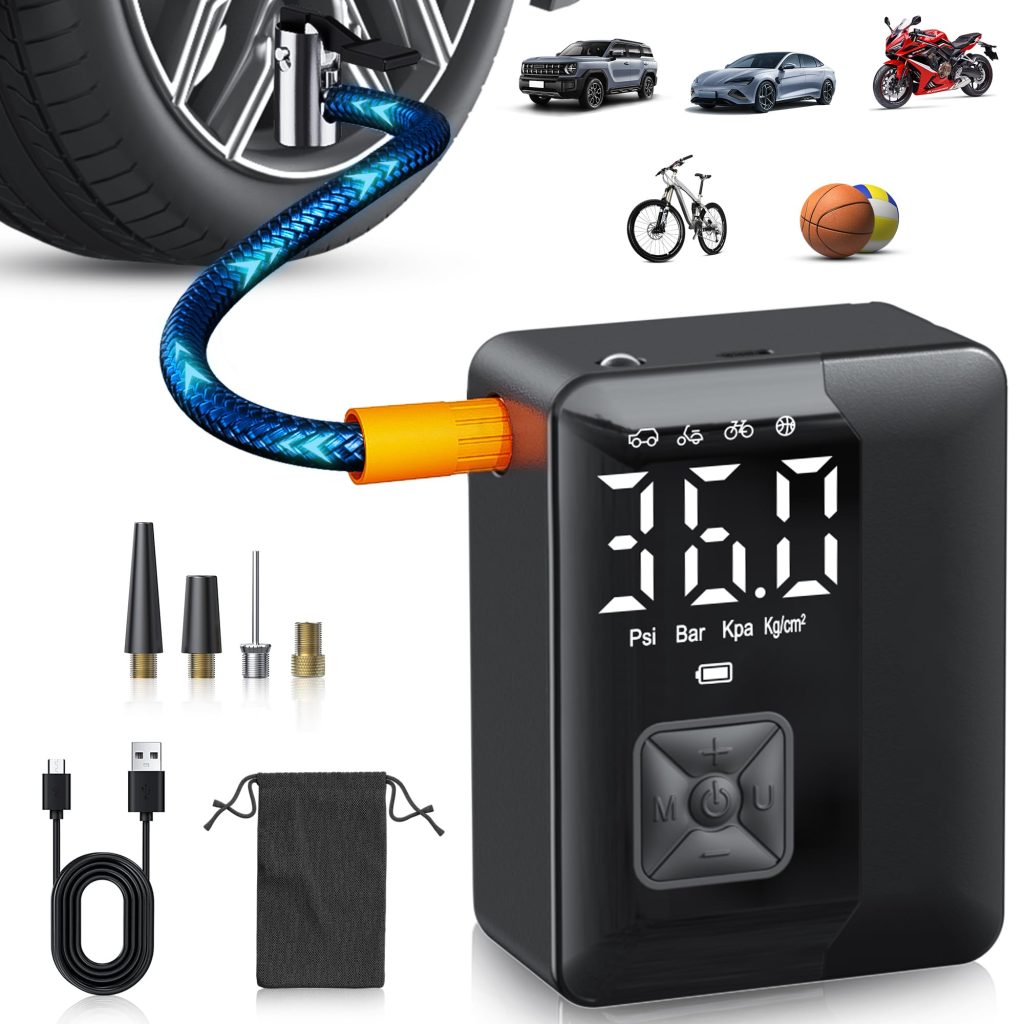
Portable Air Compressors
Portable air compressors are small machines that plug into your car’s power outlet. They work by pumping air into the tire quickly. Many models come with pressure gauges to avoid overinflation.
- Easy to carry and store in your car
- Can inflate tires in minutes
- Works on different tire sizes
- Some models include automatic shutoff
- Needs a power source, usually the car battery
Gas Station Air Pumps
Gas station air pumps are public machines that provide compressed air. They are often free or cost a small fee. These machines are designed to fill car tires quickly and with the right pressure.
| Feature | Details |
| Location | Found at most gas stations |
| Cost | Usually free or low cost |
| Power | Electric, no effort needed |
| Use | Good for quick top-ups |
| Limitations | May be busy or unavailable at times |

Credit: www.amazon.ca
Frequently Asked Questions
Can A Bike Pump Inflate A Car Tire Effectively?
Yes, a bike pump can inflate a car tire, but it takes more time and effort. Car tires require higher air volume and pressure than bike tires, so expect slower inflation.
What Type Of Bike Pump Works Best For Car Tires?
A high-pressure floor pump with a compatible valve adapter works best. It provides better airflow and fits car tire valves like Schrader valves.
How Long Does It Take To Pump A Car Tire With A Bike Pump?
It usually takes 10 to 20 minutes depending on tire size and pump efficiency. Using a bike pump is slower compared to an electric or car-specific pump.
Can Using A Bike Pump Damage The Car Tire Valve?
No, as long as the pump head matches the valve type and is used properly. Using the wrong adapter or forcing the pump can cause valve damage.
Conclusion
You can pump a car tire with a bike pump, but it takes time. Bike pumps work best for small tires. Car tires need more air and pressure. Using a bike pump requires patience and effort. It is helpful in emergencies or if no other pump is available.
Always check the tire pressure with a gauge. Keep a proper car tire pump for regular use. Pumping slowly and steadily gives better results. Remember, a bike pump is a temporary solution for car tires.