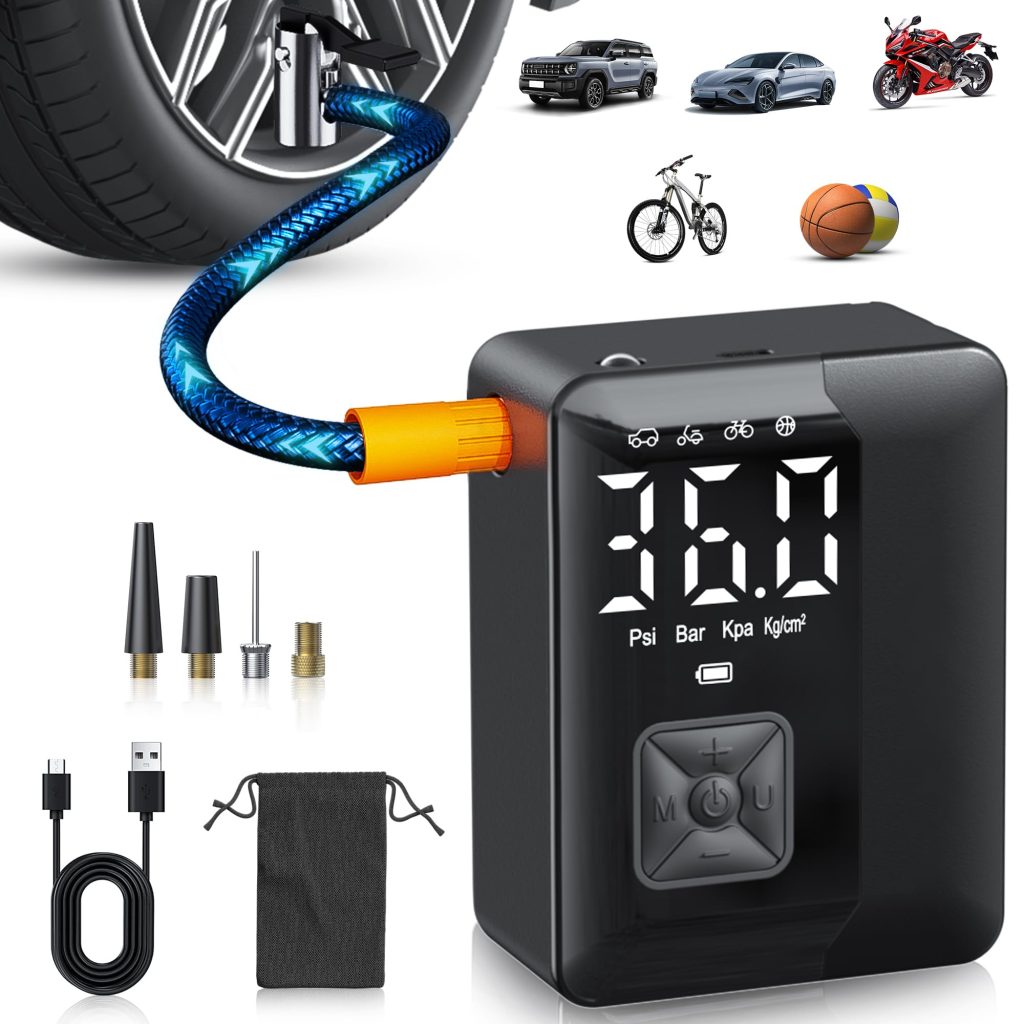
Have you ever found yourself with a flat car tire and no air pump nearby? You might wonder, “Can I use my bike pump to fill it up?”
It’s a question many people ask when they’re in a tight spot. The idea sounds simple, but there’s more to it than just attaching the pump. If you’re curious whether your bike pump can do the job without damaging your tire or wasting your time, keep reading.
This article will help you understand when and how to use a bike pump for your car tires—and what to watch out for—so you’re never left stuck again.

Credit: www.amazon.com
Bike Pump Types
Bike pumps come in different shapes and sizes. Each type suits different needs and situations.
Knowing about these pumps helps you choose the right one for pumping car tires.
Floor Pumps
Floor pumps are large and stable. They have a wide base and a long handle for easy pumping.
They can reach high pressure quickly. Floor pumps usually have a pressure gauge.
- Best for home use
- Can inflate car tires easily
- Requires a power stance to use
- Usually heavier than other pumps
Hand Pumps
Hand pumps are smaller and portable. They fit in your backpack or bike bag.
| Feature | Details |
| Size | Small to medium |
| Pressure | Medium, enough for bike tires |
| Use | Good for quick fixes on the road |
| For Car Tires? | Possible but takes effort |
Mini Pumps
Mini pumps are very small and light. They are easy to carry but pump slowly.
- Very portable
- Works well for low pressure tires
- Not ideal for car tires due to low volume
- Requires many pumps to inflate a car tire
Tire Valve Types
Tires use different types of valves to hold air inside. Knowing valve types helps you choose the right pump.
Some valves work well with bike pumps, others do not. It depends on the valve design and size.
Schrader Valves
Schrader valves are common on car tires and many bikes. They are wider and have a spring-loaded pin inside.
You can usually pump a car tire with a bike pump if it fits Schrader valves. Many bike pumps have Schrader settings.
- Valve diameter is about 8mm
- Has a valve core with a pin
- Easy to find adapters for bike pumps
Presta Valves
Presta valves are thinner and longer than Schrader valves. Bikes often have these valves, especially road bikes.
Bike pumps usually fit Presta valves, but car tire pumps may not. You need an adapter to use a bike pump on a car tire with Presta valves.
- Valve diameter is about 6mm
- Has a small lock nut on top
- Requires careful handling when pumping
Dunlop Valves
Dunlop valves are common in some countries on bikes. They look like a mix of Schrader and Presta valves.
Bike pumps usually fit Dunlop valves. Car tire pumps often do not fit because of valve size differences.
- Valve diameter is similar to Schrader
- Uses a rubber seal inside
- Less common outside certain regions
Compatibility Check
Using a bike pump to inflate car tires can be done in some cases. You must check if your bike pump fits the car tire valves. Also, make sure the pump can reach the needed pressure.
This guide will help you understand key points before pumping car tires with a bike pump.
Valve Adapter Needs
Car tires usually have Schrader valves, while many bike pumps fit Presta valves. You need an adapter to connect the bike pump to the car tire valve.
Adapters are small and easy to use. They help make sure the pump fits tightly on the tire valve.
- Check if your bike pump fits Schrader valves directly.
- Buy a valve adapter if the pump fits only Presta valves.
- Ensure a tight seal to avoid air leaks during pumping.
Pressure Requirements
Car tires need higher air pressure than bike tires. Most car tires require 30 to 35 PSI. Bike pumps may struggle to reach this pressure.
Check the maximum pressure your bike pump can handle before trying to inflate car tires.
- Check the car tire’s recommended PSI on the sidewall.
- Look at the bike pump’s maximum pressure rating.
- Do not exceed the pump’s limit to avoid damage.
Pump Capacity
Bike pumps are designed for smaller volumes of air. Car tires hold much more air, so pumping takes longer with a bike pump.
Consider the pump’s size and stroke length for efficiency. Larger pumps fill tires faster and with less effort.
- Small bike pumps require many strokes to fill a car tire.
- Floor pumps with larger barrels work better for car tires.
- Use a pump with a longer stroke for faster inflation.
Step-by-step Pumping
You can use a bike pump to fill car tires if you follow the right steps. It takes more time but works well for emergencies.
Below are clear instructions to help you pump your car tires safely with a bike pump.
Preparing The Tire
First, check the tire for damage or leaks. Make sure the valve is clean and ready for pumping.
Remove any dirt or dust around the valve to ensure a good connection with the pump.
Attaching The Pump
Identify the valve type on your car tire. Most car tires use Schrader valves, which fit bike pumps easily.
Attach the bike pump head firmly to the valve. Make sure it is tight to avoid air leaks during pumping.
- Press the pump head onto the valve
- Lock the pump head if it has a lever
- Check for air escaping around the connection
Inflating Properly
Start pumping slowly and steadily. Count your pumps to keep track of the air added.
Check the tire pressure often with a gauge. Stop pumping when the tire reaches the recommended pressure.
- Use a tire pressure gauge after every 10-20 pumps
- Do not overinflate the tire
- Remove the pump carefully after inflating
Common Challenges
Pumping car tires with a bike pump is possible but not always easy. Several challenges can make this task difficult or risky.
Understanding these challenges helps you decide if using a bike pump is a good idea for your car tires.
Pump Limitations
Bike pumps are made for bike tires, not car tires. They have smaller chambers and less power. This means it takes a long time to fill a car tire.
Some bike pumps can’t reach the high pressure car tires need. This can leave your tires underinflated, which is unsafe.
- Small volume of air per pump stroke
- Lower maximum pressure limits
- Longer time required to fill car tires
Valve Damage Risks
Car tires often use different valves than bikes. Forcing a bike pump on the wrong valve can cause damage. This may lead to air leaks or broken valves.
Care must be taken to use the right adapter and avoid over-tightening the pump head. Rough handling can harm the valve stem.
- Incorrect valve type compatibility
- Risk of bending or breaking valve stems
- Potential air leaks after pumping
Pressure Accuracy
Bike pumps may not have accurate pressure gauges for car tires. This can cause you to overinflate or underinflate the tires. Both conditions affect driving safety.
Checking pressure with a separate, reliable gauge is important. Relying only on a bike pump gauge is risky for car tire inflation.
- Bike pump gauges often lack precision
- Overinflation can cause tire damage
- Underinflation reduces tire performance
- Use a separate pressure gauge for best results
Tips For Better Inflation
You can use a bike pump to inflate car tires. It takes more effort but works in many cases.
Here are some tips to help you pump car tires better with a bike pump.
Using Valve Adapters
Car tires often have Schrader valves, while some bike pumps fit Presta valves. Use a valve adapter to match the pump to the tire.
Valve adapters make the connection secure and prevent air leaks during pumping.
- Check the valve type on your car tire first.
- Get the right adapter for Presta to Schrader or vice versa.
- Attach the adapter tightly before pumping.
Checking Tire Pressure
It is important to know the right tire pressure for your car. Check the pressure before and after pumping.
Use a tire pressure gauge for accurate readings. Proper pressure improves driving safety and tire life.
- Find the recommended pressure on the car door or manual.
- Check pressure with a reliable gauge.
- Inflate slowly and recheck pressure often.
Pump Maintenance
Keep your bike pump clean and in good condition. This helps it work efficiently for car tires.
Inspect the hose and seals to avoid air leaks. Lubricate moving parts if needed.
- Store the pump in a dry place.
- Check for cracks or damage before use.
- Clean the valve head regularly.
When To Avoid Bike Pumps
Using a bike pump to fill car tires seems easy. Still, there are times you should avoid it. Knowing these moments helps keep your tires safe and properly inflated.
Bike pumps work well for low-pressure tires. But for some tires and situations, they are not the best choice.
High-pressure Tires
Car tires need air pressure much higher than bike tires. Bike pumps often cannot reach the needed pressure. Using a bike pump might leave your tires underinflated.
Underinflated tires can cause poor fuel efficiency and uneven tire wear. Also, they reduce the car’s handling and safety on the road.
Large Vehicle Tires
Large vehicles like trucks and SUVs have much bigger tires. Bike pumps are not designed for these sizes. The volume of air needed is too large for a bike pump to fill efficiently.
- Bike pumps take a long time to fill large tires.
- The pressure may never reach the proper level.
- Using the wrong pump can damage tire valves.
Emergency Situations
In emergencies, a bike pump may not be the best tool. Quick and reliable inflation is important. Bike pumps often require many pumps and time.
| Situation | Best Pump Type | Why |
| Flat car tire on highway | Electric or air compressor | Fast and high pressure |
| Slow leak during a trip | Portable car tire pump | Designed for car tires |
| Bike tire inflation | Bike pump | Low pressure, small volume |

Credit: www.amazon.ca

Credit: etenwolf.com
Frequently Asked Questions
Can I Use A Bike Pump For Car Tires?
Yes, you can use a bike pump for car tires in emergencies. However, it takes longer and requires more effort than a car tire pump.
Will A Bike Pump Reach The Required Car Tire Pressure?
Bike pumps can reach the needed pressure but may be slow. Car tires typically require 30-35 PSI, which some bike pumps can achieve.
Are There Any Risks Using A Bike Pump On Car Tires?
Using a bike pump on car tires is generally safe. Just ensure the valve fits and monitor pressure to avoid overinflation.
How Long Does It Take To Pump Car Tires With A Bike Pump?
Pumping car tires with a bike pump can take several minutes. It depends on tire size and pump efficiency, making it less convenient.
Conclusion
Using a bike pump for car tires is possible. Yet, it’s not ideal. Bike pumps require more effort and time. Car tires need higher pressure. A proper car pump is efficient. It’s designed for the task. A bike pump serves in emergencies.
Keep it as a backup. Choose the right tool for convenience. Maintain tire health and safety. Proper inflation saves fuel. It ensures smooth rides. Always prioritize efficiency and ease. Consider investing in a quality car pump. Your efforts will pay off.