Have you ever wondered if your enameled cast iron cookware can go in the dishwasher? You’re not alone.
As someone who loves the convenience of a dishwasher, you might find yourself questioning if it’s safe for your beloved enameled pieces. Imagine the ease of simply placing your heavy cookware in the dishwasher without a second thought. But, is it really that simple?
Could there be hidden risks to the vibrant finish and durability of your cookware? We’ll explore the ins and outs of cleaning enameled cast iron, revealing the secrets that can help you maintain its beauty and longevity. Dive in to discover the best practices and make an informed decision that will keep your kitchen essentials in pristine condition.
Enameled Cast Iron Basics
Enameled cast iron has become a favorite in many kitchens, but understanding its basics can help you care for it properly. This cookware combines durability with a smooth, colorful finish, making it both practical and visually appealing. Knowing what makes enameled cast iron unique will guide you in deciding how to clean and maintain it, including whether it belongs in your dishwasher.
Material Composition
Enameled cast iron starts as traditional cast iron, known for excellent heat retention and even cooking. The cast iron core is coated with a layer of enamel, which is a type of glass fused to the metal at high temperatures.
This enamel layer prevents rusting and eliminates the need for seasoning, a common requirement for regular cast iron. It also creates a non-reactive surface, so acidic foods like tomato sauce won’t react with the metal.
Benefits Of Enameled Cast Iron
One of the biggest advantages is its ease of cleaning. The smooth enamel surface resists sticking, making hand washing simpler compared to bare cast iron.
It also offers versatility—you can use it on the stovetop, in the oven, and even for serving right at the table thanks to its attractive finish.
Have you noticed how enameled cast iron maintains temperature so well? This quality means your food stays warm longer after cooking, which is great for family dinners or entertaining guests.
Dishwasher Safety Concerns
Considering dishwasher safety for your enameled cast iron is crucial before you load it in. While the idea of convenience is tempting, ignoring potential risks can shorten the life of your cookware. Let’s take a closer look at what might happen when your prized pot meets the dishwasher.
Potential Damage Risks
Dishwashers use high heat and strong detergents that can be tough on enameled cast iron. Over time, the constant exposure to these elements can cause the enamel to crack or chip. Have you noticed any tiny chips or dull spots on your cookware after a dishwasher cycle? That’s a sign your pot is under stress.
Another risk is rust formation. If the enamel coating is compromised, the exposed cast iron underneath can start to rust quickly. Rust not only affects the look but also the cooking performance and safety of your cookware.
Effect On Enamel Coating
The enamel coating is what makes your cast iron easy to clean and resistant to sticking. However, dishwasher detergents contain harsh chemicals designed to break down food residues, which can erode this coating. You might find the vibrant color fading or the surface becoming rough after multiple washes.
Think about how often you want to replace or refinish your cookware. Is it worth risking the protective enamel for the sake of convenience? Hand washing with mild soap and a soft sponge can keep the coating intact and your cookware looking new for years.
Manufacturer Recommendations
Manufacturer recommendations offer valuable insights on caring for enameled cast iron cookware. These guidelines help maintain the cookware’s appearance and performance over time. Following the advice ensures safety and extends the life of your pots and pans.
Each brand has its own care instructions. These often include dishwasher use advice. Understanding these details can help you avoid damage and preserve the enamel coating.
Common Guidelines
- Most manufacturers advise against dishwasher cleaning.
- Dishwasher detergents can dull or chip the enamel surface.
- Hand washing with mild soap and a soft sponge is preferred.
- Rinsing and drying immediately prevents rust on exposed cast iron edges.
- Avoid abrasive scrubbers that scratch the enamel finish.
Exceptions And Variations
- Some brands claim their cookware is dishwasher safe.
- These models usually have a thicker or more durable enamel layer.
- Even with dishwasher-safe labels, frequent machine washing may cause wear.
- Check the user manual for specific cycle recommendations and detergent types.
- Some manufacturers suggest placing cookware on the top rack only.
- Temperature settings and drying cycles can affect enamel longevity.
Credit: www.surlatable.com
Hand Washing Vs Dishwasher
Choosing between hand washing and using a dishwasher for enameled cast iron matters. Both methods clean your cookware but affect it differently. Understanding these differences helps keep your cast iron looking great and lasting longer.
Cleaning Efficiency
Hand washing allows gentle scrubbing with soft sponges. You can target stuck-on food carefully. Dishwashers use strong jets and hot water. They clean fast but may miss tough stains. Soap in dishwashers can be harsh on enamel. Hand washing avoids harsh chemicals and maintains shine.
Longevity Of Cookware
Hand washing protects the enamel coating. It reduces chipping and cracking risks. Dishwashers expose cast iron to heat and moisture. This can wear down enamel over time. Frequent dishwasher use may cause dullness and damage. Hand washing extends the life of your cookware.
Proper Care Tips
Taking proper care of your enameled cast iron ensures it stays beautiful and lasts for years. Knowing the right cleaning and maintenance habits can prevent damage and keep the enamel coating intact. Let’s look at some effective ways to care for this valuable kitchen tool.
Cleaning Techniques
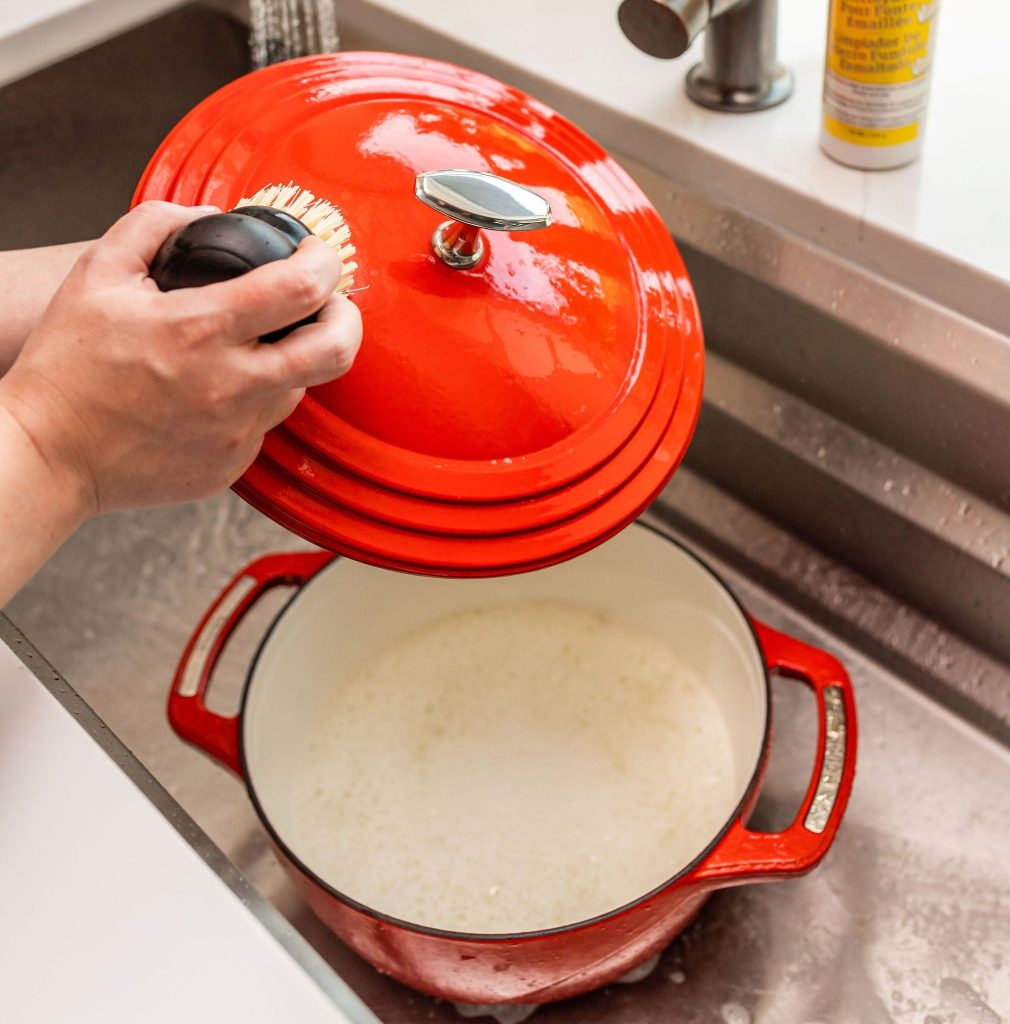
Always avoid putting enameled cast iron in the dishwasher. Harsh detergents and high heat can dull the enamel and cause cracking over time. Instead, hand wash your cookware with warm, soapy water and a soft sponge.
If food is stuck, soak the pot or pan in warm water for 15-20 minutes before scrubbing gently. Use a non-abrasive brush or sponge to protect the enamel surface from scratches. Steer clear of metal scouring pads or harsh cleansers, as they can damage the finish.
Have you ever noticed stubborn stains that just won’t come off? Try a paste of baking soda and water, gently rubbing it on the stain. This simple trick often lifts tough spots without harming the enamel.
Maintenance Practices
After cleaning, dry your enameled cast iron thoroughly to prevent rust on exposed metal rims. Store it with the lid off or place a paper towel inside to allow airflow and avoid moisture buildup.
Heating your cookware gradually is key. Avoid sudden temperature changes, like adding cold water to a hot pot, which can cause the enamel to crack. Consider seasoning the edges with a little oil to keep them protected and shiny.
Have you checked your cookware regularly for chips or cracks? Even small damages can lead to bigger problems down the line. Address these issues early by contacting the manufacturer or using enamel repair kits designed for cast iron.
:max_bytes(150000):strip_icc()/faw-le-creuset-sale-tout-171cc011293b49e7b23446970db17dfe.jpg)
Credit: www.foodandwine.com
Troubleshooting Common Issues
Dealing with problems after cleaning your enameled cast iron can be frustrating. Knowing how to handle common issues like stains, residue, chips, and cracks can save your cookware and keep it looking great. Let’s dive into what you can do when your favorite pot or pan doesn’t come out of the dishwasher as expected.
Stains And Residue
Have you noticed stubborn stains or a filmy residue on your enameled cast iron after dishwasher use? This often happens because the dishwasher detergent is too harsh or because food particles didn’t rinse off completely before washing.
To fix this, try soaking the cookware in warm water with a little baking soda for about 15 minutes. Then, gently scrub with a soft sponge. Avoid abrasive cleaners that can damage the enamel surface.
If stains persist, a paste made from cream of tartar and water can work wonders. Apply the paste, let it sit for a few hours, then rinse thoroughly. This approach often brightens the enamel without scratching.
Chips And Cracks
Noticing chips or cracks on your enameled cast iron? These usually happen due to sudden temperature changes or accidental drops. Unfortunately, once the enamel is chipped or cracked, it cannot be fully repaired at home.
However, you can take steps to prevent further damage. Avoid using metal utensils and never expose the cookware to extreme temperature shifts, like putting a hot pot directly into cold water.
If the damage is small, you can continue using the cookware cautiously, but large chips can lead to rust on the cast iron underneath. Consider contacting the manufacturer for professional repair options or replacement advice.

Credit: www.amazon.com
Frequently Asked Questions
Can You Safely Wash Enameled Cast Iron In Dishwasher?
Dishwashers can damage the enamel coating over time. Hand washing with mild soap preserves the finish and prevents chipping. Avoid harsh detergents to keep the cookware looking new.
Does Dishwasher Harm Enameled Cast Iron Cookware?
Dishwashers may cause discoloration and dullness on enameled cast iron. High heat and strong detergents degrade the enamel surface. Hand washing extends the life and appearance of your cookware.
How To Clean Enameled Cast Iron Without Dishwasher?
Use warm water, mild dish soap, and a soft sponge. Avoid abrasive scrubbers that scratch the enamel. Dry thoroughly after washing to prevent rust on exposed cast iron edges.
Why Avoid Dishwasher For Enameled Cast Iron Pans?
Dishwasher cycles are too harsh for enamel coatings. The intense heat and strong chemicals can cause cracking or chipping. Hand washing ensures gentle care and maintains the cookware’s durability.
Conclusion
Enameled cast iron needs gentle care to last longer. Dishwashers can harm its coating and finish. Hand washing with warm water and mild soap works best. Avoid harsh scrubbing or metal sponges. Dry it well to prevent rust. Taking simple steps keeps your cookware safe and beautiful.
Treat your enameled cast iron with care every time. It will serve you well for many meals. Easy cleaning helps maintain its quality and look. Small efforts make a big difference in the long run.