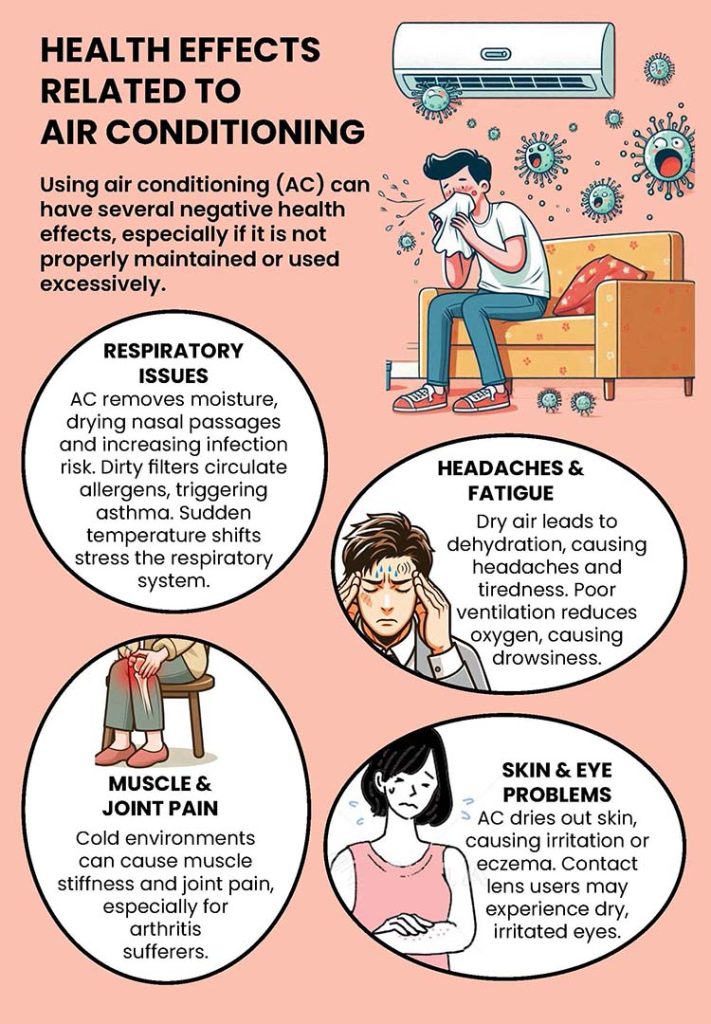
Have you ever noticed your skin feeling tight or your throat getting dry after running your air conditioner? You might be wondering, does your air conditioner cause dry air?
Understanding how your AC affects the air around you can help you stay comfortable and healthy. You’ll discover the surprising truth about air conditioners and dry air—and learn simple ways to keep your indoor air fresh and balanced. Keep reading to find out what’s really happening inside your home when the AC is on.

Credit: theconversation.com
How Air Conditioners Work
Air conditioners cool the air by removing heat from inside a room. The cooling mechanismuses a refrigerant that absorbs heat as it changes from liquid to gas. This process lowers the air temperature.
Air is pulled into the AC unit and passes over cold coils. These coils cool the air and also remove moisture. The air circulation processpushes this cool, dry air back into the room. This can sometimes make the air feel drier.
Air Conditioning And Humidity
Air conditioners cool the air by removing heatand moisture. Moisture gathers on the cooling coils and drips away. This process lowers the humidityinside a room.
Lower humidity can make the air feel drier. Dry air can cause dry skin, throat irritation, and static electricity. Some people may feel uncomfortable in very dry rooms.
Many modern AC units have settings to control humidity levels. Using a humidifier alongside the AC can help keep air balanced. Good ventilation also helps to maintain comfortable indoor humidity.
Do Air Conditioners Cause Dry Air?
Many people think air conditioners remove moisturefrom the air. This makes them believe ACs cause dry air. Actually, air conditioners cool the air by removing heat. Some moisture may condense on the cooling coils, but AC units do not dry out the room air directly. Dry air inside homes often happens because of low outdoor humidityor heating systems, not just the AC.
Studies show air conditioners mainly lower temperature. Moisture level changes depend on the AC type and room conditions. Some ACs have dehumidifying featuresthat reduce humidity. But standard ACs do not significantly dry the air by themselves. Proper ventilation and humidifiers can help keep indoor air comfortable and balanced.
Health Effects Of Dry Indoor Air
Dry air inside can cause breathing problems. It may lead to coughing, wheezing,and throat irritation. People with asthma or allergies may feel worse.
Dry air also affects the skin and eyes. It can cause dry, itchy skinand red, irritated eyes. This discomfort can last if the air stays dry for long.
Preventing Dry Air Indoors
Using humidifiershelps add moisture to dry indoor air. They keep the air comfortable and prevent dry skin and throat. Choose a humidifier that fits your room size. Clean it often to stop mold and bacteria growth.
Good ventilationlets fresh air in and moves dry air out. Open windows for a few minutes daily. Use fans to improve air flow. This reduces dryness and keeps air fresh.
| Maintenance Task | Why It’s Important | How Often |
|---|---|---|
| Change Air Filters | Keeps air clean and moist | Every 1-3 months |
| Clean Coils | Improves cooling and moisture control | Once a year |
| Check Drainage | Prevents water buildup and mold | Every 6 months |
Credit: franklinautomotive.com
Choosing The Right Air Conditioner
Some air conditioners come with built-in humidity control. These models help keep the air from becoming too dry. They work by balancing coolingand moisture levels. You might see features like humidifiersor dehumidifiersinside the unit.
Choosing the right air conditioner means thinking about energy use. Energy-efficient models save money and use less power. Look for units with an Energy Star rating. They cool your home without wasting energy.
| Type | Humidity Control | Energy Efficiency |
|---|---|---|
| Window AC | Basic, may dry air | Moderate |
| Split AC | Some models control humidity | High |
| Portable AC | Usually no humidity control | Low to moderate |
| Central AC | Advanced humidity control options | Very high |

Credit: getcanopy.co
Frequently Asked Questions
Do Air Conditioners Make The Air Dry?
Yes, air conditioners can make the air dry. They work by removing moisture from the air to cool it down. This process can lead to reduced humidity levels in a room, resulting in dry air. Using a humidifier can help maintain a balanced humidity level.
How Do Air Conditioners Affect Indoor Humidity?
Air conditioners reduce indoor humidity by extracting moisture from the air. As they cool the air, they also remove excess moisture, leading to drier indoor conditions. This can be beneficial in humid climates but might cause discomfort in already dry environments.
Can Air Conditioning Cause Dry Skin?
Yes, air conditioning can contribute to dry skin. By lowering humidity, air conditioners can reduce moisture in the skin. To combat this, consider using moisturizers and a humidifier. This helps maintain skin hydration and prevents dryness.
Is Dry Air From Ac Bad For Health?
Dry air from air conditioning can cause discomfort and health issues. It may lead to dry skin, irritated eyes, and respiratory problems. To minimize these effects, maintain proper hydration and consider using a humidifier to add moisture back into the air.
Conclusion
Air conditioners can lower indoor humidity and cause dry air. This dryness may lead to dry skin, throat, and eyes. Using a humidifier helps keep moisture in the air. Regularly drinking water also reduces discomfort from dry air. Proper maintenance of your AC keeps it working well.
Balancing cooling and humidity creates a more comfortable home. Understanding this helps you stay healthy during hot weather.