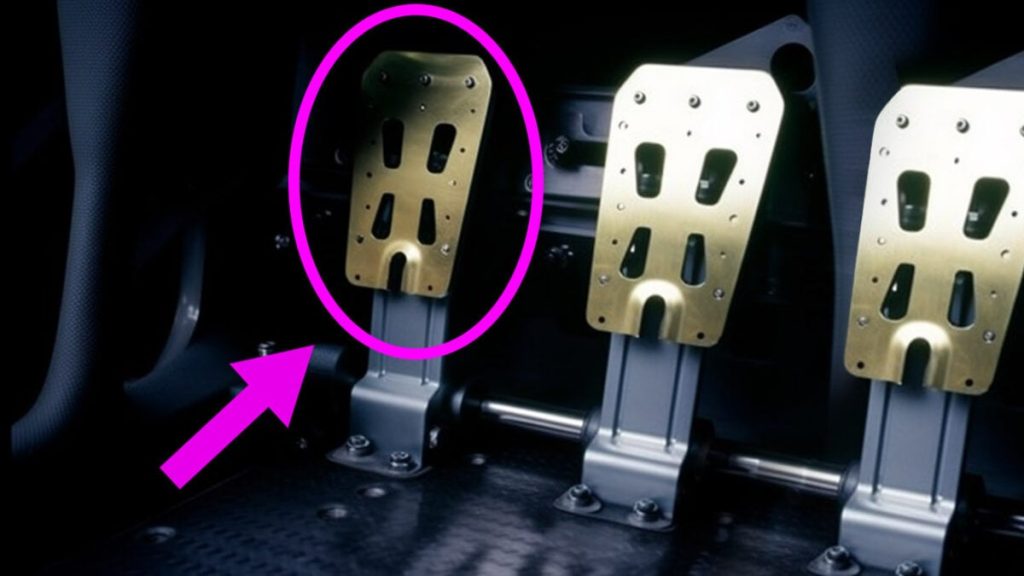
Have you ever wondered how Formula 1 drivers control their incredibly fast cars? You might be surprised to learn that F1 cars do have pedals—but they are quite different from the ones in your everyday vehicle.
Understanding these pedals is key to grasping how drivers manage speed, braking, and gear changes at lightning-fast speeds. If you want to know exactly what pedals F1 cars have and how they work, keep reading. This insight will change the way you see racing forever.

Credit: www.reddit.com
F1 Car Controls
Formula 1 cars use pedals to control speed and braking. These pedals differ from those in regular cars.
Understanding the pedal setup helps explain how drivers manage these fast machines.
Standard Pedal Setup
F1 cars have three main pedals: throttle, brake, and clutch. Each pedal has a specific function during a race.
- Throttle pedal:Controls the engine power and speed.
- Brake pedal:Slows down or stops the car quickly.
- Clutch pedal:Used to change gears, mostly at race start or pit stops.
Differences From Road Cars
F1 pedals work differently compared to normal cars. They are built for speed and precision.
| Feature | F1 Car Pedals | Road Car Pedals |
| Number of Pedals | Three (throttle, brake, clutch) | Usually three (throttle, brake, clutch) or two (auto) |
| Brake Pedal | Highly sensitive, carbon fiber material | Less sensitive, metal or rubber material |
| Clutch Use | Used mainly at start and pit stops | Used constantly during gear changes |
| Throttle Response | Instant and precise for quick acceleration | Slower and smoother for comfort |
Throttle Pedal
Formula 1 cars do have pedals, including a throttle pedal. This pedal controls the engine power. Drivers use it to speed up or slow down their cars.
The throttle pedal is very sensitive and needs careful control. It helps drivers manage speed on straights and corners.
Function And Sensitivity
The throttle pedal controls how much fuel and air enter the engine. Pressing it more increases power and speed. Even small changes affect the car’s behavior.
- It allows smooth acceleration out of corners.
- Drivers use it to avoid wheel spin.
- Its sensitivity helps in precise speed control.
- Throttle input impacts tire wear and fuel use.
Driver Control Techniques
| Technique | Description |
| Feathering | Light and careful pedal pressing to avoid sudden speed changes. |
| Modulation | Adjusting pressure to balance speed and traction. |
| Full Throttle | Pressing pedal fully on straights for max power. |
| Lift-Off | Releasing pedal quickly to slow down or prepare for a corner. |
Brake Pedal
F1 cars do have brake pedals. These pedals control the braking system, which is very advanced. The brake pedal in an F1 car is different from a regular car’s pedal.
The design and function of the brake pedal help drivers slow down quickly and safely at high speeds. Let’s look at how it works in detail.
Brake-by-wire System
F1 cars use a brake-by-wire system. This means the brake pedal does not connect directly to the brakes with cables or pipes. Instead, sensors detect the pedal pressure and send signals to control the brakes.
This system helps balance braking between the front and rear wheels. It also works with the car’s electronics to improve performance and safety.
Pressure And Modulation
Drivers must apply the right amount of pressure on the brake pedal. Too much pressure can lock the wheels, and too little will not slow the car enough. Modulation means the driver controls the pressure smoothly.
- Light pressure for small speed reductions
- Medium pressure for cornering and slow turns
- Heavy pressure for rapid deceleration or emergencies
| Pressure Level | Use Case |
| Light | Adjusting speed on straights |
| Medium | Entering and exiting corners |
| Heavy | Stopping quickly or avoiding crashes |

Credit: medium.com
Clutch Pedal
F1 cars have pedals like regular cars, but they are special. The clutch pedal is one of these pedals.
The clutch pedal helps drivers control the engine and gearbox. It is very important for smooth driving.
Usage In Starts And Shifts
The clutch pedal is mostly used at the start of the race. It helps the car move without stalling the engine.
Drivers press the clutch to change gears smoothly. This prevents damage and keeps the car fast.
- Press clutch pedal to start moving
- Release clutch slowly to avoid jerks
- Use clutch when shifting gears
Manual Vs Semi-automatic Gearboxes
Older F1 cars had manual gearboxes with a clutch pedal for every shift. Drivers controlled all gear changes.
Modern F1 cars use semi-automatic gearboxes. They have paddle shifters and no clutch pedal for shifting.
- Manual gearboxes need clutch pedal for starts and shifts
- Semi-automatic gearboxes use paddle shifters
- Clutch pedal is only used at the start with semi-automatic gearboxes
Uncommon Pedals
Formula 1 cars have pedals like regular cars, but they also include some unusual controls. These extra pedals help drivers handle complex tasks quickly during a race.
These uncommon pedals are important for fine control and improving car performance in tight situations. They are tailored to each driver’s needs and style.
Additional Controls On Pedals
Besides the usual accelerator, brake, and clutch pedals, F1 cars may have extra pedals or pedal adjustments. Some of these include:
- Brake Bias Adjuster: Allows the driver to change brake balance between front and rear.
- Clutch Paddle: Used for quick starts and shifting during pit stops.
- Throttle Mapping Switch: Adjusts engine power delivery based on track conditions.
- Engine Brake Control: Helps slow the car by controlling engine resistance.
Customization For Drivers
Teams customize pedals to match driver preferences. This includes pedal shape, spacing, and response force. Customization helps drivers stay comfortable and react faster.
| Customization Type | Purpose |
| Pedal Position | Fits driver’s leg length and seating style |
| Pedal Shape | Improves grip and control during races |
| Pedal Pressure | Matches driver’s strength and pedal feel preference |
| Additional Controls | Added for specific race strategies or track needs |

Credit: www.autocarindia.com
Pedal Materials And Design
F1 cars have pedals that drivers use to control speed and braking. These pedals are designed with special materials and shapes. They focus on being very light and safe to help drivers perform well.
The design of F1 pedals also pays attention to how comfortable and easy they are to use. This helps drivers react quickly during races.
Lightweight Construction
F1 pedals are made from materials that are very light but strong. This helps reduce the car’s overall weight. Lighter pedals also improve the driver’s control and speed.
- Carbon fiber is used for its light weight and strength.
- Titanium parts provide durability without adding much weight.
- Aluminum alloys offer a good balance between weight and toughness.
Ergonomics And Safety
Pedals must fit the driver’s foot well and be safe to use. They have special shapes and textures to prevent slipping. Safety is a top priority to avoid accidents during fast driving.
| Feature | Purpose |
|---|---|
| Textured pedal surface | Prevents foot from slipping |
| Adjustable pedal position | Fits different driver sizes |
| Reinforced pedal arms | Withstands high pressure and force |
Driver Training With Pedals
F1 cars have pedals that drivers use to control speed and braking. Training with pedals helps drivers react fast and drive smoothly.
Drivers spend many hours practicing with pedals to get used to the feel and timing. This training is key for their success on the track.
Simulators And Practice
Simulators let drivers practice pedal control without being in a real car. They help drivers learn how to brake, accelerate, and shift gears.
- Simulators mimic real pedal resistance and position.
- Drivers can practice different track conditions safely.
- They help improve pedal timing and coordination.
- Simulators allow repeated practice without wear on the car.
Building Muscle Memory
Muscle memory lets drivers press pedals correctly without thinking. It comes from many hours of training and practice.
| Training Activity | Focus | Benefit |
| Simulator Sessions | Pedal feel and timing | Safe and repeatable practice |
| On-Track Practice | Real pedal response | Adapting to car behavior |
| Strength Exercises | Foot and leg muscles | Better pedal control |
| Reflex Drills | Quick pedal response | Faster reaction times |
Frequently Asked Questions
Do F1 Cars Have Accelerator Pedals?
Yes, F1 cars have an accelerator pedal. It is located on the right side. This pedal controls the speed of the car. It is crucial for quick acceleration and maintaining high speeds during races.
How Many Pedals Do F1 Cars Have?
F1 cars typically have two pedals. These include the accelerator and brake pedals. Unlike road cars, they do not have a clutch pedal. The clutch is controlled by paddles on the steering wheel.
Do F1 Drivers Use A Clutch Pedal?
No, F1 drivers do not use a traditional clutch pedal. Instead, they use paddle shifters located on the steering wheel. This allows for quick and efficient gear changes during high-speed racing.
Where Is The Brake Pedal In An F1 Car?
The brake pedal in an F1 car is on the left side. It is crucial for controlling the car’s speed and executing sharp turns. The brake pedal is highly sensitive, providing precise control to the driver.
Conclusion
F1 cars do have pedals, but they are different from regular cars. Drivers use pedals to control speed and braking precisely. The pedals are designed for quick and sharp movements. This setup helps drivers handle high speeds safely. Understanding these pedals shows how complex F1 cars really are.
Each pedal plays a key role in racing performance. Knowing this makes watching F1 more interesting and fun.