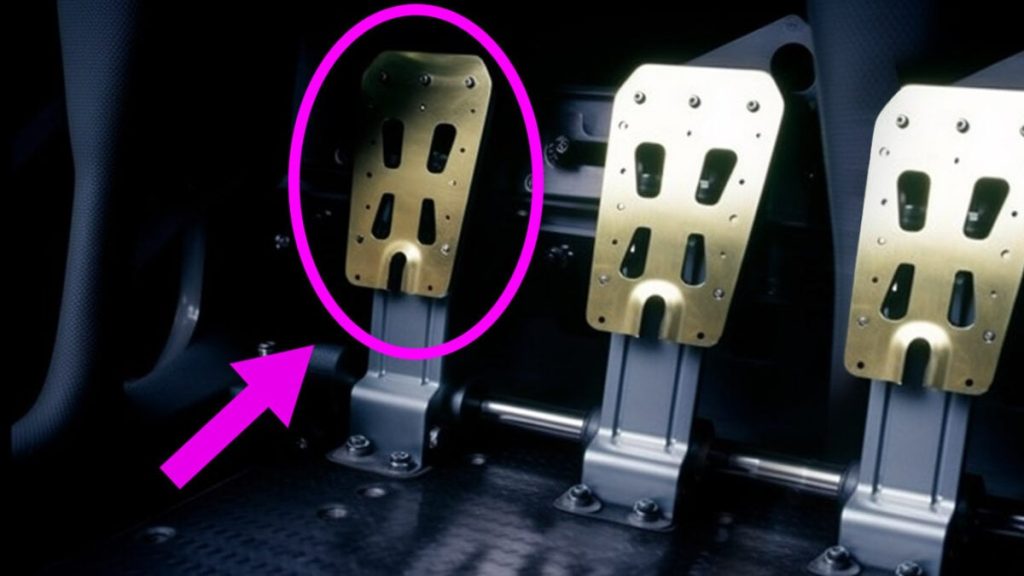
Have you ever wondered how Formula 1 drivers control their incredibly fast cars? You might be surprised to learn that, yes, Formula 1 cars do have pedals—but they’re not quite like the ones in your everyday vehicle.
If you think it’s just about pressing the gas and brake, think again. The way these pedals work is finely tuned to give drivers the speed and precision they need on the track. Keep reading, and you’ll discover how these tiny controls make a huge difference in racing performance—and what makes them so unique compared to regular cars.
Your curiosity about F1 cars is about to be fully satisfied!

Credit: www.autocarindia.com
Pedals In Formula 1 Cars
Formula 1 cars have pedals just like regular cars. These pedals control key functions during a race.
Though they look simple, each pedal has a special role. Drivers must use them with great skill.
Types Of Pedals Used
Formula 1 cars have three main pedals. These are the accelerator, brake, and clutch pedals.
- Accelerator Pedal:Controls the speed of the car by increasing engine power.
- Brake Pedal:Slows down or stops the car by activating the braking system.
- Clutch Pedal:Used to change gears manually, mainly during race starts and pit stops.
Functions Of Each Pedal
| Pedal | Main Function | When Used |
| Accelerator | Increase speed | Throughout the race |
| Brake | Reduce speed or stop | Before corners, during overtakes |
| Clutch | Engage/disengage gears | Race start, pit stops |
Steering Wheel Controls
Formula 1 cars do have pedals, but the steering wheel holds many important controls. Drivers use these controls to manage the car while racing.
The steering wheel is not just for steering; it is a complex control center. It helps drivers adjust settings quickly during a race.
Buttons And Switches Explained
The steering wheel has many buttons and switches. Each one controls a specific part of the car’s performance.
- Radio button to talk to the team
- Engine mode switches to change power levels
- Brake balance adjustment switches
- ERS (Energy Recovery System) deployment buttons
- Clutch paddle for starts
These controls let drivers make fast decisions without moving their hands from the wheel.
Role In Car Operation
The buttons and switches help drivers control the car’s speed and handling. They adjust engine power, brakes, and energy use.
Drivers can change settings to save fuel or get more speed on straights. These controls improve lap times and safety.
- Changing brake balance helps in corners
- Adjusting engine mode manages fuel and power
- Using ERS boosts acceleration
- Radio button keeps the driver in contact with the team
Differences From Road Cars
Formula 1 cars have pedals like road cars but with many differences. These changes help drivers control the car at very high speeds.
The pedals in a Formula 1 car are designed for racing, not everyday driving. They focus on quick responses and precise control.
Pedal Layout Comparison
Road cars usually have three pedals or two for automatic cars. Formula 1 cars have only two pedals for brake and throttle.
The layout in Formula 1 cars is very close together. This helps drivers switch between pedals fast during races.
- Road cars: clutch, brake, and accelerator pedals
- Formula 1 cars: no clutch pedal, just brake and accelerator
- Pedals in F1 are smaller and placed for quick access
Unique Control Features
Formula 1 pedals have special features for better control. The brake pedal is very sensitive and can be adjusted.
Drivers use the throttle pedal to control power carefully. The pedals work with advanced systems for speed and safety.
- Brake pedal pressure can be finely controlled
- Throttle pedal is linked to the engine and energy recovery systems
- Pedals are connected to electronic sensors for fast response

Credit: f1chronicle.com
Driver Interaction With Controls
Formula 1 cars do have pedals, but they differ from regular cars. Drivers use pedals to control speed and braking precisely.
The pedals are part of a complex system that helps drivers handle the car at very high speeds on the track.
Footwork Techniques
Drivers use their feet to control three main pedals: throttle, brake, and clutch. The throttle pedal controls speed.
The brake pedal helps slow the car down quickly. The clutch is used mainly during starts or gear changes.
- Throttle pedal controls acceleration
- Brake pedal controls deceleration
- Clutch pedal helps in gear shifting
- Precise foot pressure is crucial
- Drivers often “heel-and-toe” to balance pedals
Hand Coordination
Drivers use their hands on the steering wheel to steer and control car settings. The wheel has many buttons and switches.
These controls adjust engine power, brake balance, and more. Hands must work fast and smoothly with foot movements.
- Steering wheel controls car direction
- Buttons adjust car settings
- Hands and feet work together
- Quick reactions improve lap times
Technological Advances In Controls
Formula 1 cars use pedals, but they are very different from normal cars. Technology has changed how drivers control their cars. The pedals are part of a complex system that helps drivers go faster and stay safe.
These advances make driving easier and more precise. The pedals connect to electronic systems that give drivers better control over the car.
Electronic Systems Integration
Modern Formula 1 cars have pedals linked to electronic systems. These systems manage many parts of the car at once. For example, the throttle pedal controls the engine’s power electronically.
The brake pedal works with advanced brake-by-wire technology. This system adjusts the brakes using computers for better performance. It helps drivers brake smoothly and avoid locking the wheels.
- Throttle pedal controls engine power electronically
- Brake pedal uses brake-by-wire for smooth braking
- Pedals send data to the car’s computer systems
- Systems adjust power and brakes for better control
Future Trends
Future Formula 1 cars will have even smarter pedals. Sensors will give faster and more precise feedback to drivers. This will help drivers react quicker during races.
There may also be pedals that adjust themselves based on track conditions. This will make driving safer and more efficient. Technology will keep improving how drivers control their cars.
- Pedals with faster sensor feedback
- Self-adjusting pedals for different tracks
- More integration with car’s electronic systems
- Improved safety and control features

Credit: www.reddit.com
Frequently Asked Questions
Do F1 Cars Have Accelerator Pedals?
Yes, Formula 1 cars have accelerator pedals. They function similarly to those in regular cars. Drivers use them to control speed. The pedal is highly sensitive, allowing precision in acceleration. This is crucial for maintaining optimal speed on various track sections.
How Many Pedals Are In An F1 Car?
Formula 1 cars have two pedals: an accelerator and a brake pedal. Unlike regular cars, there is no clutch pedal. The clutch is controlled by paddles on the steering wheel. This setup allows for quicker gear changes and more focus on driving dynamics.
What Materials Are F1 Pedals Made From?
F1 pedals are made from lightweight and durable materials like carbon fiber or titanium. These materials ensure the pedals are strong yet light, contributing to the overall performance. The design prioritizes durability to withstand the rigorous demands of racing conditions.
How Do F1 Drivers Use Brake Pedals?
F1 drivers use brake pedals to decelerate rapidly when approaching corners. The brake system is highly advanced, allowing precise control. Drivers apply significant force for effective braking. This precision is essential for maintaining control and achieving fast lap times.
Conclusion
Formula 1 cars do have pedals, but they differ from regular cars. Drivers use them for braking and accelerating. The pedals are designed for fast, precise control. This helps drivers handle high speeds and sharp turns. Understanding these pedals gives insight into the skill needed in F1 racing.
It shows how technology and driver ability work together. Racing is not just about speed but control too. Now you know a key part of what makes F1 cars unique.