Are you wondering if you need to add PAG oil after vacuuming your car’s AC system? You’re not alone.
Many car owners find themselves puzzled over this crucial step in AC maintenance. Ignoring it could lead to costly repairs and discomfort during sweltering summer days. But don’t worry, we’ve got you covered. We’ll break down the ins and outs of PAG oil, why it’s essential, and how it ensures your AC runs smoothly.
By the end, you’ll know exactly what steps to take to keep your car’s air conditioning system in top shape. Ready to make your ride more comfortable and avoid unnecessary headaches? Let’s dive in!
Role Of Pag Oil In Ac Systems
PAG oil plays a crucial role in the performance and longevity of your car’s AC system. Without the right amount and type of oil, the system can suffer from poor lubrication, leading to wear and tear. Understanding how PAG oil functions helps you decide if you need to add it after vacuuming your AC system.
What Is Pag Oil?
PAG oil stands for Polyalkylene Glycol oil. It is a synthetic lubricant specifically designed for automotive air conditioning systems. Unlike regular oils, PAG oil mixes well with refrigerants like R134a, ensuring smooth operation.
PAG oil comes in different viscosities, such as PAG 46, 100, and 150. Choosing the right viscosity depends on your car’s AC system requirements. Using the wrong type can cause damage or reduce efficiency.
Importance In Refrigeration Cycle
PAG oil lubricates critical components like the compressor, preventing friction and overheating. Without proper lubrication, the compressor can seize up, leading to costly repairs.
Additionally, PAG oil helps seal gaps inside the compressor, improving the system’s overall efficiency. It travels with the refrigerant through the cycle, ensuring all moving parts stay protected.
Have you ever wondered why your AC stops cooling after a repair or vacuum? Sometimes, the oil level drops during servicing, so adding the correct amount of PAG oil is essential to keep your system running smoothly.

Credit: www.youtube.com
Why Vacuuming Is Critical
Vacuuming your AC system is more than just a routine step—it’s an essential process that protects the entire system’s performance and longevity. Skipping or rushing through this step can lead to serious issues that might cost you time and money down the road. Understanding why vacuuming is critical will help you appreciate its role in keeping your AC running smoothly.
Purpose Of Vacuuming Ac Systems
Vacuuming removes all the air and moisture trapped inside the AC system before you add refrigerant or PAG oil. Air and moisture can cause corrosion inside the system, damaging vital parts like the compressor. You want to create a clean, sealed environment that allows the refrigerant and oil to work efficiently.
Think of it like preparing a clean canvas before painting. If you don’t, the final result won’t be as good. A proper vacuum ensures your AC system operates at peak performance without unexpected breakdowns.
Effects Of Moisture And Air
Moisture inside your AC system can freeze, blocking refrigerant flow and causing uneven cooling. It also reacts chemically with refrigerants, creating harmful acids that degrade components over time. Even small amounts of air reduce the efficiency of the system, forcing it to work harder and consume more energy.
Have you ever noticed your AC struggling to cool after a repair? It’s often because moisture or air wasn’t fully removed. Proper vacuuming eliminates these risks, saving you from costly repairs and discomfort later.
When To Add Pag Oil After Vacuum
Knowing when to add PAG oil after vacuum is key for your vehicle’s AC system. Vacuuming removes air and moisture, which keeps the system running smoothly. After this step, oil may need replenishing to maintain proper lubrication and function.
Adding the right amount of PAG oil at the correct time protects the compressor and other parts. Too little oil can cause damage, while too much can reduce efficiency. Understanding the signs and factors helps decide the best moment to add oil.
Signs Oil Needs Replenishing
- Unusual noise from the AC compressor during operation
- Reduced cooling performance or weaker airflow
- Visible oil leaks around AC components or hoses
- Overheating compressor or frequent system cycling
- Oil level reading below manufacturer’s recommended range
Factors Influencing Oil Addition
- Amount of oil lost during system evacuation and repair
- Type and capacity of the AC system in the vehicle
- Manufacturer’s specifications for oil quantity and type
- Condition and age of AC components affecting oil retention
- Whether the compressor was replaced or serviced recently
Credit: www.tsxclub.com
How To Add Pag Oil Correctly
Adding PAG oil correctly is important for your vehicle’s air conditioning system. The right amount and proper technique keep the system running smoothly. Overfilling or underfilling can cause damage or poor performance. Follow clear steps and use the right tools to avoid mistakes.
Tools And Equipment Needed
- PAG oil specific to your vehicle’s AC system
- Clean syringe or oil injector
- Protective gloves
- Shop towels or rags
- Safety glasses
- Service manual or oil capacity guide
Step-by-step Procedure
- Wear gloves and safety glasses to protect yourself.
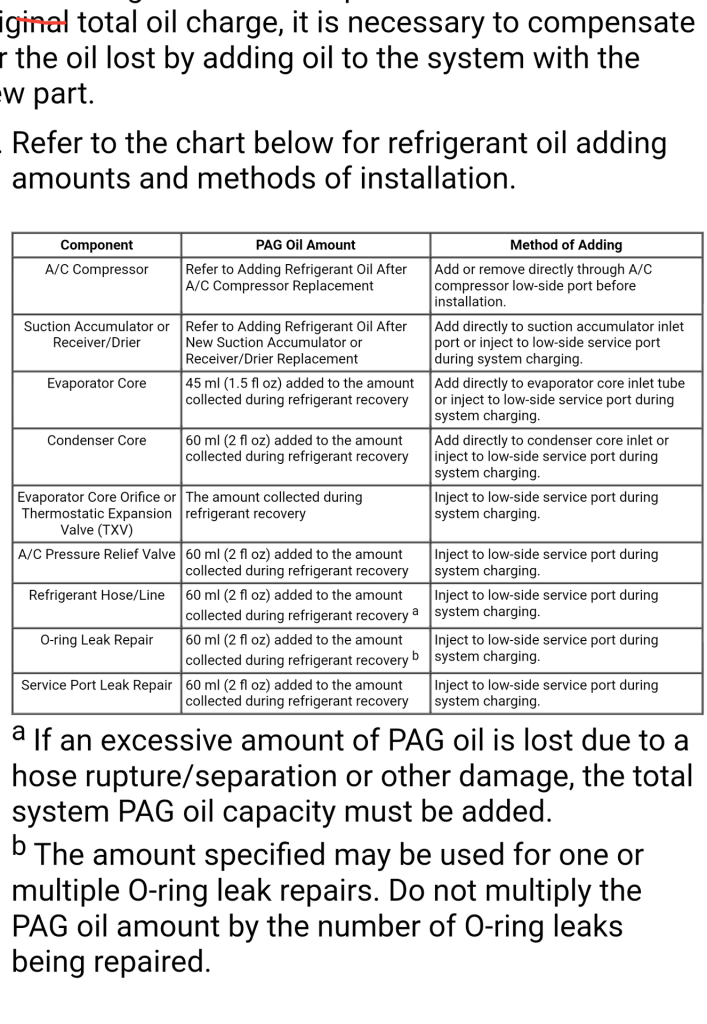
- Check your vehicle’s service manual for the correct oil type and amount.
- Locate the low-pressure service port on the AC system.
- Attach the syringe or oil injector to the PAG oil container.
- Draw the exact amount of PAG oil needed.
- Carefully inject the oil into the low-pressure port.
- Remove the injector and quickly replace the port cap.
- Wipe any spilled oil with a clean rag to avoid dirt buildup.
- Run the AC system to help circulate the oil evenly.
Common Mistakes To Avoid
Adding PAG oil after vacuuming an air conditioning system requires care. Many people make simple mistakes that cause damage or reduce system efficiency. Avoiding these errors saves time and money. Understanding common pitfalls helps maintain your car’s AC properly.
Overfilling Oil
Too much PAG oil harms the AC system. Excess oil can clog components and reduce cooling power. It may cause higher pressure inside the system. This leads to leaks and damage over time. Always add the correct amount of oil. Check the vehicle manual or service guide for exact quantities. Use a precise measuring tool to avoid guessing.
Using Wrong Oil Types
PAG oil comes in different types and viscosities. Using the wrong type can cause poor lubrication. The AC compressor may fail or wear out faster. Some PAG oils are not compatible with certain refrigerants. Mixing oil types also leads to problems. Always use the oil specified for your car’s system. Confirm the grade and type before adding it.

Credit: www.amazon.com
Tips For Maintaining Optimal Oil Levels
Maintaining optimal oil levels is crucial after vacuuming your AC system to ensure smooth performance and prevent damage. Skipping this step or guessing the amount of PAG oil needed can lead to costly repairs or inefficient operation. Let’s look at practical ways you can keep your oil levels in check and your system running perfectly.
Regular Inspections
Checking your oil levels regularly helps catch issues before they escalate. Use a clear sight glass or dipstick to measure the oil and verify it matches the manufacturer’s specifications. If you notice a drop in oil level after vacuuming, it’s a clear sign you need to add more PAG oil.
Don’t wait for warning signs like strange noises or poor cooling to inspect the oil. Schedule these checks as part of your routine maintenance, especially after any repairs or system openings. Small, consistent checks save you from big headaches later.
Monitoring System Performance
Your AC system’s performance directly reflects its oil health. Keep an eye on cooling efficiency and listen for any unusual sounds from the compressor. A sudden drop in performance often signals insufficient lubrication caused by low oil levels.
Tracking system pressure with gauges can also reveal oil-related problems early. If pressure readings don’t stabilize after vacuuming, it could mean oil levels are off. Have you noticed any performance changes after your last vacuum service? That’s your cue to check the oil.
Frequently Asked Questions
Do I Need To Add Pag Oil After Vacuuming Ac System?
Yes, adding PAG oil after vacuuming is essential. It lubricates the AC compressor and ensures proper functioning. Vacuuming alone does not restore lost oil, so replenishing it maintains system efficiency and prevents damage.
How Much Pag Oil Should Be Added After Vacuum?
The amount of PAG oil to add depends on your vehicle’s AC system capacity. Refer to the manufacturer’s guidelines for exact quantities to avoid overfilling or underfilling, which can harm the compressor.
Can Vacuuming Ac System Remove All Old Pag Oil?
No, vacuuming removes moisture and air, but it does not remove old PAG oil. The oil remains inside the system’s components, so adding fresh oil after vacuuming is necessary for proper lubrication.
What Happens If I Don’t Add Pag Oil After Vacuuming?
Failing to add PAG oil can cause compressor damage due to insufficient lubrication. It leads to overheating, increased wear, and eventual AC system failure, resulting in costly repairs.
Conclusion
Adding PAG oil after vacuum helps keep your AC system working well. The oil lubricates key parts and prevents damage. Without the right amount, the system may fail or leak. Always check the manufacturer’s guide for correct oil type and quantity.
Proper oil levels ensure cool air and longer system life. Small steps like this save time and money later. So, don’t skip adding PAG oil after vacuuming your AC. It makes a real difference.