
Are you thinking about getting a portable air conditioner but aren’t sure if it needs venting? You’re not alone.
Many people wonder if these handy devices can cool your space without extra setup. Understanding whether your portable AC needs venting can save you time, money, and frustration. Keep reading to discover the truth behind portable air conditioners and learn how to make the most of your cooling solution.
How Portable Acs Work
Portable air conditioners cool rooms by moving heat from inside to outside. They use a simple system to change warm air into cooler air. This makes them useful in places where permanent AC is not an option.
Understanding how portable ACs work helps explain why they need venting. Two main parts show this process: the cooling mechanism and the heat exhaust process.
Cooling Mechanism
Portable ACs use a refrigerant to absorb heat from indoor air. The warm air passes over cold coils, where the refrigerant cools it down. The cooled air then blows back into the room, lowering the temperature.
- Warm air enters the AC unit.
- Air passes over cold evaporator coils.
- Refrigerant absorbs heat from the air.
- Cooled air returns to the room.
- Refrigerant carries heat away to be released outside.
Heat Exhaust Process
The heat absorbed from the room must leave the portable AC. This heat moves to the outside through a vent hose. Without venting, the heat stays in the room, making the AC less effective.
| Component | Function |
| Exhaust Hose | Removes hot air from inside to outside |
| Fan | Pushes heated air through the exhaust hose |
| Window Vent Kit | Seals opening where exhaust hose exits |

Credit: www.dreo.com
Why Venting Matters
Portable air conditioners cool rooms by moving heat outside. Venting is the process that removes this heat. Without venting, the heat stays inside.
Understanding venting helps you use your air conditioner well. It makes your room cooler and saves energy.
Heat Removal Importance
Portable air conditioners take heat from inside the room. They push this heat outside through a vent hose. This stops the room from getting warmer.
- Heat builds up if not vented out.
- Heat inside makes the air conditioner work harder.
- Venting removes hot air and moisture.
- This keeps your room cool and dry.
Energy Efficiency Impact
Proper venting helps your air conditioner use less energy. It avoids extra work from the machine. This means lower electricity bills.
| Venting Status | Energy Use | Cooling Effectiveness |
| Proper Venting | Low | High |
| No Venting | High | Low |
Types Of Venting Options
Portable air conditioners need venting to remove hot air. The vent directs warm air outside your room. There are several venting methods to choose from. Each option fits different room setups and needs.
Choosing the right venting type helps your air conditioner work well. It also keeps your space comfortable and cool. Below are common venting options for portable air conditioners.
Window Vent Kits
Window vent kits are the most popular choice. They come with a panel that fits into your window frame. The kit includes a hose that connects the air conditioner to the window panel. This setup lets hot air flow outside easily.
- Fits most standard windows
- Easy to install and remove
- Prevents insects and dust from entering
- Allows fresh air while venting hot air
Through-the-wall Venting
This venting type uses a hole drilled through an exterior wall. The air conditioner hose connects directly to this wall vent. It is a more permanent venting solution. This method keeps windows free and clear.
| Pros | Cons |
| Does not block windows | Requires drilling a wall hole |
| Secure and stable vent connection | Installation may need professional help |
| Good for rooms without suitable windows | Less flexible if you move the AC |
Sliding Door Adaptors
Sliding door adaptors fit into the gap of a sliding door. These kits include an adjustable panel and hose connection. They allow venting without blocking the door. This option works well if you do not want to use windows.
Key features of sliding door adaptors:
- Adjusts to different door sizes
- Easy to install and remove
- Allows outdoor access while venting
- Prevents insects and dust from entering

Credit: www.reddit.com
Consequences Of No Venting
Portable air conditioners need venting to remove hot air. Without venting, they cannot work properly.
This article explains what happens if you do not vent a portable air conditioner.
Reduced Cooling Performance
Without venting, the hot air stays inside the room. This stops the portable air conditioner from cooling effectively.
- The unit recycles warm air instead of fresh air.
- The cooling coils get warmer and less efficient.
- The air conditioner works harder and uses more energy.
- The room does not reach the desired cool temperature.
Increased Room Temperature
If no venting happens, the room temperature may rise over time. This is because heat from the unit builds up inside.
| Effect | Cause | Result |
|---|---|---|
| Heat buildup | Hot air stays inside | Room gets warmer |
| Humidity rise | Condensation not removed | Room feels damp and uncomfortable |
| Air conditioner strain | Harder work without vent | Shorter device lifespan |
Installation Tips For Venting
Portable air conditioners need venting to work well. Venting removes hot air from your room. Proper venting stops heat from building up.
Good venting helps your air conditioner cool your space faster. It also saves energy and keeps your unit safe.
Proper Hose Placement
Place the exhaust hose so hot air flows outside. Avoid sharp bends or kinks in the hose. This keeps air moving smoothly.
Use a window kit to secure the hose. The hose should be as short as possible to improve efficiency.
- Point the hose directly out a window or vent
- Keep the hose straight without twisting
- Use window kits or adapters for tight seals
- Avoid placing the hose near heat sources
Sealing Gaps
Seal gaps around the window and hose. Gaps let hot air back inside. This lowers cooling power and wastes energy.
Use weather stripping, foam, or tape to close openings. Check seals regularly to keep them tight.
- Use foam inserts in window gaps
- Apply weather stripping around window edges
- Seal hose connections with tape
- Inspect seals for damage often
Safety Precautions
Follow safety rules to prevent accidents. Keep the unit dry and away from water. Avoid blocking vents or air intake.
Do not use damaged hoses or kits. Make sure the electrical outlet matches the unit’s power needs.
- Keep the AC away from water sources
- Do not block exhaust or intake vents
- Use undamaged, recommended hose kits
- Plug into proper power outlets only
Alternatives To Venting
Portable air conditioners usually need venting to remove hot air. Some models and devices offer ways to cool without traditional venting. These alternatives can work better in places where venting is hard.
This section covers two popular options that reduce or avoid venting: dual hose models and evaporative coolers. Each offers a different way to keep rooms cool.
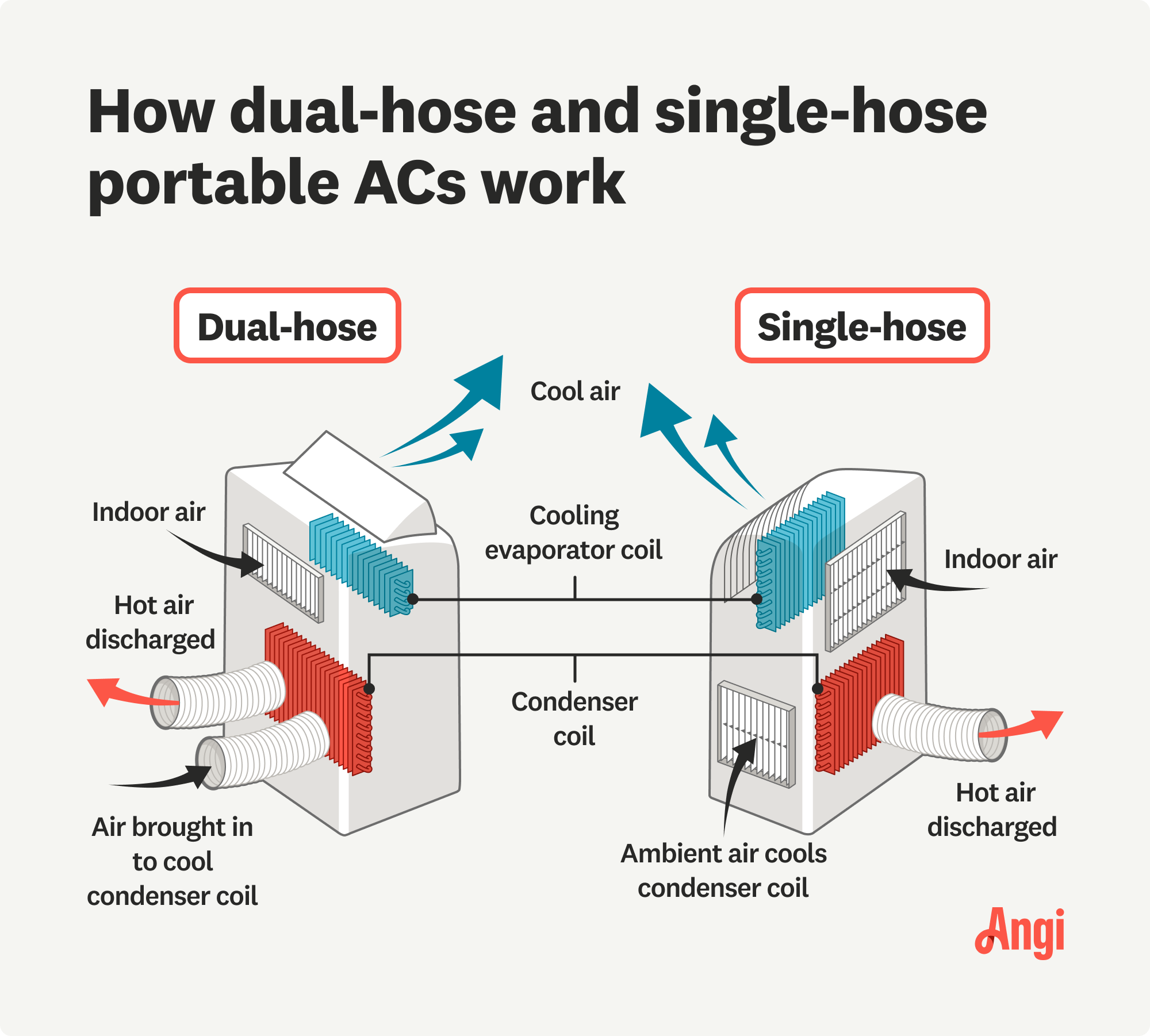
Dual Hose Models
Dual hose portable air conditioners use two separate hoses. One hose pulls in fresh air from outside to cool the unit. The other hose pushes hot air outside. This design improves efficiency.
- One hose brings in air for cooling the system.
- The second hose vents hot air out of the room.
- They avoid negative air pressure inside the room.
- They cool rooms faster than single hose units.
Evaporative Coolers
Evaporative coolers, also called swamp coolers, cool air by adding moisture. They do not use traditional venting. Instead, they blow cool, moist air into the room.
| Feature | Evaporative Cooler | Portable AC with Venting |
|---|---|---|
| Cooling Method | Evaporation of water | Refrigerant cycle with venting |
| Requires Venting | No | Yes |
| Best Use | Dry climates | Any climate |
| Air Humidity | Increases | No change |
| Energy Use | Lower | Higher |
Credit: www.angi.com
Frequently Asked Questions
Do Portable Air Conditioners Need Venting?
Yes, portable air conditioners require venting to expel hot air. This process ensures efficient cooling by removing the heat from the room. Venting is typically done through a window, sliding door, or ceiling. Without proper venting, the air conditioner may not cool effectively, leading to energy wastage and reduced performance.
Can I Use A Portable Ac Without Venting?
No, using a portable AC without venting is ineffective. Venting expels hot air and maintains cooling efficiency. Without venting, the unit will struggle to cool the room. It may even circulate warm air back into the space, reducing comfort and increasing energy consumption.
How To Vent A Portable Air Conditioner?
To vent a portable air conditioner, use the included window kit. Fit the exhaust hose into the kit, then secure it in the window. Ensure there are no gaps for optimal efficiency. Follow the manufacturer’s instructions for a secure fit and to maintain the unit’s performance.
What Happens If Portable Ac Is Not Vented?
If not vented, a portable AC will circulate hot air. This reduces its cooling ability and wastes energy. The room temperature may remain uncomfortable, and the unit will work harder, potentially leading to increased wear and tear.
Conclusion
Portable air conditioners need venting to work well. Venting removes hot air and moisture from your room. Without venting, the unit cannot cool effectively. Most models come with vent kits for easy setup. Make sure to place the vent hose through a window or wall opening.
Proper venting helps save energy and keeps your space comfortable. Remember, a well-vented portable AC means better cooling and less hassle. Choose a spot with easy access to a vent area. This keeps your room cool and fresh all day.