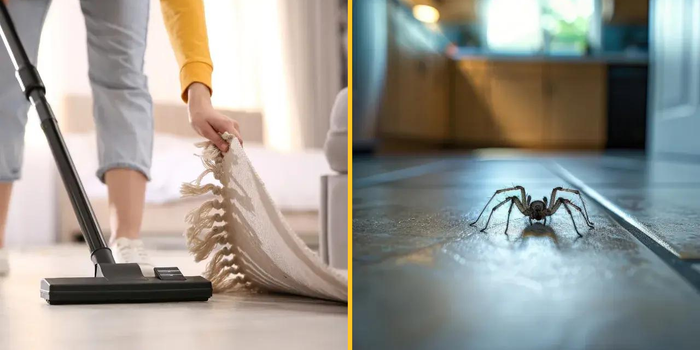
Ever wondered what happens to spiders when they’re trapped in a vacuum? If you’re like most people, you’ve probably found yourself face-to-face with a creepy crawler and reached for the nearest vacuum cleaner.
But does that really solve your spider problem? You might be surprised by the answer. This article will uncover the truth about spiders and vacuums, sparking your curiosity and maybe even changing how you deal with these eight-legged visitors. Stick around to find out if your vacuuming efforts are truly effective, or if spiders have a secret way of surviving even the most powerful suction.
Your spider knowledge is about to get a serious upgrade.
Spider Biology And Survival
Spiders are fascinating creatures built to survive in many environments. Their biology helps them handle challenges that would harm other animals. Understanding how spiders breathe and adapt shows why they might survive unusual conditions, like a vacuum.
How Spiders Breathe
Spiders do not have lungs like humans. They breathe through special organs called book lungs or tracheae. Book lungs have thin layers that allow oxygen to pass into their blood. Tracheae are small tubes that carry air directly to their cells.
These breathing systems need air to work well. Without air, spiders cannot get oxygen. This makes breathing in a vacuum very difficult. The lack of air means spiders cannot get the oxygen they need to live.
Adaptations To Harsh Environments
Spiders have many ways to survive tough places. Some live in deserts with little water. They reduce water loss by having a tough outer skin. Others hide during hot days and hunt at night to avoid heat.
Some spiders can slow down their body functions. This helps them use less oxygen. It allows survival in places with low oxygen for short times. But a complete vacuum has no air at all, making it almost impossible for spiders to survive long.
Effects Of Vacuum On Living Creatures
Vacuum environments are harsh and unforgiving for living creatures. Without air pressure and oxygen, their bodies face extreme stress. Understanding how vacuums affect life forms helps us answer curious questions, like whether spiders survive in such conditions.
What Happens In A Vacuum
In a vacuum, there is almost no air or atmospheric pressure. This lack causes water inside living organisms to vaporize quickly, leading to dehydration. Oxygen, crucial for breathing, is absent, making it impossible for most animals to survive.
Without pressure, gases in the body expand. This can cause internal damage or make the creature swell. However, not all creatures react the same way—some are more resistant to vacuum conditions than others.
Previous Experiments On Insects
Scientists have tested insects in vacuum chambers to observe their survival rates. Many insects can endure short periods without air, thanks to their ability to slow metabolism. For instance, fruit flies have survived brief vacuum exposures, though extended time proves fatal.
Insects with tougher exoskeletons often resist vacuum effects better than soft-bodied ones. These experiments show that while vacuums are deadly, survival depends on the species and exposure duration. It makes you wonder how spiders, with their unique physiology, would respond.
Spiders In A Vacuum Chamber
Placing spiders inside a vacuum chamber creates a unique environment where air pressure drops dramatically. This setup helps scientists observe how spiders react to extreme conditions that aren’t found in nature. Understanding their behavior in such a setting can reveal surprising facts about their survival mechanisms and physical limits.
Observations From Scientific Studies
Studies show that spiders can survive short periods in a vacuum chamber, but the duration is limited. Without air, their bodies experience rapid changes that affect breathing and movement. Researchers noticed that while some spiders remain active initially, prolonged exposure leads to decreased activity and eventual death.
One study found that spiders sealed in a vacuum for less than 30 minutes often recover once returned to normal air pressure. However, exposure beyond that threshold causes irreversible damage. These findings challenge common assumptions about how fragile spiders really are.
Immediate Physical Reactions
When exposed to a vacuum, spiders undergo visible physical changes almost instantly. Their abdomen expands due to internal gases trying to escape. Legs may curl as muscles lose their normal function without oxygen.
You might wonder how these reactions compare to other insects or small animals. Spiders’ exoskeletons provide some protection, but their delicate respiratory system makes them vulnerable. Watching this process up close can change your perspective on their resilience.
Credit: www.gbnews.com
Can Spiders Survive Without Air?
Spiders need air to live like most animals. They breathe oxygen, which helps their cells work. But can spiders survive without air at all? This question matters when thinking about extreme places, such as a vacuum. Let’s explore how spiders handle the lack of air.
Oxygen Requirements
Spiders breathe through small openings called spiracles. These lead to tubes that carry oxygen to their body. They do not have lungs like humans. Instead, their breathing system uses less oxygen.
Spiders can survive with low oxygen for some time. Their metabolism is slower than many other animals. This helps them use oxygen efficiently. Still, spiders cannot live without any oxygen at all.
Survival Time Limits
Without air, spiders can only survive briefly. In a vacuum, no air exists. This means no oxygen for breathing. A spider exposed to a vacuum will suffocate quickly.
Some spiders may hold their breath longer than others. Smaller spiders often survive less time without oxygen. Larger spiders can sometimes last several minutes. But eventually, lack of oxygen causes death.
In short, spiders cannot survive long without air. Their bodies need oxygen to keep working. A vacuum environment is deadly for them after a short period.
Myths Vs Reality
Spiders in a vacuum—sounds like a scene from a science fiction movie, right? Many people have strong opinions about whether spiders die instantly in a vacuum cleaner or if they can survive the suction. Let’s separate what you might have heard from what science actually says.
Common Misconceptions
One popular belief is that spiders die immediately when sucked into a vacuum. People imagine the strong force and lack of air as instant killers. Others think spiders can escape or survive inside the vacuum bag for a long time. Have you ever wondered if the vacuum’s power is really enough to kill these tiny creatures?
Some also assume that spiders’ fragile bodies can’t handle the pressure changes in a vacuum. But not all spiders have the same resilience. Your own experience vacuuming might show spiders still moving after being trapped, contradicting the quick-death myth.
Scientific Evidence
Research shows spiders can survive short-term exposure to vacuum suction better than you might expect. Their exoskeletons provide protection against physical damage. Also, spiders can enter a state of reduced metabolism, helping them endure low oxygen levels temporarily.
In controlled experiments, many spiders survived the vacuuming process, although some did eventually die due to stress or injury. This means that a vacuum cleaner doesn’t guarantee an immediate end for spiders, but it does create a hostile environment for them.
- Vacuum suction can injure spiders but not always kill them instantly.
- Spiders’ survival depends on species, vacuum strength, and duration inside the vacuum.
- Some spiders can recover if released quickly from the vacuum.
Next time you vacuum around a spider, consider what might really happen to it. Could you try releasing it instead of assuming it’s already gone? Your choice could make a big difference to these small survivors.

Credit: geekvacuums.com
Implications For Space And Research
The study of spiders in vacuum conditions offers unique insights for space science and research. Understanding how spiders respond to such extreme environments helps scientists learn about survival in space. It also aids in designing experiments to explore life beyond Earth. This knowledge supports future missions and technological advances.
Vacuum Exposure In Space
Space is a vacuum with no air or pressure. Creatures, including spiders, face harsh conditions there. Research shows some spiders can survive short vacuum exposure. They enter a state of suspended animation. Their metabolism slows down, reducing oxygen needs. This ability helps scientists study life’s limits in space. It also informs how organisms might endure space travel.
Using Spiders As Research Models
Spiders provide valuable models for studying biology in space. Their simple body systems react clearly to vacuum and microgravity. Researchers observe changes in their web-building patterns and behavior. These observations reveal how space conditions affect living beings. Spiders also help test new space equipment and life support systems. They serve as easy-to-maintain test subjects for long-term studies.

Credit: www.gbnews.com
Frequently Asked Questions
Do Spiders Survive In A Vacuum Environment?
Spiders can survive short periods in a vacuum due to their low oxygen needs. However, extended exposure causes dehydration and death. They are not adapted for vacuum conditions, so prolonged absence of air is fatal.
How Does Vacuum Affect A Spider’s Body?
Vacuum causes rapid water loss from a spider’s body. This leads to dehydration and physical damage. Without air pressure, their internal organs can be harmed, making survival unlikely over time.
Can Spiders Breathe Without Air In A Vacuum?
Spiders rely on air for oxygen through book lungs or tracheae. In a vacuum, oxygen is absent, so they cannot breathe. This lack of oxygen eventually results in suffocation and death.
Why Do Spiders Die Faster In A Vacuum Than Other Insects?
Spiders have delicate respiratory structures sensitive to pressure changes. Vacuum causes their lungs to collapse or fail quickly. Compared to some insects with protective features, spiders die faster in vacuum conditions.
Conclusion
Spiders need air to live like most animals. A vacuum removes air and pressure. Without air, spiders can’t breathe and die quickly. Their bodies are not made for space-like conditions. This shows how fragile spiders really are. Understanding this helps us learn about survival limits.
Spiders may be tough on Earth but not in a vacuum. This topic reminds us how life depends on air.