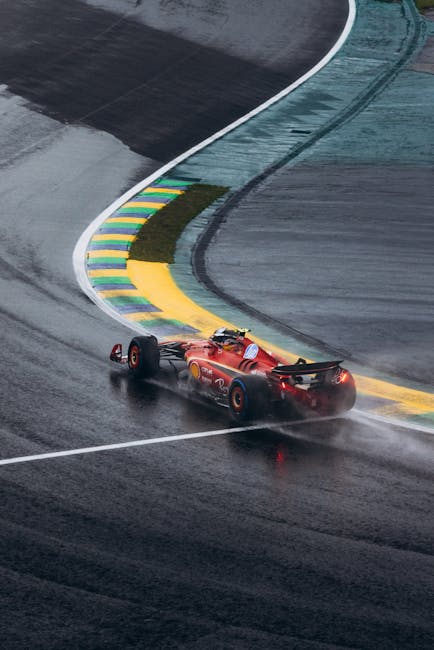
Have you ever wondered how Formula 1 drivers control their lightning-fast cars? You might be surprised to learn that an F1 car does have pedals—but they’re not quite like the ones in your everyday car.
If you think it’s just about gas, brake, and clutch, think again. Understanding these pedals can change the way you see the sport and the incredible skill it takes to race at such high speeds. Keep reading, because what you discover next might just blow your mind.
F1 Car Controls
Formula 1 cars have very special controls. They look different from regular cars. Drivers use these controls to handle the car at very high speeds.
The pedals are part of these controls. They help drivers control speed and braking with great precision.
Types Of Pedals In F1 Cars
An F1 car has three main pedals. Each pedal has a unique role during a race. These pedals help the driver control the car’s speed and performance.
- Accelerator Pedal:This pedal controls how fast the car goes. Pressing it increases the engine power.
- Brake Pedal:This pedal slows down the car. It can also help with sharp turns by adjusting brake balance.
- Clutch Pedal:Some F1 cars have a clutch pedal for starting and gear changes, but many modern cars use paddle shifters instead.
Differences From Regular Cars
| Feature | F1 Car Pedals | Regular Car Pedals |
| Number of Pedals | Usually 2 or 3 (accelerator, brake, sometimes clutch) | 3 (accelerator, brake, clutch) |
| Function | Precise control for racing conditions | General control for everyday driving |
| Brake Pedal | Highly sensitive, controls brake bias | Simple brake application |
| Clutch Use | Often replaced by paddle shifters | Used for all gear changes |
| Pedal Shape | Designed for quick, precise footwork | Designed for comfort and ease |

Credit: www.autocarindia.com
Throttle Pedal
A Formula 1 car is a marvel of engineering. It uses advanced systems for speed and control. One key component is the throttle pedal. This pedal plays a crucial role in how the car moves on the track.
The throttle pedal is similar to the gas pedal in regular cars. It helps control the car’s speed by managing the engine’s power output. Let’s explore its role and design in more detail.
Role In Speed Control
The throttle pedal is vital for controlling speed. Drivers use it to increase or decrease speed. Pressing it sends more fuel to the engine. This makes the car go faster.
Releasing the pedal slows the car down. This balance is key during races. Drivers need precise control to navigate turns and straights.
Sensitivity And Design
The throttle pedal in an F1 car is very sensitive. It responds quickly to even slight movements. This sensitivity helps drivers make quick adjustments at high speeds.
The design of the pedal is also unique. It is made for comfort and precision. The position and angle allow drivers to use it efficiently during long races.
- The pedal is lightweight for better control.
- It is positioned to reduce driver fatigue.
- Materials used ensure durability under stress.
Brake Pedal
The brake pedal in a Formula 1 car is very different from a regular car. It is a vital part of the car’s braking system. Drivers use it to slow down or stop the car quickly and safely.
F1 brake pedals are designed for high performance. They help drivers control the car at high speeds on the track.
Brake System Specifics
The brake pedal in an F1 car connects to a complex hydraulic system. It applies pressure to carbon brakes that work at very high temperatures. The pedal is small and shaped to fit the driver’s foot perfectly.
| Feature | Description |
| Material | Carbon fiber and titanium |
| Size | Smaller than regular car pedals |
| Pressure Control | Hydraulic system for precise braking |
| Temperature | Works up to 1000°C |
| Position | Located on the right side of the cockpit |
How Drivers Use The Brake
F1 drivers use the brake pedal very carefully. They must control the pressure to avoid locking the wheels. Smooth braking helps keep the car balanced.
- Press gently at first to slow down gradually
- Increase pressure before tight corners
- Release the brake smoothly when exiting corners
- Use brake and throttle together for better control
- Adjust braking based on track conditions

Credit: www.autocarindia.com
Clutch Pedal
The clutch pedal in a Formula 1 car is very different from a regular car. It plays a special role during the race.
Drivers use the clutch pedal mainly at the start and during gear shifts. It helps control the power delivery to the wheels.
Presence In Modern F1 Cars
Modern F1 cars still have a clutch pedal, but it is not used all the time. It is mainly for specific moments in the race.
- The clutch pedal is located next to the brake pedal.
- It is smaller and lighter than in regular cars.
- Drivers use it only at the start and sometimes during slow corners.
- Most gear changes happen automatically with paddle shifters, so clutch use is limited.
Function During Starts And Shifts
The clutch pedal helps drivers launch the car smoothly from a standstill. It controls the power sent to the wheels.
| Action | Clutch Role |
| Race Start | Engages engine to wheels gradually |
| Gear Shifts | Used briefly to avoid damage, mostly automated |
| Slow Corners | Sometimes used to control speed and balance |
Steering Wheel Controls
Formula 1 cars do not have traditional pedals like regular cars. Drivers use controls mainly on the steering wheel. These controls help manage many car functions during the race.
The steering wheel is a complex device with buttons, switches, and paddles. It allows the driver to shift gears and adjust car settings quickly without taking hands off the wheel.
Shift Paddles Vs Traditional Pedals
F1 cars use shift paddles behind the steering wheel instead of a gear stick or pedal. Drivers pull these paddles to change gears up or down. This setup is faster and safer at high speeds.
Traditional cars use a clutch pedal and a gear lever to shift gears. F1 cars remove the clutch pedal because shifts happen electronically. This system improves control and response time.
- Shift paddles are behind the steering wheel for quick access
- No clutch pedal is needed due to electronic gear changes
- Traditional pedals include clutch, brake, and accelerator
- F1 cars have only brake and accelerator pedals
Additional Functions On The Wheel
The F1 steering wheel has many extra buttons and dials. Drivers adjust engine settings, brake balance, and fuel mixture from the wheel. This helps optimize performance during the race.
Other controls include radio communication and the drink system. The steering wheel acts as a control center for the driver in every race situation.
- Engine mode switches for power adjustments
- Brake balance controls to manage front and rear brakes
- Radio button for team communication
- Drink button to hydrate the driver during the race

Credit: medium.com
Driver Experience
F1 cars do have pedals, but they are very different from regular cars. Drivers use them to control speed and balance.
The pedals in an F1 car require great skill and focus. Drivers face many challenges while using them during a race.
Physical Demands Of Pedal Use
Using pedals in an F1 car is hard on the body. Drivers must push and release pedals with strong and steady force.
- Brake pedal requires powerful pressure to slow down quickly.
- Throttle pedal needs smooth control to avoid losing grip.
- Clutch pedal is used for fast gear changes, demanding quick footwork.
- Drivers feel high resistance from pedals during fast corners.
Training For Precision And Control
F1 drivers train a lot to use pedals with precision. Their footwork must be exact to keep the car balanced.
| Training Type | Purpose |
| Simulators | Practice pedal timing and pressure |
| Physical Fitness | Build leg strength for pedal control |
| On-track Practice | Refine pedal use in real conditions |
| Reflex Drills | Improve quick pedal responses |
Technological Innovations
F1 cars use advanced technology in every part, including pedals. These pedals are not like normal car pedals. They help drivers control speed and braking very precisely.
Innovations in pedal design improve driver comfort and performance. Teams keep working on ways to make pedals better and easier to adjust.
Pedal Adjustments And Customization
F1 pedals can be changed to fit each driver’s style. Teams adjust pedal position, angle, and resistance for better control. This helps drivers react faster on the track.
- Brake pedal pressure can be customized to suit driver preference.
- Throttle pedal travel is adjustable for smooth acceleration.
- Pedal shape and size can change to improve foot grip.
- Materials used reduce weight but keep strength high.
Future Trends In F1 Controls
Future F1 pedals will include more electronic controls. These controls will give drivers feedback and improve safety. Teams plan to use sensors to track pedal use precisely.
| Trend | Effect |
| Electronic pedal sensors | Better control data for teams |
| Haptic feedback | Improved driver awareness |
| Lightweight materials | Reduced car weight |
| Custom software settings | Driver-specific pedal response |
Frequently Asked Questions
Does An F1 Car Have Standard Pedals Like Regular Cars?
No, F1 cars have specialized pedals designed for racing. They include throttle, brake, and clutch controls, but their layout differs from regular cars.
How Many Pedals Are In A Formula 1 Car?
F1 cars typically have three pedals: accelerator, brake, and clutch. These are crucial for precise control during high-speed racing.
What Functions Do F1 Car Pedals Serve?
The pedals control acceleration, braking, and gear changes. They allow drivers to manage speed and maneuver through complex tracks efficiently.
Are F1 Car Pedals Customizable For Drivers?
Yes, pedals can be adjusted for each driver’s preference. This customization helps improve comfort and control during races.
Conclusion
F1 cars do have pedals, but they differ from regular cars. Drivers use them to control speed and braking precisely. The pedals are designed for quick, sharp responses on the track. Understanding these pedals helps appreciate the skill involved in racing.
F1 racing is a blend of technology and driver ability. The pedals play a big role in that mix. Knowing this adds to the excitement of watching races. It shows how every part of the car matters in performance.