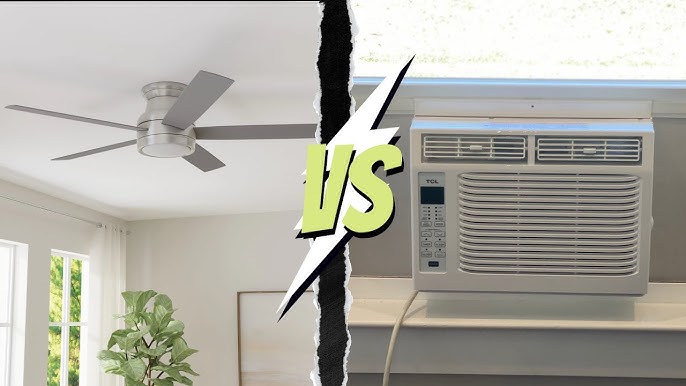
Are you wondering whether your fan or air conditioner is costing you more on your electricity bill? You’re not alone.
Many people want to stay cool without breaking the bank, but it’s not always clear which option uses more power. Understanding the difference can help you make smarter choices for your comfort and your wallet. Keep reading to discover the surprising facts about how much energy fans and air conditioners really use—and which one is best for your home and budget.
Electricity Use Of Fans
Fans use much less electricitythan air conditioners. Different types of fans consume different power levels.
| Type of Fan | Power Consumption (Watts) |
|---|---|
| Ceiling Fan | 15 – 90 W |
| Table Fan | 40 – 60 W |
| Pedestal Fan | 45 – 75 W |
| Exhaust Fan | 40 – 80 W |
Electricity use depends on:
- Fan size and power rating
- Speed settings used
- Duration of operation
- Room size and airflow needed
Fans use around 15 to 90 watts, which is very low. Running a fan for several hours uses little electricity. Adjusting speed affects power use. Bigger fans usually use more power.
Credit: www.renogy.com
Electricity Use Of Air Conditioners
Air conditioners use different amounts of electricity depending on their modeland size. Some are window units, others are split systems. Each type has a different power need. The power use can range from 500 watts to over 2000 watts. Newer models often use less energythan older ones.
| Air Conditioner Type | Power Consumption (Watts) |
|---|---|
| Window Unit | 500 – 1500 |
| Split System | 1000 – 2000 |
| Portable AC | 800 – 1500 |
Electricity use also depends on room size, temperature setting, and how long it runs. Higher temperatures or longer use means more power. Good insulation helps reduce use. Fans usually use less electricity, around 50 to 100 watts.
Comparing Fans And Air Conditioners
Fans use much less electricitythan air conditioners. A typical fan uses around 50 watts, while an air conditioner can use between 1000 and 2000 watts. Fans cool people by moving air, not by lowering room temperature. This makes fans more energy efficientfor personal cooling.
Air conditioners cool entire rooms by removing heat, which takes more power. Their compressors run on high energy to change warm air to cool air. Fans run on simple motors that use less energy.
| Device | Average Power Use (Watts) | Energy Efficiency |
|---|---|---|
| Fan | 50 – 100 | High (moves air) |
| Air Conditioner | 1000 – 2000 | Lower (cools air) |
- Fans cost less to run each month.
- Air conditioners increase electricity bills a lot.
- Energy use depends on device size and settings.
Using a fan instead of an air conditioner helps reduce carbon footprint. Fans use less power and cause fewer greenhouse gas emissions. Air conditioners need more energy, often from fossil fuels, increasing environmental impact. Choosing fans can help save energy and protect the planet.

Credit: www.aljazeera.com
Maximizing Energy Savings
Fans use much less electricitythan air conditioners. Fans just move air around, so they use about 10 times less power. Air conditioners cool the air by removing heat, which needs more energy.
Tips For Efficient Fan Use
- Place fans near windows to push hot air outside.
- Use ceiling fans to cool rooms evenly.
- Turn off fans when you leave the room.
- Keep fans clean for better airflow.
Optimizing Air Conditioner Settings
- Set the temperature to 78°F (26°C) for comfort and savings.
- Use energy-saving or eco mode if your AC has one.
- Close doors and windows to keep cool air inside.
- Regularly clean or replace AC filters for efficiency.
Alternative Cooling Methods
| Method | Benefits | Electricity Use |
|---|---|---|
| Shade with curtains or blinds | Keeps sun out, lowers indoor temperature | None |
| Use natural ventilation | Fresh air moves heat out | None |
| Drink cold water | Helps body cool down | None |
| Wear light clothing | Feels cooler without extra energy | None |

Credit: www.dreo.com
Frequently Asked Questions
Which Uses More Electricity: Fan Or Air Conditioner?
Air conditioners use significantly more electricity than fans. Fans are energy-efficient and circulate air, consuming less power. Air conditioners cool the air, requiring much more energy. Choosing a fan over an air conditioner can lead to lower electricity bills, especially during mild weather conditions.
How Much Electricity Does A Fan Use?
A typical ceiling fan uses between 10 to 120 watts per hour. The exact usage depends on the fan size and speed settings. Compared to air conditioners, fans are much more energy-efficient. They help reduce electricity bills, making them a cost-effective cooling solution.
Does Using A Fan Save On Electricity Bills?
Yes, using a fan can significantly reduce electricity bills. Fans are energy-efficient, consuming far less power than air conditioners. They provide a cost-effective solution for cooling, especially in moderate temperatures. Using fans instead of air conditioners can lead to substantial savings.
Can Fans And Air Conditioners Work Together?
Yes, fans and air conditioners can be used together effectively. Using a fan with an air conditioner can improve air circulation. This allows you to set the air conditioner at a higher temperature, reducing energy consumption. This combination can save electricity and enhance cooling efficiency.
Conclusion
Fans use much less electricity than air conditioners. Fans move air and help you feel cooler without using a lot of power. Air conditioners cool the whole room but use more energy. Choosing between them depends on your needs and budget.
For small cooling and saving energy, fans work best. For hot days and better comfort, air conditioners help more. Balance comfort with electricity use to keep bills low. Think about how you use each device to make the right choice.