
Have you ever wondered if your air conditioner does more than just cool your room? You might think it also cleans the air you breathe, but is that really true?
Understanding whether your air conditioner purifies the air can change how you manage your home’s comfort and health. Keep reading to discover the surprising facts about air conditioners and what they actually do to the air around you. This knowledge could help you breathe easier and make smarter choices for your living space.

Credit: www.youtube.com
How Air Conditioners Work
Air conditioners cool indoor spaces by removing heat from the air. They help keep rooms comfortable during hot weather.
Many people wonder if air conditioners also clean the air. To understand this, let’s look at how they work.
Basic Cooling Mechanism
An air conditioner uses a refrigerant to absorb heat from inside the room. This process cools the air before it is released back inside.
The refrigerant changes from a liquid to a gas and back, moving heat outside the building. This cycle repeats to keep the air cool.
Air Circulation Process
Air conditioners pull warm air from the room through a filter. The air passes over cold coils to lower its temperature.
The cooled air is then blown back into the room. This cycle keeps the air moving and maintains a steady temperature.
- Warm air enters the unit through an intake vent
- Air passes through a filter to catch dust and particles
- Cool coils lower the air temperature
- Cooled air is pushed back into the room
- Cycle repeats to maintain comfort

Credit: www.youtube.com
Air Conditioning Vs Air Purification
Many people wonder if air conditioners can clean the air. It is important to know the difference between cooling and purifying air.
This article explains how air conditioners and air purifiers work in different ways.
Differences In Function
An air conditioner cools the air by removing heat and humidity. It circulates air inside a room or building.
An air purifier cleans the air by removing dust, pollen, smoke, and other particles. It uses filters or other technology to trap harmful substances.
| Function | Air Conditioner | Air Purifier |
| Main Purpose | Cooling and dehumidifying air | Removing particles and pollutants |
| Air Movement | Circulates cooled air | Filters and cleans air |
| Filters | Basic dust filters | HEPA or activated carbon filters |
| Effect on Air Quality | Minimal purification | Significant purification |
Common Misconceptions
Some people think air conditioners clean the air well. This idea is not correct. Air conditioners only have simple filters.
- Air conditioners mainly cool the air, not purify it.
- They can trap large dust particles but not fine pollutants.
- Air purifiers use special filters to remove allergens and smoke.
- Running an air conditioner alone may not improve air quality enough.
For better indoor air quality, use air purifiers along with air conditioners.
Role Of Filters In Air Conditioners
Air conditioners cool indoor air by removing heat and moisture. They also use filters to trap dust and dirt. These filters help keep the air cleaner.
Filters play a key role in improving air quality inside homes and offices. They catch particles that can cause allergies and other problems.
Types Of Filters Used
There are several types of filters used in air conditioners. Each type works differently and catches different particles.
- Fiberglass Filters:These are basic filters that trap large dust particles. They are cheap but less effective for small particles.
- Pleated Filters:Made from folded fabric, these filters trap smaller particles like pollen and pet dander.
- Electrostatic Filters:Use static electricity to attract and hold dust and other particles.
- HEPA Filters:High-efficiency filters that catch very small particles, including some bacteria and smoke.
Effectiveness In Removing Particles
| Filter Type | Particle Size Removed | Common Uses |
|---|---|---|
| Fiberglass | Large (>10 microns) | Basic home air conditioners |
| Pleated | Medium (3-10 microns) | Homes and offices |
| Electrostatic | Small (1-3 microns) | Improved home air quality |
| HEPA | Very small (0.3 microns) | Hospitals, clean rooms |
Filters improve air quality but do not kill germs or viruses. Regular cleaning and replacement keep filters working well.
Limitations Of Air Conditioners In Purifying Air
Air conditioners cool indoor air by removing heat and moisture. Many people wonder if they can also clean or purify the air. While air conditioners can filter some dust and particles, they have limits in cleaning indoor air fully.
Understanding what air conditioners cannot remove helps set the right expectations. It also shows why other air purification methods might be needed for better indoor air quality.
What They Can’t Remove
Air conditioners use basic filters that catch dust and dirt. They do not remove many harmful pollutants. Here are some common pollutants that air conditioners cannot remove:
- Viruses and bacteria
- Smoke and odors
- Volatile organic compounds (VOCs)
- Mold spores in the air
- Fine particles smaller than the filter size
These pollutants can affect health and comfort but pass through standard AC filters easily. Special air purifiers or filters are needed to reduce them.
Impact On Indoor Air Quality
Air conditioners improve comfort but have little effect on overall air cleanliness. Poor indoor air quality can stay even with AC running. This happens because AC units mostly recirculate indoor air.
Without added air cleaning features, AC systems do not reduce pollution levels. Using air purifiers, ventilating rooms, and keeping spaces clean helps improve air quality more effectively.
Alternatives For Better Air Purification
Air conditioners cool indoor spaces but do not clean the air well. Many people want to improve air quality for health and comfort. There are better ways to purify the air in your home or office.
This guide explains different air purifiers and how they work. It also covers how to use air conditioners with air purifiers for better air quality.
Air Purifiers And Their Technology
Air purifiers use filters and other tools to remove dust, pollen, smoke, and germs. Some common types include HEPA filters, activated carbon, and UV light.
- HEPA filterstrap tiny particles like dust and pollen.
- Activated carbonremoves odors and harmful gases.
- UV lightkills bacteria and viruses.
- Ionizerscharge particles so they stick to surfaces.
Choosing the right purifier depends on your needs and room size. Some models combine these technologies for better cleaning.
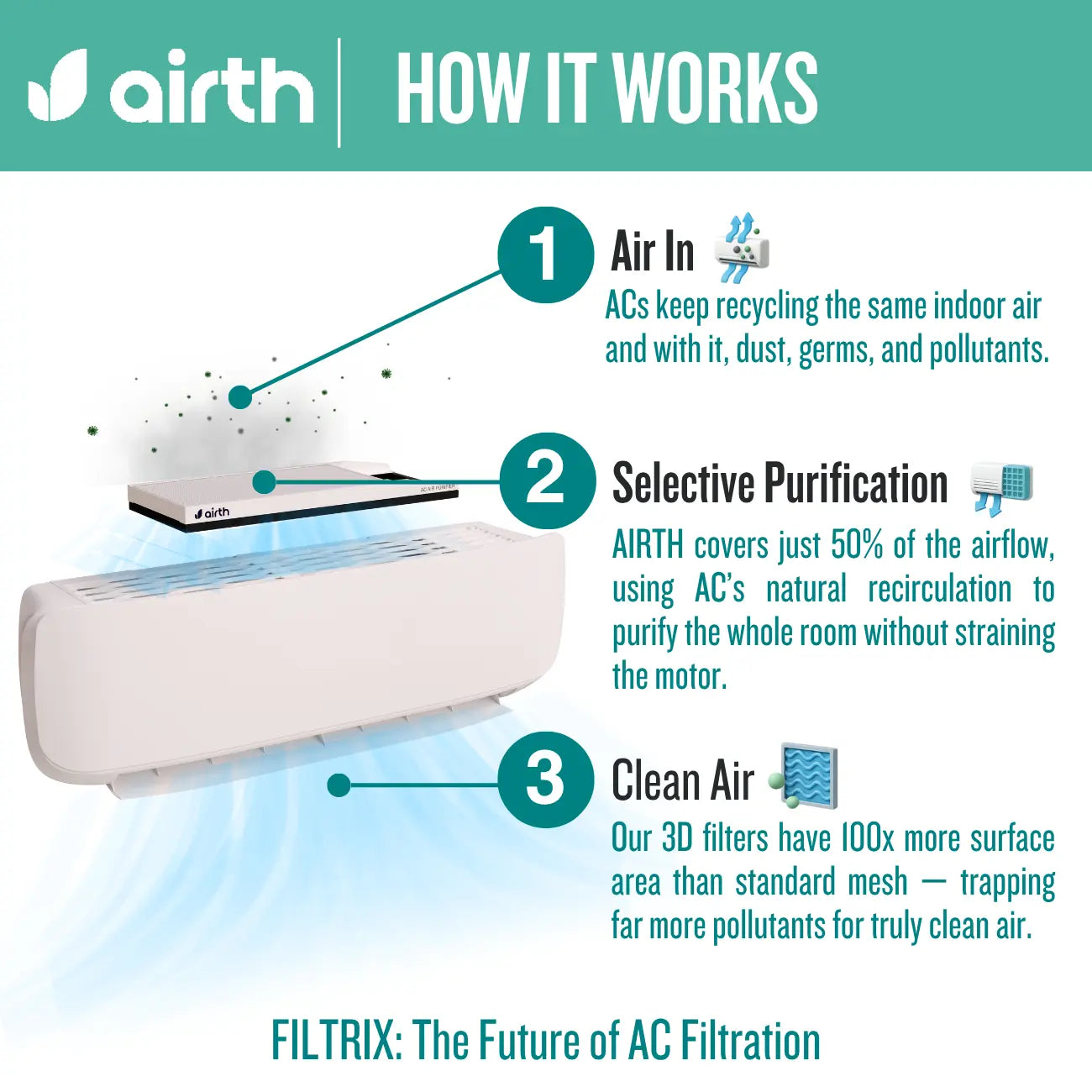
Combining Ac With Air Purifiers
Air conditioners can work with air purifiers to improve indoor air quality. The AC cools the air while the purifier cleans it.
| Benefit | Explanation |
| Improved comfort | Cool and clean air makes rooms more pleasant. |
| Health protection | Reduces allergens, dust, and germs in the air. |
| Energy efficiency | Some purifiers use little power when paired with AC. |
| Better airflow | AC helps circulate purified air throughout the room. |
For best results, place the air purifier near the AC unit’s air intake. Keep both devices clean and maintained.
Credit: airth.in
Maintenance Tips For Cleaner Air
Keeping your air conditioner clean helps improve the air quality in your home.
Regular maintenance removes dust and allergens that can build up inside the system.
Filter Cleaning And Replacement
Filters trap dust and particles from the air. Cleaning or replacing them helps air flow better.
- Check filters every month during heavy use
- Clean washable filters with water and let them dry fully
- Replace disposable filters as recommended by the manufacturer
- Use high-quality filters to capture more pollutants
- Keep spare filters on hand for quick replacement
Regular System Servicing
Professional service keeps the air conditioner working well and reduces indoor pollutants.
| Service Task | Recommended Frequency |
| Check refrigerant levels | Once a year |
| Clean coils and fins | Once a year |
| Inspect electrical connections | Once a year |
| Test thermostat accuracy | Once a year |
| Clear drain lines | Twice a year |
Frequently Asked Questions
Does An Air Conditioner Clean The Air Inside A Room?
Air conditioners primarily cool air but do not fully clean it. They filter large particles like dust but cannot remove all pollutants or bacteria. For thorough air purification, additional air purifiers or specialized filters are needed.
Can An Air Conditioner Reduce Indoor Allergens?
Yes, air conditioners with quality filters can reduce allergens such as pollen and dust mites. However, standard AC filters have limited ability to eliminate smaller allergens like mold spores or pet dander completely.
Do All Air Conditioners Have Air Purification Features?
No, not all air conditioners include air purification features. Some models come with advanced filters or ionizers designed to improve air quality, but many standard units focus solely on cooling.
How Often Should Ac Filters Be Cleaned Or Replaced?
AC filters should be cleaned or replaced every 1 to 3 months. Regular maintenance ensures better air quality and efficient cooling performance, reducing dust and allergens in the air.
Conclusion
Air conditioners cool the air but do not fully purify it. They can trap some dust and particles with filters. Still, these filters do not remove all germs or harmful pollutants. For cleaner air, consider using air purifiers designed for that purpose.
Good ventilation also helps keep indoor air fresh. Remember, staying healthy means combining cool air with clean air. Choose the right tools to breathe easier every day.