Have you ever wondered what it feels like to control a Formula 1 car? You might be curious about something simple yet crucial—do F1 cars have pedals like the cars you drive every day?
Understanding this can change the way you see these incredible machines. Stick with me, and I’ll reveal how these high-speed beasts are controlled, and why their pedals are anything but ordinary. By the end, you’ll see F1 cars in a whole new light.
Ready to dive in? Let’s go!

Credit: www.reddit.com
F1 Car Controls
Formula 1 cars have unique controls compared to regular road cars. These controls help drivers manage speed, direction, and car settings precisely during races.
The design of F1 car controls focuses on quick access and efficiency. Drivers use the steering wheel and pedals to handle the car at very high speeds.
Steering Wheel Functions
The F1 steering wheel is much more than a tool to steer. It has many buttons, dials, and switches to control different car functions.
- Change gears using paddle shifters behind the wheel
- Adjust brake balance between front and rear wheels
- Control engine modes for power and fuel saving
- Communicate with the team via radio button
- Activate DRS (Drag Reduction System) for faster straights
- Monitor car data on a small display screen
Pedals In Road Cars Vs F1 Cars
Road cars usually have three pedals: clutch, brake, and accelerator. F1 cars have fewer pedals but more complex controls.
| Type of Car | Number of Pedals | Pedal Functions |
| Road Car | 3 | Clutch, Brake, Accelerator |
| F1 Car | 2 | Brake and Accelerator (No clutch pedal) |
F1 drivers use paddle shifters on the steering wheel to change gears. The clutch is controlled by a paddle, not a pedal.

Credit: www.autocarindia.com
Throttle And Brake Pedals
F1 cars have pedals similar to regular cars. They use a throttle pedal and a brake pedal to control speed.
These pedals are very sensitive. Drivers press them carefully to get the best performance on the track.
Role Of The Accelerator Pedal
The accelerator pedal controls how fast the car goes. Pressing it increases engine power and speed.
F1 drivers use the throttle pedal to speed up on straight parts of the track. They also adjust it in corners for smooth driving.
How Braking Works In F1
The brake pedal helps the car slow down or stop. F1 cars have very strong brakes that work fast and well.
Drivers press the brake pedal hard before corners. This lets them reduce speed quickly and keep control.
- Brake pedal pressure controls how fast the car slows
- Brakes cool down quickly to avoid overheating
- Drivers balance braking with throttle for smooth turns
Clutch Pedal In F1
Formula 1 cars have pedals like regular cars, but they work differently. The clutch pedal is one of these pedals.
The clutch pedal helps drivers change gears smoothly and control the car’s power. It is important during starts and some gear shifts.
Manual Vs Semi-automatic Gearboxes
Older F1 cars used manual gearboxes with a clutch pedal. Drivers pressed the clutch to change gears by hand.
Modern F1 cars use semi-automatic gearboxes. These gearboxes do not need a clutch pedal for every gear change.
- Manual gearboxes require a clutch pedal for all gear shifts.
- Semi-automatic gearboxes use paddles behind the steering wheel.
- Clutch pedals in semi-automatic cars are mainly for starts and pit stops.
Use Of Clutch Pedal During Races
Drivers use the clutch pedal mainly at the start of the race. It helps to get the car moving smoothly.
During the race, the clutch pedal is rarely used. Gear changes happen with paddles and the semi-automatic system.
- Press clutch to start the car from a standstill.
- Use clutch in the pit lane to control speed.
- No clutch needed for normal gear shifts while racing.
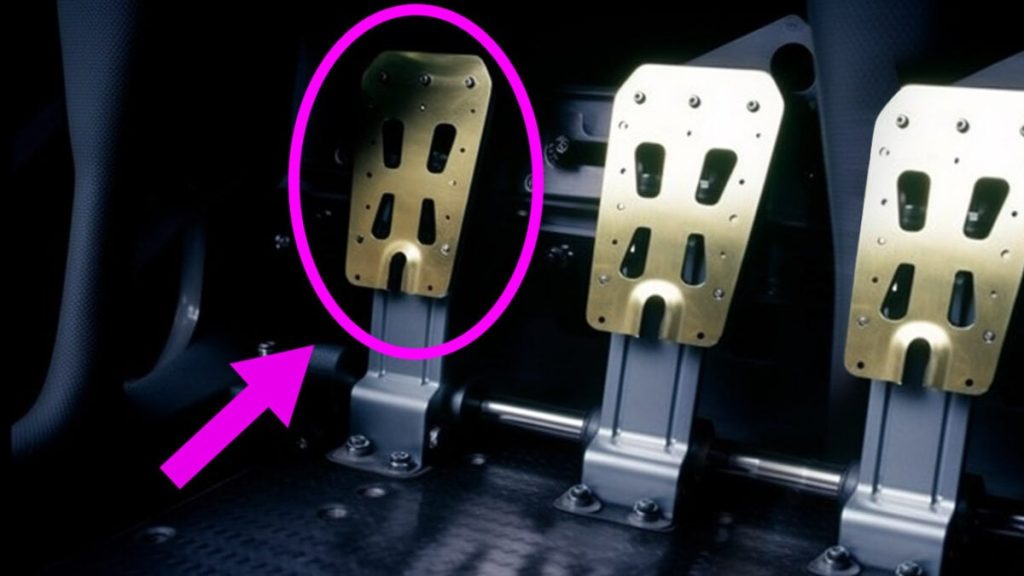
Unique Pedal Design
Formula 1 cars have pedals, but they look very different from regular cars. These pedals are designed for speed and precision.
The unique design helps drivers control the car under extreme conditions on the track.
Materials And Ergonomics
F1 pedals use strong and light materials like carbon fiber and titanium. These materials keep the pedals durable but very light.
- Carbon fiber for a light frame
- Titanium for strong support
- High-quality rubber for grip
- Custom shapes to fit driver’s feet
Customization For Drivers
Each driver gets pedals shaped and placed to fit their style and comfort. Small changes help improve control and reduce fatigue.
| Customization Feature | Purpose |
| Pedal spacing | Fits driver’s foot size |
| Pedal angle | Improves foot comfort |
| Pedal resistance | Matches driver’s preferred feel |
| Material finish | Enhances grip and control |
Pedal Operation Challenges
F1 cars have pedals like regular cars, but using them is very hard. Drivers face many challenges while pressing pedals.
The pedals must work perfectly in extreme conditions. Small mistakes can cause big problems during a race.
High G-forces Impact
F1 drivers feel very strong forces when they brake or turn fast. These forces push their bodies hard against the seat.
High G-forces make it tough to press pedals correctly. Drivers need strong legs to control the brake and throttle pedals.
- Drivers must resist the force pushing them back.
- Pedals need to be firm but not too hard to press.
- Strong muscles help keep steady pedal pressure.
Precision And Responsiveness
F1 pedals must respond instantly to driver input. Even small delays can cost time or cause crashes.
Drivers use pedals with great precision. They adjust pressure smoothly to control speed and braking exactly.
- Brake pedal sensitivity is crucial for safe stopping.
- Throttle pedal control affects acceleration and cornering.
- Drivers practice to improve pedal feel and timing.
Technological Innovations
F1 cars do have pedals, but they are very different from regular cars. These pedals use advanced technology for better control and speed.
Technology in F1 pedal systems helps drivers handle the car with great precision. These innovations improve safety and performance on the track.
Electronic Controls Integration
F1 pedals connect to electronic systems that adjust many car functions. This integration helps drivers control braking and acceleration smoothly.
Electronic sensors on pedals send data to the car’s computer. It adjusts power delivery, traction, and brake balance instantly.
- Brake-by-wire systems improve brake response
- Throttle sensors control engine power
- Pedal pressure data helps traction control
Future Trends In F1 Pedal Systems
Future F1 pedals will have even more electronic features. These changes will help drivers react faster and drive safer.
New materials will make pedals lighter and stronger. Also, pedal designs will improve to give better feedback to drivers.
- More precise electronic brake control
- Customizable pedal feel for each driver
- Integration with advanced driver assistance systems

Credit: medium.com
Frequently Asked Questions
Do F1 Cars Have Pedals Like Regular Cars?
Yes, F1 cars have pedals for throttle, brake, and clutch. They differ in design but serve similar functions to regular car pedals.
How Many Pedals Are In A Formula 1 Car?
F1 cars typically have three pedals: accelerator, brake, and clutch. Each pedal is finely tuned for high-performance racing control.
Are F1 Car Pedals Different From Standard Car Pedals?
Yes, F1 pedals are more sensitive and responsive. They offer precise control needed for high-speed racing and quick reactions.
What Material Are F1 Car Pedals Made From?
F1 pedals are usually made from lightweight materials like carbon fiber or aluminum. This ensures strength and reduces overall car weight.
Conclusion
F1 cars do have pedals, but they differ from regular cars. Drivers use pedals to control speed and braking. The layout is unique to fit the car’s design. Pedals help drivers react quickly during the race. Understanding this makes watching F1 more interesting.
Knowing how pedals work shows the skill needed. It’s a small part of a complex machine. Racing is about precision and fast decisions. Pedals play a key role in that process.