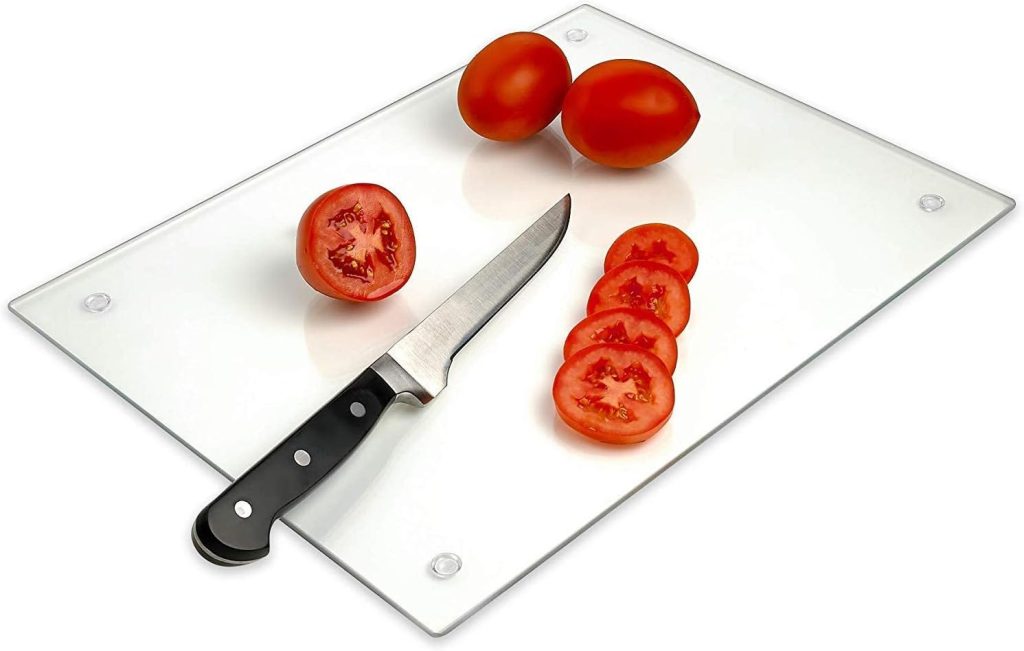
Have you ever wondered if using a glass cutting board could be harming your knives? You might have heard that glass boards dull blades faster, but is that really true?
If you care about keeping your knives sharp and lasting longer, this is something you need to know. You’ll discover the truth behind glass cutting boards and how they affect your knives. By the end, you’ll be able to make smarter choices for your kitchen and save your blades from unnecessary wear.
Keep reading to protect your knives and improve your cooking experience!
Glass Cutting Boards Basics
Glass cutting boards are common in many kitchens. They are known for their smooth surface and easy cleaning.
People often wonder if glass cutting boards dull knives faster than other boards. To understand this, we first need to learn about the material and how it is used.
Material Properties
Glass cutting boards are made from tempered glass. This type of glass is very hard and resistant to scratches.
The hardness of glass makes it less forgiving on knife edges. Unlike wood or plastic, glass does not absorb impact or allow the blade to sink in slightly.
- Tempered glass is smooth and very hard
- It resists scratches and stains
- The hard surface can cause knives to dull faster
- Glass does not absorb knife pressure like wood or plastic
Common Uses In Kitchens
Glass cutting boards are often used for their clean look and easy maintenance. Many people use them for cutting fruits, vegetables, or serving cheese.
They are also popular for use as a surface for rolling dough or placing hot pots because they handle heat well.
- Cutting fruits and vegetables
- Serving cheese and snacks
- Rolling dough or pastry
- Placing hot pots or pans

Credit: chopchopusa.com
Knife Edges And Sharpness
Knife edges are the thin parts that cut food. Sharpness means how well the knife cuts.
Using the right cutting surface helps keep knives sharp longer. Some boards can dull knives faster.
Types Of Knife Blades
Knives have different blade types. Each blade has a unique edge shape and use.
Common blade types include straight, serrated, and granton edges. The edge type affects cutting style and sharpness.
- Straight edges are sharp and smooth for slicing.
- Serrated edges have teeth for cutting bread and tough skins.
- Granton edges have small dips to reduce food sticking.
How Knives Get Dull
Knives get dull when their edges wear out or bend. Hard surfaces can cause this faster.
Cutting on glass boards may chip or roll the blade edge. Softer boards protect the knife better.
- Cutting on hard surfaces like glass can dull edges quickly.
- Using a dull knife needs more force and can be unsafe.
- Regular sharpening helps keep knives sharp and safe.
Interaction Between Glass And Knives
Glass cutting boards are popular for their look and easy cleaning. Many people wonder if glass dulls knives faster than other boards.
This article looks at how glass and knives interact. It helps you understand if glass boards affect your knife edges.
Surface Hardness Comparison
Glass is much harder than common cutting board materials. This hardness affects how knives perform on glass surfaces.
| Material | Surface Hardness (Mohs Scale) |
| Glass Cutting Board | 5.5 – 6 |
| Wood Cutting Board | 2 – 3 |
| Plastic Cutting Board | 2 – 3 |
| Knife Blade Steel | 5 – 6.5 |
Since glass is as hard or harder than many knife blades, it can cause more wear on the blade edge.
Effect On Knife Edges
Using glass boards can dull knife edges faster. The hard surface can chip or bend the blade edge.
- Glass boards do not absorb impact, so knives hit a solid surface.
- The hard glass edge can cause small chips on the knife blade.
- Repeated cutting on glass can make knives dull quickly.
- Soft boards like wood or plastic are gentler on knives.
Choosing the right cutting board affects your knife’s sharpness and lifespan.

Credit: chopchopusa.com
Scientific Studies And Expert Opinions
Glass cutting boards are popular for their look and ease of cleaning. Many people wonder if they make knives dull faster. This topic has been studied by scientists and discussed by kitchen experts.
Here, we look at what research and chefs say about glass cutting boards and knife sharpness.
Research Findings
Scientific studies show glass is very hard and smooth. This hardness can cause more wear on knife edges than softer surfaces.
Tests compare glass boards to wood and plastic. Knives lose sharpness faster on glass than on softer materials.
- Glass has a high hardness rating on the Mohs scale.
- Knife blades made of steel can chip or dull quickly on glass.
- Plastic and wood absorb impact better, preserving blade edges.
Chef Perspectives
Many chefs avoid glass boards because they damage knives. They prefer wood or plastic boards to keep knives sharp longer.
Some chefs say glass boards are good for display or serving food, not for cutting. They warn that cutting on glass wears down blades faster.
- Wood boards help preserve knife edges.
- Plastic boards are easier on knives and dishwasher safe.
- Glass boards look nice but are harsh on blades.
Alternatives To Glass Cutting Boards
Glass cutting boards look clean and modern but can dull your knives. Many cooks prefer other materials to keep knives sharp longer.
Here are some good alternatives to glass boards that protect your knives and work well in the kitchen.
Wooden Boards
Wooden cutting boards are gentle on knives. They have a natural surface that helps keep blades sharp. Wood also resists bacteria if cleaned properly.
- Made from hardwoods like maple or walnut
- Self-healing surface that hides knife marks
- Requires regular oiling to prevent cracking
- Heavier and less portable than other types
Plastic Boards
Plastic cutting boards are affordable and easy to clean. They are safe for knives because they have a softer surface than glass.
| Feature | Plastic Boards |
| Weight | Lightweight |
| Maintenance | Dishwasher safe |
| Durability | Can get deep cuts |
| Knife friendliness | Good |
Bamboo Boards
Bamboo boards are eco-friendly and harder than wood. They are less porous and resist water well. Bamboo is good for kitchen use but may dull knives faster than soft wood.
Tips for bamboo boards:
- Use oil to keep surface smooth
- Avoid soaking in water
- Replace when deep cuts appear
Maintaining Knife Sharpness
Glass cutting boards are popular in many kitchens. Some people worry they might dull knives faster. Keeping knives sharp is important for safe and easy cutting.
Using the right techniques and surfaces helps maintain knife sharpness. Understanding how glass boards affect knives guides better care.
Sharpening Techniques
Knives need regular sharpening to stay sharp. Sharpening fixes small dull spots on the blade. It makes cutting easier and safer.
Use sharpening tools like whetstones or electric sharpeners. Sharpen at the right angle for your knife type. Do not rush the process.
- Hold the knife at a 15 to 20 degree angle
- Move the blade evenly across the sharpener
- Repeat strokes until the edge feels sharp
- Test sharpness by slicing soft foods
Proper Cutting Surfaces
Cutting surfaces affect how fast knives dull. Glass boards are very hard and non-porous. This hardness can wear down knife edges quicker than softer boards.
Wood and plastic boards are gentler on blades. They absorb some force and protect the knife edge. Switching to these can keep knives sharp longer.
- Wood boards have a softer surface that cushions blades
- Plastic boards are flexible and less damaging
- Glass boards can chip or dull knives faster
- Use glass boards mainly for serving, not cutting
Choosing The Right Cutting Board
Choosing the right cutting board is important for your kitchen tools. It helps protect your knives and makes food prep easier.
Different materials affect how your knives stay sharp and how long the board lasts. Learn what to look for before buying.
Factors To Consider
Think about the material, how easy it is to clean, and how it feels under your knife. These things affect both your knives and the board.
- Material:Wood, plastic, and glass are common choices.
- Knife care:Some boards dull knives faster than others.
- Durability:Boards should resist scratches and stains.
- Maintenance:Some need oiling or special cleaning.
Balancing Durability And Knife Care
Glass boards last long but can dull knives quickly. Wood and plastic are gentler but may wear out faster.
Choose a board that protects your knife edges without needing constant replacement. Soft surfaces help keep knives sharp.
- Glass:Very durable, hard on knives.
- Wood:Gentle on knives, needs care.
- Plastic:Knife-friendly, may scratch easily.
Credit: cookingpanda.com
Frequently Asked Questions
Do Glass Cutting Boards Harm Knife Edges?
Yes, glass cutting boards can dull knife edges over time. Glass is harder than metal, causing blades to lose sharpness. To maintain knife longevity, consider using softer cutting surfaces like wood or plastic. Regularly sharpening your knives can also help counteract the dulling effects.
Are Glass Cutting Boards Suitable For All Knives?
Glass cutting boards are not ideal for all knives. While durable and easy to clean, they can quickly dull blades. Softer knives or those requiring precision cuts may suffer most. Opt for wooden or plastic boards to better preserve knife sharpness and effectiveness.
How Often Should I Sharpen Knives Used On Glass Boards?
Knives used on glass boards need more frequent sharpening. It’s advisable to sharpen them every few weeks, depending on use. Regular honing can also help maintain the edge between sharpening sessions. Using a professional sharpening service ensures optimal blade performance.
What Are The Benefits Of Glass Cutting Boards?
Glass cutting boards offer several benefits. They’re durable, non-porous, and easy to sanitize, making them hygienic. Their sleek design can complement modern kitchens. However, the trade-off is potential knife dulling, so weigh the pros and cons before choosing.
Conclusion
Glass cutting boards can dull knives faster than wood or plastic. The hard surface wears down the blade edges quickly. For sharp knives, softer boards work better. Choosing the right board protects your knives longer. Keep knives sharp by using proper cutting surfaces.
Regular sharpening also helps maintain blade life. Consider your knife type when picking a board. Careful use and good maintenance keep knives effective. Think about what matters most: knife care or easy cleaning. The best choice depends on your kitchen needs and habits.