Have you ever wondered why your air conditioner sometimes seems to struggle on really hot days? You might think it’s just doing its job, but the outside temperature plays a bigger role than you realize.
Understanding how the heat around you affects your AC can help you keep your home cool and your energy bills low. Keep reading, and you’ll discover simple facts that can change the way you use your air conditioner—making your comfort easier and smarter every day.

Credit: www.yahoo.com
How Air Conditioners Work
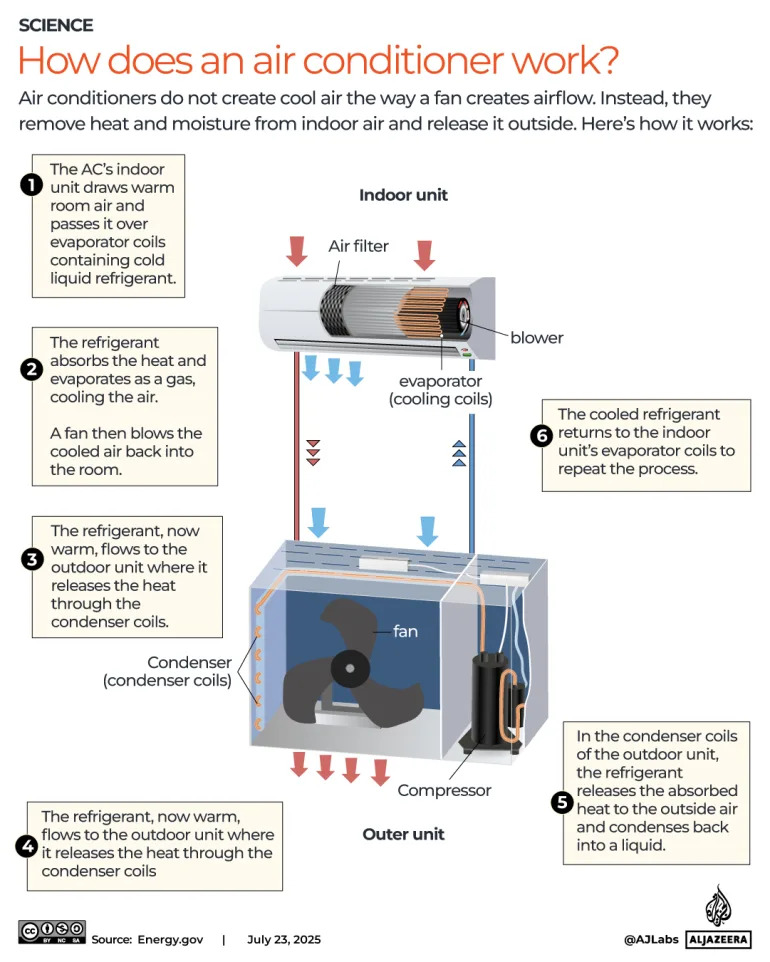
Air conditioners keep indoor spaces cool by moving heat from inside to outside. They use a cycle that absorbs heat and releases it outside the building.
This process relies on special parts and fluids that work together to cool the air efficiently.
Basic Cooling Process
Air conditioners use a cycle called refrigeration to cool your home. The warm air inside passes over cold coils. The coils absorb the heat and cool the air before it flows back into the room.
- Warm indoor air moves over the evaporator coil.
- The refrigerant inside the coil absorbs heat.
- The refrigerant turns into gas and flows outside.
- The heat is released outside through the condenser coil.
- The refrigerant cools down and turns back into liquid.
- The cycle repeats to keep your home cool.
Role Of Refrigerants
Refrigerants are liquids that absorb and release heat in the cooling cycle. They change from liquid to gas and back to carry heat away from your home.
| Refrigerant | Function |
| Absorbs heat | Evaporator coil |
| Releases heat | Condenser coil |
| Changes state | Liquid to gas and gas to liquid |
Components Influencing Performance
Several parts affect how well an air conditioner cools. These include the compressor, coils, fans, and filters.
- Compressor pumps the refrigerant through the system.
- Evaporator coil absorbs heat from indoor air.
- Condenser coil releases heat outside.
- Fans move air over the coils for better heat exchange.
- Filters clean the air and keep components working well.
Impact Of Outside Temperature
Outside temperature plays a key role in how well an air conditioner works. The air conditioner moves heat from inside your home to outside. The temperature outside affects how easily this heat moves.
Understanding this impact helps you use your air conditioner wisely. It also explains why energy use changes during hot or cool days.
Heat Exchange Efficiency
The air conditioner uses a heat exchanger to move heat out of your home. This process works best when outside air is cooler. Hot outside air makes heat exchange harder.
When outside temperature rises, the heat exchanger struggles to release heat. This lowers its efficiency and makes the air conditioner work longer.
Compressor Workload
The compressor pumps refrigerant to cool your home. Hotter outside air forces the compressor to work harder. This extra work can increase wear and tear on the unit.
On cooler days, the compressor runs less. This reduces stress on the system and can extend the air conditioner’s life.
Energy Consumption Patterns
Higher outside temperatures cause air conditioners to use more energy. The system runs longer and works harder to cool your home.
Lower outside temperatures reduce energy use. The air conditioner does not need to run as much to keep your home comfortable.
- Hot days increase electricity bills
- Cooler days lower energy costs
- Regular maintenance improves efficiency
Common Misconceptions
Many people believe outside temperature directly affects air conditioner performance. This idea leads to confusion about how AC units work. Understanding the facts helps clear up these common myths.
This article explores common misunderstandings about temperature and air conditioners. It explains what really impacts AC efficiency indoors and outdoors.
Temperature Myths Debunked
One myth is that hotter outdoor air always makes the AC work harder inside. While outside temperature plays a role, it is not the only factor. The AC’s ability to cool depends on multiple conditions.
- Air conditioners remove heat from indoor air, not outside air directly.
- Insulation quality affects how much heat enters your home.
- Humidity levels impact cooling comfort more than outdoor temperature.
- Regular maintenance keeps your AC running efficiently regardless of weather.
Indoor Vs Outdoor Factors
Indoor conditions often matter more than outdoor heat. The AC cools the air inside your home, so factors inside the building are crucial.
| Factor | Impact on AC |
|---|---|
| Indoor Temperature | Directly affects cooling load and energy use |
| Outdoor Temperature | Influences compressor workload but less than indoor heat |
| Insulation | Reduces heat gain, lowers AC demand |
| Humidity | Affects comfort and AC energy use |
| Sunlight Exposure | Increases indoor heat, raising cooling needs |

Credit: www.reddit.com
Extreme Weather Effects
Air conditioners work differently depending on the outside temperature. Extreme weather can affect their performance and energy use. Understanding these effects helps keep your home comfortable.
Both very hot and very cold weather create challenges for air conditioners. Each condition impacts the system in unique ways.
High Heat Challenges
When temperatures rise above normal, air conditioners must work harder to cool your home. This extra effort can reduce efficiency and increase wear on the unit.
- The compressor runs longer, using more electricity.
- Heat outside makes it harder to release heat inside.
- Cooling coils may freeze if the system struggles.
- Airflow can become restricted by dirt or debris.
- Frequent use can shorten the lifespan of the unit.
Cold Weather Impact
Cold weather can also affect air conditioners, especially heat pump models. Low temperatures make it harder for the system to extract heat from outside air.
| Temperature Range | Effect on Air Conditioner |
| Above 40°F (4°C) | Normal operation |
| 20°F to 40°F (-6°C to 4°C) | Reduced efficiency |
| Below 20°F (-6°C) | Possible frost build-up and defrost cycles |
| Below 0°F (-18°C) | System may shut off to prevent damage |
Tips For Optimal Ac Performance
Air conditioners work better when you take care of them. Simple tips help save energy and keep your home cool.
Outside temperature can change how your AC runs. Use the right settings and practices to get the best results.
Maintenance Practices
Clean filters and check your AC regularly. This keeps air flowing and stops the system from working too hard.
- Replace or clean filters every month during use
- Clear debris from outdoor units
- Check ducts for leaks or blockages
- Schedule professional tune-ups yearly
Energy-saving Strategies
Save power by using your AC smartly. Adjust your habits to lower energy use and costs.
| Strategy | Benefit |
| Use fans with AC | Improves air flow, cools faster |
| Close curtains during day | Blocks heat from sun |
| Turn off AC when rooms are empty | Reduces wasted energy |
| Use programmable thermostat | Sets cooling only when needed |
Setting Ideal Temperatures
Set your AC to the right temperature. Too low wastes energy, too high feels uncomfortable.
- Set temperature between 24°C and 26°C (75°F to 78°F)
- Increase temperature when no one is home
- Lower temperature only when very hot outside
- Use energy-saving mode if available
Future Of Air Conditioning
Air conditioners keep us cool when it is hot outside. The outside temperature affects how well they work. Engineers are working on new ways to improve air conditioners for the future.
These new ideas help air conditioners use less energy and handle changing weather. This will make cooling homes easier and better for the planet.
Innovations In Cooling Technology
New cooling technologies help air conditioners work better even in very hot weather. Some use new materials that cool faster and use less power.
Smart systems adjust cooling based on the outside temperature and how many people are in the room. This saves energy and keeps people comfortable.
- Use of eco-friendly refrigerants that do less harm to the environment
- Development of solar-powered air conditioners
- Improved insulation to keep cool air inside longer
- Smart sensors that adjust cooling automatically
Adapting To Climate Change
Climate change causes hotter and longer heat waves. Air conditioners must adapt to work well under these new conditions.
Designs focus on using less energy to reduce greenhouse gases. This helps fight climate change while keeping homes cool.
- Stronger cooling systems for extreme heat
- Energy-efficient designs to lower electricity use
- Materials that reduce heat absorption in buildings
- Integration with renewable energy sources

Credit: shopboldr.com
Frequently Asked Questions
Does Outside Temperature Impact Air Conditioner Efficiency?
Yes, higher outside temperatures make air conditioners work harder. This reduces efficiency and increases energy consumption, raising cooling costs.
How Does Outdoor Heat Affect Ac Performance?
Outdoor heat raises the temperature difference the AC must overcome. This forces the system to run longer, potentially causing wear and higher bills.
Can Extreme Cold Outside Harm Air Conditioners?
Extreme cold can cause some AC components to freeze or malfunction. However, most units are designed to handle typical seasonal temperature variations safely.
Why Does My Ac Cool Less On Hot Days?
On very hot days, AC units struggle to expel heat efficiently. This leads to reduced cooling capacity and longer run times to maintain comfort.
Conclusion
Outside temperature impacts your air conditioner’s efficiency. High temperatures make it work harder. This can increase energy costs. Regular maintenance helps improve performance. Keep your unit clean and check filters often. Consider shade or awnings to block sun. This reduces strain on your air conditioner.
Use fans to help circulate cool air. Smart thermostats can optimize cooling. Small changes can make a big difference. Stay comfortable and save money.