Have you ever wondered why your air conditioner sometimes struggles to keep your home cool on really hot days? Or why it seems to work harder when the temperature outside rises?
Understanding how outside temperature affects your air conditioner can help you make smarter choices about cooling your home and saving energy. You’ll discover the surprising ways the weather impacts your AC’s performance—and how you can keep it running smoothly no matter the heat.
Keep reading to find out what’s really going on behind the scenes every time you switch on your air conditioner.
How Air Conditioners Work
Air conditioners cool indoor air by moving heat outside. Higher outside temperatures make it harder for AC units to release heat, reducing their efficiency. This means ACs work longer and use more energy on hot days.
Basic Cooling Process
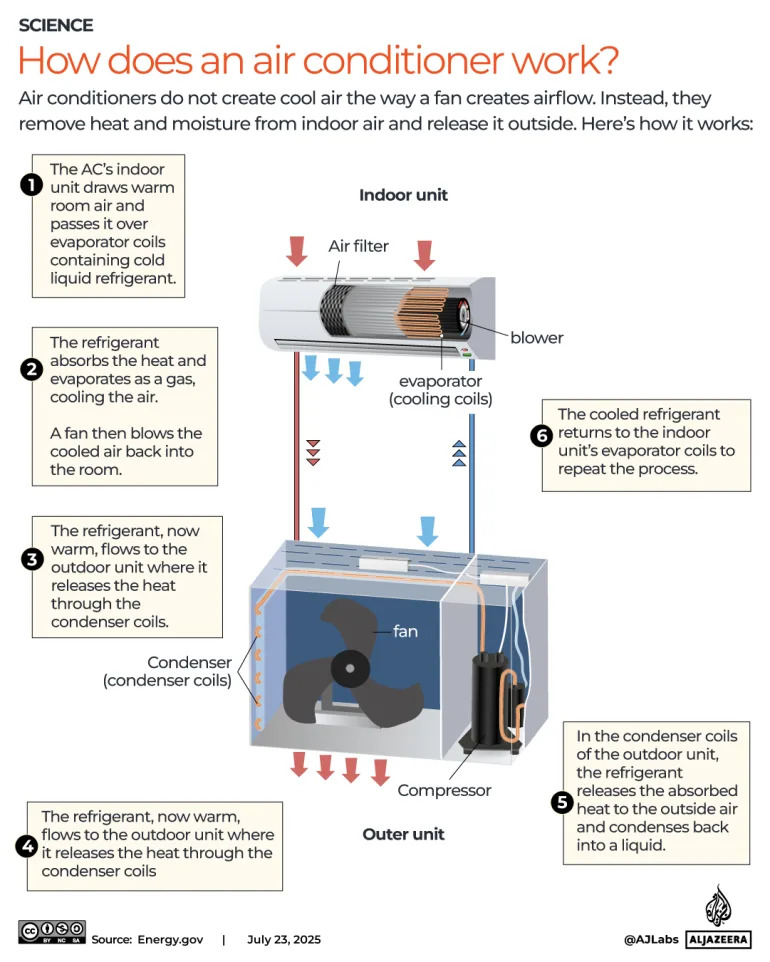
An air conditioner cools by removing heat from inside a room. It takes warm air and passes it over cold coils. These coils absorb the heat. Then, the heat moves outside, making the room cooler. This process keeps repeating to keep the air cool.
Role Of Refrigerants
Refrigerantsare special fluids that help cool the air. They change from liquid to gas and back again inside the AC. This change helps absorb and release heat quickly. Without refrigerants, the AC cannot cool the air.
Heat Exchange Mechanism
The AC has two main parts: the indoor unit and the outdoor unit. The indoor unit absorbs heat from the room air. The outdoor unit releases the heat outside. This heat exchangekeeps the indoor air cool and comfortable.

Credit: shopboldr.com
Impact Of Outside Temperature
Outside temperature plays a big role in how an air conditioner works. Higher temperatures increase the heat load, which means the AC must work harder to cool the space. This leads to higher energy consumptionand bigger electricity bills.
The compressor performanceis affected by outside heat. When it is very hot outside, the compressor needs to run longer and more often. This can cause wear and tear, reducing the AC’s lifespan.
Cooling capacity drops as outside temperatures rise. The AC struggles to remove heat from the indoor air effectively. This means it may take longer to cool rooms, or the space may not get as cool as desired.
Efficiency Variations By Climate
Hot and humid conditionsmake air conditioners work harder. High humidity means the AC must remove more moisture from the air. This process uses more energy and reduces efficiency. The AC cools the air but also removes water, which adds to its workload.
Dry and hot environmentsstill challenge the AC, but less than humid ones. Without much moisture, the AC mainly focuses on cooling the air. This helps it run more efficiently compared to humid climates.
Mild and cool weatheris the easiest for AC units. The temperature difference between inside and outside is smaller. The AC uses less energy and runs smoothly. This leads to better overall efficiency and less wear on the system.

Credit: www.reddit.com
Design Features For Temperature Adaptation
Variable speed compressorsadjust their speed based on outside temperature. This means the air conditioner can cool gently on cooler days and work harder on hot days. It saves energy and keeps the room comfortable.
Advanced heat exchangershelp the air conditioner transfer heat better. They work well even when it is very hot outside. This keeps the system running smoothly and cools the air faster.
Smart thermostats and controlslearn your schedule and outside temperature. They change the cooling power automatically. This way, the air conditioner uses less energy and keeps the room just right.
Tips To Improve Ac Efficiency
Regular maintenancekeeps your AC running smoothly. Clean or replace filters monthly. Clear debris around outdoor units to improve airflow. Check refrigerant levels to avoid overworking the system.
Good insulation and sealingstop cool air from escaping. Seal windows and doors to block warm air. Use weatherstripping or caulk to close gaps. This keeps your home cooler and reduces AC load.
Set your thermostat to an optimal temperature, around 78°F (25-26°C). Avoid setting it too low; it wastes energy. Use a programmable thermostat to adjust temps when away or sleeping. This saves power and keeps comfort high.
Energy Cost Implications
Peak temperaturesmake air conditioners work harder. This causes higher energy useand increased costs. On very hot days, cooling systems run longer to keep rooms cool. This means electric billsrise during summer.
Seasonal changes affect energy use. Cooler months need less cooling, so bills drop. Warmer months require more energyfor air conditioning. Understanding these patterns helps plan budgets better.
- Use fans to help cool rooms.
- Set thermostat to a higher temperature when away.
- Close curtains to block sunlight.
- Maintain your air conditioner regularly.
These steps can lower electricity bills and reduce energy waste.

Credit: www.yahoo.com
Frequently Asked Questions
How Does Outside Temperature Impact Ac Efficiency?
Outside temperature affects AC efficiency by influencing heat exchange. Higher temperatures make the AC work harder to cool indoor air. This increases energy use and reduces performance. Lower temperatures ease the cooling process, improving efficiency and lowering electricity bills.
Can Extreme Heat Damage My Air Conditioner?
Yes, extreme heat can strain your AC system. It causes components to overheat and wear faster. Continuous high temperatures may lead to breakdowns and costly repairs. Regular maintenance helps prevent damage during heat waves and ensures reliable cooling.
Why Does My Ac Struggle On Hot Days?
Your AC struggles on hot days because the outside unit faces intense heat. This limits heat dissipation, reducing cooling capacity. The compressor works harder, consuming more power but delivering less cool air. Proper shading and maintenance can improve performance in hot weather.
Does Outside Humidity Affect Air Conditioner Performance?
Yes, high outside humidity affects AC performance by increasing indoor moisture levels. The AC must remove more moisture, which requires extra energy. This can reduce cooling efficiency and comfort. Using a dehumidifier alongside your AC helps manage humidity better.
Conclusion
Outside temperature plays a key role in how your air conditioner works. Hotter days make the AC work harder to cool your home. Cooler weather helps it run more easily and save energy. Understanding this can help you use your AC smarter.
It also explains why your energy bills change with seasons. Keep your AC well maintained for best performance all year. This simple fact helps you stay comfortable and save money too.