Have you ever wondered if running your air conditioner uses gas? It’s a common question that can impact your energy bills and how you think about keeping cool.
Understanding what powers your AC can help you make smarter choices for your home and wallet. Keep reading to find out the truth about your air conditioner’s energy use—and discover simple tips to save money while staying comfortable.

Credit: coastalhomeservicesinc.com
How Air Conditioners Work
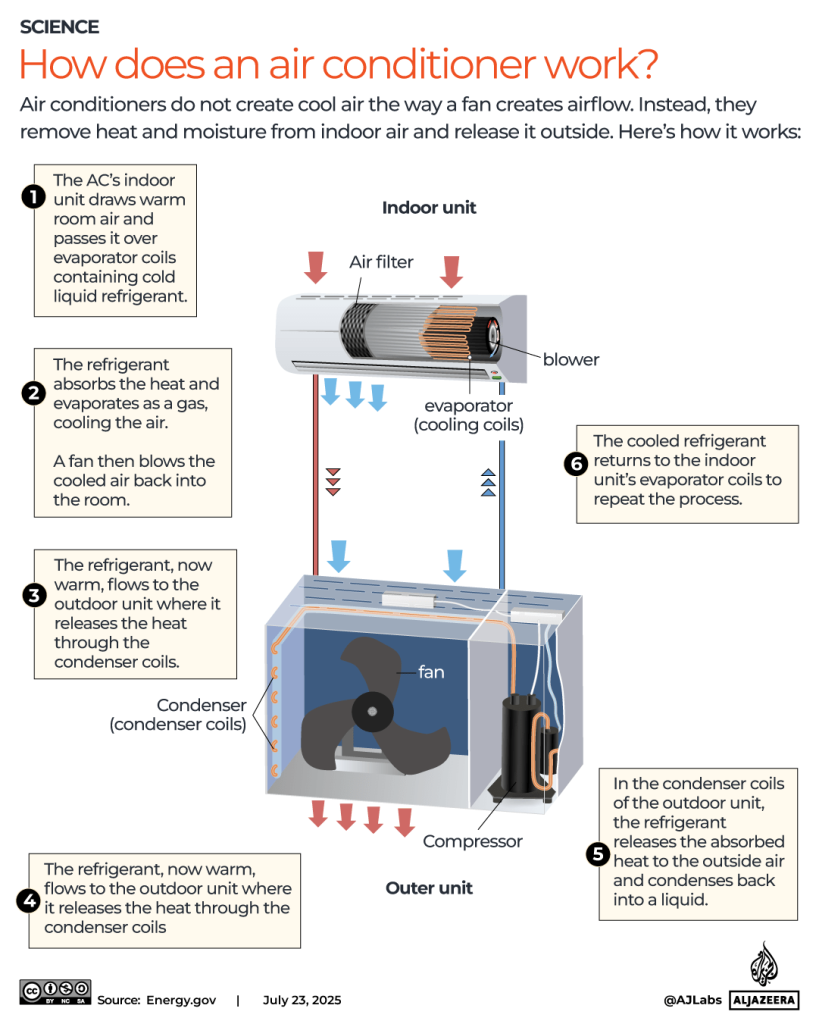
Air conditioners cool air using a simple process. They take heat from inside your home and send it outside. The cool air stays inside, making the room comfortable.
The system uses a special liquid called refrigerant. This liquid changes from gas to liquid and back. As it changes, it absorbs and releases heat. This cycle keeps the air cool.
| Type | Description |
|---|---|
| Window Air Conditioner | Fits in a window; cools a single room. |
| Split Air Conditioner | Has two parts; quiet and efficient for homes. |
| Central Air Conditioner | Cools whole house through ducts. |
| Portable Air Conditioner | Can be moved; good for small spaces. |
Energy Sources For Air Conditioners
Air conditioners mostly run on electricity. They do not use gas directly for cooling. Electricity powers the compressor and fans inside the unit. This makes the air conditioner work.
Some heating systems in air conditioners may use gas, but this is for heating, not cooling. Most homes use electric air conditioning units.
| Power Source | Usage | Common in |
|---|---|---|
| Electricity | Cooling and Fan operation | Almost all air conditioners |
| Gas | Heating in some HVAC systems | Homes with gas furnaces |
- Electricity is the main power for cooling.
- Gas is mainly for heating, not cooling.
- Most air conditioners in homes use electric power.
Gas Consumption In Air Conditioners
Air conditioners do not use gas directlylike a stove or heater. They run on electricityto cool your home. Inside, a special gas called refrigeranthelps move heat from inside to outside.
This refrigerant gasis sealed inside the system and does not burn or consume fuel. The unit uses a compressor to pressurize this gas, changing its temperature.
| Type of Air Conditioning | Fuel Used | How It Works |
|---|---|---|
| Electric Air Conditioner | Electricity | Uses refrigerant gas inside to cool air |
| Gas-Powered Air Conditioning | Natural Gas or Propane | Uses gas to power a small engine or absorption system |
Some air conditioners use natural gasor propane. These are less common and use gas to run the cooling process. They are called gas-powered air conditioners.
Impact On Household Gas Usage
Running an air conditioner usually does not use household gas. Most air conditioners use electricity, not gas, to cool your home. Gas bills stay the same even if the air conditioner runs a lot.
Some homes have gas-powered heating systems, but cooling with an air conditioner does not increase gas use. Cooling costs mostly show up in electricity bills, not gas bills.
| Energy Type | Use for Air Conditioning | Effect on Gas Bill |
|---|---|---|
| Electricity | Primary energy for most AC units | Increases electricity bill only |
| Gas | Used mainly for heating, not cooling | No increase from running AC |
Energy efficiency matters a lot. Choose an air conditioner with a high energy rating. This helps lower electricity use and saves money.
Setting the thermostat a few degrees higher can also reduce energy use. Regular maintenance keeps the unit working well and saves energy too.
Alternative Cooling Systems Using Gas
Gas absorption refrigeration uses natural gas or propane to cool spaces. It works by heating a special liquid to create a cooling effect. This system is often found in places without electricity or where gas is cheaper.
Pros:
- Can run without electricity
- Quieter than electric air conditioners
- Useful in remote areas
Cons:
- Less efficient than electric systems
- Higher initial cost
- Requires a steady gas supply

Credit: www.aljazeera.com
Reducing Energy Costs With Air Conditioning
Running an air conditioner uses electricity, not gas. Using a smart thermostathelps save energy by adjusting the temperature automatically. It keeps the room cool only when needed. This reduces electric billsand saves power.
Regular maintenancekeeps the air conditioner working well. Clean or replace filters every few months. Check for leaks and clear debris around the unit. Proper care improves efficiencyand lowers energy use.
| Maintenance Tip | Why It Helps |
|---|---|
| Clean or Replace Filters | Improves airflow and cooling efficiency |
| Check for Leaks | Prevents energy loss and keeps cooling strong |
| Clear Debris Around Unit | Allows proper airflow and prevents damage |

Credit: www.kauffmangas.com
Frequently Asked Questions
Does An Air Conditioner Use Gas Or Electricity?
Air conditioners primarily use electricity to operate. They require power to run the compressor, fan, and other components. Some vehicles’ air conditioning systems might indirectly use gas when the engine runs, but the AC itself relies on electricity.
How Does Air Conditioning Affect Gas Mileage?
Running the air conditioner can decrease gas mileage slightly. The engine needs more power to run the AC compressor, which can lead to higher fuel consumption. However, the impact is usually minimal compared to other factors like driving speed and vehicle maintenance.
Can Using Ac In A Car Waste Fuel?
Using the AC in a car can increase fuel consumption. The engine works harder to power the AC system, leading to higher fuel use. However, the effect is relatively minor, and comfort might outweigh the slight decrease in efficiency for many drivers.
Is It Cheaper To Drive With Windows Down?
Driving with windows down can save fuel compared to using AC. However, at higher speeds, open windows create drag, reducing fuel efficiency. For city driving, open windows might save gas, but on highways, AC might be more efficient.
Conclusion
Running the air conditioner does not use gas directly. It mainly uses electricity to cool your home. Gas may power some older or special HVAC systems, but most AC units rely on electric power. Knowing this helps you understand your energy bills better.
Saving energy means using your air conditioner wisely. Simple steps can keep your home cool without high costs. Stay informed, and you can enjoy comfort without wasting energy.