Have you ever packed your RV for a trip and wondered if your freezer gets cold before your fridge? It’s a curious question that many RV owners face.
Understanding how your RV’s cooling system works can save you from spoiled food and frustrating surprises on your adventures. Imagine hitting the road, confident that your ice cream will stay frozen and your drinks will remain chilled. We’ll explore the cooling behavior of RV freezers and fridges.
By the end, you’ll know exactly what to expect and how to make the most of your RV’s cooling capabilities. Keep reading to ensure your next trip is as enjoyable and stress-free as possible.
How Rv Cooling Systems Work
Understanding how RV cooling systems work can help you manage your appliances more efficiently on the road. Many RV owners wonder if the freezer gets cold before the fridge and why that happens. The answer lies in the design and operation of the refrigeration system inside your RV.
Basics Of Rv Refrigeration
RV refrigerators use a different cooling method than home refrigerators. Most rely on absorption cooling, which doesn’t use a compressor but a heat source like propane or electricity to create a cooling effect.
This system moves heat from inside the fridge to the outside, keeping your food cold. The process involves a continuous loop of liquids and gases that absorb and release heat.
Because it depends on heat transfer rather than mechanical compression, the cooling takes time to reach the right temperature. You might notice your fridge takes longer to cool down after you start it.
Freezer Vs. Fridge Cooling Mechanisms
The freezer and fridge compartments share the same cooling system, but they cool at different rates. The freezer is usually colder because it’s designed to maintain sub-zero temperatures, which helps it cool faster.
Inside the RV refrigerator, cold air from the freezer circulates into the fridge section. This means the freezer pulls cold first, then the fridge gradually follows as cold air fills its space.
Have you ever started your RV’s fridge and noticed the freezer feeling cold while the fridge still warms? This happens because the freezer has less air volume to cool, making it chill quicker.
Knowing this can help you plan how to load your fridge and freezer. For instance, placing items that need to stay frozen in the freezer first can prevent spoilage during the cooling phase.
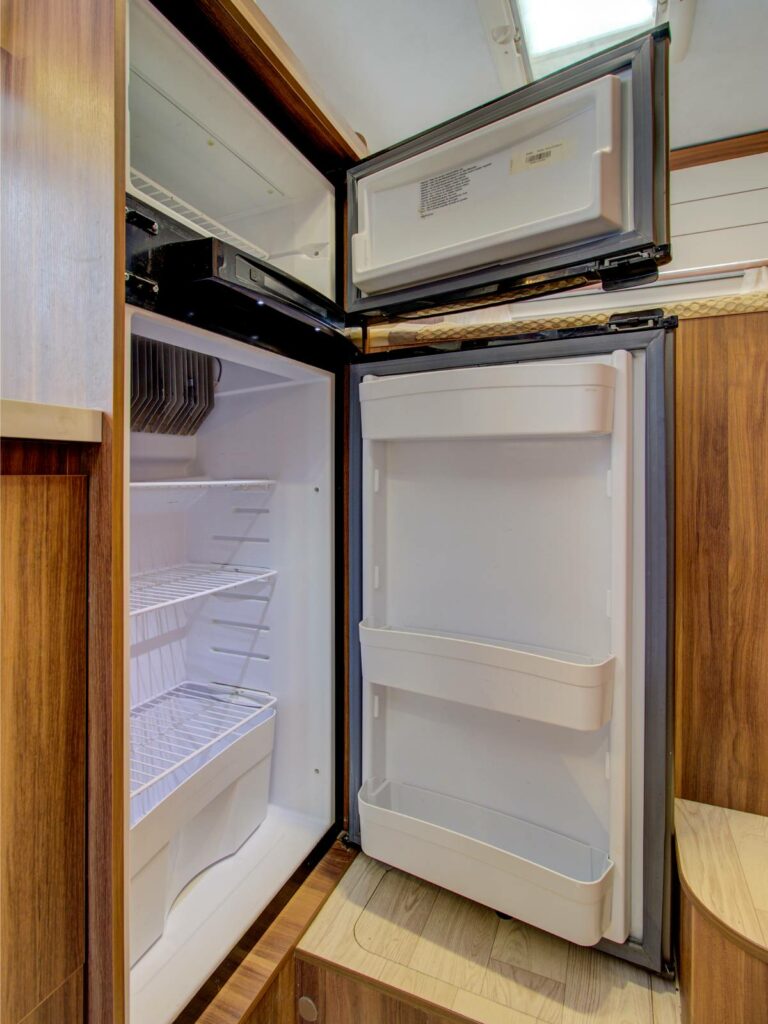
Credit: blog.indiecampers.com
Factors Affecting Cooling Speed
The speed at which an RV freezer cools compared to the fridge depends on several factors. Understanding these factors helps set realistic expectations. Cooling speed varies based on settings, usage, and the environment around the RV.
Temperature Settings
Temperature controls play a key role in cooling speed. Freezers usually have lower temperature settings than fridges. Setting a colder temperature makes the freezer work harder and faster. If the fridge is set too warm, it will take longer to reach the desired coolness. Adjusting both compartments to proper settings ensures efficient cooling.
Door Usage And Seal Quality
Opening the doors frequently slows down cooling. Each time the door opens, cold air escapes and warm air enters. This forces the unit to work more to cool down again. Poor door seals let cold air leak out constantly. Checking and fixing seal issues helps maintain cold temperatures and speeds up cooling.
Ambient Temperature Impact
External temperature affects how quickly the freezer and fridge cool. Hot weather makes the cooling system work harder and longer. In cooler climates, the unit cools faster and uses less energy. Parking the RV in shaded or cool areas helps improve cooling efficiency and speed.
Freezer Cooling Timeline
The freezer cooling timeline in an RV follows specific stages. Understanding these stages helps to know if the freezer gets cold before the fridge. Cooling does not happen instantly. It takes time for temperatures to stabilize in both compartments.
Initial Cooling Phase
The freezer starts cooling rapidly after turning on. It reaches low temperatures quicker than the fridge. This happens because the freezer has less space and needs to remove less heat. The cooling unit directs cold air mainly to the freezer first. During this phase, the freezer temperature drops fast, while the fridge cools slowly.
Steady-state Temperature
After the initial phase, both freezer and fridge temperatures level off. The freezer maintains a colder temperature, usually below 0°F (-18°C). The fridge stabilizes around 35°F to 40°F (1.7°C to 4.4°C). At this stage, cooling is balanced between the two compartments. The freezer no longer cools faster but keeps the low temperature steady.
Fridge Cooling Timeline
The fridge cooling timeline in an RV affects how quickly your food and drinks chill. Understanding this timeline helps you manage your trip better. The freezer often gets cold faster than the fridge compartment. This happens because the freezer section is smaller and needs to reach a lower temperature. Watching the cooling process can prevent food spoilage and save energy.
Pre-cooling Duration
Pre-cooling is the time the fridge takes to reach the right temperature. Usually, it takes about 4 to 6 hours in an RV. The freezer cools faster, often within 2 to 3 hours. This difference happens because the freezer needs to reach around 0°F (-18°C), while the fridge aims for about 37°F (3°C). Starting the fridge before loading food helps keep items fresh longer.
Maintaining Optimal Temperature
Keeping the fridge and freezer at stable temperatures is key. The freezer should stay below 0°F (-18°C). The fridge needs to hold steady near 37°F (3°C). Avoid opening the doors often. Warm air entering slows cooling. Use a thermometer to check temperatures regularly. Proper sealing and ventilation also help maintain coolness. This keeps food safe and the fridge running efficiently.
Common Misconceptions
Many RV owners believe the freezer gets cold faster than the fridge. This is a common misconception. Understanding how RV refrigerators and freezers work helps clear up the confusion. The cooling process depends on several factors, not just the appliance type. Let’s explore why the freezer may seem colder before the fridge and how load affects cooling time.
Why Freezer May Seem Colder First
The freezer often feels colder first because it is smaller and better insulated. It requires less energy to lower its temperature. The fridge compartment is larger and may take longer to cool. Temperature sensors in RV units also focus on the fridge section. This can make the freezer feel colder while the fridge is still cooling down.
Effect Of Load On Cooling Time
The amount of food inside impacts cooling speed. A fully loaded freezer holds cold air better. It cools down faster than an empty one. The fridge takes longer to cool if it is packed with warm items. Opening the doors often also slows cooling. Proper loading helps maintain steady temperatures.

Credit: rvinspectionandcare.com
Tips For Faster Cooling
Cooling an RV freezer faster can save time and keep food fresh longer. Small changes in how you use and care for your RV freezer make a big difference. These tips help your freezer reach cold temperatures quickly and stay efficient.
Proper Loading Techniques
Do not overload the freezer. Air needs space to circulate around the items. Arrange food in smaller packages for quicker cooling. Avoid placing hot or warm food inside the freezer. Leave gaps between items to allow cold air flow. Use airtight containers to reduce moisture and frost build-up.
Temperature Control Adjustments
Set the freezer temperature lower than the fridge setting. This helps the freezer reach the right cold level faster. Check the thermostat regularly to keep it accurate. Avoid frequent opening of the freezer door. Each time you open, warm air enters, slowing cooling.
Maintenance And Cleaning
Clean the freezer coils regularly to remove dust and dirt. Dirty coils reduce cooling efficiency. Defrost the freezer if frost builds up more than a quarter inch. Frost blocks cold air from circulating. Check door seals for cracks or gaps. Replace damaged seals to keep cold air inside.
Troubleshooting Cooling Issues
Cooling problems in an RV freezer or fridge can spoil food quickly. Spotting these issues early helps save your groceries and avoid costly repairs. Troubleshooting involves checking common signs and knowing when to seek expert help. This section guides you through key steps to diagnose cooling issues effectively.
Signs Of Cooling Malfunction
- Freezer or fridge takes too long to get cold
- Uneven temperatures inside compartments
- Ice buildup or frost in the freezer
- Strange noises from the cooling unit
- Fridge or freezer smells musty or spoiled
- Power is on but no cooling effect
These signs suggest your RV cooling system may not work properly. Regular checks help identify problems early.
When To Call A Technician
- Cooling does not improve after basic checks
- Unusual sounds persist or get louder
- Electrical issues or power failures occur
- Leaks or frost build-up worsen
- Temperature keeps rising despite adjustments
- Routine maintenance or part replacement needed
Professional help prevents damage and restores cooling quickly. Do not delay calling a technician if problems continue.

Credit: www.youtube.com
Frequently Asked Questions
Does Rv Freezer Cool Faster Than Fridge?
Yes, RV freezers usually cool faster due to their lower temperature settings. They remove heat more quickly to maintain freezing conditions, unlike fridges which keep a higher temperature to preserve food freshness.
Why Does The Rv Freezer Get Cold Before The Fridge?
The freezer is designed to reach colder temperatures first to prevent food spoilage. It often has a dedicated cooling system that activates before the fridge compartment does, ensuring proper freezing conditions before chilling.
Can Rv Fridge And Freezer Run Simultaneously?
Yes, most RV cooling units are designed to cool both compartments simultaneously. However, the freezer typically reaches its set temperature faster due to its need for lower temperatures compared to the fridge.
How To Maintain Proper Cooling In Rv Freezer And Fridge?
Keep the doors closed as much as possible and avoid overloading. Regularly clean coils and check seals to ensure efficient cooling. Proper ventilation around the unit also helps maintain optimal temperatures.
Conclusion
RV freezers usually get cold faster than fridges. This happens because freezers work at lower temperatures. They need to freeze items, so they cool quickly. Fridges keep food cool but not frozen, so they take more time. Knowing this helps you plan your food storage better.
It also saves energy and keeps your food fresh longer. Remember, proper use of your RV fridge and freezer improves your travel experience. Simple care and understanding make a big difference on the road.