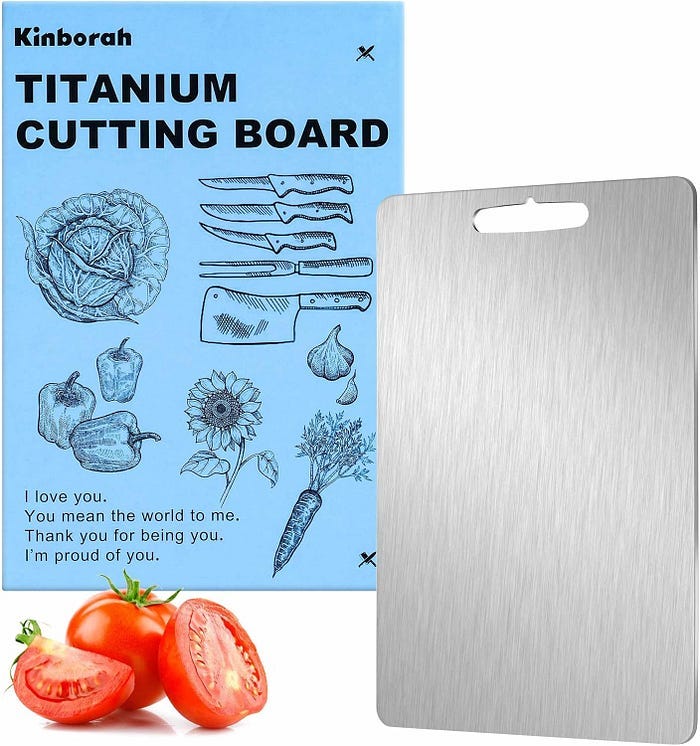
Are you worried that using a titanium cutting board might dull your knives faster? It’s a common question for anyone who wants to keep their kitchen tools sharp and ready.
You want a cutting board that’s strong and durable but won’t wear down your favorite knives. You’ll discover the truth about titanium cutting boards and how they affect your blades. Keep reading to find out what you need to know before making your next kitchen upgrade.

Credit: medium.com
Titanium Cutting Boards Basics
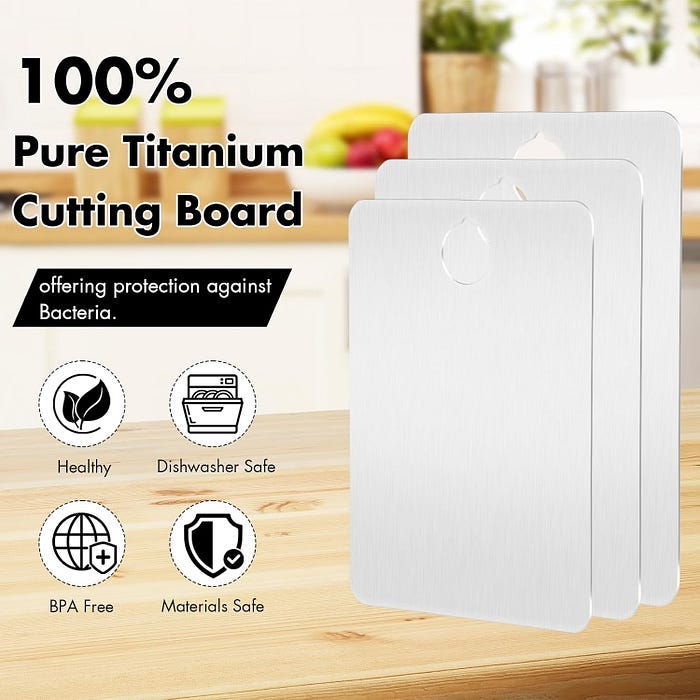
Titanium cutting boards are a newer option in kitchens. They offer a strong and durable surface.
This article explains the material properties of titanium and how it is used in kitchenware.
Material Properties Of Titanium
Titanium is a metal known for its light weight and high strength. It resists corrosion and does not rust easily.
- Very strong but light metal
- Resistant to rust and corrosion
- Non-toxic and safe for food contact
- Hard surface that can resist scratches
- More expensive than wood or plastic
Common Uses In Kitchenware
Titanium is used in many kitchen items because it is safe and long-lasting. It appears in cookware and utensils.
| Kitchenware Item | Reason for Use |
| Cutlery | Lightweight and sharp |
| Cookware | Resists corrosion and heat |
| Cutting Boards | Durable and hygienic surface |
| Utensils | Strong and easy to clean |
Credit: medium.com
Knife Edge And Cutting Surfaces
Choosing the right cutting board affects how long your knives stay sharp. Some materials can dull knife edges faster than others. Titanium cutting boards are known for their strength, but do they harm knives?
Understanding how knife edges interact with cutting surfaces helps explain if titanium boards cause dulling. Let’s look at how knife edges work and the impact of surface hardness.
How Knife Edges Work
A knife edge is a thin line where two sides meet. This edge cuts food by slicing through fibers. Sharpness depends on the angle and how fine the edge is.
When a knife hits a hard surface, the edge may bend or chip. Softer surfaces protect the edge by letting it slide and cut smoothly.
- Sharp edges are thin and fine
- Cutting pressure focuses on the edge line
- Edges can bend or chip on hard surfaces
- Softer surfaces help keep edges sharp
Impact Of Surface Hardness
Surface hardness measures how tough a material is. Very hard surfaces can wear down knife edges faster. Softer surfaces absorb some pressure and reduce damage.
Titanium is a very hard metal. If a cutting board is made from pure titanium, it could wear knife edges quickly. But most boards mix titanium or use it as a coating, which can change hardness.
- Hard surfaces can chip or dull knife edges
- Softer surfaces protect knife sharpness
- Titanium is very hard and durable
- Mixed materials may be less damaging
Comparing Titanium To Other Boards
Titanium cutting boards are different from traditional boards. Many people wonder if they dull knives faster.
Let’s look at how titanium boards compare to wood, plastic, and glass boards in terms of knife sharpness.
Wood Vs. Titanium
Wood boards are soft and gentle on knives. They help keep blades sharp for a long time.
Titanium boards are much harder than wood. This hardness can cause knives to dull faster than on wood.
- Wood absorbs some impact from cutting
- Titanium is strong but can wear down blades
- Wood boards need more care to avoid damage
- Titanium boards are easier to clean and very durable
Plastic Vs. Titanium
Plastic boards are soft and protect knife edges well. They are popular in many kitchens.
Titanium boards are much harder and less forgiving. They can dull knives faster than plastic boards.
- Plastic boards are less expensive and light
- Titanium boards last longer but are heavy
- Plastic can get cut marks easily
- Titanium resists cuts but may harm blades
Glass Vs. Titanium
Glass boards are very hard and very rough on knives. They dull blades quickly.
Titanium boards are also hard but less brittle than glass. They still dull knives faster than wood or plastic.
- Glass boards can crack or chip easily
- Titanium boards do not crack but may scratch
- Both glass and titanium are tough on knives
- Glass boards are harder to clean than titanium
Does Titanium Cause Dulling?
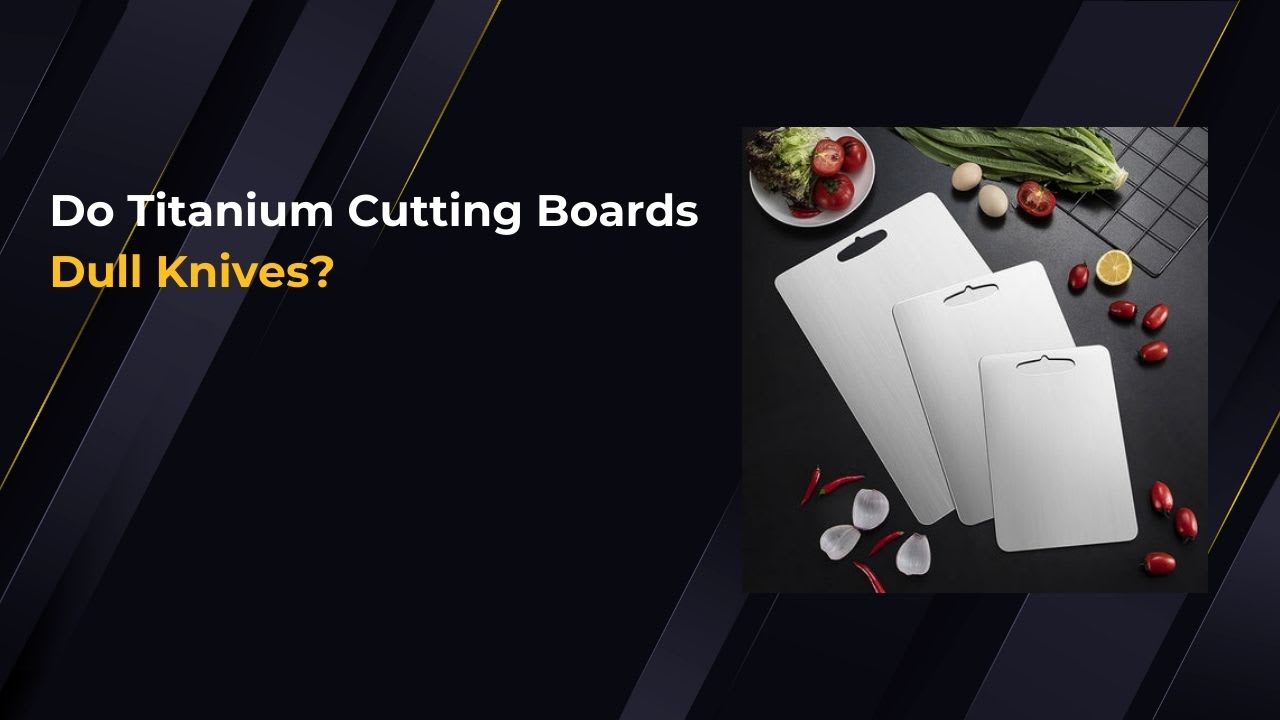
Titanium cutting boards are known for their strength and durability. People often wonder if they cause knives to dull faster.
This article looks at how titanium affects knife edges and sharpening needs.
Wear On Knife Edges
Titanium is a very hard metal. This hardness can cause more wear on knives than softer cutting boards like wood or plastic.
- Titanium boards may create small chips on knife edges over time.
- The surface is less forgiving, leading to faster edge damage.
- Knives need careful use to avoid quick dulling on titanium.
Frequency Of Sharpening Needed
Because titanium can wear down blades faster, knives may need sharpening more often.
| Cutting Board Material | Sharpening Frequency |
| Wood | Low |
| Plastic | Moderate |
| Titanium | High |
Care Tips For Titanium Boards
Titanium cutting boards are strong and durable. They do not dull knives easily like harder surfaces.
Proper care helps keep your board and knives in good condition for a long time.
Cleaning And Maintenance
Clean your titanium board after every use. Use warm water and mild soap to remove food particles.
Avoid using abrasive cleaners or steel wool that can scratch the surface. Dry the board completely to prevent water spots.
- Wash with soft sponge or cloth
- Use gentle dish soap
- Rinse thoroughly with warm water
- Dry with a soft towel immediately
Extending Board And Knife Life
Use your titanium board only for cutting tasks. Avoid chopping on very hard surfaces or using it as a trivet.
Store knives properly and sharpen them regularly. This helps keep blades sharp and reduces wear on the board.
- Cut on the board gently without heavy force
- Keep knives sharp with regular honing
- Store knives in a block or magnetic strip
- Avoid dropping or banging knives on the board
Credit: vocal.media
Frequently Asked Questions
Can Titanium Cutting Boards Damage Knives?
Titanium cutting boards are less likely to damage knives. Titanium is a durable material that resists wear. However, frequent use might still dull blades over time. Regularly sharpening your knives can help maintain their performance.
Are Titanium Cutting Boards Good For Daily Use?
Yes, titanium cutting boards are great for daily use. They are durable and resist stains and odors. Their non-porous surface makes them easy to clean. However, they might be more expensive than other types.
Do Titanium Boards Last Longer Than Wood?
Titanium boards are more durable than wood. They resist scratches and are less prone to warping. With proper care, they can last for years. Wood boards may require more maintenance and may not last as long.
How Do I Maintain A Titanium Cutting Board?
Maintaining a titanium cutting board is simple. Clean it with warm soapy water after use. Avoid abrasive cleaners to prevent scratches. Regular cleaning ensures its longevity and keeps it hygienic.
Conclusion
Titanium cutting boards do not dull knives quickly. Their surface is gentle on blades. You can cut safely without worrying about damage. Proper care keeps both board and knives lasting long. Choose titanium boards for durability and knife protection. They offer a solid option for everyday cooking.
Trust your knives to stay sharp with this choice. Simple maintenance makes a big difference in performance. Cutting on titanium feels smooth and safe every time.