Have you ever wondered if running your air conditioner uses gas? You might be surprised to learn how your cooling system actually works and what powers it.
Understanding this can help you save money, make better choices for your home, and even reduce your environmental impact. Keep reading to discover the truth about your air conditioner and how it affects your energy use. This knowledge will give you the power to take control of your comfort and expenses.
How Air Conditioners Work
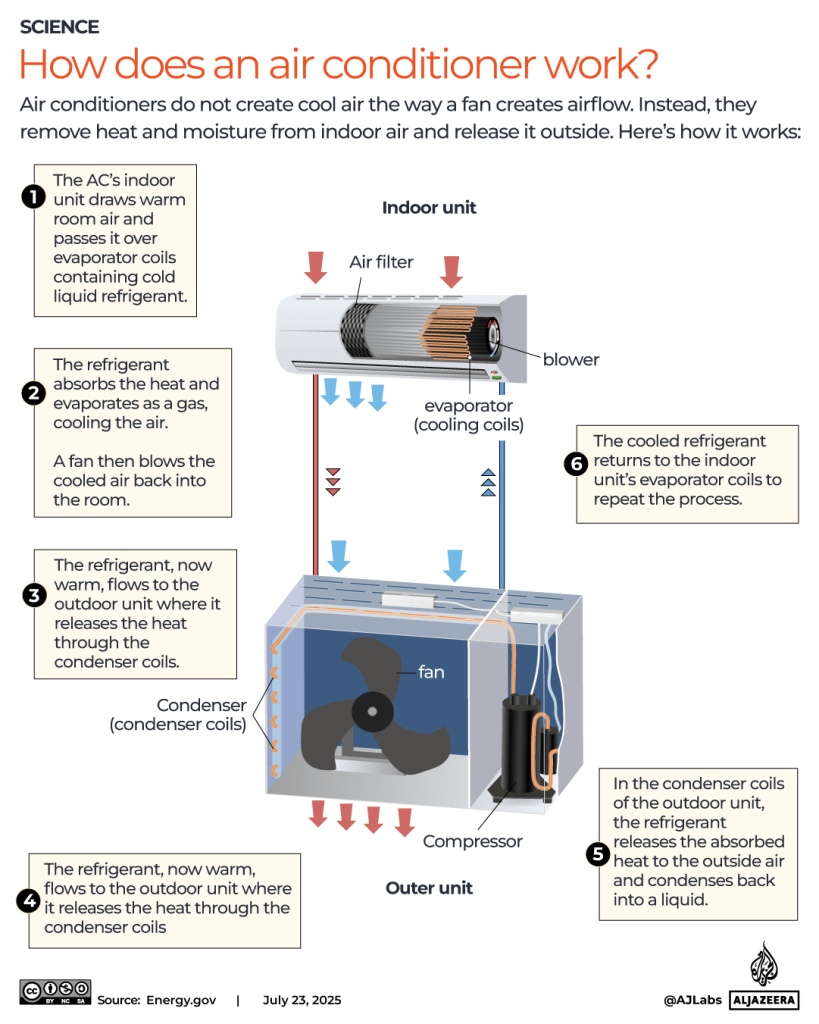
Air conditioners work by moving heat from inside to outside. The cooling cycleuses a special liquid called refrigerant. This refrigerant changes from liquid to gas and back again. As it changes, it absorbs heatfrom indoor air.
The refrigerant flows through coils. Inside, it evaporatesand takes heat. Outside, it condensesand releases heat. This cycle keeps repeating to cool your home.
| Role | Description |
|---|---|
| Refrigerants | Absorb heat inside and release it outside during phase changes. |
| Electricity | Runs the compressor and fans that move the refrigerant and air. |
| Gas Usage | Air conditioners do not use gas for cooling, only electricity. |
Credit: yourenergyanswers.com
Types Of Air Conditioning Systems
Central air conditionersuse a network of ducts to cool entire homes. They run on electricity and use refrigerants to remove heat from inside air. These systems are common in many houses and keep rooms cool evenly.
Window unitsare small, single-box air conditioners. They fit in a window and cool only one room. These units use electricity and are easy to install and remove.
Ductless mini-splitscool rooms without ducts. They have an outdoor compressor and one or more indoor units. They use electricity and offer flexible cooling for different rooms.
Gas-powered air conditionersuse natural gas instead of electricity. These systems use gas to power the cooling process. They can be more efficient in some cases but are less common than electric systems.
Common Misconceptions About Gas And Ac
Many people think air conditioners use gaslike heaters do. This idea comes from confusion about how these systems work. Heating systemsoften burn gas to create heat. Air conditioners, on the other hand, use electricity to cool air. They work by moving heat from inside the house to outside.
Here is a simple table showing the key differencesbetween heating and cooling systems:
| Feature | Heating System | Air Conditioning System |
|---|---|---|
| Energy Source | Gas or Electricity | Electricity only |
| Function | Generates heat by burning fuel or electric resistance | Removes heat from inside and releases it outside |
| Common Types | Gas furnace, electric heater | Central AC, window units, heat pumps |
Energy Sources For Air Conditioning
Most air conditioners use electricityto cool your home. They work by moving heat from inside to outside. This process needs electric power to run the compressor and fans.
Natural gasis not common for regular air conditioners but is used in some HVAC systems. These systems may use gas for heating and electricity for cooling. It helps save energy in colder months.
Some hybrid systemscombine electricity and natural gas. They switch between the two based on which is cheaper or more efficient. This helps lower energy bills and reduce environmental impact.
Environmental Impact Of Ac Energy Use
Air conditioners use electricity, which often comes from burning fossil fuels. This process releases carbon dioxide (CO2), a gas that adds to global warming. The carbon footprintof electric AC depends on how the electricity is made.
| Type | Emissions Source | Typical Emissions |
|---|---|---|
| Gas-powered AC | Burning natural gas directly | High CO2 and methane emissions |
| Electric AC | Electricity from coal, gas, or renewables | Varies; lower if renewables used |
Some sustainable coolingoptions include:
- Using energy-efficientAC units
- Installing solar panelsto power AC
- Using natural ventilationand shading
- Choosing geothermal coolingsystems

Credit: coastalhomeservicesinc.com
Tips To Reduce Energy Costs
Using an air conditioner usually runs on electricity, not gas. Saving energy helps lower your bills and protect the environment.
Efficient AC usage means setting the thermostat at a comfortable but not too cold level. Closing windows and doors keeps cool air inside. Using fans can help spread cool air without using more power.
Regular maintenance keeps your AC working well. Clean or replace filters often. Check for leaks or blockages in ducts. A well-maintained unit uses less energy.
| Upgrade Tip | Benefit |
|---|---|
| Choose Energy-Efficient Models | Use less electricity and cool better |
| Look for Energy Star Labels | Guaranteed to save power and money |
| Consider Smart Thermostats | Adjust cooling based on your schedule |

Credit: yourenergyanswers.com
Frequently Asked Questions
Does Air Conditioning Consume Gas?
No, air conditioners use electricity, not gas, to operate. However, the engine might use a bit more fuel when the AC is on, as it adds load to the system. Therefore, while it doesn’t directly use gas, it can slightly increase fuel consumption.
How Does Ac Affect Fuel Efficiency?
Using the air conditioner can slightly decrease fuel efficiency. This happens because the AC adds extra load to the engine. As a result, the engine works harder, which may lead to increased fuel consumption, especially during city driving.
Why Does My Car Ac Use More Fuel?
The car’s AC system requires energy to cool the interior, which puts additional load on the engine. This extra load forces the engine to work harder, using more fuel. The impact is more noticeable in stop-and-go traffic compared to highway driving.
Can I Save Gas By Not Using Ac?
Yes, turning off the air conditioner can help save fuel. When the AC is off, the engine doesn’t have the extra load, so it consumes less fuel. However, driving with windows down at high speeds can also reduce efficiency due to increased air resistance.
Conclusion
Using an air conditioner does not directly use gas. It mainly runs on electricity to cool your home. Some systems may use gas for heating, but not for cooling. Knowing this helps you understand your energy bills better. Choose efficient air conditioners to save money and energy.
Keep your unit clean and maintained for best performance. Stay cool without worrying about gas consumption during hot days. Simple steps make a big difference in comfort and cost.