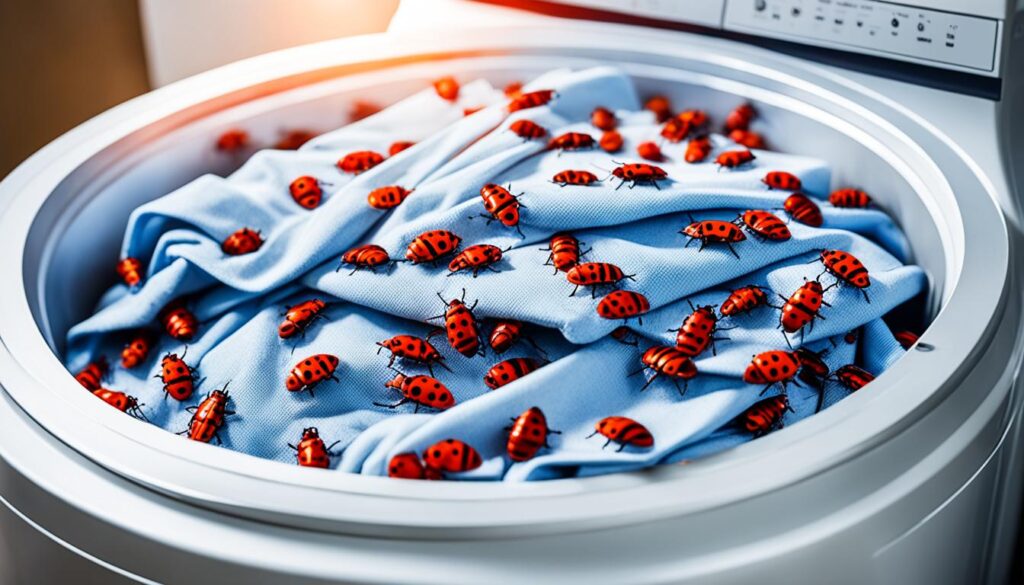
Are you worried that bed bugs might be hiding in your clothes or bedding? You’re not alone.
These tiny pests can cause big problems, making your home uncomfortable and stressful. You might be wondering if simply tossing your items into the washer and dryer is enough to get rid of them for good. The answer isn’t as simple as you think.
You’ll discover how effective your washer and dryer really are against bed bugs, and what steps you can take to protect your home and peace of mind. Keep reading to learn the truth and take control of your space.
How Bed Bugs Survive
Bed bugs are tiny insects that feed on blood. They live close to humans and can survive in many conditions.
Understanding how bed bugs live helps us find ways to control or stop them.
Life Cycle Basics
Bed bugs go through several stages before becoming adults. They start as eggs, then hatch into nymphs. Nymphs grow by shedding their skin five times. Each stage needs a blood meal to move to the next.
- Egg: Small and white, laid in hidden places.
- Nymph: Young bed bug that needs blood to grow.
- Adult: Fully grown and ready to reproduce.
Hiding Spots In Homes
Bed bugs hide in places near where people sleep or rest. They choose dark cracks and tight spaces to stay safe during the day.
- Mattress seams and tags
- Bed frames and headboards
- Behind wallpaper and picture frames
- Inside furniture joints
- Under carpets and baseboards

Credit: www.howtopestcontrol.co.uk
Heat Treatment With Washer And Dryer
Using a washer and dryer can help kill bed bugs by applying heat. Bed bugs cannot survive high temperatures.
Heat from washing and drying clothes is a simple way to treat infested items at home.
Effect Of Washing On Bed Bugs
Washing clothes removes bed bugs and their eggs. The water helps rinse away bugs from fabric.
Cold or warm water may not kill all bed bugs. Washing mainly loosens bugs for the dryer to kill.
Dryer Temperature Impact
High heat in the dryer kills bed bugs effectively. Temperatures above 120°F (49°C) are deadly to them.
Drying infested clothes for at least 30 minutes at high heat ensures bed bugs die completely.
- Heat damages bed bug bodies and eggs
- Longer drying times improve kill rate
- Low heat or short drying may not kill all bugs
Recommended Settings
Use the hottest water safe for your clothes when washing. Then dry on the highest heat setting.
- Wash clothes in hot water if fabric allows
- Dry clothes for at least 30 minutes at high heat
- Check garment care labels before using heat
- Treat all infested items together to prevent spread
Limitations Of Washer And Dryer
Washing and drying can kill many bed bugs on clothes and bedding. High heat is the main way to destroy these pests. Still, washers and dryers do not kill bed bugs in all situations.
Some items cannot be treated by washing or drying. Also, low heat may not be enough to kill all bed bugs. It is important to know these limits.
Items That Can’t Be Treated
Not all belongings can go into a washer or dryer. Some materials get damaged by water or heat. Bed bugs hiding in these items may survive.
Examples of items that often can’t be treated this way include:
- Leather shoes and bags
- Delicate fabrics like silk or wool
- Stuffed animals and soft toys
- Electronics and books
- Mattresses and large furniture
Survival Chances In Low Heat
Washer and dryer heat settings vary. Some settings use low heat to protect clothes. Bed bugs can survive these lower temperatures.
Heat below 120°F (49°C) may not kill all bed bugs or eggs. Surviving bugs can reinfest your home after treatment.
- Low heat may only stun bed bugs temporarily
- Eggs are harder to kill than adult bugs
- Longer drying time at low heat helps but may not be enough
Additional Bed Bug Control Methods
Washing and drying clothes on high heat can kill bed bugs on fabric. Still, other steps help remove bed bugs from your home.
Using several control methods together increases your chance of success. Here are some common options to try.
Vacuuming And Steam Cleaning
Vacuuming removes bed bugs and eggs from floors, mattresses, and furniture. Use a vacuum with strong suction and a crevice tool.
Steam cleaning kills bed bugs on contact. High heat steam works well on mattresses and cracks where bugs hide.
- Vacuum carpets, bed frames, and baseboards carefully
- Use steam on mattresses and upholstery
- Empty vacuum bags outside to avoid re-infestation
Insecticides And Natural Remedies
Insecticides can kill bed bugs but use them carefully. Follow the instructions and target areas where bugs hide.
Some natural remedies like diatomaceous earth can dry out bed bugs. Essential oils may repel bugs but usually do not kill them.
- Use insecticides labeled for bed bugs
- Apply diatomaceous earth in cracks and crevices
- Try natural oils for mild repellant effects
Professional Pest Control
Pest control experts have tools and chemicals to remove bed bugs. They can inspect and treat your home thoroughly.
Professionals often use heat treatments or stronger insecticides. Their experience helps control bed bugs faster and safer.
Preventing Future Infestations
Bed bugs can hide in many places, making them hard to stop. Taking good care with cleaning and storage helps keep them away.
Using the right steps often prevents bed bugs from coming back after treatment.
Regular Laundry Practices
Washing and drying clothes at high heat kills bed bugs and their eggs. Regular cleaning lowers the chance of bugs spreading.
- Wash clothes and bedding in hot water, at least 120°F (49°C).
- Use the highest heat setting on your dryer for 30 minutes or more.
- Dry items completely before putting them away.
- Wash items often if you suspect bed bugs in your home.
Inspecting Secondhand Items
Used furniture or clothes can bring bed bugs into your home. Check items carefully before using them.
| Item Type | Inspection Tips |
| Furniture | Look for small rust-colored spots and cracks. |
| Clothing | Check seams and folds for bugs or eggs. |
| Bedding | Examine under sheets and mattress edges. |
Sealing And Decluttering
Bed bugs hide in clutter and cracks. Reducing clutter and sealing cracks limits their hiding spots.
- Keep your rooms tidy and organized.
- Seal cracks in walls, baseboards, and furniture.
- Use plastic covers on mattresses and pillows to block bugs.
- Store clothes and bedding in sealed plastic bags.

Credit: smol.com

Credit: www.jonesbrospc.com
Frequently Asked Questions
Can A Washer And Dryer Kill Bed Bugs Effectively?
Yes, washing clothes in hot water above 120°F and drying on high heat kills bed bugs and their eggs. Heat exposure for at least 30 minutes is essential to eliminate infestations.
What Temperature Kills Bed Bugs In Laundry Machines?
Temperatures of 120°F (49°C) or higher effectively kill bed bugs. Use the hottest water and dryer setting to ensure all bugs and eggs are destroyed.
Can Cold Washing Prevent Bed Bugs From Spreading?
No, cold washing does not kill bed bugs. It may spread them. Always use hot water and high dryer heat to prevent infestation.
How Long Should Clothes Stay In The Dryer To Kill Bed Bugs?
Dry clothes for at least 30 minutes on the highest heat setting. This duration ensures bed bugs and eggs are completely eradicated.
Conclusion
Washing and drying clothes can help reduce bed bugs. Hot water and high heat kill many bugs and eggs. Still, this method might not remove all bed bugs in your home. Bed bugs hide in places other than clothes. Use washing and drying as part of a bigger plan.
Clean your bedding and furniture often. Combine heat treatment with cleaning for best results. Stay patient and keep checking to stop bed bugs fully.