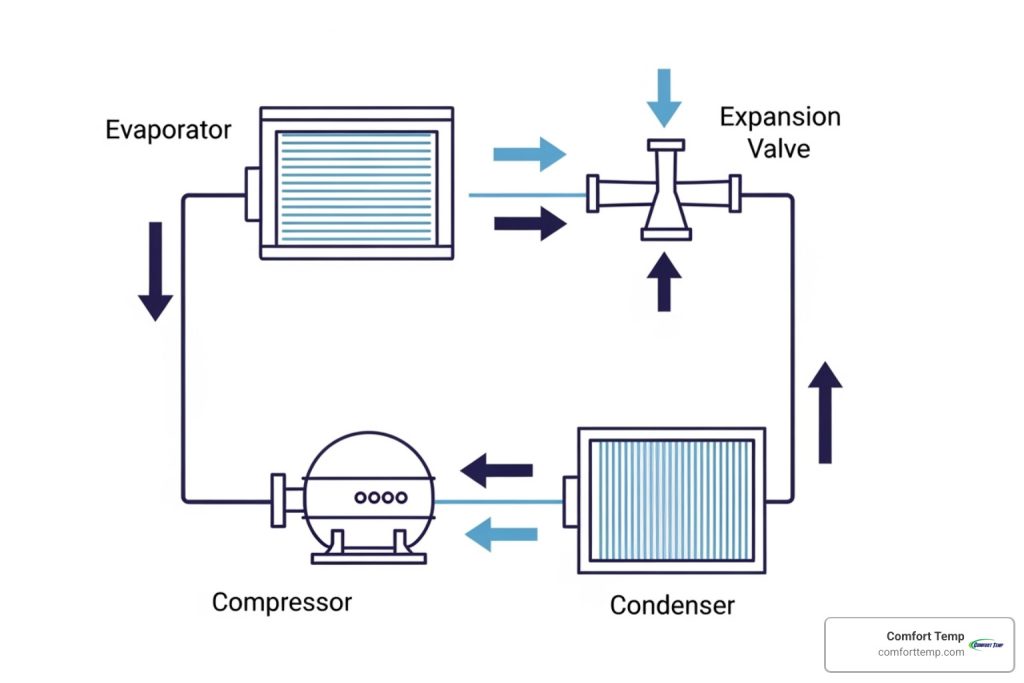
Have you ever wondered how your air conditioner cools down your room on a hot day? Understanding how an air conditioner works can make you appreciate the comfort it brings to your life.
This article will walk you through a simple, easy-to-follow diagram that shows exactly what happens inside your AC unit. By the end, you’ll know how each part plays a role in keeping your space cool and fresh. Keep reading to discover the secrets behind your air conditioner’s magic!

Credit: www.aljazeera.com
Basic Components
An air conditioner cools air by moving heat from inside to outside. It uses several key parts to do this.
These parts work together to change warm air into cool air for your home or office.
Compressor
The compressor is like the heart of the air conditioner. It pumps the refrigerant through the system.
This part increases the pressure of the refrigerant gas, making it hot and ready to release heat.
Condenser Coil
The condenser coil is outside the building. It cools down the hot refrigerant gas from the compressor.
The coil lets heat escape into the air, turning the gas into a warm liquid.
Expansion Valve
The expansion valve controls how much refrigerant flows into the evaporator coil.
It lowers the pressure of the refrigerant, which helps it cool down quickly.
Evaporator Coil
The evaporator coil is inside the building. It absorbs heat from the indoor air.
The cold refrigerant in the coil turns warm air into cool air that flows into the rooms.
Refrigerant
Refrigerant is a special fluid that moves heat in the air conditioner. It changes from gas to liquid.
This fluid picks up heat inside and releases it outside, cooling the air inside your space.
Cooling Cycle
An air conditioner cools a room by moving heat outside. It uses a special process called the cooling cycle.
The cycle has four main parts: compression, heat release, pressure drop, and heat absorption.
Compression Process
The cooling cycle starts with the compressor. It squeezes the refrigerant gas to raise its pressure.
This makes the gas hot and dense. The compressor pushes the gas into the next part of the cycle.
Heat Release
The hot, high-pressure gas moves to the condenser coil outside the house. Here, it releases heat to the air.
The gas cools down and changes into a liquid as it loses heat.
Pressure Drop
Next, the liquid refrigerant passes through an expansion valve. This valve lowers its pressure quickly.
Lower pressure cools the liquid even more and prepares it for the next step.
Heat Absorption
The cool, low-pressure liquid moves into the evaporator coil inside the house. It absorbs heat from the indoor air.
The refrigerant turns back into a gas as it takes heat away. The cool air blows into the room.
Airflow Path
The airflow path in an air conditioner moves warm air out and cool air in. This process keeps the room comfortable. It involves three main parts: intake air, cooling air, and air circulation.
Each part plays a key role in how the air conditioner works to cool the space effectively and efficiently.
Intake Air
Intake air is the warm air drawn from the room into the air conditioner. A fan pulls this air through a filter that traps dust and dirt. Clean air helps the system work better and lasts longer.
Cooling Air
Cooling air is the air that passes over the cold evaporator coil. The coil absorbs heat from the air, making it cool. The refrigerant inside the coil carries the heat outside.
- Warm air enters the evaporator coil.
- The coil cools the air by removing heat.
- The cooled air moves back into the room.
- The heat is transferred outside through the refrigerant.
Air Circulation
| Airflow Stage | Description |
|---|---|
| Intake | Room air is pulled inside through a filter. |
| Cooling | Air passes over the cold coil and loses heat. |
| Distribution | Cooled air is pushed back into the room. |
| Heat Release | Heat is moved outside via the refrigerant. |
Air circulation keeps the air moving, so the room stays cool and fresh. Fans help push the air around evenly.
Credit: medium.com
Energy Transfer
An air conditioner moves heat from inside a room to the outside. It uses energy to cool the air inside.
This process depends on transferring heat from one place to another using special parts inside the unit.
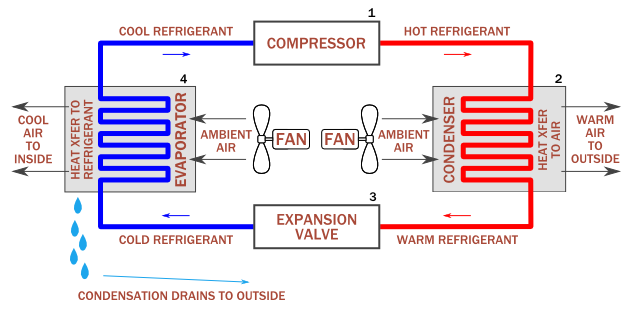
Heat Extraction
Heat extraction happens when the air conditioner removes warm air from inside the room. The system’s refrigerant absorbs heat from the indoor air.
The warm air passes over cold coils. The refrigerant inside the coils takes the heat and cools the air.
- Indoor fan pulls warm air into the AC.
- Warm air flows over cold evaporator coils.
- Refrigerant absorbs heat from the air.
- Cooled air blows back into the room.
Heat Dispersion
Heat dispersion is the process of releasing the absorbed heat outside. The refrigerant carries heat to the outdoor unit.
The outdoor fan blows air over hot coils. This moves the heat from the refrigerant into the outside air.
- Refrigerant travels to outdoor condenser coils.
- Outdoor fan pushes air over hot coils.
- Heat transfers from refrigerant to outside air.
- Cooled refrigerant returns indoors to repeat the cycle.
Common Types
Air conditioners come in different types. Each type cools your space in its own way.
Understanding common types helps you choose the right system for your needs.
Window Units
Window units are compact air conditioners. They fit in a window or a wall opening.
These units cool one room by pulling warm air inside. Then, they send hot air outside.
- Easy to install in most windows
- Good for small rooms or apartments
- Contain all parts in one box
Split Systems
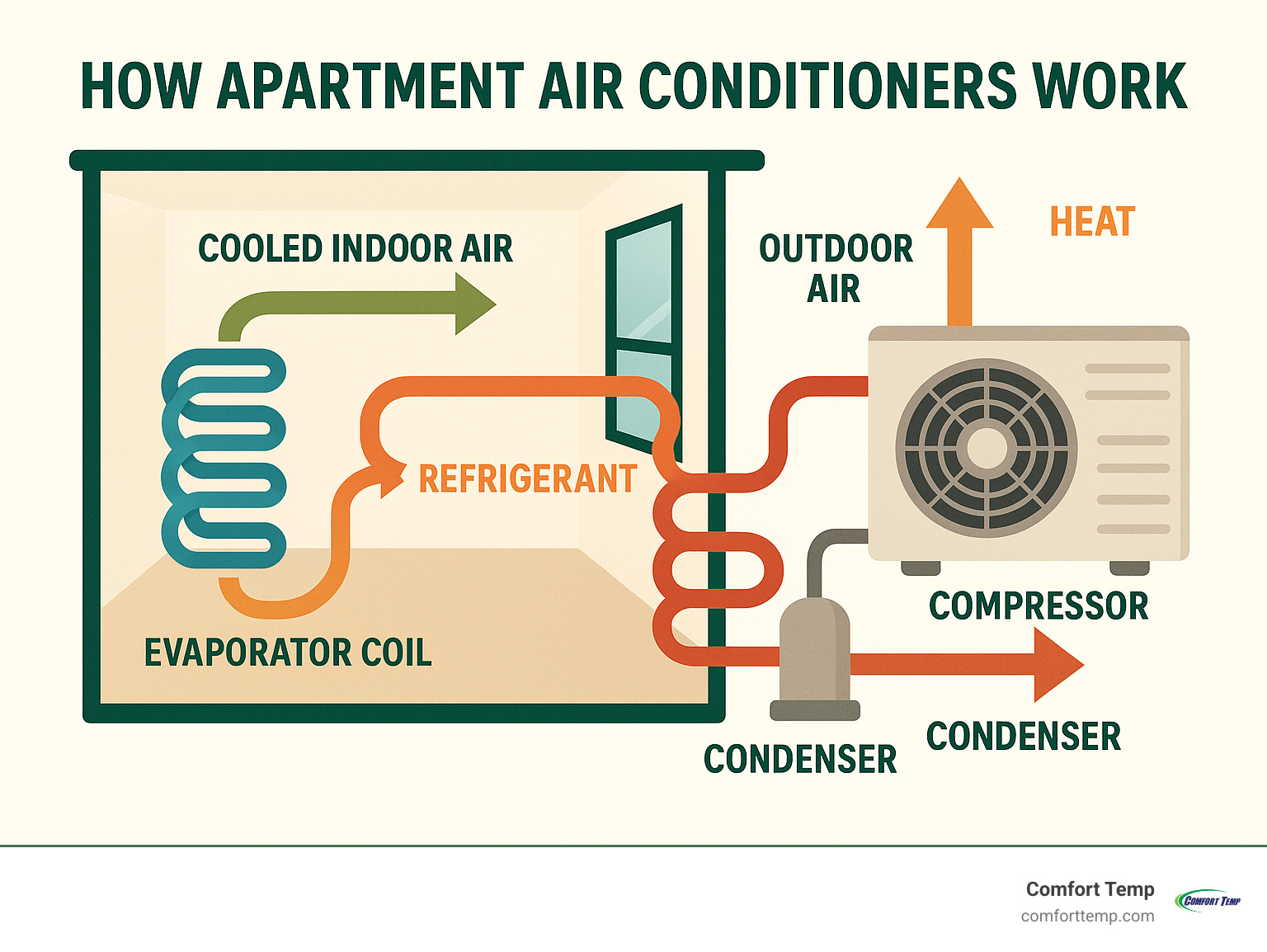
Split systems have two main parts: an indoor unit and an outdoor unit.
The indoor unit blows cool air inside. The outdoor unit releases heat outside.
- Indoor unit is quiet and small
- Outdoor unit contains compressor and fan
- Good for cooling single or multiple rooms
Central Air Conditioning
Central air conditioning cools an entire house or building. It uses ducts to spread cool air.
The system has a large outdoor unit and an indoor air handler. Together, they cool all rooms.
- Uses ducts to send cool air everywhere
- Controls temperature for the whole building
- Needs professional installation
Credit: comforttemp.com
Maintenance Tips
Keeping your air conditioner in good shape helps it work better. Regular care saves energy and extends its life.
Simple maintenance tasks can prevent common problems. Focus on key parts like filters, coils, and refrigerant.
Filter Cleaning
Dirty filters block airflow and reduce cooling. Clean or replace filters every one to two months during use.
- Turn off the AC before removing the filter
- Vacuum the filter to remove dust
- Wash with warm water and mild soap if washable
- Let the filter dry completely before reinstalling
- Replace the filter if it is torn or very dirty
Coil Care
Coils help transfer heat and keep the air cool. Clean both the evaporator and condenser coils yearly.
| Coil Type | Cleaning Tip |
|---|---|
| Evaporator Coil | Use a soft brush or coil cleaner to remove dirt |
| Condenser Coil | Clear debris and rinse gently with water |
Refrigerant Levels
Proper refrigerant keeps your AC cooling well. Low levels cause poor performance and damage.
- Check for leaks if cooling drops suddenly
- Call a professional to measure refrigerant pressure
- Refill refrigerant only with certified service
- Do not overcharge, as it can harm the system
Frequently Asked Questions
How Does An Air Conditioner Work Step-by-step?
An air conditioner cools air by circulating refrigerant through coils. It absorbs heat inside, then releases it outside. The system uses a compressor, condenser, expansion valve, and evaporator to manage this heat exchange efficiently.
What Is The Role Of Refrigerant In Ac?
Refrigerant absorbs heat from indoor air and carries it outside. It changes from liquid to gas and back, enabling the air conditioner to cool your home effectively.
Why Is The Compressor Important In Ac Systems?
The compressor pumps refrigerant through the system and raises its pressure. This process helps refrigerant release heat outside and absorb heat indoors, making cooling possible.
How Does The Evaporator Coil Cool Indoor Air?
The evaporator coil allows refrigerant to absorb indoor heat. Warm air passes over the coil, and the refrigerant inside evaporates, cooling the air before it circulates back inside.
Conclusion
Understanding how an air conditioner works is crucial. It helps you maintain your unit better. The diagram simplifies complex processes. You see how each part functions. Cool air doesn’t just happen. It’s a result of teamwork between parts. The compressor, evaporator, and condenser play key roles.
Regular maintenance ensures efficient cooling. Keep filters clean. Check for leaks. This way, your air conditioner runs smoothly. Save on energy bills too. Now, you can enjoy a comfortable home. Always cool and refreshing. Appreciate the mechanics behind your comfort.
It’s more than just a machine. It’s science working for you.