Are you sure your tires are getting the care they need? Knowing how tires are rotated on a car can save you money and keep your ride smooth and safe.
When you understand the simple steps behind tire rotation, you’ll extend the life of your tires and improve your car’s performance. Keep reading to discover easy tips that anyone can follow—no mechanic needed—to protect your investment and drive with confidence.
Credit: www.michelin.ca
Reasons For Tire Rotation
Tire rotation means moving tires from one position to another on your car. It helps keep tires in good shape for longer. Regular rotation improves how your car drives and saves money on new tires.
Cars wear tires unevenly because of weight and driving style. Rotating tires spreads out the wear. This keeps all tires working well together.
Enhancing Tire Lifespan
Rotating tires helps them wear evenly. This stops some tires from wearing out faster than others. Even wear means tires last longer before needing replacement.
Without rotation, front or rear tires may wear quickly. Moving tires around balances the wear. This saves money by extending tire life.
Improving Vehicle Performance
Good tires keep your car stable and safe. Rotated tires grip the road better. This helps your car handle turns and stops smoothly.
Rotated tires reduce vibrations and noise. Your ride feels more comfortable and controlled. This improves overall driving experience.
Ensuring Even Wear
Cars put more pressure on some tires. Front tires often wear faster because they steer and brake. Rotation moves tires to different positions to balance wear.
- Front tires move to rear positions
- Rear tires move to front positions
- Sometimes tires are crossed to opposite sides
This even wear keeps all tires in good shape. It prevents one tire from wearing out too soon.

Credit: www.lesonauto.com
Common Rotation Patterns
Tire rotation helps your car’s tires wear evenly. This keeps the tires lasting longer. Different cars use different rotation patterns.
Knowing the right pattern for your car is important. It depends on whether your car has front-wheel, rear-wheel, or all-wheel drive.
Front-wheel Drive Patterns
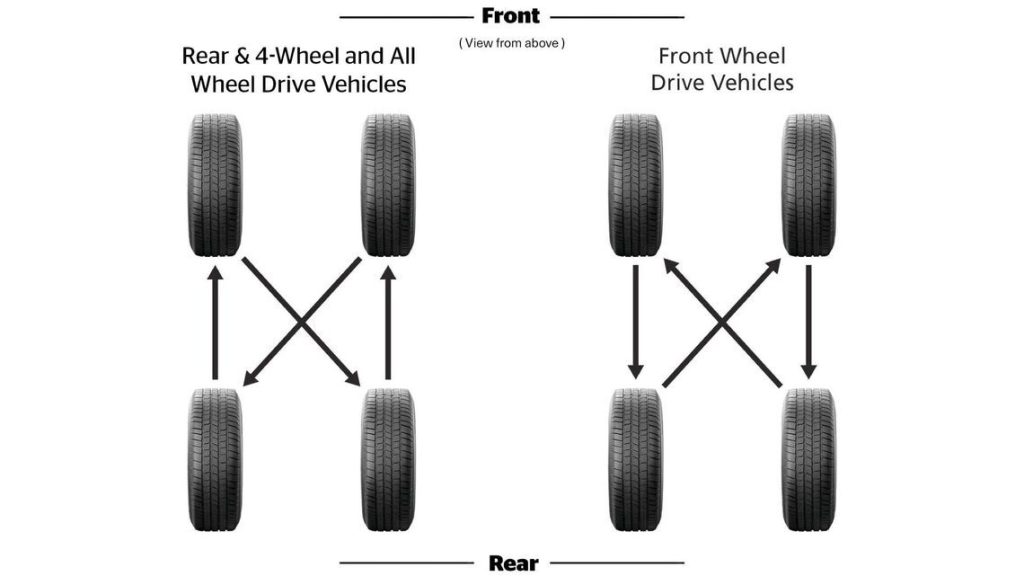
Most front-wheel drive cars use a pattern called the forward cross. The front tires move straight back to the rear. The rear tires cross to the opposite front positions.
- Front left tire moves to rear left
- Front right tire moves to rear right
- Rear left tire moves to front right
- Rear right tire moves to front left
Rear-wheel Drive Patterns
Rear-wheel drive cars often use the rearward cross pattern. Rear tires move straight to the front. Front tires cross to the opposite rear positions.
| Tire Position | After Rotation |
| Rear left | Front left |
| Rear right | Front right |
| Front left | Rear right |
| Front right | Rear left |
All-wheel Drive Patterns
All-wheel drive cars use a pattern called the X-pattern. All tires cross to the opposite corners.
- Front left tire moves to rear right
- Front right tire moves to rear left
- Rear left tire moves to front right
- Rear right tire moves to front left
Tools Needed For Rotation
Rotating tires helps your car’s tires wear evenly. This keeps your car safe and extends tire life. You need some tools to do it right.
This guide covers three main tools you need for tire rotation. They are a jack and jack stands, a lug wrench, and a torque wrench.
Jack And Jack Stands
A jack lifts the car off the ground. Jack stands hold the car safely while you work. Never rely on the jack alone.
Use the jack to raise the car enough to remove the tires. Place jack stands under the car frame to support it firmly.
- Place the jack on a flat, stable surface
- Lift the car at the manufacturer’s recommended spot
- Set jack stands securely before removing tires
Lug Wrench
A lug wrench loosens and tightens the lug nuts on your tires. It fits over the nuts and gives you leverage.
Use the lug wrench to remove nuts before lifting the car. After rotating, tighten the nuts by hand first.
- Choose the right size for your lug nuts
- Turn counterclockwise to loosen nuts
- Turn clockwise to tighten nuts by hand
Torque Wrench
A torque wrench tightens lug nuts to the right pressure. This keeps nuts secure without damage.
Check your car’s manual for the correct torque setting. Use the wrench to tighten nuts evenly in a star pattern.
- Set torque wrench to the recommended value
- Tighten lug nuts gradually and evenly
- Follow a star or crisscross pattern
Step-by-step Rotation Process
Rotating tires helps your car drive smoothly and lasts longer. It keeps tire wear even on all wheels.
Follow these simple steps to rotate your tires safely and correctly at home.
Preparing The Vehicle
Park your car on a flat, hard surface. Make sure the parking brake is on.
Gather tools: a jack, jack stands, and a lug wrench. Check your car manual for tire rotation patterns.
Loosening Lug Nuts
Before lifting the car, loosen the lug nuts on each tire. Do not remove them yet.
Use a lug wrench and turn the nuts counterclockwise. Loosen them just enough so they turn by hand.
Lifting The Car Safely
Place the jack under the car’s lift points. Check your manual for the exact spots.
Lift the car until the tire is off the ground. Then, place jack stands under the car for safety.
- Never work under a car supported only by a jack
- Use wheel chocks on tires still on the ground
Removing And Swapping Tires
Remove the loosened lug nuts completely. Take off the tire carefully.
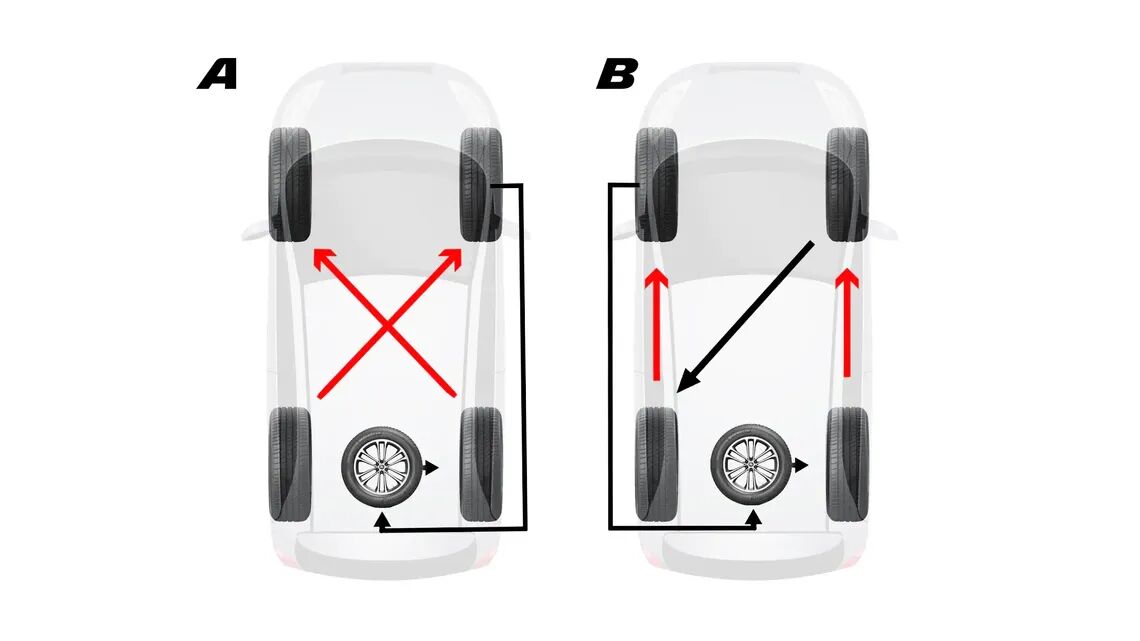
Move tires according to the rotation pattern. Usually, front tires go to the back opposite sides.
- Front left tire moves to rear right
- Front right tire moves to rear left
- Rear tires move to the front on the same side
Tightening Lug Nuts Correctly
Put the tire back on the hub. Hand-tighten the lug nuts to hold the tire in place.
Lower the car slightly so the tire touches the ground but can still turn.
Tighten the lug nuts in a star pattern. This ensures even pressure on the wheel.
- Tighten one nut, then the opposite nut next
- Repeat until all nuts are tight
- Use a torque wrench if possible for correct tightness
Rotation Frequency And Indicators
Tire rotation helps your tires wear evenly. It improves your car’s safety and performance.
Rotating tires means moving them to different positions on the car. This balances tire wear over time.
Recommended Mileage Intervals
Most car makers suggest rotating tires every 5,000 to 8,000 miles. Check your owner’s manual for exact numbers.
Regular rotation keeps tires safe and extends their life. It also helps maintain good fuel efficiency.
- Rotate every 5,000 to 8,000 miles
- Follow your car manual’s advice
- Rotate sooner if you drive on rough roads
- Rotate more often for all-wheel drive cars
Signs Tires Need Rotation
Watch for uneven tire wear. This means some tires wear faster than others.
You may notice vibrations or pulling to one side when driving. These can be signs your tires need rotation.
- Tires look more worn on one edge
- Car pulls to one side while driving
- Feel vibrations in steering wheel
- Loud noise from tires during driving
Expert Tips For Safe Rotation
Rotating tires helps your car drive better and lasts longer. It is important to do it safely and correctly.
Follow these expert tips to make sure your tire rotation is safe and effective.
Checking Tire Pressure
Check tire pressure before rotating your tires. Proper pressure helps tires wear evenly and keeps you safe.
Use a tire pressure gauge to measure each tire’s pressure. Inflate tires to the recommended level in your car’s manual.
- Check pressure when tires are cold
- Use the correct pressure for front and rear tires
- Fix any leaks before rotating
Inspecting Tire Condition
Look for signs of damage or uneven wear before rotation. Bad tires can cause problems even if rotated properly.
Check the tread depth and sidewalls for cracks or cuts. Replace tires that are too worn or damaged.
- Measure tread depth with a gauge or coin
- Look for bulges or cracks on sidewalls
- Check for nails or other objects stuck in tires
Balancing And Alignment Considerations
After rotating tires, check wheel balance and alignment. This keeps your car stable and prevents uneven wear.
Unbalanced wheels cause vibration. Poor alignment causes the car to pull to one side.
- Get wheels balanced if you feel vibration
- Check alignment yearly or after hitting a pothole
- Ask a professional if unsure about balancing or alignment
When To Seek Professional Help
Rotating tires helps your car wear evenly and last longer. Sometimes, you need a pro to handle this job. Some tire setups and vehicles are tricky to work on at home.
Knowing when to ask for help keeps you safe and protects your tires. Read on to learn about situations that need expert care.
Complex Tire Setups
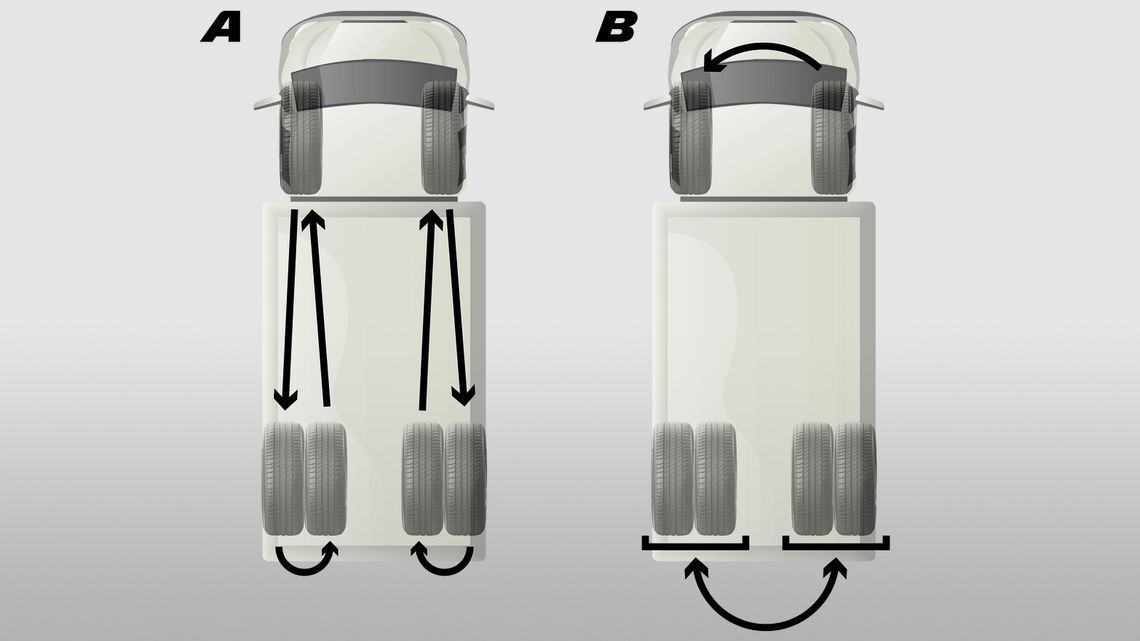
Some cars have special tire setups that are hard to rotate yourself. These include staggered sizes, directional tires, or run-flat tires. Mixing them up can cause damage or uneven wear.
- Staggered tires: Different sizes front and back.
- Directional tires: Must spin in one direction only.
- Run-flat tires: Thicker sidewalls need careful handling.
- Wide or low-profile tires: Need special tools to remove.
Specialized Vehicles
Some vehicles require professional service to rotate tires safely. These include trucks, SUVs with four-wheel drive, and sports cars. Their systems may need calibration after tire changes.
| Vehicle Type | Reason to Seek Help |
| Four-wheel drive SUVs | Calibration of driveline after rotation |
| Sports cars | Use of directional or staggered tires |
| Light trucks | Heavier tires need special lifts |
| Electric cars | Electronic tire pressure sensors |
Tools And Experience Limitations
Tire rotation needs the right tools and know-how. Without them, you risk injury or damage. Professionals have these tools and skills to do the job right.
Key tools and skills include:
- Proper jack and stands to lift the car safely
- Lug wrench or impact gun to remove wheels
- Knowledge of the correct tire rotation pattern
- Understanding of torque specifications for lug nuts
- Ability to check tire pressure and balance
Credit: www.michelin.ca
Frequently Asked Questions
What Is The Purpose Of Rotating Tires On A Car?
Tire rotation ensures even tread wear, extending tire life. It improves handling, fuel efficiency, and safety by balancing tire wear patterns.
How Often Should Car Tires Be Rotated?
Tires should be rotated every 5,000 to 7,500 miles. Check your vehicle’s manual for specific recommendations.
What Are Common Tire Rotation Patterns?
Common patterns include front-to-back, cross, and X-patterns. The pattern depends on your vehicle’s drivetrain and tire type.
Can I Rotate Tires Myself Or Need A Professional?
You can rotate tires yourself with proper tools and knowledge. Otherwise, professional service ensures correct and safe rotation.
Conclusion
Rotating tires helps your car drive safely and last longer. It spreads wear evenly across all tires. This simple step can save money on new tires. Most cars need rotation every 5,000 to 7,000 miles. Check your owner’s manual for the best pattern.
Proper tire care improves fuel efficiency too. Don’t forget to inspect tires for damage while rotating. Taking time for rotation keeps your ride smooth and safe. Easy to do, important to remember. Keep your tires balanced and your car steady.