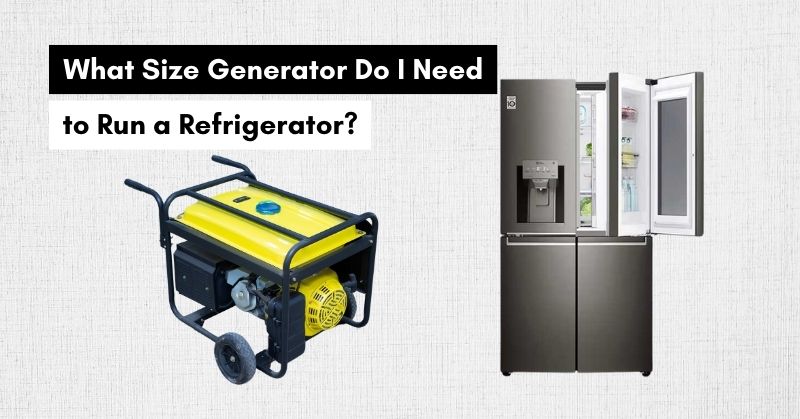
Are you tired of power outages threatening the freshness of your food? Imagine having the peace of mind knowing your refrigerator is always running, even during unexpected blackouts.
But here’s the big question: how big a generator do you actually need to keep your fridge humming smoothly? You might be surprised to learn that choosing the right generator isn’t just about size; it’s about efficiency, reliability, and convenience.
In this guide, we’ll walk you through everything you need to know, so you can confidently power your refrigerator without a hitch. Ready to keep your food safe and your mind at ease? Let’s dive in!
Credit: do-daddy.com
Generator Size Basics
Choosing the right generator size is key to running a refrigerator smoothly. Generators supply power, but not all sizes fit every appliance. Understanding the basics helps prevent damage and power failures. This section breaks down the power needs and key wattage types for refrigerators.
Power Needs Of Refrigerators
Refrigerators use different amounts of power depending on size and model. Small fridges need less energy than large ones. Average refrigerators typically consume between 100 and 800 watts while running. Energy-efficient models use less power. Knowing your fridge’s wattage helps pick the right generator size.
Starting Vs Running Watts
Refrigerators require more power to start than to run continuously. This extra power is called starting watts or surge watts. Running watts describe the power needed to keep the fridge on. For example, a fridge might use 150 watts running but need 600 watts to start. Choose a generator that can handle both surge and running watts.
Calculating Generator Capacity
Calculating the right generator capacity is crucial for running a refrigerator smoothly. A generator must handle the energy the fridge uses every second. It also needs to support brief surges when the compressor starts. Understanding these power needs helps avoid overloads and damage.
This section explains how to estimate the running watts and account for surge watts. These calculations ensure your generator can keep the refrigerator running without interruption.
Estimating Running Watts
Running watts refer to the continuous power the refrigerator uses. This number is usually listed on the appliance label or in the manual. If not, a typical fridge uses between 100 and 800 watts while running.
Use this formula to estimate running watts:
- Check the fridge’s wattage label or manual.
- If unknown, assume 400 watts as a middle value.
- Use this wattage as the steady power your generator must supply.
Accounting For Surge Watts
Surge watts are the extra power needed when the refrigerator compressor starts. This surge can be two to three times the running watts. The generator must handle this brief spike without shutting down.
Calculate surge watts with these steps:
- Multiply the running watts by 2 or 3.
- Use the higher number to ensure the generator handles startup peaks.
- Choose a generator with a surge watt rating above this value.
Types Of Generators
Choosing the right generator depends on the type you need for your refrigerator. Generators vary in size, power, and use. Knowing the options helps pick the best fit for your home or outdoor needs. Each type has unique features and benefits.
Portable Generators
Portable generators are compact and easy to move. They run on gasoline and provide power during outages. These generators can handle refrigerators but may not run for long hours without refueling. They are affordable and suit short-term power needs.
Inverter Generators
Inverter generators offer clean and stable power. They are quieter and more fuel-efficient than portable models. These generators adjust power output based on demand, saving fuel. Perfect for sensitive appliances like refrigerators and electronics.
Standby Generators
Standby generators are permanently installed outside your home. They start automatically during power cuts. These generators provide continuous power to refrigerators and entire homes. They run on natural gas or propane and require professional installation.

Credit: www.jackery.com
Refrigerator Power Consumption Factors
Understanding the power consumption of your refrigerator is crucial when deciding how big a generator you need. Various factors impact the amount of electricity your fridge uses, and knowing these can help you choose a generator that won’t just run your fridge but also keep it running efficiently. Let’s look at the key elements that influence a refrigerator’s power consumption.
Size And Model Variations
Refrigerators come in many sizes, from compact mini-fridges to large double-door models. Larger units generally use more power because they have bigger compressors and more interior space to cool.
Models with additional features like ice makers, water dispensers, or smart technology tend to draw more electricity. Have you noticed how a basic fridge and one packed with extras differ in their energy bills? This variation means you need to match your generator size to your specific fridge model, not just its brand or type.
Age And Efficiency
Older refrigerators often consume more power than newer ones due to outdated technology and wear over time. Energy efficiency standards have improved, so newer models usually run cooler on less electricity.
If your fridge is over 10 years old, it might spike your power needs during startup, causing your generator to work harder. Think about how upgrading to an energy-efficient fridge could lower both your electricity usage and the size of the generator you need.
Practical Generator Selection Tips
Selecting the right generator size to power your refrigerator can save you from unexpected power outages or equipment damage. It’s not just about matching numbers; it’s about understanding your appliance’s needs and planning for real-life use. Let’s break down some practical tips that help you choose a generator that fits your lifestyle and keeps your fridge running smoothly.
Choosing The Right Wattage
Your refrigerator’s wattage is the first thing to check. Look for the start-up (surge) wattage and running wattage on the appliance label or manual. Surge wattage is often two to three times higher than running wattage because compressors need extra power when starting.
For example, a typical fridge might run at 700 watts but require 2200 watts to start. If your generator can’t handle the surge, it won’t keep the fridge running reliably. It’s safer to pick a generator with a wattage rating at least 25% higher than your fridge’s surge wattage to avoid overload.
Considering Additional Appliances
Think beyond your refrigerator. Will you need to power lights, a freezer, or a small heater during an outage? Adding their wattages together with your fridge’s requirements gives a clearer picture of your total power needs.
Keep a list of all the devices you want to run at the same time and note their starting and running watts. This helps you avoid surprises when your generator trips because it’s overloaded. Have you ever tried running a microwave and fridge together on a small generator? It often doesn’t work well.
- Make a simple chart of appliances and their wattage.
- Add up running watts for continuous load.
- Add highest surge wattage among appliances for peak load.
- Choose a generator that covers both running and surge needs.
By planning this way, you ensure your generator isn’t just big enough for your refrigerator but for your entire emergency power setup.
Safety And Maintenance
Running a generator to power a refrigerator requires careful attention to safety and maintenance. Proper handling ensures the generator works efficiently and prevents hazards. Neglecting these aspects can lead to equipment damage or dangerous situations.
Understanding how to set up and maintain your generator is key to reliable operation. Safe practices protect your home and loved ones while extending the generator’s lifespan.
Proper Generator Setup
Place the generator outdoors in a dry, well-ventilated area. Avoid running it inside or near open windows to prevent carbon monoxide buildup. Use a sturdy, level surface to reduce vibration and noise. Connect the refrigerator using the correct power cords and outlets. Never overload the generator; match its wattage to your refrigerator’s needs. Turn off the generator before refueling to avoid fire risks. Keep children and pets away from the generator during operation.
Regular Maintenance Checks
Check the oil level before every use to keep the engine running smoothly. Clean or replace the air filter regularly to prevent clogging. Inspect fuel lines and connections for leaks or cracks. Test the spark plug and replace it if it shows wear. Run the generator at least once a month to keep it in good condition. Store fuel in a safe, approved container away from heat. Follow the manufacturer’s maintenance schedule for optimal performance.
Energy Saving Strategies
Saving energy while running your refrigerator on a generator is key to extending fuel life and reducing costs. Smart energy strategies help you get the most out of your setup without overloading your generator. These practical tips can make a real difference in how efficiently your refrigerator runs and how long your generator lasts.
Optimizing Refrigerator Usage
Keep your refrigerator as full as possible, but avoid overcrowding. A well-stocked fridge stays colder longer, which means the compressor runs less often. If you find yourself opening the door frequently, try organizing food in clear containers to cut down on the time the door stays open.
Set your refrigerator temperature between 37°F and 40°F (3°C to 4°C). Anything colder wastes energy without preserving food better. Also, defrost your freezer regularly; ice buildup makes the compressor work harder.
Have you noticed that placing the fridge away from heat sources, like ovens or direct sunlight, helps it run more smoothly? This simple adjustment reduces the workload on your generator by lowering the energy needed to cool your fridge.
Generator Fuel Efficiency
Match your generator size closely to your refrigerator’s power needs to avoid wasting fuel. A generator that’s too large will run inefficiently at low loads, while one that’s too small can cause frequent shutdowns or damage.
Use a generator with an economy or eco mode. This feature adjusts engine speed based on demand, saving fuel during low power consumption periods. Think about how often you really need the fridge running at full power—could you cycle it off for short periods without risking food spoilage?
Regular maintenance keeps your generator running smoothly and fuel-efficiently. Changing oil, cleaning air filters, and checking spark plugs can improve performance noticeably. Remember, a well-maintained generator burns less fuel and reduces your overall cost.

Credit: www.aol.com
Frequently Asked Questions
What Size Generator Runs A Standard Refrigerator?
A 1,000 to 1,500-watt generator can power a standard refrigerator. Refrigerators typically require 700 to 1,200 watts. Starting watts may be higher, so choose a generator with extra capacity to handle the initial surge.
How Many Watts Does A Refrigerator Use On Startup?
Refrigerators need about 2 to 3 times their running watts at startup. This surge usually lasts a few seconds. For example, a 700-watt running fridge might need 2,100 watts briefly.
Can A Small Generator Handle A Refrigerator?
Small generators under 1,000 watts usually can’t handle refrigerators. They lack the power for the starting surge. For reliable operation, use a generator rated at least 1,500 watts.
Why Does My Generator Trip When Running A Fridge?
Your generator may trip if it’s undersized or overloaded. The fridge’s startup surge can exceed the generator’s capacity. Ensure your generator has enough starting wattage to prevent tripping.
Conclusion
Choosing the right generator size keeps your refrigerator running smoothly. A generator with enough power avoids damage and saves fuel. Always check your refrigerator’s starting and running watts. This helps pick a generator that meets those needs. A little extra power is good for safety.
Remember, a properly sized generator gives peace of mind during outages. Stay prepared and keep your food fresh without worry.