Choosing the right size for your central air conditioner can feel confusing. If your unit is too small, your home won’t cool properly.
Too big, and you’ll waste energy and money. So, how big central air conditioner do you really need? You’ll discover simple tips to find the perfect fit for your home. By the end, you’ll be confident in making a smart choice that keeps you cool without breaking the bank.
Keep reading to learn exactly what to look for and avoid common mistakes that many homeowners make.
Credit: www.carrier.com
Factors Affecting Ac Size
Home sizeis a key factor in choosing an air conditioner. Larger homes need more cooling power to stay comfortable. The layoutalso matters. Open floor plans allow air to flow better than many small rooms.
The climateplays a big role. Hot and humid areas need bigger AC units. Cooler climates require less cooling power.
Insulationhelps keep cool air inside. Good insulation lowers the AC size needed. Windows affect cooling too. Large or many windows let in heat, increasing cooling needs.
The number of peopleliving in the home raises the temperature inside. More people mean more cooling power is needed. Appliances also add heat, so homes with many machines need larger AC units.
Credit: www.allamericanpha.com
Calculating Cooling Capacity
Start by measuring the square footageof the room or house. Use a tape measure to find length and width. Multiply them to get total area in square feet.
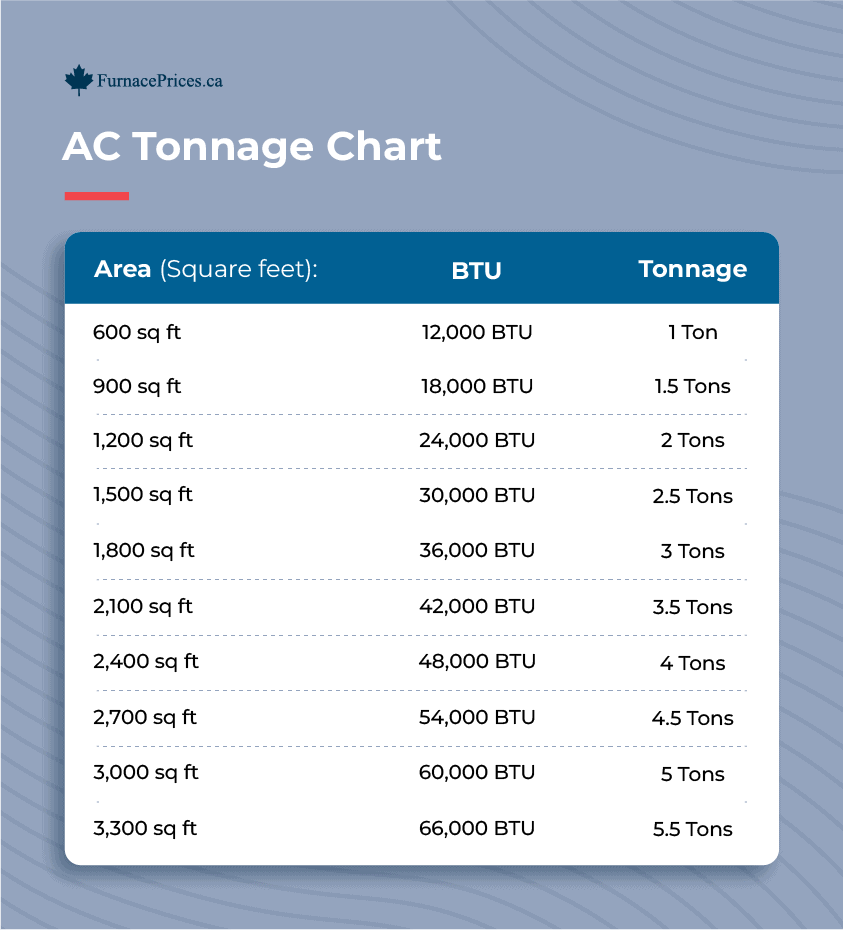
Next, check the BTU (British Thermal Unit)needed. Usually, you need about 20 BTU per square foot. For example, a 500 sq ft room needs 10,000 BTU.
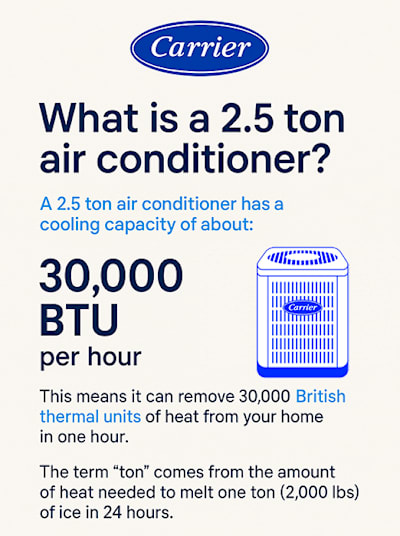
The term tonnagerelates to cooling power. One ton equals 12,000 BTU. So, a 24,000 BTU air conditioner is a 2-ton unit.
| Square Footage | BTU Needed | Approx. Tonnage |
|---|---|---|
| 500 | 10,000 | 0.8 Ton |
| 1,000 | 20,000 | 1.7 Ton |
| 1,500 | 30,000 | 2.5 Ton |
| 2,000 | 40,000 | 3.3 Ton |
Common Ac Sizes
Choosing the right central air conditioner sizedepends on your home’s size. A unit too small won’t cool well. A unit too big wastes energy and money.
| Home Size | AC Size (Tons) | Square Feet Covered |
|---|---|---|
| Small Homes | 1 to 2 | up to 1,000 sq ft |
| Medium Homes | 2 to 3.5 | 1,000 to 2,000 sq ft |
| Large Homes | 3.5 to 5 | 2,000 to 3,500+ sq ft |
Remember, a proper size keeps your home cool and saves energy.
Credit: www.furnaceprices.ca
Risks Of Incorrect Ac Size
Choosing the wrong AC size can cause poor cooling and higher energy bills. Too large units cycle on and off too often, while too small ones run constantly and wear out faster. Proper sizing ensures comfort and saves money.
Oversized Units
Big air conditioners cool rooms too fast.They stop before removing enough moisture. This leaves rooms humid and uncomfortable.Also, these units use more energyand raise electricity bills.The system turns on and off often, causing wear and tear.This can lead to costly repairs.
Undersized Units
Small air conditioners run continuously.They cannot cool the room properly. This causes higher energy useand higher bills.The house stays warm and sticky.These units break down fasterbecause they work too hard. Comfort suffers and repair costs rise.
Energy Efficiency And Cost
SEER ratingsmeasure how well an air conditioner uses energy. Higher SEER means better efficiency. It helps save money on electric bills. A unit with a SEER of 16 uses less energy than one with SEER 13.
Impact on utility billsdepends on the unit size and SEER rating. Bigger units with low SEER use more electricity. Smaller units with high SEER save money but may run longer. Choosing the right size and rating is key to balance comfort and cost.
| SEER Rating | Energy Efficiency | Effect on Bills |
|---|---|---|
| 13-14 | Standard | Higher electricity cost |
| 15-16 | Good | Moderate savings |
| 17+ | Very High | Best savings |
Professional Sizing Methods
Choosing the right size for a central air conditioner depends on your home’s square footage and insulation. Accurate measurements ensure efficient cooling and lower energy costs. Professional sizing methods use detailed calculations to match your home’s cooling needs precisely.
Manual J Load Calculation
Manual J Load Calculationis the most accurate way to find the right air conditioner size. It looks at many factors like:
- House size and shape
- Insulation levels
- Number of windows and doors
- Local climate conditions
- Heat from people and appliances
This method gives a detailed estimate of the cooling needs. It avoids buying a unit that is too big or too small.
Hiring An Hvac Expert
An HVAC expertuses tools and experience to do the Manual J calculation. They visit the home and check all details carefully. Experts can also suggest the best system type and placement. This helps save energy and money on bills. Trusting a pro reduces guesswork and mistakes.
Additional Tips For Choosing Ac Size
Future home improvementscan change your cooling needs. Adding rooms or insulation affects the AC size. Plan for extra capacity if you expect big changes.
Zoning systemslet you cool parts of your home separately. This helps save energy and keeps rooms comfortable. Consider this if your home has many rooms or floors.
Maintenanceaffects how well your AC works. Regular cleaning and filter changes keep it running smoothly. A well-maintained unit uses less energy and lasts longer.
Frequently Asked Questions
How Do I Calculate The Size Of My Central Ac Unit?
To calculate your AC size, measure your home’s square footage. Then, multiply by 20 BTUs per square foot. Adjust for insulation and climate for accuracy.
What Btu Rating Is Ideal For A 2000 Sq Ft Home?
A 2000 sq ft home typically needs a 40,000 BTU air conditioner. This ensures efficient cooling without wasting energy or overworking the unit.
Can An Oversized Ac Unit Cause Problems?
Yes, an oversized AC cools too fast, causing humidity issues. It cycles frequently, increasing wear and energy costs, reducing comfort and efficiency.
How Does Climate Affect Central Ac Size Requirements?
Hotter climates need larger AC units for effective cooling. Cooler areas may require smaller units, as less cooling power is necessary for comfort.
Conclusion
Choosing the right size central air conditioner is crucial. It ensures comfort and efficiency. Consider your home’s size and insulation. Think about local climate conditions. These factors influence the cooling needs. An oversized unit wastes energy. An undersized one struggles to cool your home.
Consulting a professional can help. They can perform accurate load calculations. This ensures you get the best fit for your needs. Remember, the right unit improves comfort and saves money. Make informed decisions for a cooler home.