Choosing the right size air conditioner for your space isn’t just about comfort—it can save you money and hassle too. If your AC is too small, it will struggle to cool your home, making your energy bills soar.
If it’s too big, you’ll waste power and face uneven cooling. So, how big should your air conditioner be? This guide will help you understand exactly what size fits your needs, making your home cool and your wallet happy. Keep reading to find out how to make the smartest choice for your space.

Credit: www.furnaceprices.ca
Why Ac Size Matters
Choosing the right air conditioner sizeis key to cooling efficiency. Too big, and the unit cools the air too fast without removing humidity. This can make the room feel damp and uncomfortable. Too small, and it runs constantly but struggles to cool the space.
Energy use depends heavily on AC size. An oversized unit cycles on and off often, wasting power. An undersized unit runs longer, using more electricity to keep the room cool.
Comfort and air quality also rely on proper AC size. The right size keeps the room at a steady temperature and controls humidity well. This helps reduce dust and allergens, making the air cleaner.
Factors Influencing Ac Size
The size of your air conditionerdepends on many factors. The room square footageis key. Larger rooms need bigger units to cool properly.
Ceiling heightaffects cooling too. Higher ceilings mean more air volume, so a stronger AC is needed.
Sunlight exposureheats the room more. Rooms with lots of sun need bigger air conditioners.
The insulation qualitychanges cooling needs. Poor insulation lets heat in, requiring a bigger AC.
The number of occupantsalso matters. More people produce more body heat, which needs more cooling power.
Many appliancesadd heat to the room. Kitchens or rooms with many devices need stronger cooling.
Calculating Cooling Capacity
BTUstands for British Thermal Unit. It measures how much heat an air conditioner can remove in one hour. The higher the BTU, the bigger the cooling power.
| Room Size (sq ft) | BTU Needed |
|---|---|
| Up to 150 | 5,000 BTU |
| 150 – 250 | 6,000 BTU |
| 250 – 350 | 8,000 BTU |
| 350 – 450 | 10,000 BTU |
| 450 – 550 | 12,000 BTU |
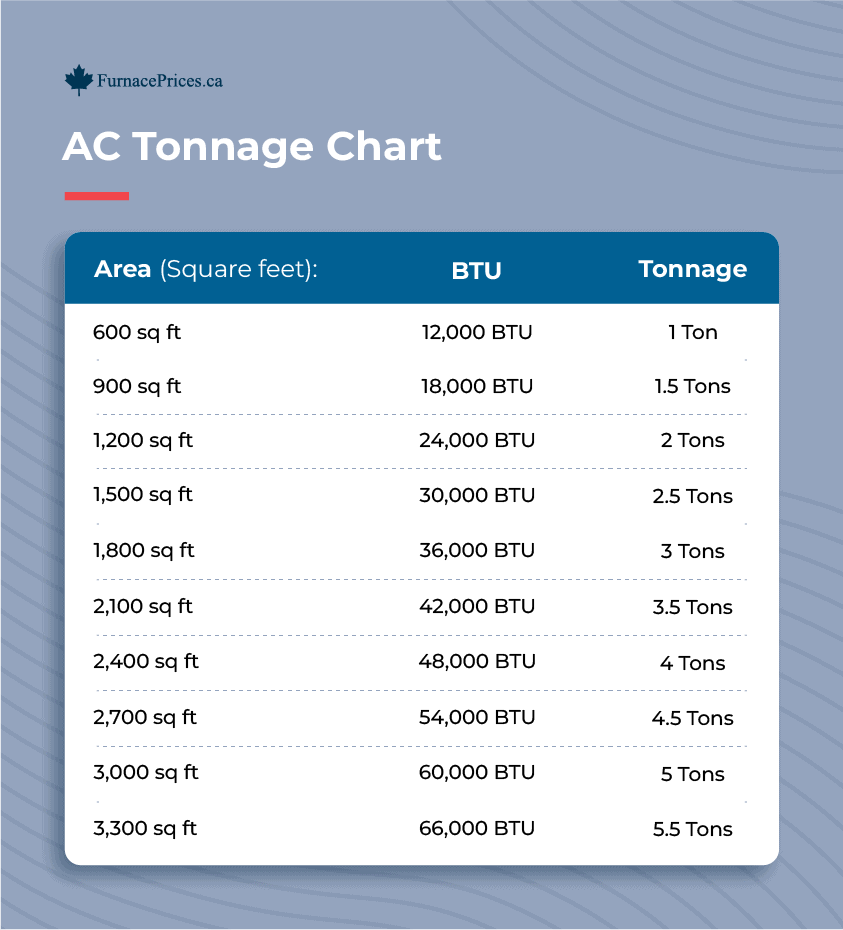
Rooms in hot climates need more cooling power. Add about 10% more BTUs for sunny rooms. If many people use the room, add more BTUs too. Kitchens need extra cooling because of heat from cooking.
Credit: www.furnaceprices.ca
Types Of Air Conditioners And Their Sizes
Window unitsare small and fit inside a window frame. They are best for cooling one room. Sizes range from about 5,000 to 12,000 BTU. Choose size based on room area. Too small won’t cool well; too big wastes energy.
Split systemshave two parts: one inside and one outside. They cool larger spaces or multiple rooms. Sizes vary from 9,000 to 24,000 BTU. These are quiet and more efficient than window units.
Portable ACsare easy to move from room to room. They usually cool smaller areas, with sizes from 8,000 to 14,000 BTU. Good for renters or places without windows.
Central air systemscool entire homes. They use ducts to spread cool air everywhere. Sizes depend on home size and layout. Systems range from about 18,000 to 60,000 BTU. These units need professional installation.
Risks Of Oversized Ac Units
Short cyclinghappens when an AC turns on and off too fast. This wears out parts and stops the unit from cooling well. The AC uses more power each time it starts.
Increased energy billscome from oversized units running often but not long enough. They waste electricity and cost more money. This is because they cool the room too fast but do not remove enough moisture.
Humidity problemsoccur because the AC does not run long enough to dry the air. The room can feel damp and uncomfortable. High humidity can cause mold and damage walls or furniture.
Risks Of Undersized Ac Units
An undersized air conditionerstruggles to cool a room properly. It leads to inadequate cooling, making the space uncomfortable.
Such units run for longer hoursto try and reach the desired temperature. This results in higher energy billsand increased power use.
Continuous operation causes wear and tearon parts. This can shorten the unit’s lifespan and cause frequent breakdowns.
- Inadequate Cooling:Room stays warm and uncomfortable.
- Longer Run Times:AC works more, costs rise.
- Wear and Tear:Parts break down faster, repairs needed.
Professional Sizing Methods
Manual J Load Calculationis a detailed method used by professionals. It measures your home’s size, insulation, windows, and climate. This helps find the right air conditioner size. It avoids buying units that are too small or too large.
Using HVAC Software Toolsspeeds up the calculation process. These tools use the same data as Manual J but give quick results. They help to compare different sizes and models easily.
Consulting with Expertsbrings experience into the mix. Experts know local climate and home details. They suggest the best size for comfort and energy savings. Their advice can save money and avoid future problems.
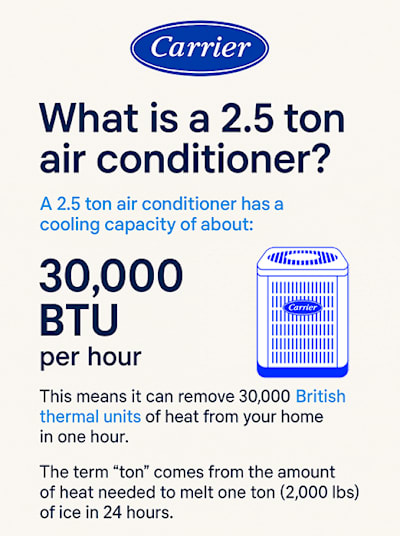
Credit: www.carrier.com
Tips For Choosing The Right Ac Size
Think about future changeslike adding rooms or windows. These can affect the cooling needs of your home. Choose an AC size that can handle extra space. This helps avoid buying a new unit soon.
Energy efficiency ratingsshow how much power an AC uses. Higher ratings mean lower bills and less pollution. Look for units with good ratings to save money over time.
Budget and long-term savingsmatter. Cheaper units may cost more to run. Spend a bit more on a good AC to save on electricity. Also, a well-sized AC lasts longer and works better.
Maintenance For Optimal Performance
Regularly changing your air conditioner’s filterskeeps the air clean and helps the unit work well. Dirty filters block airflow and make the system use more energy.
Cleaning the coils and ventsstops dust buildup. Dust makes the AC less cool and can cause it to break. Wiping the vents helps air flow freely and cool your home better.
Scheduling professional inspectionsonce a year finds small problems early. Experts check the system’s parts, clean hard-to-reach areas, and make sure everything works safely. This keeps your AC running smoothly and saves money on repairs.
Frequently Asked Questions
What Factors Determine Air Conditioner Size?
Several factors influence the size of your air conditioner. Key considerations include room size, insulation quality, and climate. Understanding these factors helps in selecting the most efficient unit. It ensures optimal performance and energy savings.
How Do I Calculate Air Conditioner Size?
To calculate the size, measure your room’s square footage. Multiply the length by the width. Use this figure to consult a BTU chart. This ensures you select a unit that effectively cools your space.
Can A Small Ac Unit Cool A Large Room?
A small AC unit can’t efficiently cool a large room. It will struggle to maintain temperature. This can lead to increased energy consumption. Choose a unit that matches your room size for best results.
What Happens If My Ac Is Too Large?
An oversized AC unit causes short cycling, leading to inefficient operation. It cools the room quickly but doesn’t remove humidity effectively. This can result in an uncomfortable environment and higher energy bills.
Conclusion
Choosing the right air conditioner size matters a lot. Too small won’t cool well. Too big wastes energy and money. Measure your space carefully for the best fit. Think about room size, sun exposure, and insulation. Proper size keeps your home comfortable and bills low.
Always ask a professional for help if unsure. A well-sized AC makes hot days easier to bear. Keep these tips in mind for a cool, happy home.