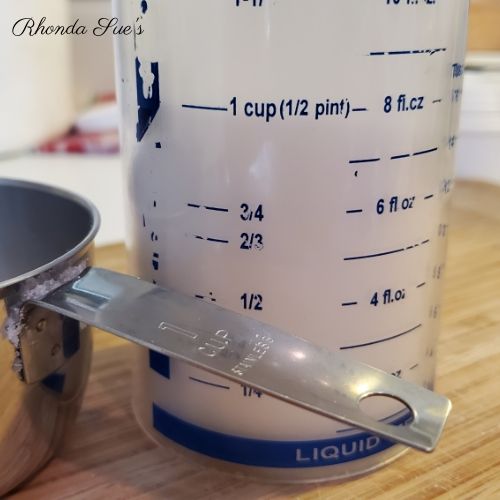
Are you struggling to measure 3/4 cup of water accurately? Whether you’re cooking, baking, or following a recipe, getting the right amount of water can make all the difference.
You don’t need fancy tools or complicated methods to do it right. You’ll discover simple, practical ways to measure 3/4 cup of water with ease. Keep reading, and you’ll never have to guess again!
Simple Tools For Measuring
Measuring 3/4 cup of water is easy with the right tools. You do not need special devices to get it right.
This guide shows simple ways to measure 3/4 cup using common kitchen items.
Using A Standard Measuring Cup
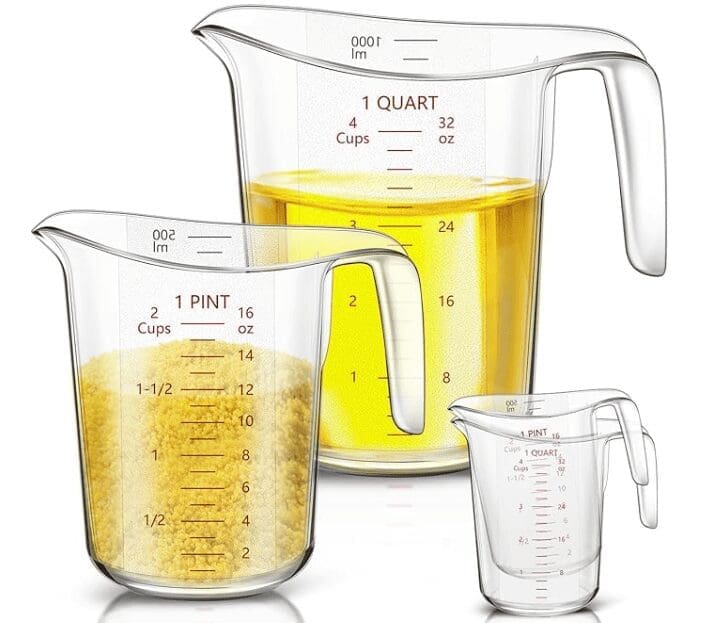
Standard measuring cups have clear markings for different volumes. Look for the 3/4 cup line on the cup. Fill water up to that mark on a flat surface to get an exact measure.
Measuring With A Kitchen Scale
A kitchen scale can measure water by weight. Since 1 cup of water weighs 240 grams, 3/4 cup equals 180 grams. Use the scale to measure 180 grams of water for 3/4 cup.
- Turn on the scale and set it to grams.
- Place an empty container on the scale and zero it.
- Slowly pour water until it shows 180 grams.
Alternative Household Items
| Household Item | Approximate Water Volume | Notes |
|---|---|---|
| Tablespoon | 15 ml | Use 12 tablespoons for 3/4 cup |
| Teaspoon | 5 ml | Use 36 teaspoons for 3/4 cup |
| Glass | 250 ml (1 cup) | Fill glass to 3/4 full |
Credit: foodnutters.com
Step-by-step Measuring Methods
Measuring 3/4 cup of water can be done easily using common kitchen tools. This guide shows simple ways to get the exact amount.
Use these methods to measure water without special tools. Each method works well depending on what you have at home.
Filling A 1-cup Measure Partially
Use a 1-cup measuring cup and fill it until it reaches the 3/4 cup mark. Many cups have lines for 1/4, 1/2, and 3/4 cups.
If your cup does not have markings, fill it three-quarters full by eye. Pour water slowly and check the level at eye height.
Combining Smaller Measurements
If you do not have a 3/4 cup measure, combine smaller units to get the right amount. For example, use 1/2 cup plus 1/4 cup.
- Fill a 1/2 cup measure and pour into your container.
- Fill a 1/4 cup measure and add it to the same container.
- Mix or use the water as needed.
Using Liquid Markings On Bottles
Some plastic bottles have liquid level markings. Use these marks to measure 3/4 cup of water.
| Mark on Bottle | Approximate Volume |
|---|---|
| 100 ml | About 1/2 cup |
| 150 ml | About 2/3 cup |
| 180 ml | About 3/4 cup |
Tips For Accuracy
Measuring 3/4 cup of water can be tricky without the right steps. Using simple tips helps you get the exact amount every time.
Small mistakes in measuring can change your recipe results. Follow these tips for the best accuracy.
Leveling Off The Liquid
After pouring water into your measuring cup, check the top level. Water can curve up at the edges, so you need to level it off.
Use a flat edge like a knife or spatula to remove extra water. This makes sure you have exactly 3/4 cup.
- Pour water slowly to avoid spills
- Place the cup on a flat surface before leveling
- Use a straight edge to remove excess liquid
Measuring On A Flat Surface
Always set your measuring cup on a flat surface. Holding it in your hand can cause wrong readings.
Bend down to eye level with the cup. This helps you see the liquid line clearly and avoid mistakes.
- Place the cup on a countertop or table
- Look straight at the liquid line, not from above
- Double-check the amount before pouring
Temperature Effects On Volume
Water volume changes slightly with temperature. Cold water is denser and takes up less space than warm water.
Use room temperature water for best accuracy. This keeps the measurement close to what recipes expect.
- Use water at about 68°F (20°C) for measuring
- Warm or hot water can look like more liquid
- Cold water may cause under-measuring

Credit: parade.com
Creative Hacks Without Measuring Tools
Measuring 3/4 cup of water is easy even without tools. You can use simple household items to estimate the amount.
These creative hacks help you measure liquids without a measuring cup. Try them next time you cook or bake.
Using A Spoon As A Guide
A standard tablespoon holds about 15 ml of liquid. You can use this to measure 3/4 cup of water.
Since 1 cup equals 240 ml, 3/4 cup is about 180 ml. Count the tablespoons to reach this amount.
- Use 12 tablespoons of water to get 3/4 cup.
- Fill the spoon fully each time for accuracy.
- Pour the water slowly to avoid spilling.
Visual Estimation Techniques
You can guess 3/4 cup by using common visual cues. Look at the size of the container and the water level.
For example, if your glass holds one cup, fill it about three-quarters full. This gives you 3/4 cup.
- Fill a small cup fully and pour it three times.
- Use your hand to compare volume—3/4 cup is less than a full fist.
- Mark your container with a pen for future use.
Repurposing Common Containers
Many household containers can help you measure 3/4 cup of water. Find one with known volume or size.
A small juice box or medicine cup often holds about 1/4 cup. Use these to add up to 3/4 cup.
- Fill a 1/4 cup-sized container three times.
- Use a standard coffee mug, which holds about 1 cup, and fill it three-quarters full.
- Use egg cartons or ice trays as rough volume guides.
Common Mistakes To Avoid
Measuring 3/4 cup of water seems easy but many people make simple mistakes. These errors change the amount and affect your recipe or task.
Learning common mistakes helps you measure accurately every time. It saves you time and prevents frustration.
Overfilling And Underfilling
Pouring water too much or too little is a common mistake. Overfilling adds extra liquid, which can ruin your recipe.
Underfilling means you use less water than needed. This can make your dish dry or change the texture.
- Fill the cup slowly to avoid spills
- Stop exactly at the 3/4 cup line
- Use a flat surface to check the level
Ignoring Meniscus Levels
The meniscus is the curve on the water surface. Many forget to check it, causing wrong measurements.
Always read the water level at eye height. Look at the bottom of the curve, not the top.
- Place the measuring cup on a flat surface
- Bend or squat to see the meniscus at eye level
- Measure at the bottom curve, not the edge
Using Inappropriate Containers
Not all containers are good for measuring water. Using cups without clear markings leads to errors.
Choose a measuring cup with clear 3/4 cup marks and a flat base for stability.
- Use clear plastic or glass measuring cups
- Avoid using bowls or mugs without measurements
- Check that the measurement marks are easy to read

Credit: www.chefworks.com
Frequently Asked Questions
How Do I Measure 3/4 Cup Without A Measuring Cup?
Use a standard cup and fill it three-quarters full. Alternatively, fill a 1-cup measure to a quarter below the top. You can also use a tablespoon; 12 tablespoons equal 3/4 cup. Kitchen scales can provide precise measurements for dry ingredients.
Can I Use A Tablespoon To Measure 3/4 Cup?
Yes, you can use a tablespoon to measure 3/4 cup. Since 1 cup equals 16 tablespoons, you would need 12 tablespoons to make 3/4 cup. This method is especially useful when measuring liquid ingredients like water.
What’s The Best Way To Ensure Accurate Measurements?
To ensure accurate measurements, use a clear measuring cup for liquids. Check the measurement at eye level for precision. For dry ingredients, use the spoon-and-level method. Scoop with a spoon and level off with a straight edge for accuracy.
Can I Use A Scale To Measure 3/4 Cup?
Yes, a kitchen scale is perfect for measuring 3/4 cup, especially for dry ingredients. Convert the cup measurement to grams or ounces. For water, 3/4 cup is approximately 177 milliliters. This method ensures precision and consistency in recipes.
Conclusion
Measuring 3/4 cup of water can be simple and quick. Use a standard measuring cup for the best results. If you don’t have one, try using a tablespoon or a liquid measuring spoon. Remember, 3/4 cup equals 12 tablespoons or 6 fluid ounces.
Pour slowly to avoid spilling. Accurate measurements help make your recipes turn out great every time. Practice a few times, and you will get better. Cooking and baking become easier with the right tools and techniques. Keep these tips in mind for your next recipe.