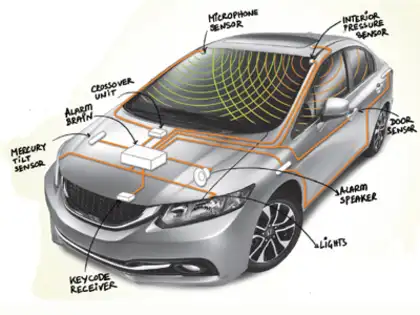
Have you ever wondered what happens the moment your car alarm goes off? Understanding how car alarms work can help you protect your vehicle better and give you peace of mind.
You’ll discover the simple yet smart technology behind these security systems. By the end, you’ll know exactly how your car alarm keeps thieves away and what makes it so effective. Keep reading to unlock the secrets of your car’s silent guardian.
Basic Components
Car alarms use several key parts to protect vehicles. These parts work together to detect threats and alert owners.
Understanding these components helps explain how alarms keep cars safe from theft or damage.
Sensors And Detectors
Sensors and detectors notice unusual actions around the car. They send signals to the control unit if they detect danger.
- Door sensors detect when doors open without a key.
- Shock sensors sense impacts or vibrations.
- Motion detectors track movement inside or near the car.
- Glass break sensors listen for broken windows.
Control Unit
The control unit is the alarm’s brain. It receives signals from sensors and decides when to activate the alarm.
This unit processes input and controls the alarm sounds and notifications.
Alarm Signals
Alarm signals warn owners and scare off thieves. They use sound, light, or messages to alert people.
| Type of Signal | Description |
| Sirens | Loud sounds to draw attention |
| Flashing Lights | Visual alerts using car’s lights |
| Notifications | Text or app alerts sent to the owner |

Credit: www.solidgps.com
Types Of Car Alarms
Car alarms help protect vehicles from theft and damage. They come in different types with unique features.
Understanding these types can help you choose the right alarm for your car.
Passive Alarms
Passive alarms turn on automatically when you lock your car. You do not need to press any button.
They protect the car without extra effort from the owner. These alarms detect door opening or glass breaking.
- Automatically activate on locking
- Detect door opening or window break
- Usually silent until triggered
Active Alarms
Active alarms need you to press a button to turn them on. They give you control over when to arm the system.
These alarms make loud noises or flash lights when triggered. They warn people nearby about a possible theft.
- Manual activation by the owner
- Sound sirens and flash lights
- Help scare away thieves
Smart Alarms
Smart alarms connect to your phone or device. They send alerts if your car is disturbed.
These alarms offer features like remote control and GPS tracking. They provide extra security and convenience.
- Send alerts to your smartphone
- Allow remote arming and disarming
- Include GPS tracking for location
Trigger Mechanisms
Car alarms protect vehicles by detecting unusual activity. They use different sensors to spot threats. These sensors trigger the alarm to warn owners and scare away thieves.
Understanding how these trigger mechanisms work helps you see how car alarms keep cars safe. The main types include door and window sensors, shock and motion sensors, and tilt and glass break sensors.
Door And Window Sensors
Door and window sensors detect if a door or window opens unexpectedly. They usually work with magnetic switches. When the door or window opens, the sensor breaks the magnetic connection.
This break in the connection triggers the alarm. These sensors are placed on car doors and windows to monitor any unauthorized entry.
- Magnetic switch closes when door/window is shut
- Switch opens when door/window is opened
- Alarm sounds if switch opens without key
Shock And Motion Sensors
Shock sensors detect impacts or sudden vibrations on the car. They sense if someone hits or bumps the vehicle. Motion sensors detect movement near or inside the car.
When these sensors sense a strong shake or motion, they trigger the alarm. They help protect the car from vandalism and theft attempts.
- Shock sensors detect physical hits or bumps
- Motion sensors detect movement inside or near car
- Both trigger alarm if unusual activity is detected
Tilt And Glass Break Sensors
Tilt sensors detect if the car is lifted or tilted. This helps stop thefts like towing or wheel theft. Glass break sensors listen for the sound of breaking glass.
When the tilt sensor senses a change in angle, or the glass break sensor hears breaking sounds, the alarm goes off. These sensors add extra layers of protection.
- Tilt sensors detect car being lifted or tilted
- Glass break sensors detect sound of breaking windows
- Trigger alarm to alert owner and deter thieves

Credit: www.carparts.com
Alarm Responses
Car alarms protect vehicles by reacting to threats. They use different signals to warn owners and scare intruders.
These responses help stop theft and alert people nearby quickly and clearly.
Audible Alerts
Audible alerts are loud sounds from the car alarm. They use sirens or horns to grab attention.
The loud noise makes it hard for thieves to stay unnoticed. It also alerts people close to the car.
- Sirens produce a sharp, continuous sound
- Car horn blasts are loud and sudden
- Some alarms use different tones for various threats
Visual Signals
Visual signals use lights to show an alarm is active. Flashing headlights or taillights catch attention.
These signals help people see the alarm even from far away or in noisy areas.
- Headlights flash rapidly
- Taillights blink to signal disturbance
- Some systems use interior lights as alerts
Remote Notifications
Remote notifications send alerts to the car owner’s phone or device. They inform about possible threats immediately.
This response lets owners act fast by checking the car or calling for help.
- Text messages or app alerts notify owners
- Some alarms send live audio or video feeds
- Owners can remotely disable the car if needed
Smart Features
Car alarms today come with smart features that add convenience and security. These features use new technology to help you control and monitor your vehicle easily.
Smart car alarms connect with your phone and other devices. This connection lets you respond quickly if your car is in danger.
Remote Control Access
Remote control access allows you to lock or unlock your car from a distance. It also lets you arm or disarm the alarm system without using a key.
- Lock or unlock doors remotely
- Turn the alarm on or off with a button
- Trigger the horn or lights to find your car
- Check if the car is locked or unlocked
Gps Tracking
GPS tracking shows your car’s location on a map. It helps you find the car if it is stolen or misplaced.
| Feature | Description |
| Real-time location | See where your car is at any moment |
| Route history | View past trips and routes taken |
| Geo-fencing | Get alerts if your car leaves a set area |
| Speed alerts | Receive warnings if the car goes too fast |
Integration With Mobile Apps
Mobile apps connect with your car alarm system to give you full control from your phone. You can manage settings and get notifications anywhere.
- Arm or disarm the alarm remotely
- Receive instant alerts about suspicious activity
- Check battery status and sensor health
- Control other smart car features like engine start

Credit: www.reddit.com
Installation And Maintenance
Car alarms help protect your vehicle from theft. Proper installation and regular maintenance keep them working well.
This guide explains how to install car alarms and maintain them for long-term use.
Professional Vs Diy Installation
Professional installation ensures the alarm works correctly. Experts connect wires and set sensors safely.
DIY installation can save money. It needs basic tools and some knowledge about car wiring and electronics.
- Professional installers have experience and proper tools
- DIY saves cost but may risk incorrect setup
- Professional work includes warranty and support
- DIY requires reading manuals and following instructions carefully
Battery And System Checks
Check the car alarm battery regularly to keep it active. A weak battery can cause false alarms or failure.
Inspect the whole system, including sensors and wiring, to spot damage or wear. Clean connections help avoid problems.
- Test alarm sound and lights often
- Replace batteries every 1-2 years or as needed
- Look for loose or broken wires
- Keep sensors clean and free from dirt
Troubleshooting Common Issues
Car alarms may beep or flash without reason. This usually means a problem with the system or battery.
Fix common issues by checking connections, resetting the alarm, or replacing parts if needed.
- Check for weak or dead battery
- Inspect wiring for damage or loose connections
- Reset alarm using the remote or main control unit
- Test sensors to ensure they are not blocked or dirty
Benefits Of Car Alarms
Car alarms protect vehicles by alerting owners and scaring off thieves. They add a layer of security and peace of mind for car owners.
Knowing the benefits of car alarms can help you decide if you need one for your vehicle.
Theft Deterrence
Car alarms make loud noises that warn nearby people when someone tries to break in. The noise can scare away thieves quickly.
- Alerts neighbors and passersby
- Discourages thieves from targeting the car
- Reduces chances of vehicle theft
- Helps protect valuables inside the car
Vehicle Recovery
Car alarms often include tracking systems that help locate a stolen vehicle. This feature increases the chances of getting the car back.
| Feature | Benefit |
|---|---|
| GPS Tracking | Finds the car’s exact location quickly |
| Remote Alerts | Sends notifications to your phone immediately |
| Immobilizer | Stops the car from being driven away |
Insurance Advantages
Many insurance companies offer discounts for cars with alarms. This can save money on your insurance premiums.
- Lower insurance rates
- Proof of added security
- Possible faster claims processing
- Better protection may reduce losses
Frequently Asked Questions
How Do Car Alarms Detect Unauthorized Entry?
Car alarms use sensors like door switches and motion detectors. When triggered, they send signals to the alarm system. This activates the siren and alerts the owner. Some alarms also notify the owner via smartphone apps.
What Components Make Up A Car Alarm System?
A typical car alarm includes sensors, a control unit, a siren, and a remote. Sensors detect intrusion, the control unit processes signals, and the siren sounds an alert. Remotes allow the owner to arm or disarm the system.
Can Car Alarms Prevent Vehicle Theft Effectively?
Yes, car alarms deter thieves by drawing attention with loud sounds. Many thieves avoid vehicles with alarms to reduce risk. However, alarms work best combined with other security measures like immobilizers.
How Do Shock Sensors Work In Car Alarms?
Shock sensors detect impacts or vibrations on the vehicle. When a strong impact occurs, the sensor triggers the alarm. This alerts the owner and scares off potential thieves or vandals.
Conclusion
Car alarms play a crucial role in vehicle security. They deter thieves and alert owners. Understanding their function helps in choosing the right system. Sensors detect unauthorized actions. Then, alarms sound to scare off intruders. Regular maintenance ensures reliability. Always keep your alarm in good condition.
This keeps your car safe and secure. Remember, a good car alarm offers peace of mind. Stay informed and choose wisely. Your car’s safety depends on it.