If you love cooking, you probably use your bamboo cutting board every day. But do you know the best way to clean it so it stays fresh and lasts longer?
Getting your bamboo board spotless isn’t just about looks—it keeps your food safe and your kitchen healthy. You’ll discover simple, effective steps to clean your bamboo cutting board the right way. Keep reading, and you’ll never worry about bacteria or stains again.
Choosing The Right Cleaning Tools
Cleaning a bamboo cutting board needs care to keep it in good shape. Using the right tools helps remove food and bacteria without damage.
Pick gentle cleaning items that clean well but do not harm the bamboo surface.
Soft Sponges And Brushes
Soft sponges work best for cleaning bamboo boards. They remove dirt without scratching the wood.
Brushes with soft bristles also clean grooves and corners. They help get rid of stuck food safely.
- Use non-abrasive sponges to protect the surface
- Choose brushes with soft, natural bristles
- Clean all sides and edges gently
Avoiding Harsh Chemicals
Harsh chemicals can dry out and damage bamboo cutting boards. Avoid bleach and strong detergents.
Use mild dish soap and warm water to clean. These keep the board safe and last longer.
- Do not use bleach or ammonia-based cleaners
- Avoid abrasive powders or scrubs
- Stick to gentle soaps and natural cleaning agents

Credit: branchbasics.com
Daily Cleaning Routine
Cleaning your bamboo cutting board every day keeps it safe and lasts longer. Dirt and bacteria can build up if you do not clean it well. A simple routine can help keep your board fresh and ready for use.
Follow easy steps to clean your bamboo cutting board after each use. This keeps your kitchen hygienic and your board in good shape.
Rinsing And Washing
Start by rinsing the board with warm water to remove loose food particles. Avoid soaking the board in water to prevent damage.
Use a soft sponge or cloth with mild dish soap to wash the surface gently. Scrub both sides of the board to clean it thoroughly.
- Rinse with warm water immediately after use
- Use mild soap and a soft sponge
- Scrub all sides of the board
- Do not soak or put in the dishwasher
Drying Properly
After washing, dry the bamboo board with a clean towel. Remove as much water as possible to stop moisture from soaking in.
Stand the board upright or lean it against a surface to air dry fully. Make sure both sides get air to avoid warping or cracking.
- Pat dry with a clean towel
- Stand upright to air dry
- Ensure both sides dry completely
- Avoid leaving wet on flat surfaces
Removing Stains And Odors
Bamboo cutting boards can absorb smells and stains after use. Cleaning them well helps keep them fresh and safe for food.
This guide shares easy ways to remove odors and stubborn stains from your bamboo board naturally.
Using Natural Deodorizers
Natural deodorizers neutralize bad smells without harsh chemicals. They are gentle on bamboo and safe for kitchen use.
- Rub the board with half a lemon to freshen the surface.
- Sprinkle baking soda, then scrub with a damp cloth to absorb odors.
- Use white vinegar diluted with water to wipe the board clean.
- Let the board air dry in a well-ventilated area after cleaning.
Scrubbing Stubborn Stains
Some stains need deeper cleaning. Use gentle scrubbing to keep the bamboo smooth and undamaged.
| Cleaning Method | How to Use |
| Baking Soda Paste | Mix baking soda with water, apply on stains, scrub gently |
| Coarse Salt Scrub | Sprinkle salt, rub with lemon half, rinse well |
| Vinegar Soak | Soak cloth in vinegar solution, wipe stains, dry board |
Credit: cheesegrotto.com
Deep Cleaning Techniques
Cleaning a bamboo cutting board well removes bacteria and stains. Deep cleaning keeps it safe and looking good. It is important to clean it deeply after cutting raw meat or strong-smelling foods.
There are natural ways to clean bamboo boards using simple kitchen items. These methods help to remove odors, stains, and germs without damaging the board.
Salt And Lemon Method
Use coarse salt and lemon to scrub your bamboo cutting board. Salt acts as a gentle scrub that removes dirt and stains. Lemon adds a fresh smell and helps kill germs.
Sprinkle a layer of coarse salt over the board. Cut a lemon in half and rub it on the salted surface. Let it sit for 5 minutes, then rinse with warm water and dry well.
- Sprinkle coarse salt on the cutting board
- Rub with half a lemon, squeezing juice as you scrub
- Leave the mixture for 5 minutes
- Rinse with warm water
- Dry the board completely before storing
Vinegar Solution
Vinegar is a natural disinfectant that kills bacteria on bamboo cutting boards. Use white vinegar diluted with water to clean your board deeply.
Mix equal parts of white vinegar and water in a spray bottle. Spray the solution on the board and let it sit for a few minutes. Then wipe the board with a clean cloth and dry it well.
- Mix equal parts white vinegar and water
- Spray the solution on the cutting board
- Let it sit for 3 to 5 minutes
- Wipe the board with a clean cloth
- Dry the board thoroughly before storing
Maintaining The Board’s Shine
Keeping your bamboo cutting board shiny helps it look new for longer. Proper care prevents cracks and dryness.
Regular cleaning and oiling keep the board smooth and protect it from water damage.
Applying Mineral Oil
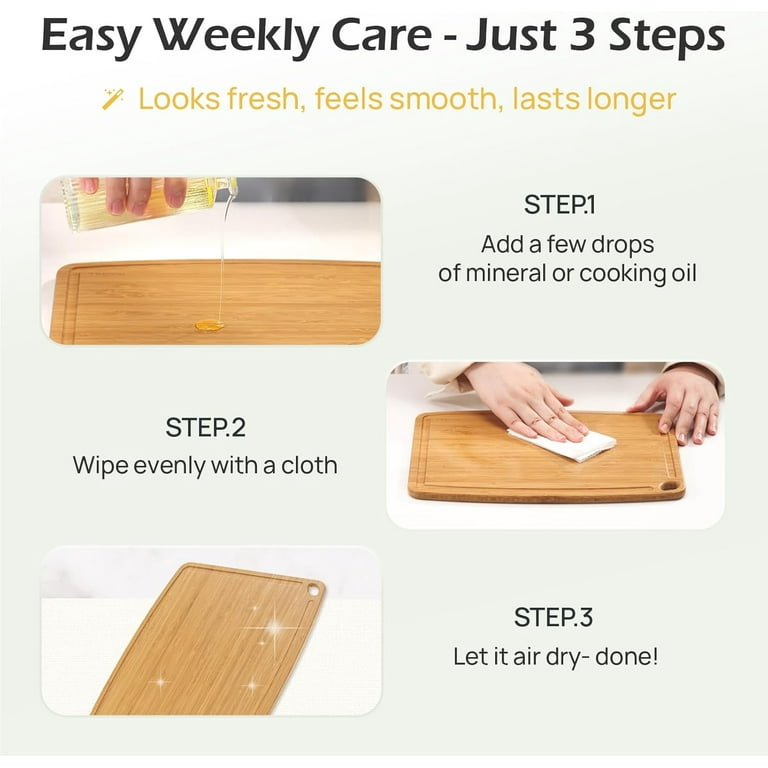
Mineral oil keeps bamboo boards from drying out and losing their shine. Use food-grade mineral oil for safety.
Apply a small amount of oil to a clean cloth. Rub the oil evenly over the entire surface of the board.
- Use a soft cloth or paper towel
- Cover all sides and edges
- Let the oil soak in for a few hours
- Wipe off any extra oil with a dry cloth
Frequency Of Oiling
Oil your bamboo board regularly to keep it protected and shiny. The frequency depends on how often you use it.
If you use the board daily, oil it once a week. For less use, oil it every month or two.
- Daily use: oil once a week
- Weekly use: oil every two weeks
- Occasional use: oil every month or two
- Always oil when the board looks dry
Avoiding Damage
Cleaning a bamboo cutting board the right way keeps it strong and long-lasting.
Knowing what to avoid helps protect your board from damage and wear.
No Soaking Or Dishwasher
Do not soak your bamboo cutting board in water or put it in the dishwasher. Excess water can make the board swell and lose its shape. High heat from dishwashers can also dry out and crack the bamboo.
- Wash by hand with warm, soapy water
- Rinse quickly and dry with a clean cloth
- Stand the board upright to air dry fully
Preventing Cracks And Warping
Cracks and warping happen when bamboo dries unevenly or gets too dry. Proper care keeps your board flat and smooth.
| Tip | How It Helps |
| Apply mineral oil regularly | Keeps bamboo moist and flexible |
| Store in a dry place | Prevents moisture build-up |
| Use both sides | Distributes wear evenly |
| Avoid direct sunlight | Stops drying and cracking |
Storage Tips
Cleaning your bamboo cutting board is not enough. Proper storage helps it last longer. You must keep it dry and store it well.
Good storage stops mold and cracks. It also keeps your board safe and ready to use.
Keeping Dry And Ventilated
After cleaning, dry your bamboo board well. Use a towel or air dry it. Avoid storing a wet board.
Keep the board in a place with air flow. This helps prevent moisture buildup and stops mold growth.
- Wipe with a dry cloth after washing
- Let it air dry standing up
- Store in a dry, cool area
- Avoid sealed containers or plastic bags
Proper Positioning
Store your bamboo cutting board standing on its side. This prevents water from pooling on the surface.
Keep it away from heat sources like stoves or dishwashers. Heat can dry out the bamboo and cause cracks.
- Place board vertically to allow air circulation
- Use a rack or stand designed for cutting boards
- Keep away from direct sunlight and heat
Credit: www.walmart.com
Frequently Asked Questions
How Often Should I Clean My Bamboo Cutting Board?
You should clean your bamboo cutting board after each use. This prevents bacteria buildup and maintains its integrity. Use warm, soapy water and a soft cloth. Rinse thoroughly and dry immediately to avoid water damage. Regular cleaning keeps your board hygienic and extends its lifespan.
Can I Use Vinegar To Clean Bamboo Boards?
Yes, vinegar is safe for cleaning bamboo cutting boards. Mix equal parts water and white vinegar. Wipe the board with the solution using a soft cloth. This natural disinfectant removes odors and kills bacteria. Always rinse and dry the board completely after cleaning with vinegar.
Is It Safe To Oil My Bamboo Cutting Board?
Oiling your bamboo cutting board is essential for its longevity. Use food-grade mineral oil for best results. Apply a generous amount and let it absorb overnight. This prevents the board from drying out and cracking. Oiling also enhances the board’s natural appearance and prevents moisture absorption.
Can Bamboo Cutting Boards Be Cleaned In A Dishwasher?
No, bamboo cutting boards should not be placed in a dishwasher. The intense heat and moisture can cause warping and damage. Hand wash with warm, soapy water instead. Rinse thoroughly and dry immediately to maintain the board’s quality and prevent bacterial growth.
Conclusion
Cleaning a bamboo cutting board is simple and quick. Use warm water and mild soap for washing. Avoid soaking to keep the board strong. Dry it well after washing to stop cracks. Regular oiling helps keep bamboo smooth and lasting longer.
Clean boards stay safe and look good. Enjoy your kitchen tools by caring for them right. Keep your bamboo board fresh with these easy steps. Your cooking will feel better with a clean board.