Choosing the right size air conditioner can feel confusing. Too small, and it won’t cool your space properly.
Too big, and you’ll waste energy and money. You want your home to be comfortable without overpaying on bills. So, how do you know what size air conditioner you really need? This guide will walk you through simple steps to find the perfect fit for your space.
Keep reading, because picking the right AC size can save you both money and stress.
Why Size Matters
Choosing the right size air conditioner is important for comfort and efficiency. An air conditioner that is too big or too small can cause problems.
This guide explains the effects of oversized and undersized units so you can decide the best size for your space.
Effects Of Oversized Units
An air conditioner that is too large cools the room quickly but turns on and off too often. This is called short cycling.
- Short cycling reduces the unit’s lifespan.
- It wastes energy and increases electricity bills.
- The room may feel cold but still humid.
- Frequent starts and stops cause more wear and tear.
Problems With Undersized Units
When an air conditioner is too small, it runs continuously but cannot cool the space well. This leads to discomfort and high energy use.
| Problem | Result |
|---|---|
| Constant operation | Higher energy bills and wear |
| Insufficient cooling | Room stays warm and uncomfortable |
| Humidity buildup | Increased moisture and possible mold |
| Short lifespan | More repairs and replacement costs |
Calculating Cooling Load
Choosing the right air conditioner size is important for comfort. You need to calculate the cooling load to find the right fit.
Cooling load means how much cooling power your room needs. It depends on many factors like size and heat sources.
Measuring Room Dimensions
First, measure the length and width of your room. This helps find the area in square feet.
Multiply length by width to get the room size. The bigger the room, the more cooling you need.
Considering Ceiling Height
Ceiling height changes the room’s volume. Tall ceilings need more cooling than low ceilings.
Measure the height from floor to ceiling. Multiply area by height to get the room volume.
Assessing Sun Exposure
Sunlight heats a room and raises cooling needs. Rooms with many windows get hotter in the day.
Note which walls get direct sun and how many windows are in the room. This adds to the cooling load.
- South and west-facing windows get the most sun
- East-facing windows get morning sun
- Shade or curtains can reduce heat gain
Accounting For Occupants And Appliances
People and appliances produce heat inside a room. More heat means more cooling is needed.
Count how many people usually stay in the room. Include heat from devices like computers or lights.
- Each person adds about 400 BTUs of heat
- Appliances add extra heat depending on use
- Turn off unused devices to reduce heat load
Btu And Tonnage Basics
Choosing the right size air conditioner is important for comfort. The size depends on the cooling power needed.
Two common terms help measure this power: BTU and tonnage. Understanding these helps pick the right unit.
What Is Btu?
BTU stands for British Thermal Unit. It measures how much heat an AC can remove from a room in one hour.
Higher BTU means stronger cooling power. Small rooms need fewer BTUs, big rooms need more.
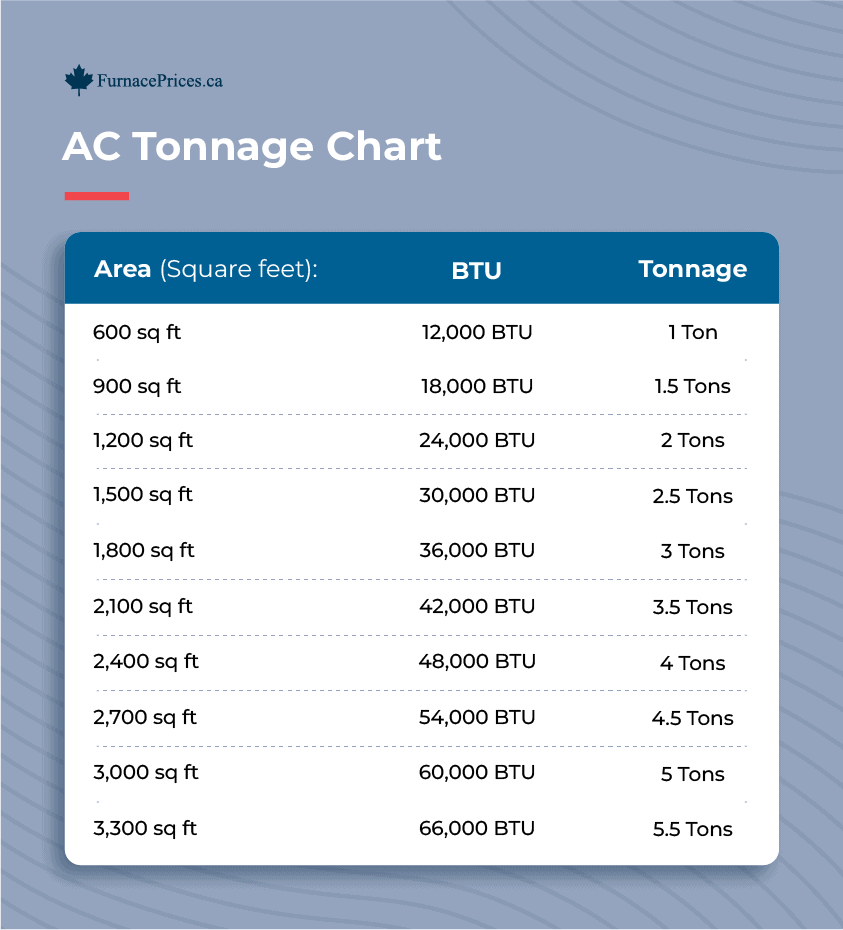
Converting Btu To Tons
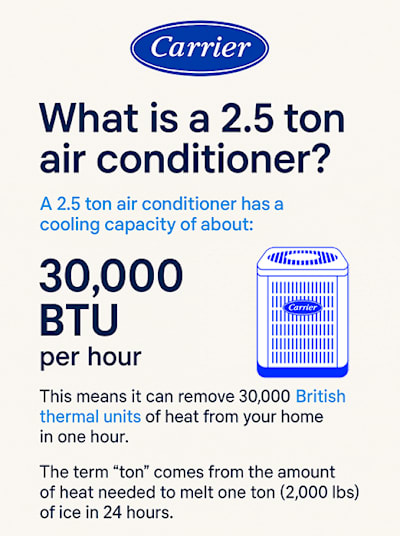
Air conditioner size is also shown in tons. One ton equals 12,000 BTUs per hour.
You can find tons by dividing BTUs by 12,000. For example, 24,000 BTUs equals 2 tons.
- 1 ton = 12,000 BTUs/hour
- 2 tons = 24,000 BTUs/hour
- 3 tons = 36,000 BTUs/hour
Typical Btu Requirements Per Room Size
The size of your room helps decide the BTU needed. Larger rooms need more cooling power.
| Room Size (sq ft) | BTU Needed |
|---|---|
| 100 – 250 | 5,000 – 6,000 BTU |
| 250 – 350 | 7,000 – 8,000 BTU |
| 350 – 450 | 9,000 – 10,000 BTU |
| 450 – 550 | 12,000 BTU |
| 550 – 700 | 14,000 – 15,000 BTU |
Credit: www.carrier.com
Using Online Calculators
Choosing the right size air conditioner is important for comfort and energy savings. Online calculators make this task easier and faster.
These tools use simple data about your space to suggest the best AC size for your needs.
Reliable Tools To Try
Several websites offer trusted air conditioner size calculators. These tools follow standard industry methods.
- Energy Star Calculator
- HVAC.com BTU Calculator
- Home Depot AC Sizing Tool
- Cool Calc HVAC Load Calculator
Input Data Tips
Enter accurate details for best results. Measure your room size in square feet or meters.
Include factors like ceiling height, window size, and sunlight exposure. Also note the number of people who use the space.
- Room length and width
- Ceiling height
- Number of windows and their direction
- Amount of direct sunlight
- Occupants in the room
Interpreting Results
The calculator shows the cooling capacity needed in BTUs (British Thermal Units). This number helps pick the right AC size.
If the suggested size is between two models, choose the larger one for better cooling. Avoid oversized units that waste energy.
- Small BTU means less cooling power
- Large BTU means more cooling power
- Right size balances comfort and efficiency
- Oversized AC cycles too often and wastes power
Energy Efficiency Ratings
Choosing the right air conditioner size means looking at energy efficiency ratings. These ratings help you find units that save power and lower bills.
Understanding these ratings makes it easier to pick an air conditioner that works well and uses less energy.
Seer And Eer Explained
SEER stands for Seasonal Energy Efficiency Ratio. It shows how well an air conditioner cools over a whole season.
EER means Energy Efficiency Ratio. It measures efficiency at a specific outdoor temperature.
| Rating | What It Means |
| SEER | Energy used for cooling over a season |
| EER | Energy used at a fixed temperature |
| Higher Number | More efficient and less power used |
Choosing Efficient Models
Look for air conditioners with high SEER and EER ratings. These models reduce energy costs and help the environment.
- Check the SEER rating on the label. Aim for 14 or higher.
- Compare EER values to see performance in hot weather.
- Pick models with Energy Star certification for guaranteed efficiency.
- Consider inverter technology for better power use.
- Balance size and efficiency to avoid wasting energy.
Professional Assessment
Choosing the right size air conditioner is important for comfort and energy savings. A professional assessment helps find the right fit for your space.
An expert uses special tools and knowledge to measure your home’s cooling needs. This avoids problems like poor cooling or high energy bills.
When To Call An Expert
It is best to call a professional if you are unsure about your space size or cooling needs. They can assess factors that affect the AC size.
- Your home has unusual layouts or many windows.
- You notice hot or cold spots inside your rooms.
- You want to replace an old air conditioner with the right size unit.
- You have added new rooms or made changes to your home.
- You want to save on energy bills and improve comfort.
What To Expect From A Load Calculation
A load calculation measures the cooling power your home needs. Experts use this to recommend the correct air conditioner size.
| Step | What It Involves |
| 1 | Measuring room sizes and ceiling heights |
| 2 | Checking insulation and window types |
| 3 | Assessing sun exposure and shading |
| 4 | Considering number of people and heat sources |
| 5 | Calculating total cooling load needed |
Installation Considerations
Choosing the right size air conditioner depends on more than just room size. Installation details affect how well the unit cools your space. Proper planning helps avoid problems later.
Two key factors to check are the ductwork and the unit’s placement. These impact the cooling efficiency and the size of the air conditioner needed.
Ductwork Impact On Size
Ductwork carries cooled air from the air conditioner to your rooms. Its condition and design change how much cooling power you need. Old or leaky ducts reduce airflow and cooling ability.
- Leaky ducts make the air conditioner work harder.
- Long or narrow ducts reduce airflow.
- Damaged ducts cause uneven cooling.
- Properly sealed and sized ducts improve efficiency.
Check ductwork before choosing your air conditioner size. Fixing ducts can allow a smaller unit to cool your space well.
Placement And Ventilation
Where you place the air conditioner affects how well it cools. Good ventilation around the unit helps it run better and last longer.
| Placement Factor | Impact |
| Near windows or direct sunlight | Unit works harder, needs larger size |
| Close to heat sources like ovens | Less efficient cooling, larger size needed |
| Well-ventilated, shaded area | Better performance, smaller size possible |
| Blocked airflow or cramped space | Reduced efficiency, bigger unit required |
Credit: lynnswinnipeg.ca
Adjusting For Climate
Choosing the right air conditioner size depends on the climate where you live. Different climates need different cooling capacities to keep your home comfortable.
Understanding your local weather helps you pick an air conditioner that works efficiently and saves energy.
Hot And Humid Areas
In hot and humid climates, air conditioners must work harder to remove moisture and cool the air. You may need a unit with a higher cooling capacity than in dry areas.
Look for air conditioners that can handle both cooling and dehumidifying. This helps keep your home comfortable and prevents mold growth.
- Choose a unit with a higher BTU rating for better cooling.
- Make sure it has good humidity control features.
- Consider energy-efficient models to save on electricity.
Mild Climates
Mild climates do not get very hot, so you may need a smaller air conditioner. A unit that cools gently is often enough to keep your home comfortable.
Smaller air conditioners use less power and reduce your energy bills in areas where heavy cooling is rarely needed.
- Pick an air conditioner with moderate BTU capacity.
- Look for models with adjustable settings for mild days.
- Choose energy-saving features to lower costs.

Credit: www.warmzilla.co.uk
Frequently Asked Questions
What Factors Determine The Size Of An Air Conditioner?
The size of an air conditioner is influenced by room size, insulation quality, and local climate. Consider ceiling height and window exposure. Calculate BTU (British Thermal Units) requirements by assessing these factors. A professional can provide a precise evaluation.
How To Calculate Btu For An Air Conditioner?
To calculate BTU, multiply room length by width to get square footage. Multiply by 25 to estimate BTU. Adjust for high ceilings, sunlight, and number of occupants. Use online calculators for accuracy.
Why Is Air Conditioner Size Important?
Choosing the right size ensures efficient cooling and energy use. An undersized unit struggles to cool, while an oversized one wastes energy. Proper sizing improves comfort and reduces utility bills.
Can A Professional Help With Sizing An Air Conditioner?
Yes, HVAC professionals can assess your home to recommend the right size. They consider factors like insulation, room size, and climate. Professional evaluations help avoid sizing mistakes and ensure optimal performance.
Conclusion
Choosing the right air conditioner size saves energy and money. Too small a unit won’t cool your space well. Too large a unit wastes electricity and costs more. Measure your room size and consider insulation and sunlight. Check cooling capacity in BTUs before buying.
A well-sized air conditioner keeps your home comfortable all year. Take time to find the best fit for your needs. This simple step helps you stay cool without extra expense.